The Parrot Who Ate Caramel Corn / Heart Failure

Unbelievable. If I dared roll my eyes during an interaction with a client, my eyes should have been doing cartwheels during the intake history I was noting on the chart.

My patient, an African Grey Parrot named Joe, was lying face down in his carrier, his beautiful red tail inelegantly dragging in the muck and mire. I was afraid to handle him, for fear it would push him over the brink. As I stalled for time I observed him from a safe distance, thoughts milling through my head. It creates a poor first impression when you touch your patient and he falls over dead.
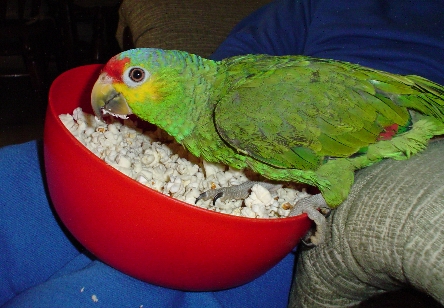
tequilapalomitas.jpg

The question I’d just asked was about his preferred foods. I was secretly hoping to hear that he ate a sunflower seed only diet, because this is the pinnacle of poor nutrition for the average parrot and was quite popular 30 years ago when most birds were imported and went through the rigors of quarantine stations before finding their way into homes. Thousands of parrots seemed to subsist on sunflower seed alone, whose nutritional value, though high in protein and fats, was loathsomely deficient in calcium and other life-sustaining vitamins and nutrients. 

The secret card up my sleeve? African Grey parrots, both the Congo species and their smaller cousins the Tymneh, were unusually susceptible to severe sickness from hypocalcemia. In addition to building strong bones, calcium is needed for all muscle contractions, including the heart muscle, and low calcium led to seizures or tetany and cardiac arrest. The treatment was simply supplying calcium and a little vitamin D to the afflicted parrot and most would turn around. The stuff of miracles and who doesn’t want to see a miracle?

But this woman! What was she saying? Forget seeds. Her bird subsisted on caramel corn? Peanut M&M’s? Pizza? Impossible that this bird could survive the high salts and fats and sugars of this diet! Let alone live to 42 years of age. But here he was. Although, as I knelt to get a closer view, one could not say that he was “living.” Not yet dead was more accurate. Gingerly I opened the cage door and slowly pulled him out. Joe didn’t move. I finally placed my stethoscope to his chest without disturbing his position on the towel. Oh dear. He had a heart murmur and his heart was beating very erratically. Cardiac arrhythmia. His abdomen bulged ominously. A tumor? The case was hopeless. The bird had never been to a veterinarian before and this was clearly too little, too late.

Which I tried to explain to his owner. We could do diagnostic tests, but he might die while we were trying to help him. The tests would be expensive and some would take a day or more to get results. I didn’t think he’d live long enough to find out what was killing him, let alone help him. I hate cases like this.

Joe’s owner requested that we proceed.

We placed him in an oxygen cage. Then, using gas anesthesia, we let him breathe himself into a state of non-painful peace and took x-rays, drew blood, obtained culture samples and tapped his abdomen (abdomenocentesis). No tumor. Joe appeared to be in congestive heart failure. What’s more, he woke up. I had given him several medications while he was still out and he remained on supplemental oxygen. Fast forward 24 hours. Joe is standing, a little wobbly, and has lost 50 grams of retained fluid overnight (10 percent of his entry weight). His blood calcium test is normal. Too weak to eat well on his own, we gavage fed him, using a tube to place baby mush directly into his crop. Fast forward 72 hours. Joe is talking, grooming himself and cracking seed. We take him off oxygen. On Day Five I sit down with his owner and explain that against all odds, her bird is adjusting well to oral medication and can go home. He will need medication the rest of his life. Given the seriousness of his condition, I tell her each day is a blessing. This is good enough for Joe and his owner.

We stayed in touch. Joe continued to improve. On Day 10 his owner happily reported that Joe was eating caramel corn again. Tongue-tied, I pulled back and stared at the phone. Not the goal I had in mind. I kept quiet. It’s been more than one month since I first met Joe. He is doing very well on his heart medications. I may start eating caramel corn myself.

Christine McFadden, DVM

Send questions or comments to drmc@mcmenagerie.com
Cloning

For roughly $50,000 you can clone your favorite dog or cat. Speaking strictly for myself, I was somewhat startled. Are we there already?

Since I’m still sewing up cuts with plain old needle and thread, I find some of this high-tech stuff interesting. And amusing. And disturbing. So while I’m still healing the old fashioned way, somewhere out there veterinarians are offering to clone your pet.

They start with something as simple as a skin biopsy, a little 6 mm circle of tissue taken from your pet and carefully preserved for the genetic material found in its DNA. From this they can replicate the DNA and fuse the sample with an egg. This grows into an embryo that can be implanted into a surrogate mother. Once born you have a “clone” – a pet produced asexually from one ancestor to which they are genetically identical “twins.” A lot of this original work was being done in South Korea. There are now companies based in the United States that also offer either to preserve your pets’ DNA for future cloning or you can order up your very own clone today. In humans, identical twins result from the natural splitting of an egg in utero and both children contain identical DNA genetic makeup. Someone labeled identical twins “natural clones”?! Canine clones appear to have been the most popular pet clones requested by the public in this early work.

There’s a lot to consider here.

Say everything goes smoothly with the pregnancy and your little clone is born. Let’s name her “Clonia.” In the old nature-versus nurture-debate, right from the get-go we may have the same genetic material but it is going to be raised by another mother. That surrogate doggie mom may have been chosen for her availability as a uterus (think “animal shelter rescue”) and may not be particularly personable towards humans. And everyone, mom-dog and puppies, are living in a laboratory setting, not on Grandma’s comforter in your kids’ bedroom closet. So the first six weeks or so are not in a home environment and raise some serious questions about early socialization for the beloved Clonia. From what I could gather, responsible lab researchers provide careful monitoring to rule out abnormalities in the little clones, so many don’t go to their homes until they are several months old. Developmentally, they cannot be properly evaluated until then. This means even more time spent in a laboratory setting, coddled and cossetted, no doubt, for $50,000, but not a home. So when you do bring home your old pets’ genetic double, Clonia may not act exactly the same as her ancestor. Maybe not at all. Nurture versus nature.

And what happens to the mother dog, once she has performed her duties? This issue is clouded by lack of information. Clonia, by the way, cannot be registered with the American Kennel Club, no matter how prestigious her ancestral pedigree. Since the first dog cloned in the United States was born in February 2016, as of this writing, there isn’t a lot of information out there about “identical personalities” to the original pet. Somehow liking to chew up your sneakers or wagging your tail clockwise isn’t enough to convince me that you have reincarnated the original pet. Isn’t that really what this is all about? Clonia may not physically be an identical twin and again, her personality, shaped by very different early experiences, may be substantially different.

There are so many hearts and homes out there looking for each other that I find it hard to recommend seeking love through a clone. Would a clone of Shakespeare, father to twins Hamnet and Judith, still pen his famous works, such as “Romeo and Juliet” wherein he wrote “What’s in a name? that which we call a rose By any other name would smell as sweet.” I suspect that that which we call a dog is each an unique individual and that the search to duplicate your beloved pet by cloning borders on smoke-and-mirrors shell games, not something sweet.

Christine McFadden, DVM

drmc@mcmenagerie.com

Dog flu has been reported in the Valley. Here’s what you need to know.

Serious news for all dog owners in recent weeks, folks: Canine influenza, or dog flu, has been documented both in San Francisco and the Bay Area and in Fresno. Up to 50 cases were diagnosed in the Bay Area in mid-January, with a confirmed case in Fresno announced Jan. 24.

holding-dog-head-e1519278244598.jpg

This dog flu is highly contagious between dogs, with 80 percent of all exposed dogs becoming sick. Most of these dogs will be only mildly sick. Symptoms include coughing, sneezing, runny eyes and noses. Some dogs whose respiratory system has been attacked by the flu virus will develop secondary bacterial infections and have thick purulent (pus) discharge from their nose and a very high fever. Occasionally even pneumonia can occur and in rare instances, death.

You’ve all probably heard of “kennel cough,” which is a generic name for a variety of viruses or bacterial infections that cause a cough contagious to other dogs. The actual cause of bronchitis can only be determined through tests. An oral cheek and eye tear swab can be sent to the lab for a PCR test (polymerase chain reaction – if you really want to know more on that kind of testing, please research!) When last checked, a PCR upper respiratory test in dogs looks for up to 13 different viruses and other agents, including both forms of the Canine Influenza, H3N8 and H3N2. Dogs in close contact easily spread the germs by coughing on each other – in a kennel, a grooming parlor, at a dog park, day care or shelter. Anywhere dogs meet. In addition the flu virus can be spread by contaminated objects like food or water dishes, collars and leashes.

Should your dog contract canine influenza you will need to see your veterinarian. Treatment is tailored to symptoms and whether secondary infections are a concern. All affected animals should be isolated from other pets for 1 month to prevent the spread of this disease.

Canine influenza first made headlines in 2004 when several racing Greyhounds dropped dead in Florida. This was the CI H3N8. It wasn’t until March 2015 that there was another crisis when an epidemic broke out in dogs in Chicago. This was a different form of CI, H3N2. They thought part of the reason for an outbreak in a big city had to do with large concentrations of dogs moving through airports. The dog flu has not been widespread and risk to pets in many parts of the U.S. has been low.

The dog flu H3N2 has been known to affect cats. One outbreak occurred in cats in a high-stress shelter environment. No cats are known to have died from the canine influenza viruses, and there is no approved vaccine for cats.

Canine influenza viruses have not been found to be transmissible to humans.

Should you like more information on the canine influenza viruses please look up the American Veterinary Medical Association article on-line. Your local veterinarian has information and protective vaccine available to your pet. This bivalent vaccine protects against both strains of dog flu. Two vaccinations are required to start, given approximately one month apart, and can be started as young as seven or eight weeks of age. Because it takes a month for your pet’s body to mount a complete immune response, and given the closeness geographically of the epidemic, we recommend all dog owners contact their veterinarian to start protection. Be aware that like the Bordetella vaccine (a better known “kennel cough”) and human “flu shots” even with proper vaccination your pet might contract a mild case. Many area clinics are offering the vaccination to their regular patients. Simply put, we want to protect your pets. We’re here for you.

Christine B. McFadden

drmc@mcmenagerie.com

Have A Nice Day !

George Carlin, a comedian I’m not much familiar with, found fault with the phrase “Have a nice day,” saying it was “probably unrealistic to expect someone to have a nice day all day long.”

I am as guilty as the next person at wishing people I meet to “have a nice day” upon taking their leave. It has become an ingrained auto-response. The phrase is depersonalized and meaningless more often than not. Carlin’s riposte struck home because it has only been a few weeks since that very phrase landed me in the middle of a hostile exchange between my staff and a client.

The first I knew that we had a problem was finding a chart on my desk with a note “Client upset. Please call.” We get very few complaints, surprising, perhaps, given the number of animal patients we see in a day and the variety of human clients attached to them. I suppose some people never discuss their dissatisfaction with us and simply go elsewhere with their pets. Our best clients tell us when we have let them down and I very much appreciate that – how else to improve our services? And then there are, well, those days that we just mess up. We don’t just drop the ball, we kick it over the fence. No half measures for us, no sir.

So I read the chart. It landed on my desk because I had examined a cute little Maltese dog and vaccinated her when she first arrived to board with us. That had been days earlier and I had not heard of any problems during her stay. I then requested to speak with any personnel who might be able to enlighten me. This can be a dicey tightrope – understandably your staff wants to feel that you’ve got their back and truthfully, the client is not always right.

With half the story under my belt, I felt prepared to call the client, who was pleasantly surprised that I even called. The saga was not life threatening in any way but was important. The client had requested her dog be bathed upon arriving at the clinic. This made no sense to the staff because like some people, a dog away from home may exhibit different behaviors than their owner is accustomed to. He may stay up until all hours of the night. She may bark joyfully nonstop. Both will engage in food fights, scattering food willy nilly. Someone peed on their favorite blanket then ate it. In short, your calm little house pet may have the manners of the worst frat boy party animal you’ve ever seen depicted in a movie once you step away. I know, I’ve seen ‘em. So we always suggest a bath and fluff up right before heading home. Time to put the leash back on. Momma’s coming and you don’t want to disappoint Momma.

In this case, the staff just thought someone heard it wrong, so they waited to give the bath 4 days later, when the dog was scheduled to go home. Only Momma came back a day early. We absolutely would have given the bath then but everything got bolloxed up in the explanations and finally the good woman took her dog (bathless) and went home. The final insult? As she was leaving in high dudgeon, one of my staff called out “Have A Nice Day.”

Ouch! Hit that ball right out of the park.

I was treated to a delightful lunch at a Ruth Chris Steakhouse recently and noted that at every request the staff responded “with pleasure.” I considered trying to incorporate this into my daily interactions with clientele, but somehow, when asked to express anal glands I think saying “with pleasure” could backfire on me. I am trying to rid myself of “Have a Nice Day.”.

Christine McFadden, DVM

drmc@mcmenagerie.com

Reflections Back on 2017 from the New Year

I can’t speak for you, but let me start this by saying that I spent my first night of the new year sleeping on the floor. No, you too? So let our first resolution be to stay home next year! Nothing stronger than water had crossed my lips, we missed the ball drop in New York because we were arguing too much as we channel-surfed at the last minute and I couldn’t tell you if there were midnight fireworks because we were all asleep long before the year crossed over. Some of us on the floor. I was there mostly because the makeshift mattress set up for the kids was very narrow. If you were next to your mom you would be snuggling, but if forced to share the same space with your sister it would have been a war zone all night. I chose “some sleep” over “none”. The great thing to come out of this? Everything settled to the down side and I’m convinced my silhouette, as seen from the left, is much slimmer.

I had lots of time to think while performing this balancing act. I remembered the faces of some I’d said goodbye to in the previous year. “Nella” was a gallant Golden Retriever. He was named as a young dog by a child too young to know a girl name from a boys and owned by a war veteran too kind to correct the child. Nella was the color of a vanilla wafer cookie. He was a big-hearted dog, always gently greeting me with a wave of his plumed tail, no matter the exams, the blood tests or x-rays that were needed. At 16 years of age, he suffered from severe arthritis. His owner always had a kind smile and a silly joke when he came in. He thanked us for our efforts to keep the big dog comfortable. He cooked for Nella when needed. On the bad days we hugged. And finally there was no denying that the most loving thing he could do for his dog was to let him go.

I started 2017 with a C-section delivery on Jan. 1. Ring in the new!

I ended 2017 with an 18 pound cat, Shrek, that had his bladder obstructed by tiny bladder stones they call “sand.” He couldn’t urinate. His bladder filled up tight as an over-filled balloon and the plumbing backed up until the pressure shut down his kidneys. It is hard to walk when your bladder feels like a large boulder in your stomach. When your kidneys shut down you feel tremendous nausea. It’s called uremic poisoning, because the body waste that the kidneys should filter out are reabsorbed into the bloodstream, poisoning you. It is impossible to eat when your kidneys shut down. A true emergency, his bladder at risk of rupture, we rushed Shrek into surgery. Under anesthesia we spent long minutes trying to break down the plug of small grit blocking his urethra until we could place a bladder catheter and empty his bladder. Then we pumped him full of intravenous fluids to encourage his kidneys to go back to work. Shrek looked a little odd, with one tube dripping fluids in at the front end and another dripping out more fluids (urine) at the back end. Key to prevent recurrent formation of this “sand” in Shrek will be his conversion to a diet of food developed specifically to prevent urinary sand of Feline Lower Urinary Tract Disease (FLUTD) syndrome.

My final thoughts before drifting off to sleep were of the first stanza of a poem I memorized years ago. The poem is by Alfred, Lord Tennyson.

Ring out, wild bells, to the wild sky,

The flying cloud, the frosty light:

The year is dying in the night;

Ring out, wild bells, and let him die.


May the new year be kind to you and your pets.

Christine B. McFadden, DVM

drmc@mcmenagerie.com

World Rabies Day


Several years ago I wrote an article on Rabies (Merced Sun Star, June 2014), a viral disease carried from animal to animal and sometimes from animal to human. For both animals and humans the disease is considered a death sentence.  I recently came upon a series of articles in a veterinary journal and was sad to learn that the disease is still a serious threat in much of the world and that approximately 60,000 people die from this disease every year. Still.


Why do I take up the story again? Because it deserves to be heard and, most importantly, it is still a threat to you and your loved ones. A very real threat if you enjoy traveling to out-of-the-way places.

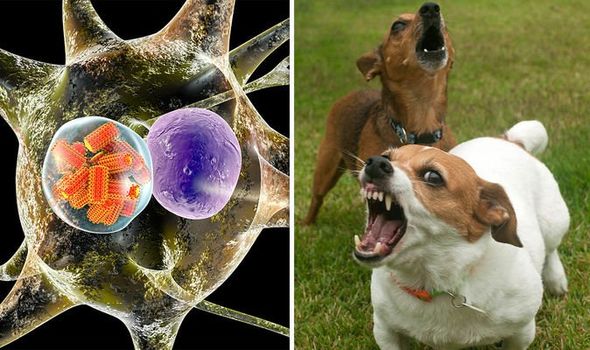
Rabies-outbreak-map-rabies-symptoms-rabies-dog-bite-1125644

Rabies is a slow-moving viral disease. It can affect any mammal, but is usually spread from one carnivore to another as the virus is passed in saliva by bites through the skin. Infection after contact with infected saliva on an open wound is a possible, though unlikely, mode of transmission. Once a new victim has been bitten, the virus slowly makes its way into the nerves and through the nervous system to the brain. This can take two weeks to 2 months or longer. By the time the rabies virus is present in the saliva, death is near. It is for this reason that when an unknown dog bites a person the dog will be quarantined for 2 weeks.  Two weeks is long enough to monitor the dog : If rabid, the animal will die. The dog’s brain can then be tested for rabies virus and the bitten person still has ample time to receive the anti-rabies protective vaccine.


Rabies has been found in the wildlife in and around Merced County. It is endemic in area bats, raccoons, skunks and foxes. You, the pet owner, have set up a terrific protective line of defense by the simple stratagem of vaccinating your pet dogs and cats. It is believed that by vaccinating 80% of a populations’ pets an effective barrier is created to protect people against exposure to the disease. In the United States more rabid cats have been reported to the CDC (Center for Disease Control) than dogs for several years. Vaccinate your cats! Vaccinate all dogs and cats older than 3 months of age. Keep them up-to-date.


There are a few island communities which have managed to keep rabies out or eradicate its presence : Hawaii, Great Britain, and Japan are three. You cannot easily take a dog or cat into those Islands. I applaud their high security. The regions most likely to have rabid animals that endanger humans are underdeveloped countries in Asia and Africa.


For the traveler to a foreign country, be aware that the dogs roaming the streets may be high risk for encountering rabies. The unsuspecting traveler may admire a puppy, letting it lick their hands. Food you carry could attract attention from a roving dog. Many of these countries have inadequate medical services for diagnosing rabies or offering post-exposure prophylaxis (prevention/ PEP) services.  Rabies prevention is not universally available. The more exotic your outpost, the higher the risk of encountering rabies. Of the 60,000 people who die every year, nearly every single case (99%) of human death started with a bite from an infected dog.


Whether at home or traveling, camping for a weekend or following your dreams of adventure exploring a foreign land, please take precautions. Enjoy wildlife, but don’t treat or keep wildlife as pets. They cannot be vaccinated against rabies and may have variable incubation times for rabies. Avoid attracting wild life to your home or campsite. Do not feed wildlife. Do not feed your pets outdoors, as this attracts wild life and strays.  Avoid animals acting unnaturally. Animal-proof your trash. Avoid stray dogs and cats. Stray animals may not be vaccinated and they run high risk of exposure and contact with wild animals that might harbor rabies. The message, Backpackers : stay away from unknown dogs and wild life. The life you save might be your own!


World Rabies Day is Thursday, September 28th this year. This day is sponsored by an alliance among the World Health Organization and many other organizations working towards the goal of eradicating Rabies deaths in people and animals by the year 2030. They are joined by the One Health Initiative, a group dedicated to promoting increased communication and joint action between physicians and veterinarians globally through the integration of human medicine, veterinary medicine and environmental science. Rabies is cited as a classic example of what “One Health” is all about, as the control of rabies in animals has reduced the death toll in people from that disease. Together, we CAN make a difference.


Christine B. McFadden, DVM

drmc@mcmenagerie.com

Photo Credit : https://www.express.co.uk

The Large Animal Vet


Perhaps the title sounds misleading. A “large animal” vet develops a veterinary practice caring for the needs of livestock such as cattle (dairy or beef), sheep, goats and pigs. A “small animal” veterinarian like me is usually slotted into the care of companion pets such as dogs and cats. So when I examine a 200 pound dog, it is still a small animal and likewise there is often confusion about whom to call when the patient is a pot-belly/miniature pig. Not me.


The life of a small animal vet and that of a large animal practitioner are markedly different. One works almost exclusively indoors, dressed neatly, white coat in place. The other weathers life outdoors, facing extremes of blazing heat to icy cold, rain and snow. One always has a sink handy to tidy up. The other uses outdoor hoses more than they’d like. A dairy vet may check over 100 head of cattle in a morning and four “farm calls” make a full day. A small animal vet may follow the medical strands of more than 25 patients a day, winding through exams, blood results, x-rays and working in a surgery or two.  All juggle the demands of unexpected emergency work.


Being in an office most of the day, I rarely interact with my brother and sister large animal veterinarians. So when the pygmy goat from the petting zoo fell over dead I was unhappy, but proceeded to perform a post-mortem examination and sent tissue samples off to our regular lab. I had overseen the care of these goats for many years, but they were on the back burner when it came to my interest in the truly exotic Zoo collection. My concerns centered on whether or not the public might have fed something odd to the goat? (I’ll jump ahead here : No. The public did not harm the goat). I mulled over the problem but prepared to wait until the pathology report was finished sometime in the next week. And then another goat died.


I was unnerved. The goats were being closely watched and none had shown any outward signs of sickness. They had all lived for more than 8 years at the Zoo and had never, collectively, suffered a single injury amongst themselves. I immediately sought the expertise of a Large Animal veterinarian. The Goat Expert was on a dairy farm. The return call came in as I was finishing one surgery and about to start another. Gloves still on, I was staring at some x-rays

in-between these surgeries when they told me they had Dr. B on the line. Multi-tasking at its best.


I hurried over, snapping gloves into the waste receptacle and grabbing pen and paper. I introduced myself and LAUNCHED into a recital of my goat woes. I verified that he had goat experience? Yes. I gave him dates, genders, date of deaths, lack of lab results, still pending. I drew breath to spew forth another list of details and heard him gently respond, “Yes…. I think…. I might be able…. to help”. His measured tones were from a man used to the gentle rhythms of milking machines, contented cows swishing their tails, chewing their cuds. Da-dum da-dum to my staccato dop-dop-dop-dop-dop! I managed to squeeze in a few more hurried sentences (surgery! Waiting!) before he responded calmly, “I think I drive past your practice on my way up from this dairy….”. I opened my mouth. Closed my mouth. I could hear the clouds, feel the sunshine, almost see the shining black and white hides of the gentle Holsteins he surveyed as we spoke. It was all there in the rhythm of his speech. I told myself to stop yapping before he decided my goat problem would be too stressful for him to bother with.


An hour later Dr. Thomas Bauman drove up in a large truck outfitted for all manner of veterinary ministrations. He spent an hour and a half doing a post-mortem on one goat. He had a wicked knife and mulled over the cause of sand in the stomach. He felt it was too much. Did we feed on the ground? No. But little kids feed the Zoo goats oat hay pellets and they often dropped to the sand, with all the goats scrambling to get their share. Hmmm. He gave the problem his full attention and we submitted a gazillion samples to the State Lab, including an intact eyeball because it would be useful for trace metal analyses. The final answer was a copper deficiency in the feed, to which Pygmy goats are especially susceptible. Hay grown in the San Joaquin Valley is often deficient in copper. The salt lick fed at the Zoo did not have added copper because Alpacas are in with the goats and they are susceptible to copper toxicity (too much) if supplemented. So we now feed our goats little capsules of copper wire every six months and all is good. But sometimes I find myself wishing that I was a Large Animal veterinarian. Just so I could slow down and smell the …..never mind.


Christine B. McFadden, DVM

drmc@mcmenagerie.com

Accreditation / Monkey Pox Virus

Dr Mc Blog


September 14, 2016
I am going to share with you the Veterinary Accreditation Program through the United States Department of Agriculture (USDA) and the Animal and Plant Health Inspection Service (APHIS). What? The USDA-APHIS educate and certify veterinarians to inspect animals for disease prior to writing a health certificate for animal travel.

The Center for Disease Control (CDC) in Georgia is a governmental body we should all get down on our knees and give thanks for! The CDC is our nation’s health protection agency. It monitors all kinds of diseases that crop up in the United States and abroad that might affect us, from food borne illnesses (think E coli in the spinach or listeriosis in raw cheese products) to contagious measles outbreaks that start at California resorts to zoonotic infections passed from animals to people. The CDC works hand in hand with the USDA-APHIS, and the system trickles down to yours truly, the local town veterinarian. Which means I am authorized to fill out and sign a health certificate for a pet planning to travel to another state or country. Not a big deal? Think again.

Why so much interest you might well ask, in where Fido goes on vacation? Is this just another way that Big Brother is invading your privacy? The short answer is no. According to the USDA-APHIS they are recognizing new emerging infectious diseases world-wide. Of ALL the bacteria, viruses and other disease-causing pathogens that affect humans, they estimate 61% to be zoonotic or spread from animals to humans. Of the new “emerging” diseases they believe at least 75% to be zoonotic. The USDA-APHIS bodies wish to protect YOU by verifying that all animals that travel are disease-free, to safeguard humans. As a veterinarian may I add that this also helps safeguard our pets and our food sources. Our way of life.

The National Veterinary Accreditation Program web site shares some fascinating information of how the local town veterinarian can be a link in this chain of protection.

In 2003 a shipment of over 700 small mammals and rodents were imported to the US from Africa. The wildlife importer brought in dormice, various unusual rats and some rope squirrels. There is always a market for unusual animals in the pet trade, sometimes zoological parks or animal preservation parks, even research. The animals arrived safely in Texas, where they were re-distributed to Illinois. Many of the rats were housed near Prairie dogs. The Prairie dog has been adopted as a pet by many people. They are native to many areas of the United States. They have not been bred in captivity for generations, but may be relatively docile, eat timothy hay and are awake in the daytime which is a real bonus for people who enjoy interactive time with small rodents as pets. Unbeknownst to all, the rats were carrying the monkeypox virus and transmitted it to the Prairie dogs. The Prairie dogs were distributed to pet shops in six Midwestern states. These Prairie dogs went into pet homes.

Monkeypox is a virus in the same family as Smallpox. Smallpox was a deadly viral disease that the European explorers and settlers first brought to the Americas in the 1600’s. Native American tribes had never encountered this virus and had no natural immunity; many Indian tribes were decimated by Smallpox. Smallpox was eradicated in the United States before 1980, so a vaccination program against Smallpox is no longer enforced. Monkeypox was first diagnosed in Africa over 40 years ago. The disease causes a fever, enlarged lymph nodes and small raised polka-dot like spots or rash that may cover the body. Both humans and animals can develop the rash. Monkeypox is known to be zoonotic, spreading from a sick pet to a human by body fluids, soiled bedding and close contact. Signs of Monkeypox can show up as little as one day after exposure. There is no specific treatment against this virus, though vaccination against Smallpox may provide protection against Monkeypox for 85% of the people who receive it. Again, no one has routinely received Smallpox vaccination since 1972. Children born after that time will have no immunity.

Monkeypox had NEVER been seen or diagnosed outside of continental Africa until this outbreak in 2003 in the United States. Over a period of four weeks, from May to June, at least 47 people were infected from their new Prairie dog pets. One of the first family cases started May 11th 2003 when two Prairie dogs arrived in their new home. One of the Prairie dogs was ill with a skin rash and runny nose on the 15th and taken to their veterinarian. By the 20th the family was ill and the Prairie dog died. The veterinarian sent tissue samples to various labs at the same time as biopsies of the skin were being performed on the family by a dermatologist. Joint diagnosis confirmed Monkeypox. Quick action taken by the CDC, USDA and APHIS contained the outbreak. No person died. Monkeypox has not been seen in the United States since.

As a small town veterinarian I have been involved with potential cases of Rabies, Salmonella, Campylobacter, Avian tuberculosis, Chlamydiosis and West Nile disease. All veterinarians are here to serve.

Christine B. McFadden, DVM
drmc@mcmenagerie.com


Bupthalmia

Dr Mc Blog


August 16, 2016
Somewhere along the way your children catch on to you and become very suspicious when you are happy about something. Mine questioned the origin of names I kept pressing upon them for new pets. They obstinately refused to name the new cat “Tenesmus”. C’mon, I begged, it sounds great, doesn’t it? What does it mean? they questioned. Surly attitude! When I confessed tenesmus meant “straining to defecate” they did not laugh. I told them no one else would know. “No, Mom”, they said.

I have another favorite : Buphthalmia. Yes, it sounds like a long burp! Is there anyone else out there who only burps after drinking root beer? I digress. So what is “buphthalmia”? Pronounce it “bup” then add “thal-mee-ah”. It was an ophthalmologist, an eye doctor, who coined this word. Spelling that ph-th thing was the first question on our opth exam back in vet school.

Buphthalmia is different than exophthalmia. Exophthalmia is when the eyeball bulges out of the orbit, pushed behind by a space-occupying lesion like a blood clot or a mass. Buphthalmia is a little different : you will see an enlarged eyeball, bigger and wider than normal, because the cornea and surrounding tissues covering the eyeball have been stretched out by fluid build-up inside the eye.

The eyeball is nestled safely inside a protective ring of bones, often collectively referred to as the eye socket or orbit. The eye is an amazing organ and provides one of the five major senses, sight. The eyes of many animals have specialized features that allow them to see underwater, see in the dark, reflect light, and see in color. Most mammals and many birds and reptiles have a third eyelid which slides over their eyeball to both protect and lubricate the eye. Humans lack a third eyelid. It slides up from inside the inner lower corner of the eye, near the nose, and may be light pink in color. The inside of the eye is constantly bathed in a gentle fluid, the aqueous humor. This fluid circulates in front of the lens and helps to keep the eyeball round. The fluid pressure provided by the aqueous humor can be measured as intra-ocular pressure or IOP. If you, a human, has ever seen an eye doctor, they have probably measured your IOP with a tonometer – a little puff of air directed straight at the center of your cornea. We also use tonometry in veterinary medicine. Why do we care? Because the fluid in the front of the eyeball can build up, creating too much pressure. Too much pressure inside the eye is diagnosed as GLAUCOMA. This often happens because the aqueous humor doesn’t drain away properly. Once clogged, through a disease process or even an inherited problem of narrow drainage, the fluid builds up, creating pressure on the outer eyeball membranes and cornea which spread and bulge. The eye may look red or bluish and the pupils may dilate. Once the eyeball has enlarged, called buphthalmia, there is no going back. The eyeball will never return to its original size.

Your pet has an emergency. Without immediate medical treatment, in as little as a couple of hours the sustained high intraocular pressure can lead to blindness. If only one eye is affected by glaucoma the other may be at risk. Buphthalmia is a classic sign of glaucoma. Once diagnosed, the remaining Healthy eye should be treated with preventative eye drops for the rest of the pet’s life.

Certain breeds are predisposed to glaucoma, though the largest category is “mixed breed”, so no dog is safe. Cocker Spaniels, Bassets and Beagles, Boston Terriers and Norwegian Elkhounds all make the list. I’ve seen it in a family of Bouviers, an Akita and in Jack Russell Terriers. One day the owner notes their dog’s eye is a little cloudy and the next day as they come in for their appointment it is bulging and blood shot and ugly. It is too late to save the eye. A blind, painful eye requires enucleation or removal, for humane reasons. Thankfully, many eyes can be saved by prompt attention and treatment.

Christine B. McFadden, DVM
drmc@mcmenagerie.com


The Spleen

Dr Mc Blog


July 19, 2016
“Tank” was adorable. An enormous Golden Retriever puppy, he had moved into the long-legged gawky teenage stage most pups go through and was ripe for the adjustments necessary to bond with his foster family, who had volunteered to train and socialize this puppy for Guide Dogs for the Blind. Guide Dogs for the Blind has been around since 1942. They place service dogs each year with blind and low-vision people who benefit from renewed activities and lifestyle once accompanied by their “Seeing Eyes” dog.

In order to prepare a puppy for his or her future responsibilities and to bond with people they benefit from leaving a kennel situation and moving into a home. A youngster needs to learn basic manners, basic obedience training, be properly housebroken and above all, be loved. Many future guide dog puppies are placed in homes through 4-H programs. They may live with their foster family for over 12 months, when they are returned to the Guide Dogs for the Blind school for temperament testing and suitability as a Companion Service Dog. A puppy that passes this test will be enrolled in further training, at the end of which they are matched with their Human. The foster family is invited to attend the Graduation Ceremony and meet the new Team (Guide Dogs may remain the property of the School). Dogs that do not pass an entry test will first be offered back to their foster family before being placed in a pet home.

Thus it was that Tank came home to roost. Large and ebullient, he was deemed a little too frisky to take his job seriously and flunked out of the program. Far from hanging his head in shame, Tank was overjoyed to be reunited with his first family and never looked back. He demolished hoses, lounged in the swimming pool and ate them out of house and home. On his visits to the Clinic we put on our “calm” faces – when pleased to see you (and Tank was pleased to meet everybody!) Tank could literally knock you over with his enthusiastic greetings. Subtlety was foreign to Tank, but his doggie charms were irresistible and he was so cheerful that we all loved him.

That was 11 years ago. Today Tank is nearly 12 years old. His owner has brought him in because he is very quiet, too quiet even for a dog that has calmed down with maturity. His weight has dropped, though not because of a diet. His gum color is a little pale, suggesting the possibility of anemia. Most horribly, I can feel a large mass in his abdomen. I keep my head down for a moment, bent over the dogs’ back as I consider what I shall say. Before I have to look his owner in the eyes. That first moment when unspoken fears are acknowledged.

We discuss tests, his age. Tanks’ owners agree to pursue a diagnosis.

The blood tests deliver both good and bad news. Tests confirm that Tank is anemic. But his liver and kidney function are good, other internal organs good. X-rays demonstrate a large undefined mass in his abdomen. We continue to an ultrasound examination of his abdomen, which helps to identify the spleen as the mass. We are breathless as the machine’s probe moves up to explore Tank’s liver. One of the most horrible cancers a dog can get typically involves both liver and spleen. Tank’s liver appears to be clean; we cannot identify evidence of cancer spreading there. We must now consider the option of other disorders of the spleen.

The spleen is an interesting organ. Looking like an elongated red-purple colored tongue, it sits near the stomach. The spleen is the largest filtration system of old blood cells in the body. In addition, it produces a portion of the new red blood cells the body needs and cells for the immune system. That said, a spleen can be removed and the animal can live a perfectly normal life, no special medications or supplements needed. Because it is filled with blood, the spleen can develop large blood clots called hematomas, which can burst open. The dog will bleed to death. It can twist upon itself or develop tumors. Any disease or trauma that causes a ruptured spleen may lead to death by rapid bleeding out into the abdomen. It is splenic cancer that is the most feared; because of its close connection to the bloodstream this cancer spreads rapidly.

We discussed the options. Tank might have hematomas of the spleen. Removed surgically, his prognosis would be excellent. But we might open him up and find evidence of a spreading cancer that had gone undetected by our other tests. Worse, in the early stages, cancer might have spread at the cellular level but not be evident until long after surgery. Often the trained eye of the surgeon cannot visually differentiate between a hematoma or cancer, so we could go to surgery, remove the spleen, performing a splenectomy, only to find out days later that the results of the biopsy test at the lab were cancerous. The family needed time to confer. Ultimately they agreed upon proceeding to an exploratory abdominal surgery, where we found a gigantic spleen. It was bulbous and lumpy, an angry dark purple color that spread from one side to the other and, once removed, was found to weigh over 3 pounds (when healthy it had probably weighed less than 6 ounces). Tank came through surgery fine. In less than 24 hours he ate a healthy breakfast. He went home the day after the surgery, wagging his tail at being relieved of that tremendous weight. Within 2 weeks Tank was rapidly putting on weight (sigh) and appeared restored to his old self. We all rejoiced when the pathology report could not detect any cancer, but pronounced the cause : splenic hematomas. Tank’s future appears bright and we all look forward to his cheerful greetings to come.

Christine B. McFadden, DVM
drmc@mcmenagerie.com