Coronavirus and your pet — what you need to know

For many of us, our everyday lives have changed dramatically, suddenly, as the coronavirus pandemic has swept the world, crossing continents, invading communities large and small.

Although there are hundreds of existing coronaviruses in humans and animals, this brand-new “novel” coronavirus has never been seen before and has proven to be highly contagious among humans.

It is only natural that people question if their dogs and cats are also at risk. Diseases spread from animals to people are called “zoonotic.”

At this time there are no confirmed reports of pets becoming sick with COVID-19 in the United States. There is no information that suggests dogs or cats might be a source of infection to people.

What can you, as a pet owner, do in the face of a potential crisis in your own home? What if you, the owner, tests positive? Worse, what if you become severely ill?

SUGGESTIONS TO PREPARE YOUR HOUSE AND PETS

In case you might need to be home-quarantined, please keep at least two weeks of pet food and your pets’ medication(s) on hand at home.

Veterinarians are essential workers and most clinics are open to help you. Call your veterinarian if you need advance medication.

Should you test positive, have arrangements in place to limit your contact with your pet(s) just as you would limit contact with other family members. It is recommended that you not pet, kiss, hug, or share food with your pet during your quarantine period.

If you have a service animal (please refer to CDC guidelines for definition of service animals) or you, yourself, must care for your pets, please wear a cloth face covering and try to minimize contact, washing your hands well before and after pet contact.

You should not share any dishes, drinking glasses, towels, clothing or bedding with your pets during this time.

The coronavirus is primarily spread from an infected person’s bodily fluids, like saliva or mucous when they cough or sneeze.

Secondary transmission is possible if you touch a countertop or surface that is moist with infected sneeze or cough droplets. A smooth, nonporous surface like a countertop transmits better than a porous and fibrous surface like pet fur.

Again, at this time, per the CDC, there is no evidence that companion animal pets can spread the coronavirus to people. Pets are an important part of our lives and give joy and comfort, especially during a time of home isolation.

There is no reason, at the moment, to remove pets from a coronavirus positive house unless the owner becomes too sick to care for the pet and no other family member is available.

Should the owner be unable to care for a pet, and has no family to take it in, then the community will need to step in to help. Contact your veterinarian, a local Humane Animal group or your local Animal Shelter for service under these extreme circumstances.

CAN PETS TEST POSITIVE FOR CORONAVIRUS?

Despite the global cases of 2.1 million people being infected with the coronavirus as of April 17, at this time the AVMA is only aware of four animals worldwide testing positive : two dogs and one cat in Hong Kong, and a tiger in New York.

We do know in the case of the two dogs and housecat in Hong Kong, the pets lived in very close contact with a positive ill owner.

New York City’s Bronx Zoo had a Malayan tiger present with a cough and tested positive for the virus. A total of seven big cats in the collection had mild coughs. All recovered. They were not each tested because that required anesthetizing each animal, wherein the risks outweighed the benefits.

In this case the tigers’ caretaker was discovered to be asymptomatically positive and was shedding the virus. No other big cat in the collection was affected.

This has been an isolated incident, and it’s still under investigation.

Keep in mind, the domestic house cat is not a mini-tiger.

All of the house pets were asymptomatic. At this time, there is no evidence that house pets can spread the coronavirus to people and no pets or livestock have become ill with COVID-19 in the U.S. .

Please take appropriate steps to ensure your pets are safe and cared for during this time.

In the meantime, you can stay up to date on the coronavirus by following the American Veterinary Medical Association news online or reviewing the information on-site from the Centers for Disease Control and Prevention.

with a long distance, virtual hug,
Dr. Mc

Christine McFadden holds a license to practice veterinary medicine and surgery. She has cared for the family pets of Merced at Valley Animal Hospital for more than 30 years.
Rabies didn’t die with Old Yeller — and the disease is endemic to Merced

I’m going to talk about something scary today.

Not an alien life form but a very real live virus called rabies. Rabies didn’t die out with Old Yeller — it is still very much with us, and definitely present in the wildlife of Merced County.

They map where the rabid animals were discovered, watching for “hot spots” of possible contagion in the wildlife. Positive rabid bats and skunks have been identified, often after a dog or cat has carried it into the house or killed it.

In fact, Merced is considered an endemic area for the disease. We have positive cases every year. In the 30 plus years I have lived and worked here, I have watched both the Public Health Department and Animal Control cooperate to monitor rabies-positive cases turned in to the county.

But what about the animals that just quietly die in the wild, that may be carriers of the disease? This, of course, is how it is spread.

Rabies virus enters the body through a direct bite or contact with the mucous membranes like the eyes, mouth and nose. Once there, it slowly spreads into the nervous system, eventually reaching the brain.

There is no cure for the disease at this point. In fact, only because the virus multiplies and spreads so slowly is it possible for post-exposure immunization to work and save human lives.

Rabies is diagnosed after the brain of the suspect animal has been inspected. There is no way to diagnose the disease in a living patient.

HIGH NUMBER OF CASES

California is considered to have a high incidence of cases — over 400 cases in wildlife reported annually. Skunks and bats are the most frequent wildlife involved, but other carnivores like raccoons, foxes, coyotes and bobcats are often positive.

Each year one or two cases of human rabies is reported in the United States. Since 2002, 21 of 24 reported human rabies cases in the US were linked to bats, per the Center for Disease Control (CDC).

On July 24, 2013 a young girl was bitten by a rabid bat at the Oakland Zoo — it was not an exhibit animal, just local wildlife. She received post-exposure immunization and is fine.

Easter in Bakersfield, California of 2012 was grim for the family whose pet cat bit their child, after it contracted rabies from area bats.

In June 2011, an 8 year old girl from Willow Creek, California actually survived the disease after intensive treatment at UC Davis’s Childrens Hospital. She is only the third person in the U.S. to survive rabies without receiving the post-bite immunizations.

Most people die or become seriously disabled. In countries where vaccination vigilance is not as high as the United States, rabies is a serious threat : 60,000 people die from this entirely preventable disease every year.

Three “islands” are isolated enough to have no rabies : Hawaii, England and Australia. Traveling with pets to these places is a complicated process as they strive to remain rabies free, protecting people and their indigenous or native wildlife from sure death.

VACCINATION IS KEY TO PREVENTION

Because wildlife cannot be vaccinated against Rabies, your first line of defense is to vaccinate your pets — the carnivores at highest risk of coming in contact with wildlife.

All dogs and cats should be vaccinated against rabies. And you should never approach wildlife, especially when they seem sick.

If your dog or cat is bitten by a bat or suspect carnivore that isn’t available for brain examination it is presumed exposed to a rabid animal. If the bat or skunk is confirmed positive and rabid and the dog or cat is not current with rabies vaccination protection it may be recommended that it be immediately destroyed.

If the pet is current on vaccination, by law it will still be isolated for anywhere from 10 days to 6 months, depending on the individual circumstances of the case.

If a human is bitten, whether it be a pet or a stray dog or cat, or any wildlife, it should immediately be reported to a physician.

If the animal is available, it will be quarantined or its’ brain will be examined to check for rabies. The type of bite, animal involved, vaccination history and other factors will determine the recommendations made by your physician and public health authorities.

This is where your money for those darned rabies licenses go. This is what it’s all about.

The message : Vaccinate your pets against rabies. It’s the law — and it’s a good one!

Christine McFadden holds a license to practice veterinary medicine and surgery. She has cared for the family pets of Merced at Valley Animal Hospital for more than 30 years. Send questions or comments to drmc@mcmenagerie.com
Doggie Dental hygiene

February is National Dental Month in the veterinary world.

Are we pushing for whiteners and brighteners, hoping to put a Hollywood-worthy smile on every doggie face? Nope, the hype is really about health.

It’s pretty amazing we don’t see more problems within our pets’ mouths. People brush two minutes at least twice a day, then there’s flossing and mouth wash.

Yet, people still get cavities that lead to fillings and abscesses that lead to root canals, crowns and crooked teeth that require braces.

Dogs can’t do any of that on their own. Still, for some reason we’re surprised when their teeth rot and their mouth is full of mossy brown teeth. “Doggie breath” is not a cute, endearing term. The funk of some dog’s breath will make you want to vomit.

Now, imagine your pet having live with that.

Not surprisingly, brushing your pets’ teeth daily is the gold standard of dental care for veterinary patients. What does come as a surprise is that even the most devoted client is frustrated and gives up after one or two attempts.

It takes years to get small children to brush their teeth — why are your expectations so high when it comes to your pet?

This is what I recommend to owners pursuing happiness in the pet dental field (directed to dog owners. Cats are, indeed, a different animal).

STEPS FOR TOOTH BRUSHING

Begin by choosing a toothpaste meant for dogs. Meat flavored, not mint. Something the dog likes. Do not expect the toothpaste to have suds and foam like yours. That is a product of detergents, which if swallowed by the dog could upset a sensitive stomach. Some may contain fluoride, a natural bacteriostatic ingredient.

Step One : Place a smidgeon of toothpaste on your finger and call your dog to you, with a happy phrase like “Tooth time!” Gently hold the dog’s head, rub the toothpaste quickly on the dogs front teeth, praise your dog and let it go.

The next day, preferably about the same time, repeat.

After a few days, your dog will probably be telling you that it’s “tooth time.”

Step Two : Once your dog is bouncing up for that daily tooth treat, extend the time by rubbing the toothpaste over the teeth and gums. Go as long as your pet stands still. Once your dog squirms, praise and release. Work your way up gradually until you are finger brushing the entire mouth. Small additional amounts of toothpaste may be used. This is not a meal!

Step Three: It may have taken weeks or even months to get to this point, but once your dog has accepted finger brushing, you return to square one. Get an infant toothbrush, one that is soft and small or large enough to fit your dog’s mouth comfortably. Place a small amount of toothpaste on the toothbrush and gently wipe it on the front teeth. Praise and release your pet. Gradually extend the brushing time until you are able to fully brush all the teeth in your pet’s mouth.

The end goal is not how fast you can teach your dog, but how thoroughly you accomplish the task.

It really doesn’t matter if it takes a couple of months to enjoy a successful Tooth Time together. It is a job well done and can make all the difference in the world to your dog’s oral health. Rotten teeth are painful.

Throughout the years I have had clients tell me their pet act years younger once they’ve undergone dental work, with healthy teeth cleaned and infected teeth removed.

And if you still aren’t feeling motivated, I hear there is a song about brushing your teeth set to the tune of “Jingle Bells”.

I’ll bet watching you sing that to your dog would put a smile on their doggie face.

(You can post those sing a long videos of you and your pet on my Facebook page!)

Christine McFadden holds a license to practice veterinary medicine and surgery. She has cared for the family pets of Merced at Valley Animal Hospital for more than 30 years. Send questions or comments to drmc@mcmenagerie.com

Cheese Whiz

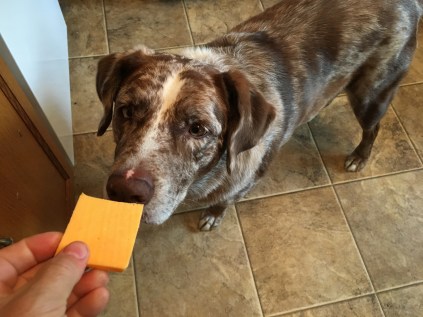
So I was visiting with a friend when she decided it was time to pill her dog.  This was something new for her and she had questions. “What should I put the pill in?” She’d used peanut butter once before when she gave her dog some medicine. I shrugged. That’s ok. Told her I use bread with my dogs. Bread is something I usually have on hand, it’s cheap, and makes disgusting balls to mold around things like pills. My dogs would crawl through fire for a crust of bread. She opened her fridge (maybe she was out of peanut butter?) and called back from within its depths : “what about cheese?” “Sure”, I said.  She extracted herself from the refrigerator, bringing two slices of cheese with her. Pre-sliced orange cheese. Gotcha. Least it wasn’t in a can (and yes, I ate cheese whiz from a can growing up. Still here). Then she selected one slice and began to wrap up the pill. Sure seemed to be taking a while. The dog was starting to drool and I was my usual impatient self so I reached across to just mush it up, for heaven’s sake, no need to be dainty. In my expert hands the cheese completely crumbled and fell away from the pill. I stared. “What kind of cheese IS this?” I asked suspiciously. She glanced over at me. “Tillamook.” Tillamook? I reeled. Tillamook is some serious cheese. What happened to American Kraft? Where was the CAN, man? This was uncharted territory. Done trying to make silly putty out of real cheese, I simply reached down, opened her dogs’ mouth and pushed the pill and cheese crumbles in, letting the dog lick the last crumbs off my palm.
Real cheese, what a crazy idea. Invalidated my entire childhood’s culinary experiences! 

I Am The Cheese Dog

‘This is brand name organic right Karen?’

Sigh. Isn’t that the darndest thing? But I actually do find myself giving all sorts of recommendations on how to deliver medication to a pet. For many of my clients it’s fairly simple : they have a time tested treat that they can hide medication within and especially with the larger breeds of dogs and any garbage hound, down the hatch it goes. Medicine is a treat. For little dogs and those with pushed in faces and cats and birds and turtles and coyotes it can be surprisingly difficult to actually deliver the medication to its intended patient. Think about it. The brachycephalic breeds of dogs (Pugs, Bostons, Bulldogs) have all the body parts of a regular dog, just compressed into about 20% of the space. There’s no extra room in their mouth and they choke and turn blue if you try to get anything past them. Little dogs suffer from Napoleon Complex – they bite you if you try to force something on them. They know the Alligator Roll, too.


Cats? Hoo-boy, cats. We carry one medication for cats stocked in four forms: a tiny tablet, a chewable “gourmed” form, as a liquid and finally as a topical “transdermal” preparation. Yikes. Cat owners in particular are warned not to “dry pill” their cat, meaning do NOT shove a pill down your cat’s throat and forget about it. The pill or capsule may stick partway down, lodging in the folds of the esophagus. Without food or liquid to carry it down to the stomach, the medication may adhere and cause serious inflammation.  Most people have experienced the feeling at least once and don’t wish to repeat it. That’s why we swallow our meds with a glass of water. Esophagitis can affect a cats ability to swallow and in extreme cases lead to strictures or scar tissue in the esophagus. I often recommend that people be prepared to follow a pill with a syringe of warm water. This also helps cleanse the mouth of any aftertaste, making the experience more palatable (very helpful if you must repeat the medication in a few hours!). Feeding canned food afterwards is also effective. Many owners purchase special treats, some with a pocket to house the medication, to pill their pets.  Since medication in some form is almost inevitable for most dogs and cats, keep that in mind during training. Stay ahead of the game. And just to keep the record straight, the only cheese I eat out of a can these days has the word “Nacho” emblazoned across it. 


Christine B. McFadden, DVM

drmc@mcmenagerie.com 

Little Old Ladies

She was a little old lady, short and round as a dumpling. She energetically grabbed her dog from the exam table and tipped him onto his paws. You’d never have guessed her age except for the grey hair. Her dog found his footing and waited expectantly by her feet. “I’ve got to go”, she declared, “I have to decorate the Hall for my sister’s 50th wedding anniversary.” Wow, I marveled, that’s something! A blaze of blue eyes flashed at me. “It’s a pain in the-you-know-what” she said. “My 50th was 2 years ago and every day I wake up and wonder if we’re going to make it.”  She gave me a saucy grin and danced out the door, her dog following her in adoration. I stared after them open-mouthed. Awesome woman.

People and pets share their lives with me. It’s a jumble and a jungle out there, and hanging on to these moments builds a life. On a long work day, I spend more awake time with fellow staff than I do with my family. 

When I’d first started out in town I struggled to put my textbook medical knowledge together with my patient’s needs. My focus was on the animals and I learned their names first. This fact appalled me the day I rounded a clothing carousel at a local store and came face to face with a client. The woman looked up, a smile starting and then fading as I blurted out “Beau!” – not her name at all, but her dogs. Good grief! I worked harder to learn BOTH their names in future but don’t test me on that one. Over the years my brain often refuses to let go of the first impression, the pet we bonded over who is now deceased, so that I continue to call the next dog, or worse, the third or fourth pet that follows, by the original dog’s name. My staff cringes at these mistakes, occasionally alarmed as they search for other signs of dementia. There’s Zoie’s Mom. Oh, she has another dog now. Mrs. R is 87 years old. Last year she took a trip to China with her daughter. Next year they’re thinking of Australia. Zoie was a 10 pound black miniature poodle who had epilepsy and the sweetest disposition you could ask for. Her new dog is 3 years old, but she will always be the “new” dog. When we get together we talk more about Zoie. The new dog is very healthy and we don’t have twelve years of medical battles fought and won to look back upon with her. 

And I have fond memories of the family matriarch, in her 90’s, who put out condensed milk for her cats every day. They were all terribly obese. She confided to me once that if they turned up their nose at a can of food she’d just open another flavor. Sometimes, she said, there would be as many as 7 cans lined up along her porch. I marveled at the ability of our pets to train us. She took in many neighborhood strays and it pleased her to spoil them. She laughed at my dietary advice. Condensed milk had seen her into her 90’s and I wasn’t going to convince her otherwise.  She gave me a chocolate colored blanket she’d hand crocheted. I have it yet.

old ladydog-walking-4426782.jpg

It was a little old lady who taught me about the bluing older woman used to take the grey out of their hair and make it lustrous white. True, sometimes it turned their hair a delicate blue. This invaluable knowledge helped me make white poodles whiter. 

I’ll be a little old lady someday. I’ll hoard cats and keep too large of a dog and goodness knows what other kinds of critters. I plan to wear purple with a red hat and act up just like those women in the Red Hat Society, because I love the poem by Jenny Joseph. And to all the older women who have shared their pets and their lives with me, thank you for enriching my days and just for being you.


Christine B. McFadden, DVM

drmc@mcmenagerie.com

Molly and the Spider Plant

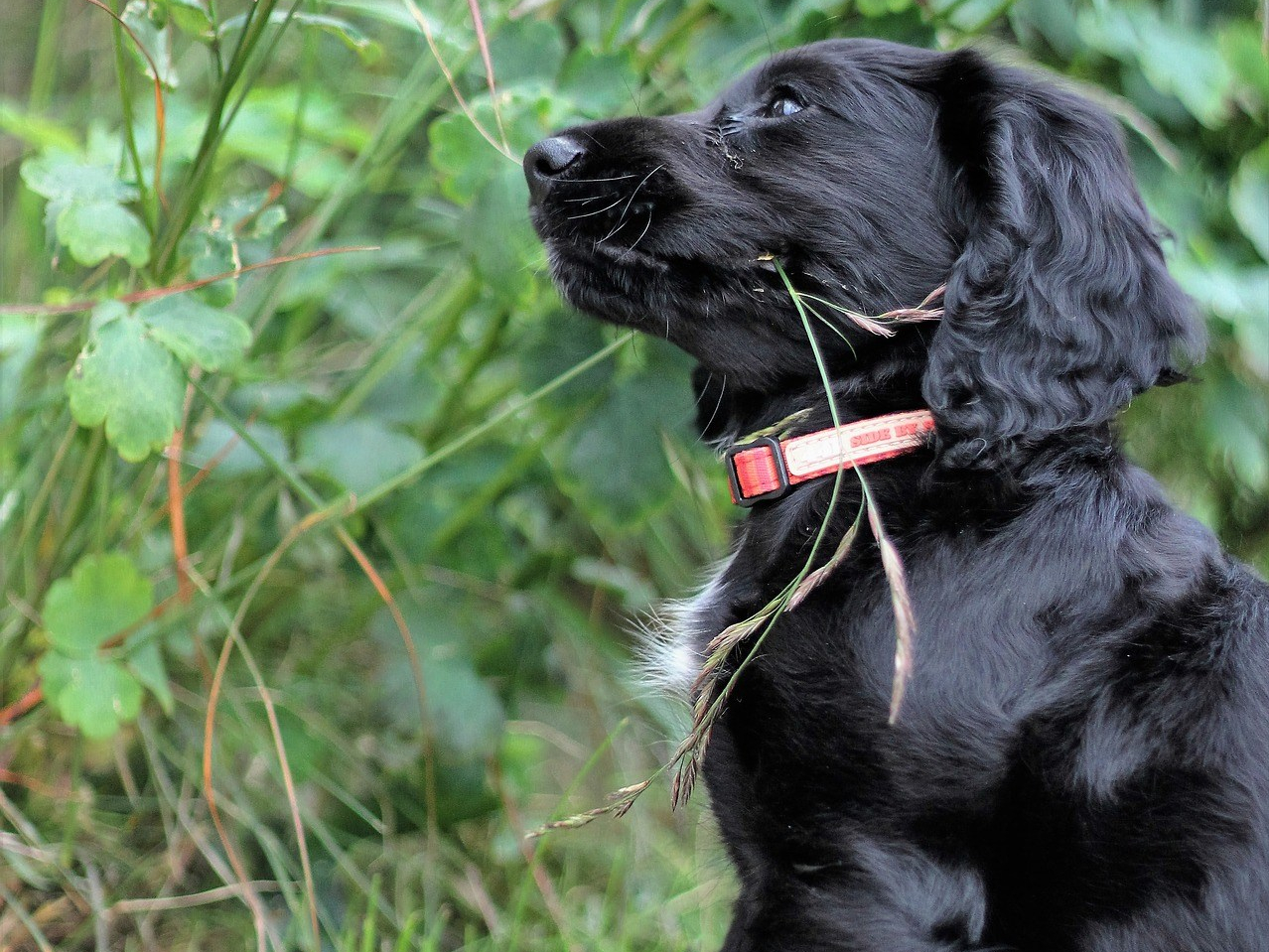
It was Molly who reminded me. Molly is an English Springer Spaniel. Her soft, silky black ears make it irresistible to gently pull them. Her owner was bewailing the fate of her garden, as young Molly had developed a fascination for a particular potted spider plant. She sought my advice.

MollyandtheSpiderPlant

My mind went drifting back to my third Irish Wolfhound, named Shredder. ( You can see photos of Shredder and I on my Facebook Page) If there can be karma in the name you give your dog then he was blessed with boatloads of karma. He lived up to his name. The glue on envelopes fascinated him, and given his size, no kitchen counter was safe for the deposition of mail. He took what he pleased and to this day I blame him for receiving a 5 day cut-off notice from the electricity people. He’s the only dog I’ve ever had who actually did eat the children’s homework. No one laughed. But the real pain in the neck was his attitude towards a tiny potted lemon tree I had started on the back patio. One morning, as I made my garden rounds, I noticed that the tree was a little crooked. Doubtless the dirt was settling, so I carefully righted it, tamping the soil down gently at the base. A few days later I noted it was tilted again. Puzzled, I again returned it to its proper position. As the days passed, I began to realize a pattern here, namely that the tree was being knocked sideways again and again. I was righting it on a daily basis! And then I caught him, Shredder, with a lemon leaf in his mouth, grinning happily, tail wagging. Such fun! Sigh.

So I moved the plant. Nope. Now, as a veterinarian, I had lots of training for behavioral problems. This was drummed into us students as very important, because poor animal behavior can lead straight to the Pound. I became annoyed. I staked the tree with a bamboo stake. Apparently this was not deemed fair play by the dog and next morning I found the tree completely sideways, a branch broken. I righted it. He knocked it sideways. Finally I took metal rebar, settled the tree more deeply in the pot, and firmly staked the trunk every few inches. Satisfied that I had prevailed, I went to bed.

The following morning the lemon tree was nowhere to be seen. When it was no longer fun, Shredder had simply removed the entire plant and shredded it. Who says dogs don’t have a sense of humor?

I did not share this story with Molly and her owner. I wanted them to have confidence in my advice. But when next I saw her, Molly had become truly devious. She not only enjoyed her spider plant but had branched out to include ALL the potted plants. I understood her owner’s angst. I wished I had a fabulous know-it-all answer. There are special Behaviorists in the field of veterinary medicine. They listen for hours to your problems and have reams of questionnaires to fill out. They have many inventive cures to modify and “cure” your dog of his or her behavioral problems. Most of them involve owner intensive time: “Take your dog for a 5 mile walk twice a day, he’ll be tired out and have less energy”(me, too); “Tell him no! sharply every time he goes near your plant, then distract him with a fun activity” (but I needed to run to the grocery store, I won’t be home to distract him); “Use the dimes or rocks-in-the–tin-can method” (but first, how do you really securely seal the thing and second, my aim REALLY is that poor – ouch!). Somehow, behaviorists always have the answers and most of it involves time that most of us don’t have – or the dog wouldn’t be doing it to begin with, right? Fence either your dog or your plants in (expensive! Not attractive!).

In the end, I wanted to tell her to dump the spider plants and try roses. It’s karma. You see, one of the meanings associated with the name “Molly” is “rebellion”. They should have looked it up first.

Christine B. McFadden, DVM

drmc@mcmenagerie.com

Connect with me on Facebook for shared photos and more!

Weight Loss Dreams

Myrtle had lost 8 pounds. I was most impressed. A middle-aged Australian Shepherd, she’d never had puppies, so couldn’t excuse her mid-life spread by pointing out her gorgeous offspring. Myrtle had been spayed young, which virtually guaranteed that she would not contract breast cancer in her lifetime (a 1-in-4 risk for older intact female dogs). This also meant she couldn’t drum up excuses about hormonal changes late in life. No, sadly, Myrtle would garner no awards for discovering the mystery behind unwanted weight gain : too many calories in, not enough burned off. In short, Myrtle over-ate and slept in. “Exercise” was not in her vocabulary.


When you realize that she had stuffed 73 pounds into a 50 pound body frame, you might begin to understand the concern. A young dog that is overweight can usually bear the extra pounds with grace. They are active, if perhaps less agile than a truly fit play mate. But look ahead : after years of joints and body parts groaning under those extra pounds, you will find this same pet to be suffering from arthritis at a much younger age than its counterparts. The overweight dog faces their senior years plagued with creaky knees and groaning hips. Yes, we have bunches of medications to come to their aid – an arsenal of anti-inflammatories, analgesics (an analgesic is a straight pain medication that is meant to mask the pain but does nothing to change the underlying condition, does not reduce inflammation, etc), dietary supplements, omega this and that – and they work. They do. But NO pill helps a suffering obese dog as much as taking that extra weight off. The weight loss can’t reverse the damage already done, but it will significantly reduce the everyday burden and muscle strain required to move the body.


As a group veterinarians are seeing obesity with increasing frequency in pets of all kinds. Diabetes mellitus (sugar diabetes) is on the rise, as are heart disease, exercise intolerance and heat stroke.


We feed our dogs too much, too often. I would like to think that the man who assured me he fed his dog only doughnuts was kidding. I understand the desire to share food with those we love. At our veterinary clinic we stock a low cal treat in each exam room. They gum up like rice cakes and average about 3 calories each. No, I don’t suppose anyone would chose it over bacon, but my patients on the whole accept them. The Disney stickers we used to hand out were a little dry going down. We serve treats because we hope our patients have a pleasant experience. We understand what you’re going through.


When meeting a pet who desperately needs to lose weight, I try to review the actual diet as fed at home. There have been some surprises over the years. Dental chews help keep teeth healthy. Bonus! Because most people do not brush their dog’s teeth. But we found some of those chews had up to 50 calories each – which for a tiny dog leading a “lapdog” life could account for 1/5th of their total recommended daily caloric intake! Dog food companies have been slow to publish the calorie count of many of their foods. If found, it will read as “Kcal” or kilocalorie, which is the same as “calorie” in everyday life.


So-called “lite” or healthy-weight or weight-management diets can have widely varying calorie counts. Get that information, calories (Kcal) per cup, before choosing which food is best for your pet. Extra fiber will fill up the stomach, helping your dog feel satisfied with smaller meals. Your veterinarian is always there to help. Blood tests can be checked to rule out underlying health issues, and we offer assistance with prescription weight loss foods and plans that really work – if followed.


We strive for balance. As long as we count the gummy bear and the cocktail peanuts, we can help you make the life plan work. Because at the end of the day, the real reward is talking to Myrtle’s owner and hearing her say in wonder : “It’s as if she’s 2 years younger. I’m getting my dog back.”


Christine B. McFadden, DVM

drmc@mcmenagerie.com

Walking Your Dog

Walking the dog is good exercise, good for the dog, good for the family. Done properly, you take in some sunshine and fresh air. You have time to admire the blossoming trees and critique your neighbor’s landscape. Wait a minute, there’s a “proper” way to walk your dog? Hmmmm…


Young puppies need exercise to build strong bones and muscle. Psychologically their mind will be more focused if their body is relaxed after a good run. Good manners and obedience training is then maximized. The average dog needs 30 to 60 minutes of hard exercise every day – not just a leashed walk around the block. Some breeds, like hunting breeds bred to run for hours, may need more exercise than a breed bred to be a lap dog. Different personalities require more exercise to tire. Know your pet.


Because of the high prevalence of canine Parvovirus infection locally, all puppies should have received three or four vaccinations for this and Distemper by four months of age before hitting the streets of Merced.

walking dog.jpg

Dogs that do not receive adequate exercise are often bored and that pent-up energy can turn into destructive habits: tearing up furniture and household items, digging up the back yard, constant barking. Yech! No wonder you see those ads for free dog, needs big back yard.


As your dog grows older his or her exercise needs change, especially if your pet has any health issues. Arthritis is as common in older dogs as in older people, and regular exercise is even more important to keep them moving. You can fall into a vicious cycle : it hurts to walk, so you let your dog stay home and sleep. His muscle tone deteriorates further and can’t carry the weight of his own limbs. Muscle atrophy occurs, and now your dog walks bone-on-bone. This is where regularly scheduled daily exercise helps to keep that muscle tone built up and will improve your dog’s mobility. This is also a good time to consider working with your veterinarian to consider arthritis medication options, customized to your dog’s kidney and liver function. Your vet will review with you dietary options, over the counter supplements and anti-inflammatory and analgesic (pain) medications. Working together we can optimize your dog’s athleticism and enjoyment of life well past what used to be achieved.


Explore the lovely foot paths along Bear Creek and Black Rascal Creek. Merced neighborhoods enjoy our climate by showcasing flowers throughout most of the year. Clean up after your pet’s waste, don’t let your dog soil someone’s yard. There are many handy gadgets available today to make the minor chore quick and easy.


Please review the weather before setting out. The Valley rarely suffers severely cold days but there’s no denying that our summer weather includes many scorching days over 100 degrees. Feel the asphalt with your palm. Even after the sun has gone to bed, you may find the road too hot for doggie feet. They aren’t walking on rubber-soled athletic shoes that insulate their feet from the baking asphalt! Early mornings are most cool for pet and people if you can motivate yourself to get out there and enjoy our sunrise.

I feel I must add a word of caution to all would-be dog walkers and perhaps especially to parents of young children who wish to take the dog for a walk. Dogs attract other dogs. Your pet may be walking obediently on a leash, minding its own business and another dog or dogs may come from nowhere. These loose dogs may attack your dog. If you try to intervene they may leave your dog to attack you. Some of my clients walk their dog and carry a stout walking stick for possible defense. Some carry pepper spray but I have heard that it is often ineffective on dogs, not to mention you must be close enough to aim for the eyes. An inventive scheme is to carry an umbrella, and if a stray approaches rapidly open and close the umbrella to fend off an attack. Loud noises, such as produced by an air horn, could also frighten away a dog. Always stand your ground and face an approaching dog, saying “NO” in a loud, commanding voice. Hold your hand out firmly in the universal gesture for “Stop!” Do NOT scream and jump around as you have now become prey. Should your dog actually be attacked do NOT use your hands and arms to try to pry them apart – every year I have a client or two sent to the hospital when the attacking dog turns upon them (or their own dog bites them, frenzied as it tries to protect itself). Only a stick, a broom, a chair, some kind of physical object can be used to wedge the dogs apart. Know your neighborhood. Do not walk your dog near homes with chronically loose pets or dogs that bark viciously along the fence line and might jump over.


Taking a walk has benefits that far outweigh the risks. Get out and enjoy our spring!


Christine B. McFadden, DVM

drmc@mcmenagerie.com