Coronavirus and your pet — what you need to know

For many of us, our everyday lives have changed dramatically, suddenly, as the coronavirus pandemic has swept the world, crossing continents, invading communities large and small.

Although there are hundreds of existing coronaviruses in humans and animals, this brand-new “novel” coronavirus has never been seen before and has proven to be highly contagious among humans.

It is only natural that people question if their dogs and cats are also at risk. Diseases spread from animals to people are called “zoonotic.”

At this time there are no confirmed reports of pets becoming sick with COVID-19 in the United States. There is no information that suggests dogs or cats might be a source of infection to people.

What can you, as a pet owner, do in the face of a potential crisis in your own home? What if you, the owner, tests positive? Worse, what if you become severely ill?

SUGGESTIONS TO PREPARE YOUR HOUSE AND PETS

In case you might need to be home-quarantined, please keep at least two weeks of pet food and your pets’ medication(s) on hand at home.

Veterinarians are essential workers and most clinics are open to help you. Call your veterinarian if you need advance medication.

Should you test positive, have arrangements in place to limit your contact with your pet(s) just as you would limit contact with other family members. It is recommended that you not pet, kiss, hug, or share food with your pet during your quarantine period.

If you have a service animal (please refer to CDC guidelines for definition of service animals) or you, yourself, must care for your pets, please wear a cloth face covering and try to minimize contact, washing your hands well before and after pet contact.

You should not share any dishes, drinking glasses, towels, clothing or bedding with your pets during this time.

The coronavirus is primarily spread from an infected person’s bodily fluids, like saliva or mucous when they cough or sneeze.

Secondary transmission is possible if you touch a countertop or surface that is moist with infected sneeze or cough droplets. A smooth, nonporous surface like a countertop transmits better than a porous and fibrous surface like pet fur.

Again, at this time, per the CDC, there is no evidence that companion animal pets can spread the coronavirus to people. Pets are an important part of our lives and give joy and comfort, especially during a time of home isolation.

There is no reason, at the moment, to remove pets from a coronavirus positive house unless the owner becomes too sick to care for the pet and no other family member is available.

Should the owner be unable to care for a pet, and has no family to take it in, then the community will need to step in to help. Contact your veterinarian, a local Humane Animal group or your local Animal Shelter for service under these extreme circumstances.

CAN PETS TEST POSITIVE FOR CORONAVIRUS?

Despite the global cases of 2.1 million people being infected with the coronavirus as of April 17, at this time the AVMA is only aware of four animals worldwide testing positive : two dogs and one cat in Hong Kong, and a tiger in New York.

We do know in the case of the two dogs and housecat in Hong Kong, the pets lived in very close contact with a positive ill owner.

New York City’s Bronx Zoo had a Malayan tiger present with a cough and tested positive for the virus. A total of seven big cats in the collection had mild coughs. All recovered. They were not each tested because that required anesthetizing each animal, wherein the risks outweighed the benefits.

In this case the tigers’ caretaker was discovered to be asymptomatically positive and was shedding the virus. No other big cat in the collection was affected.

This has been an isolated incident, and it’s still under investigation.

Keep in mind, the domestic house cat is not a mini-tiger.

All of the house pets were asymptomatic. At this time, there is no evidence that house pets can spread the coronavirus to people and no pets or livestock have become ill with COVID-19 in the U.S. .

Please take appropriate steps to ensure your pets are safe and cared for during this time.

In the meantime, you can stay up to date on the coronavirus by following the American Veterinary Medical Association news online or reviewing the information on-site from the Centers for Disease Control and Prevention.

with a long distance, virtual hug,
Dr. Mc

Christine McFadden holds a license to practice veterinary medicine and surgery. She has cared for the family pets of Merced at Valley Animal Hospital for more than 30 years.
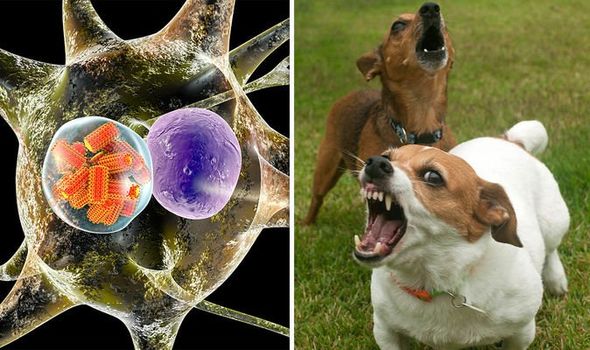
Rabies didn’t die with Old Yeller — and the disease is endemic to Merced

I’m going to talk about something scary today.

Not an alien life form but a very real live virus called rabies. Rabies didn’t die out with Old Yeller — it is still very much with us, and definitely present in the wildlife of Merced County.

They map where the rabid animals were discovered, watching for “hot spots” of possible contagion in the wildlife. Positive rabid bats and skunks have been identified, often after a dog or cat has carried it into the house or killed it.

In fact, Merced is considered an endemic area for the disease. We have positive cases every year. In the 30 plus years I have lived and worked here, I have watched both the Public Health Department and Animal Control cooperate to monitor rabies-positive cases turned in to the county.

But what about the animals that just quietly die in the wild, that may be carriers of the disease? This, of course, is how it is spread.

Rabies virus enters the body through a direct bite or contact with the mucous membranes like the eyes, mouth and nose. Once there, it slowly spreads into the nervous system, eventually reaching the brain.

There is no cure for the disease at this point. In fact, only because the virus multiplies and spreads so slowly is it possible for post-exposure immunization to work and save human lives.

Rabies is diagnosed after the brain of the suspect animal has been inspected. There is no way to diagnose the disease in a living patient.

HIGH NUMBER OF CASES

California is considered to have a high incidence of cases — over 400 cases in wildlife reported annually. Skunks and bats are the most frequent wildlife involved, but other carnivores like raccoons, foxes, coyotes and bobcats are often positive.

Each year one or two cases of human rabies is reported in the United States. Since 2002, 21 of 24 reported human rabies cases in the US were linked to bats, per the Center for Disease Control (CDC).

On July 24, 2013 a young girl was bitten by a rabid bat at the Oakland Zoo — it was not an exhibit animal, just local wildlife. She received post-exposure immunization and is fine.

Easter in Bakersfield, California of 2012 was grim for the family whose pet cat bit their child, after it contracted rabies from area bats.

In June 2011, an 8 year old girl from Willow Creek, California actually survived the disease after intensive treatment at UC Davis’s Childrens Hospital. She is only the third person in the U.S. to survive rabies without receiving the post-bite immunizations.

Most people die or become seriously disabled. In countries where vaccination vigilance is not as high as the United States, rabies is a serious threat : 60,000 people die from this entirely preventable disease every year.

Three “islands” are isolated enough to have no rabies : Hawaii, England and Australia. Traveling with pets to these places is a complicated process as they strive to remain rabies free, protecting people and their indigenous or native wildlife from sure death.

VACCINATION IS KEY TO PREVENTION

Because wildlife cannot be vaccinated against Rabies, your first line of defense is to vaccinate your pets — the carnivores at highest risk of coming in contact with wildlife.

All dogs and cats should be vaccinated against rabies. And you should never approach wildlife, especially when they seem sick.

If your dog or cat is bitten by a bat or suspect carnivore that isn’t available for brain examination it is presumed exposed to a rabid animal. If the bat or skunk is confirmed positive and rabid and the dog or cat is not current with rabies vaccination protection it may be recommended that it be immediately destroyed.

If the pet is current on vaccination, by law it will still be isolated for anywhere from 10 days to 6 months, depending on the individual circumstances of the case.

If a human is bitten, whether it be a pet or a stray dog or cat, or any wildlife, it should immediately be reported to a physician.

If the animal is available, it will be quarantined or its’ brain will be examined to check for rabies. The type of bite, animal involved, vaccination history and other factors will determine the recommendations made by your physician and public health authorities.

This is where your money for those darned rabies licenses go. This is what it’s all about.

The message : Vaccinate your pets against rabies. It’s the law — and it’s a good one!

Christine McFadden holds a license to practice veterinary medicine and surgery. She has cared for the family pets of Merced at Valley Animal Hospital for more than 30 years. Send questions or comments to drmc@mcmenagerie.com

Doggie Dental hygiene

February is National Dental Month in the veterinary world.

Are we pushing for whiteners and brighteners, hoping to put a Hollywood-worthy smile on every doggie face? Nope, the hype is really about health.

It’s pretty amazing we don’t see more problems within our pets’ mouths. People brush two minutes at least twice a day, then there’s flossing and mouth wash.

Yet, people still get cavities that lead to fillings and abscesses that lead to root canals, crowns and crooked teeth that require braces.

Dogs can’t do any of that on their own. Still, for some reason we’re surprised when their teeth rot and their mouth is full of mossy brown teeth. “Doggie breath” is not a cute, endearing term. The funk of some dog’s breath will make you want to vomit.

Now, imagine your pet having live with that.

Not surprisingly, brushing your pets’ teeth daily is the gold standard of dental care for veterinary patients. What does come as a surprise is that even the most devoted client is frustrated and gives up after one or two attempts.

It takes years to get small children to brush their teeth — why are your expectations so high when it comes to your pet?

This is what I recommend to owners pursuing happiness in the pet dental field (directed to dog owners. Cats are, indeed, a different animal).

STEPS FOR TOOTH BRUSHING

Begin by choosing a toothpaste meant for dogs. Meat flavored, not mint. Something the dog likes. Do not expect the toothpaste to have suds and foam like yours. That is a product of detergents, which if swallowed by the dog could upset a sensitive stomach. Some may contain fluoride, a natural bacteriostatic ingredient.

Step One : Place a smidgeon of toothpaste on your finger and call your dog to you, with a happy phrase like “Tooth time!” Gently hold the dog’s head, rub the toothpaste quickly on the dogs front teeth, praise your dog and let it go.

The next day, preferably about the same time, repeat.

After a few days, your dog will probably be telling you that it’s “tooth time.”

Step Two : Once your dog is bouncing up for that daily tooth treat, extend the time by rubbing the toothpaste over the teeth and gums. Go as long as your pet stands still. Once your dog squirms, praise and release. Work your way up gradually until you are finger brushing the entire mouth. Small additional amounts of toothpaste may be used. This is not a meal!

Step Three: It may have taken weeks or even months to get to this point, but once your dog has accepted finger brushing, you return to square one. Get an infant toothbrush, one that is soft and small or large enough to fit your dog’s mouth comfortably. Place a small amount of toothpaste on the toothbrush and gently wipe it on the front teeth. Praise and release your pet. Gradually extend the brushing time until you are able to fully brush all the teeth in your pet’s mouth.

The end goal is not how fast you can teach your dog, but how thoroughly you accomplish the task.

It really doesn’t matter if it takes a couple of months to enjoy a successful Tooth Time together. It is a job well done and can make all the difference in the world to your dog’s oral health. Rotten teeth are painful.

Throughout the years I have had clients tell me their pet act years younger once they’ve undergone dental work, with healthy teeth cleaned and infected teeth removed.

And if you still aren’t feeling motivated, I hear there is a song about brushing your teeth set to the tune of “Jingle Bells”.

I’ll bet watching you sing that to your dog would put a smile on their doggie face.

(You can post those sing a long videos of you and your pet on my Facebook page!)

Christine McFadden holds a license to practice veterinary medicine and surgery. She has cared for the family pets of Merced at Valley Animal Hospital for more than 30 years. Send questions or comments to drmc@mcmenagerie.com

Weight Loss Dreams

Myrtle had lost 8 pounds. I was most impressed. A middle-aged Australian Shepherd, she’d never had puppies, so couldn’t excuse her mid-life spread by pointing out her gorgeous offspring. Myrtle had been spayed young, which virtually guaranteed that she would not contract breast cancer in her lifetime (a 1-in-4 risk for older intact female dogs). This also meant she couldn’t drum up excuses about hormonal changes late in life. No, sadly, Myrtle would garner no awards for discovering the mystery behind unwanted weight gain : too many calories in, not enough burned off. In short, Myrtle over-ate and slept in. “Exercise” was not in her vocabulary.


When you realize that she had stuffed 73 pounds into a 50 pound body frame, you might begin to understand the concern. A young dog that is overweight can usually bear the extra pounds with grace. They are active, if perhaps less agile than a truly fit play mate. But look ahead : after years of joints and body parts groaning under those extra pounds, you will find this same pet to be suffering from arthritis at a much younger age than its counterparts. The overweight dog faces their senior years plagued with creaky knees and groaning hips. Yes, we have bunches of medications to come to their aid – an arsenal of anti-inflammatories, analgesics (an analgesic is a straight pain medication that is meant to mask the pain but does nothing to change the underlying condition, does not reduce inflammation, etc), dietary supplements, omega this and that – and they work. They do. But NO pill helps a suffering obese dog as much as taking that extra weight off. The weight loss can’t reverse the damage already done, but it will significantly reduce the everyday burden and muscle strain required to move the body.


As a group veterinarians are seeing obesity with increasing frequency in pets of all kinds. Diabetes mellitus (sugar diabetes) is on the rise, as are heart disease, exercise intolerance and heat stroke.


We feed our dogs too much, too often. I would like to think that the man who assured me he fed his dog only doughnuts was kidding. I understand the desire to share food with those we love. At our veterinary clinic we stock a low cal treat in each exam room. They gum up like rice cakes and average about 3 calories each. No, I don’t suppose anyone would chose it over bacon, but my patients on the whole accept them. The Disney stickers we used to hand out were a little dry going down. We serve treats because we hope our patients have a pleasant experience. We understand what you’re going through.


When meeting a pet who desperately needs to lose weight, I try to review the actual diet as fed at home. There have been some surprises over the years. Dental chews help keep teeth healthy. Bonus! Because most people do not brush their dog’s teeth. But we found some of those chews had up to 50 calories each – which for a tiny dog leading a “lapdog” life could account for 1/5th of their total recommended daily caloric intake! Dog food companies have been slow to publish the calorie count of many of their foods. If found, it will read as “Kcal” or kilocalorie, which is the same as “calorie” in everyday life.


So-called “lite” or healthy-weight or weight-management diets can have widely varying calorie counts. Get that information, calories (Kcal) per cup, before choosing which food is best for your pet. Extra fiber will fill up the stomach, helping your dog feel satisfied with smaller meals. Your veterinarian is always there to help. Blood tests can be checked to rule out underlying health issues, and we offer assistance with prescription weight loss foods and plans that really work – if followed.


We strive for balance. As long as we count the gummy bear and the cocktail peanuts, we can help you make the life plan work. Because at the end of the day, the real reward is talking to Myrtle’s owner and hearing her say in wonder : “It’s as if she’s 2 years younger. I’m getting my dog back.”


Christine B. McFadden, DVM

drmc@mcmenagerie.com

World Rabies Day


Several years ago I wrote an article on Rabies (Merced Sun Star, June 2014), a viral disease carried from animal to animal and sometimes from animal to human. For both animals and humans the disease is considered a death sentence.  I recently came upon a series of articles in a veterinary journal and was sad to learn that the disease is still a serious threat in much of the world and that approximately 60,000 people die from this disease every year. Still.


Why do I take up the story again? Because it deserves to be heard and, most importantly, it is still a threat to you and your loved ones. A very real threat if you enjoy traveling to out-of-the-way places.

Rabies-outbreak-map-rabies-symptoms-rabies-dog-bite-1125644

Rabies is a slow-moving viral disease. It can affect any mammal, but is usually spread from one carnivore to another as the virus is passed in saliva by bites through the skin. Infection after contact with infected saliva on an open wound is a possible, though unlikely, mode of transmission. Once a new victim has been bitten, the virus slowly makes its way into the nerves and through the nervous system to the brain. This can take two weeks to 2 months or longer. By the time the rabies virus is present in the saliva, death is near. It is for this reason that when an unknown dog bites a person the dog will be quarantined for 2 weeks.  Two weeks is long enough to monitor the dog : If rabid, the animal will die. The dog’s brain can then be tested for rabies virus and the bitten person still has ample time to receive the anti-rabies protective vaccine.


Rabies has been found in the wildlife in and around Merced County. It is endemic in area bats, raccoons, skunks and foxes. You, the pet owner, have set up a terrific protective line of defense by the simple stratagem of vaccinating your pet dogs and cats. It is believed that by vaccinating 80% of a populations’ pets an effective barrier is created to protect people against exposure to the disease. In the United States more rabid cats have been reported to the CDC (Center for Disease Control) than dogs for several years. Vaccinate your cats! Vaccinate all dogs and cats older than 3 months of age. Keep them up-to-date.


There are a few island communities which have managed to keep rabies out or eradicate its presence : Hawaii, Great Britain, and Japan are three. You cannot easily take a dog or cat into those Islands. I applaud their high security. The regions most likely to have rabid animals that endanger humans are underdeveloped countries in Asia and Africa.


For the traveler to a foreign country, be aware that the dogs roaming the streets may be high risk for encountering rabies. The unsuspecting traveler may admire a puppy, letting it lick their hands. Food you carry could attract attention from a roving dog. Many of these countries have inadequate medical services for diagnosing rabies or offering post-exposure prophylaxis (prevention/ PEP) services.  Rabies prevention is not universally available. The more exotic your outpost, the higher the risk of encountering rabies. Of the 60,000 people who die every year, nearly every single case (99%) of human death started with a bite from an infected dog.


Whether at home or traveling, camping for a weekend or following your dreams of adventure exploring a foreign land, please take precautions. Enjoy wildlife, but don’t treat or keep wildlife as pets. They cannot be vaccinated against rabies and may have variable incubation times for rabies. Avoid attracting wild life to your home or campsite. Do not feed wildlife. Do not feed your pets outdoors, as this attracts wild life and strays.  Avoid animals acting unnaturally. Animal-proof your trash. Avoid stray dogs and cats. Stray animals may not be vaccinated and they run high risk of exposure and contact with wild animals that might harbor rabies. The message, Backpackers : stay away from unknown dogs and wild life. The life you save might be your own!


World Rabies Day is Thursday, September 28th this year. This day is sponsored by an alliance among the World Health Organization and many other organizations working towards the goal of eradicating Rabies deaths in people and animals by the year 2030. They are joined by the One Health Initiative, a group dedicated to promoting increased communication and joint action between physicians and veterinarians globally through the integration of human medicine, veterinary medicine and environmental science. Rabies is cited as a classic example of what “One Health” is all about, as the control of rabies in animals has reduced the death toll in people from that disease. Together, we CAN make a difference.


Christine B. McFadden, DVM

drmc@mcmenagerie.com

Photo Credit : https://www.express.co.uk

Walking Your Dog

Walking the dog is good exercise, good for the dog, good for the family. Done properly, you take in some sunshine and fresh air. You have time to admire the blossoming trees and critique your neighbor’s landscape. Wait a minute, there’s a “proper” way to walk your dog? Hmmmm…


Young puppies need exercise to build strong bones and muscle. Psychologically their mind will be more focused if their body is relaxed after a good run. Good manners and obedience training is then maximized. The average dog needs 30 to 60 minutes of hard exercise every day – not just a leashed walk around the block. Some breeds, like hunting breeds bred to run for hours, may need more exercise than a breed bred to be a lap dog. Different personalities require more exercise to tire. Know your pet.


Because of the high prevalence of canine Parvovirus infection locally, all puppies should have received three or four vaccinations for this and Distemper by four months of age before hitting the streets of Merced.

walking dog.jpg

Dogs that do not receive adequate exercise are often bored and that pent-up energy can turn into destructive habits: tearing up furniture and household items, digging up the back yard, constant barking. Yech! No wonder you see those ads for free dog, needs big back yard.


As your dog grows older his or her exercise needs change, especially if your pet has any health issues. Arthritis is as common in older dogs as in older people, and regular exercise is even more important to keep them moving. You can fall into a vicious cycle : it hurts to walk, so you let your dog stay home and sleep. His muscle tone deteriorates further and can’t carry the weight of his own limbs. Muscle atrophy occurs, and now your dog walks bone-on-bone. This is where regularly scheduled daily exercise helps to keep that muscle tone built up and will improve your dog’s mobility. This is also a good time to consider working with your veterinarian to consider arthritis medication options, customized to your dog’s kidney and liver function. Your vet will review with you dietary options, over the counter supplements and anti-inflammatory and analgesic (pain) medications. Working together we can optimize your dog’s athleticism and enjoyment of life well past what used to be achieved.


Explore the lovely foot paths along Bear Creek and Black Rascal Creek. Merced neighborhoods enjoy our climate by showcasing flowers throughout most of the year. Clean up after your pet’s waste, don’t let your dog soil someone’s yard. There are many handy gadgets available today to make the minor chore quick and easy.


Please review the weather before setting out. The Valley rarely suffers severely cold days but there’s no denying that our summer weather includes many scorching days over 100 degrees. Feel the asphalt with your palm. Even after the sun has gone to bed, you may find the road too hot for doggie feet. They aren’t walking on rubber-soled athletic shoes that insulate their feet from the baking asphalt! Early mornings are most cool for pet and people if you can motivate yourself to get out there and enjoy our sunrise.

I feel I must add a word of caution to all would-be dog walkers and perhaps especially to parents of young children who wish to take the dog for a walk. Dogs attract other dogs. Your pet may be walking obediently on a leash, minding its own business and another dog or dogs may come from nowhere. These loose dogs may attack your dog. If you try to intervene they may leave your dog to attack you. Some of my clients walk their dog and carry a stout walking stick for possible defense. Some carry pepper spray but I have heard that it is often ineffective on dogs, not to mention you must be close enough to aim for the eyes. An inventive scheme is to carry an umbrella, and if a stray approaches rapidly open and close the umbrella to fend off an attack. Loud noises, such as produced by an air horn, could also frighten away a dog. Always stand your ground and face an approaching dog, saying “NO” in a loud, commanding voice. Hold your hand out firmly in the universal gesture for “Stop!” Do NOT scream and jump around as you have now become prey. Should your dog actually be attacked do NOT use your hands and arms to try to pry them apart – every year I have a client or two sent to the hospital when the attacking dog turns upon them (or their own dog bites them, frenzied as it tries to protect itself). Only a stick, a broom, a chair, some kind of physical object can be used to wedge the dogs apart. Know your neighborhood. Do not walk your dog near homes with chronically loose pets or dogs that bark viciously along the fence line and might jump over.


Taking a walk has benefits that far outweigh the risks. Get out and enjoy our spring!


Christine B. McFadden, DVM

drmc@mcmenagerie.com