Coronavirus and your pet — what you need to know

For many of us, our everyday lives have changed dramatically, suddenly, as the coronavirus pandemic has swept the world, crossing continents, invading communities large and small.

Although there are hundreds of existing coronaviruses in humans and animals, this brand-new “novel” coronavirus has never been seen before and has proven to be highly contagious among humans.

It is only natural that people question if their dogs and cats are also at risk. Diseases spread from animals to people are called “zoonotic.”

At this time there are no confirmed reports of pets becoming sick with COVID-19 in the United States. There is no information that suggests dogs or cats might be a source of infection to people.

What can you, as a pet owner, do in the face of a potential crisis in your own home? What if you, the owner, tests positive? Worse, what if you become severely ill?

SUGGESTIONS TO PREPARE YOUR HOUSE AND PETS

In case you might need to be home-quarantined, please keep at least two weeks of pet food and your pets’ medication(s) on hand at home.

Veterinarians are essential workers and most clinics are open to help you. Call your veterinarian if you need advance medication.

Should you test positive, have arrangements in place to limit your contact with your pet(s) just as you would limit contact with other family members. It is recommended that you not pet, kiss, hug, or share food with your pet during your quarantine period.

If you have a service animal (please refer to CDC guidelines for definition of service animals) or you, yourself, must care for your pets, please wear a cloth face covering and try to minimize contact, washing your hands well before and after pet contact.

You should not share any dishes, drinking glasses, towels, clothing or bedding with your pets during this time.

The coronavirus is primarily spread from an infected person’s bodily fluids, like saliva or mucous when they cough or sneeze.

Secondary transmission is possible if you touch a countertop or surface that is moist with infected sneeze or cough droplets. A smooth, nonporous surface like a countertop transmits better than a porous and fibrous surface like pet fur.

Again, at this time, per the CDC, there is no evidence that companion animal pets can spread the coronavirus to people. Pets are an important part of our lives and give joy and comfort, especially during a time of home isolation.

There is no reason, at the moment, to remove pets from a coronavirus positive house unless the owner becomes too sick to care for the pet and no other family member is available.

Should the owner be unable to care for a pet, and has no family to take it in, then the community will need to step in to help. Contact your veterinarian, a local Humane Animal group or your local Animal Shelter for service under these extreme circumstances.

CAN PETS TEST POSITIVE FOR CORONAVIRUS?

Despite the global cases of 2.1 million people being infected with the coronavirus as of April 17, at this time the AVMA is only aware of four animals worldwide testing positive : two dogs and one cat in Hong Kong, and a tiger in New York.

We do know in the case of the two dogs and housecat in Hong Kong, the pets lived in very close contact with a positive ill owner.

New York City’s Bronx Zoo had a Malayan tiger present with a cough and tested positive for the virus. A total of seven big cats in the collection had mild coughs. All recovered. They were not each tested because that required anesthetizing each animal, wherein the risks outweighed the benefits.

In this case the tigers’ caretaker was discovered to be asymptomatically positive and was shedding the virus. No other big cat in the collection was affected.

This has been an isolated incident, and it’s still under investigation.

Keep in mind, the domestic house cat is not a mini-tiger.

All of the house pets were asymptomatic. At this time, there is no evidence that house pets can spread the coronavirus to people and no pets or livestock have become ill with COVID-19 in the U.S. .

Please take appropriate steps to ensure your pets are safe and cared for during this time.

In the meantime, you can stay up to date on the coronavirus by following the American Veterinary Medical Association news online or reviewing the information on-site from the Centers for Disease Control and Prevention.

with a long distance, virtual hug,
Dr. Mc

Christine McFadden holds a license to practice veterinary medicine and surgery. She has cared for the family pets of Merced at Valley Animal Hospital for more than 30 years.
Cheese Whiz

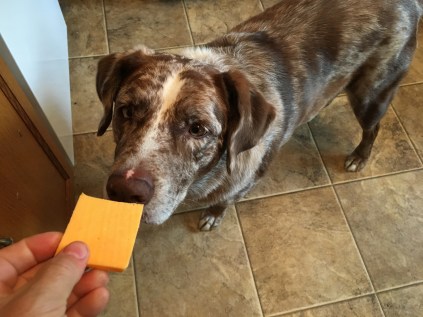
So I was visiting with a friend when she decided it was time to pill her dog.  This was something new for her and she had questions. “What should I put the pill in?” She’d used peanut butter once before when she gave her dog some medicine. I shrugged. That’s ok. Told her I use bread with my dogs. Bread is something I usually have on hand, it’s cheap, and makes disgusting balls to mold around things like pills. My dogs would crawl through fire for a crust of bread. She opened her fridge (maybe she was out of peanut butter?) and called back from within its depths : “what about cheese?” “Sure”, I said.  She extracted herself from the refrigerator, bringing two slices of cheese with her. Pre-sliced orange cheese. Gotcha. Least it wasn’t in a can (and yes, I ate cheese whiz from a can growing up. Still here). Then she selected one slice and began to wrap up the pill. Sure seemed to be taking a while. The dog was starting to drool and I was my usual impatient self so I reached across to just mush it up, for heaven’s sake, no need to be dainty. In my expert hands the cheese completely crumbled and fell away from the pill. I stared. “What kind of cheese IS this?” I asked suspiciously. She glanced over at me. “Tillamook.” Tillamook? I reeled. Tillamook is some serious cheese. What happened to American Kraft? Where was the CAN, man? This was uncharted territory. Done trying to make silly putty out of real cheese, I simply reached down, opened her dogs’ mouth and pushed the pill and cheese crumbles in, letting the dog lick the last crumbs off my palm.
Real cheese, what a crazy idea. Invalidated my entire childhood’s culinary experiences! 

I Am The Cheese Dog

‘This is brand name organic right Karen?’

Sigh. Isn’t that the darndest thing? But I actually do find myself giving all sorts of recommendations on how to deliver medication to a pet. For many of my clients it’s fairly simple : they have a time tested treat that they can hide medication within and especially with the larger breeds of dogs and any garbage hound, down the hatch it goes. Medicine is a treat. For little dogs and those with pushed in faces and cats and birds and turtles and coyotes it can be surprisingly difficult to actually deliver the medication to its intended patient. Think about it. The brachycephalic breeds of dogs (Pugs, Bostons, Bulldogs) have all the body parts of a regular dog, just compressed into about 20% of the space. There’s no extra room in their mouth and they choke and turn blue if you try to get anything past them. Little dogs suffer from Napoleon Complex – they bite you if you try to force something on them. They know the Alligator Roll, too.


Cats? Hoo-boy, cats. We carry one medication for cats stocked in four forms: a tiny tablet, a chewable “gourmed” form, as a liquid and finally as a topical “transdermal” preparation. Yikes. Cat owners in particular are warned not to “dry pill” their cat, meaning do NOT shove a pill down your cat’s throat and forget about it. The pill or capsule may stick partway down, lodging in the folds of the esophagus. Without food or liquid to carry it down to the stomach, the medication may adhere and cause serious inflammation.  Most people have experienced the feeling at least once and don’t wish to repeat it. That’s why we swallow our meds with a glass of water. Esophagitis can affect a cats ability to swallow and in extreme cases lead to strictures or scar tissue in the esophagus. I often recommend that people be prepared to follow a pill with a syringe of warm water. This also helps cleanse the mouth of any aftertaste, making the experience more palatable (very helpful if you must repeat the medication in a few hours!). Feeding canned food afterwards is also effective. Many owners purchase special treats, some with a pocket to house the medication, to pill their pets.  Since medication in some form is almost inevitable for most dogs and cats, keep that in mind during training. Stay ahead of the game. And just to keep the record straight, the only cheese I eat out of a can these days has the word “Nacho” emblazoned across it. 


Christine B. McFadden, DVM

drmc@mcmenagerie.com 

Weight Loss Dreams

Myrtle had lost 8 pounds. I was most impressed. A middle-aged Australian Shepherd, she’d never had puppies, so couldn’t excuse her mid-life spread by pointing out her gorgeous offspring. Myrtle had been spayed young, which virtually guaranteed that she would not contract breast cancer in her lifetime (a 1-in-4 risk for older intact female dogs). This also meant she couldn’t drum up excuses about hormonal changes late in life. No, sadly, Myrtle would garner no awards for discovering the mystery behind unwanted weight gain : too many calories in, not enough burned off. In short, Myrtle over-ate and slept in. “Exercise” was not in her vocabulary.


When you realize that she had stuffed 73 pounds into a 50 pound body frame, you might begin to understand the concern. A young dog that is overweight can usually bear the extra pounds with grace. They are active, if perhaps less agile than a truly fit play mate. But look ahead : after years of joints and body parts groaning under those extra pounds, you will find this same pet to be suffering from arthritis at a much younger age than its counterparts. The overweight dog faces their senior years plagued with creaky knees and groaning hips. Yes, we have bunches of medications to come to their aid – an arsenal of anti-inflammatories, analgesics (an analgesic is a straight pain medication that is meant to mask the pain but does nothing to change the underlying condition, does not reduce inflammation, etc), dietary supplements, omega this and that – and they work. They do. But NO pill helps a suffering obese dog as much as taking that extra weight off. The weight loss can’t reverse the damage already done, but it will significantly reduce the everyday burden and muscle strain required to move the body.


As a group veterinarians are seeing obesity with increasing frequency in pets of all kinds. Diabetes mellitus (sugar diabetes) is on the rise, as are heart disease, exercise intolerance and heat stroke.


We feed our dogs too much, too often. I would like to think that the man who assured me he fed his dog only doughnuts was kidding. I understand the desire to share food with those we love. At our veterinary clinic we stock a low cal treat in each exam room. They gum up like rice cakes and average about 3 calories each. No, I don’t suppose anyone would chose it over bacon, but my patients on the whole accept them. The Disney stickers we used to hand out were a little dry going down. We serve treats because we hope our patients have a pleasant experience. We understand what you’re going through.


When meeting a pet who desperately needs to lose weight, I try to review the actual diet as fed at home. There have been some surprises over the years. Dental chews help keep teeth healthy. Bonus! Because most people do not brush their dog’s teeth. But we found some of those chews had up to 50 calories each – which for a tiny dog leading a “lapdog” life could account for 1/5th of their total recommended daily caloric intake! Dog food companies have been slow to publish the calorie count of many of their foods. If found, it will read as “Kcal” or kilocalorie, which is the same as “calorie” in everyday life.


So-called “lite” or healthy-weight or weight-management diets can have widely varying calorie counts. Get that information, calories (Kcal) per cup, before choosing which food is best for your pet. Extra fiber will fill up the stomach, helping your dog feel satisfied with smaller meals. Your veterinarian is always there to help. Blood tests can be checked to rule out underlying health issues, and we offer assistance with prescription weight loss foods and plans that really work – if followed.


We strive for balance. As long as we count the gummy bear and the cocktail peanuts, we can help you make the life plan work. Because at the end of the day, the real reward is talking to Myrtle’s owner and hearing her say in wonder : “It’s as if she’s 2 years younger. I’m getting my dog back.”


Christine B. McFadden, DVM

drmc@mcmenagerie.com