Coronavirus and your pet — what you need to know

For many of us, our everyday lives have changed dramatically, suddenly, as the coronavirus pandemic has swept the world, crossing continents, invading communities large and small.

Although there are hundreds of existing coronaviruses in humans and animals, this brand-new “novel” coronavirus has never been seen before and has proven to be highly contagious among humans.

It is only natural that people question if their dogs and cats are also at risk. Diseases spread from animals to people are called “zoonotic.”

At this time there are no confirmed reports of pets becoming sick with COVID-19 in the United States. There is no information that suggests dogs or cats might be a source of infection to people.

What can you, as a pet owner, do in the face of a potential crisis in your own home? What if you, the owner, tests positive? Worse, what if you become severely ill?

SUGGESTIONS TO PREPARE YOUR HOUSE AND PETS

In case you might need to be home-quarantined, please keep at least two weeks of pet food and your pets’ medication(s) on hand at home.

Veterinarians are essential workers and most clinics are open to help you. Call your veterinarian if you need advance medication.

Should you test positive, have arrangements in place to limit your contact with your pet(s) just as you would limit contact with other family members. It is recommended that you not pet, kiss, hug, or share food with your pet during your quarantine period.

If you have a service animal (please refer to CDC guidelines for definition of service animals) or you, yourself, must care for your pets, please wear a cloth face covering and try to minimize contact, washing your hands well before and after pet contact.

You should not share any dishes, drinking glasses, towels, clothing or bedding with your pets during this time.

The coronavirus is primarily spread from an infected person’s bodily fluids, like saliva or mucous when they cough or sneeze.

Secondary transmission is possible if you touch a countertop or surface that is moist with infected sneeze or cough droplets. A smooth, nonporous surface like a countertop transmits better than a porous and fibrous surface like pet fur.

Again, at this time, per the CDC, there is no evidence that companion animal pets can spread the coronavirus to people. Pets are an important part of our lives and give joy and comfort, especially during a time of home isolation.

There is no reason, at the moment, to remove pets from a coronavirus positive house unless the owner becomes too sick to care for the pet and no other family member is available.

Should the owner be unable to care for a pet, and has no family to take it in, then the community will need to step in to help. Contact your veterinarian, a local Humane Animal group or your local Animal Shelter for service under these extreme circumstances.

CAN PETS TEST POSITIVE FOR CORONAVIRUS?

Despite the global cases of 2.1 million people being infected with the coronavirus as of April 17, at this time the AVMA is only aware of four animals worldwide testing positive : two dogs and one cat in Hong Kong, and a tiger in New York.

We do know in the case of the two dogs and housecat in Hong Kong, the pets lived in very close contact with a positive ill owner.

New York City’s Bronx Zoo had a Malayan tiger present with a cough and tested positive for the virus. A total of seven big cats in the collection had mild coughs. All recovered. They were not each tested because that required anesthetizing each animal, wherein the risks outweighed the benefits.

In this case the tigers’ caretaker was discovered to be asymptomatically positive and was shedding the virus. No other big cat in the collection was affected.

This has been an isolated incident, and it’s still under investigation.

Keep in mind, the domestic house cat is not a mini-tiger.

All of the house pets were asymptomatic. At this time, there is no evidence that house pets can spread the coronavirus to people and no pets or livestock have become ill with COVID-19 in the U.S. .

Please take appropriate steps to ensure your pets are safe and cared for during this time.

In the meantime, you can stay up to date on the coronavirus by following the American Veterinary Medical Association news online or reviewing the information on-site from the Centers for Disease Control and Prevention.

with a long distance, virtual hug,
Dr. Mc

Christine McFadden holds a license to practice veterinary medicine and surgery. She has cared for the family pets of Merced at Valley Animal Hospital for more than 30 years.
Doggie Dental hygiene

February is National Dental Month in the veterinary world.

Are we pushing for whiteners and brighteners, hoping to put a Hollywood-worthy smile on every doggie face? Nope, the hype is really about health.

It’s pretty amazing we don’t see more problems within our pets’ mouths. People brush two minutes at least twice a day, then there’s flossing and mouth wash.

Yet, people still get cavities that lead to fillings and abscesses that lead to root canals, crowns and crooked teeth that require braces.

Dogs can’t do any of that on their own. Still, for some reason we’re surprised when their teeth rot and their mouth is full of mossy brown teeth. “Doggie breath” is not a cute, endearing term. The funk of some dog’s breath will make you want to vomit.

Now, imagine your pet having live with that.

Not surprisingly, brushing your pets’ teeth daily is the gold standard of dental care for veterinary patients. What does come as a surprise is that even the most devoted client is frustrated and gives up after one or two attempts.

It takes years to get small children to brush their teeth — why are your expectations so high when it comes to your pet?

This is what I recommend to owners pursuing happiness in the pet dental field (directed to dog owners. Cats are, indeed, a different animal).

STEPS FOR TOOTH BRUSHING

Begin by choosing a toothpaste meant for dogs. Meat flavored, not mint. Something the dog likes. Do not expect the toothpaste to have suds and foam like yours. That is a product of detergents, which if swallowed by the dog could upset a sensitive stomach. Some may contain fluoride, a natural bacteriostatic ingredient.

Step One : Place a smidgeon of toothpaste on your finger and call your dog to you, with a happy phrase like “Tooth time!” Gently hold the dog’s head, rub the toothpaste quickly on the dogs front teeth, praise your dog and let it go.

The next day, preferably about the same time, repeat.

After a few days, your dog will probably be telling you that it’s “tooth time.”

Step Two : Once your dog is bouncing up for that daily tooth treat, extend the time by rubbing the toothpaste over the teeth and gums. Go as long as your pet stands still. Once your dog squirms, praise and release. Work your way up gradually until you are finger brushing the entire mouth. Small additional amounts of toothpaste may be used. This is not a meal!

Step Three: It may have taken weeks or even months to get to this point, but once your dog has accepted finger brushing, you return to square one. Get an infant toothbrush, one that is soft and small or large enough to fit your dog’s mouth comfortably. Place a small amount of toothpaste on the toothbrush and gently wipe it on the front teeth. Praise and release your pet. Gradually extend the brushing time until you are able to fully brush all the teeth in your pet’s mouth.

The end goal is not how fast you can teach your dog, but how thoroughly you accomplish the task.

It really doesn’t matter if it takes a couple of months to enjoy a successful Tooth Time together. It is a job well done and can make all the difference in the world to your dog’s oral health. Rotten teeth are painful.

Throughout the years I have had clients tell me their pet act years younger once they’ve undergone dental work, with healthy teeth cleaned and infected teeth removed.

And if you still aren’t feeling motivated, I hear there is a song about brushing your teeth set to the tune of “Jingle Bells”.

I’ll bet watching you sing that to your dog would put a smile on their doggie face.

(You can post those sing a long videos of you and your pet on my Facebook page!)

Christine McFadden holds a license to practice veterinary medicine and surgery. She has cared for the family pets of Merced at Valley Animal Hospital for more than 30 years. Send questions or comments to drmc@mcmenagerie.com

Marijuana Toxicosis

Now it is possible that some of you may succumb to the same little habit I am guilty of: reading the popular magazines while standing in line at the grocery store. Never buying them, of course. This is where I follow the stars (we aren’t talking astronomy here) and gather knowledge of my fellow human beings. Consider it human resource research. It doesn’t take many pages for me to feel that I have gleaned everything of interest that one of these magazines might offer, so imagine my surprise when I came across an entire page devoted to the subject of: “What’s In My Bag?” It is actually believed to be of interest to American readers to know what a Hollywood actress might carry in her purse. I am stuck on that: who cares and why? First, I decided to look in my own purse. I have one, though I rarely carry it.  Wallet, ID, keys. A pen. Sometimes I have actual money in there, sometimes not. I cannot imagine this being of interest to anyone else. Even potential purse snatchers have divined that it’s not worth their time.

Now, if I was going to be interviewed for a magazine with full page glossies, would I lie and embellish all that? You bet. Do people really carry extra shoes, whole bottles of water, and apples in their purses? Why don’t THEIR apples bruise after being jostled in a bag with shoes all day long? Are those shoes… gym shoes? Ewww. Is it possible that I am the only person in the world who doesn’t carry protein bars as their snack, sweetened preferably with honey or agave or stevia leaves, no white sugar please? Help! These women have no need for gym class – their purses are “free weights”. Crunches, curls, lunges -just lift and press that purse. The possibilities are endless.

One item missing from these lists of “What’s In My Bag” are marijuana products. Ooops, did I just say that? Hollywood has a bit of a rep for extreme partying, for a lifestyle of too many pills, alcohol, and drugs. Now that marijuana has been legalized in California I thought someone’s “Bag” might be the first place it would show up. So I’m happy they’ve shown restraint. I’m not very happy about marijuana, legal or not. Legalization has opened up a host of dangers for my patients, mostly the dogs.  As a veterinarian, I am appalled at the people who, through carelessness or on purpose, allow it to be shared with their pets. Over the years I have cared for several dogs that were “stoned”. Marijuana-laced brownies or other food items were usually the culprit, but about half the time the item was shared with the dog because their owner was high and thought their dog should be allowed to experience the same “joy”. The reason I saw the dog was because even in their fog, the owners recognized something was terribly wrong and sought emergency care for their pet.

A pet affected by marijuana toxicosis will exhibit a host of neurological abnormalities. Dogs may become so agitated they appear manic, drooling, dilated pupils, constant vocalization and walk uncoordinated. Seizures, coma and death may occur. There is no ready test at present to detect marijuana levels in a dog, so we must rely on the owner’s honest history if we are to help their pet. That said, there is also no true antidote – we must watch the dog suffer the effects, which we try to minimize and flush out the drug with IV fluids, oral charcoal, sedatives and  sometimes enemas. The active chemicals in marijuana are stored in body fat, broken down in the liver and exit the body in the feces. It can take 24 miserable hours or longer for your pet to recover. Some trip. I am not impressed.

Years ago, fatalities related to marijuana exposure were rare. Most pets ingested only small amounts of a natural plant, containing a relatively small amount of the primary psychotropic chemical THC (tetrahydrocannabinol). That is no longer true. You see, in developing medical-grade marijuana products they have synthesized and concentrated the most potent chemicals in marijuana. Pets that ingest these medical-grade products have a much higher risk of toxicity.

The American Veterinary Medical Association (AVMA) is undertaking research to see if there are any medical benefits to the non-hallucinatory, non-psychotropic chemical CBD (cannabidiol) that is also found in marijuana. Could it be part of a treatment plan for problems such as arthritis in pets or epileptic seizure control? At this time there is little scientific evidence on this subject. Legitimate research has been hampered by the fact that while many State laws have legalized restricted uses for marijuana in people, the Federal Laws have not changed. Until the safety and risks of CBD products have been studied there is little advice on the subject from veterinarians. In the meantime, PLEASE prevent exposure of your pet to any THC / marijuana products !

Christine McFadden holds a license to practice veterinary medicine and surgery. She has cared for the family pets of Merced at Valley Animal Hospital for more than 30 years. Send questions or comments to drmc@mcmenagerie.com.

Well your cat doesn’t have lice, but…

It is remarkable what word associations may trip in your brain.

Someone was talking about head lice in children the other day and I found myself mulling over my encounters with the louse, an ectoparsite (“ecto” pertaining to bugs found crawling around on the outside of the body, as opposed to those living in your intestine, lungs, blood or brains, which would be “endo”parasites and even scarier). Infestations with lice are called “pediculosis.”

I have had the possibly unique experience, compared to the average person, of contracting a brief case of horse lice and another of ostrich lice. In my line of work I have also been called upon to identify and treat lice on chickens, pigeons and guinea pigs. Probably the lice on the ostrich and that of the other birds was the same stuff – namely, avian lice, but I’ve never researched it at any length to determine if they might have been different between KINDS of birds. My sole concern was how to get rid of the pests. My methods have been successful for my patients.

The big message I wish to convey is that all lice are “species-specific.” What this means is that a bird louse can only live and multiply on other birds-of-a-feather. An equine louse can only thrive on horses or other equus species. Sure, they may jump onto another creature, an example being the veterinary student trimming the horse’s hooves with her head buried in its flank – but apart from running around for a few riotous minutes, once scraped off, they are of no further concern to a different species. Period. Bird lice can’t live on people, horse lice can’t live on people. Bird lice can’t live on horses. I know, I’ve tested this theory! I was not a willing participant, but I will bear witness that indeed, the louse of one kind of animal cannot live on another species. Species-specific! Promise! Big sigh of relief.

Many years ago I encountered the only case of lice I have ever seen in a cat. Her owner dropped her cat off in the morning on her way to work, stating that the cat had “bugs” and for heaven’s sake fix it because the cat slept with her.

Lice can often be seen with the naked eye and I quickly found a few on this black cat. Ensnared on some scotch tape, I examined the sample under the microscope. This was more than 25 years ago. There was no Internet to speak of, no cell phones, no Google or other search engines.

What I had was good old text books, several devoted strictly to the parasites of animals. And what showed up on the microscope didn’t look like any lice I recognized. Odd. Searching my books, I came across a photo demonstrating the finer points of the human head louse. I called Public Health. I called the owner, hesitating to discuss my findings. How to delicately convey that her cat was fine.

She was horrified. Turned out she taught first graders and there was a notice circulating that a head lice problem had cropped up in class. She realized that she had contracted it from her student and brought head lice home. I gave the cat a medicated bath, which cured the cat. And although this was one louse I avoided, it made my head itch every time I thought about it!

Christine McFadden holds a license to practice veterinary medicine and surgery. She has cared for the family pets of Merced at Valley Animal Hospital for more than 30 years. Send questions or comments to drmc@mcmenagerie.com.

World Rabies Day


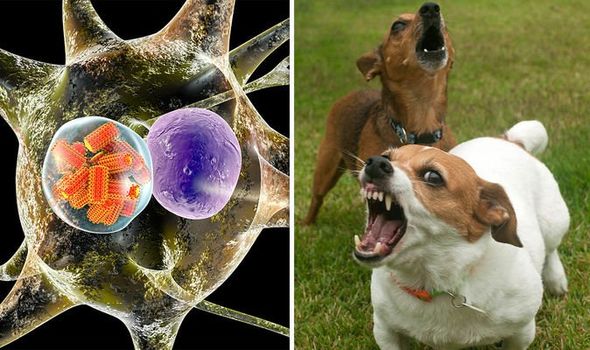
Several years ago I wrote an article on Rabies (Merced Sun Star, June 2014), a viral disease carried from animal to animal and sometimes from animal to human. For both animals and humans the disease is considered a death sentence.  I recently came upon a series of articles in a veterinary journal and was sad to learn that the disease is still a serious threat in much of the world and that approximately 60,000 people die from this disease every year. Still.


Why do I take up the story again? Because it deserves to be heard and, most importantly, it is still a threat to you and your loved ones. A very real threat if you enjoy traveling to out-of-the-way places.

Rabies-outbreak-map-rabies-symptoms-rabies-dog-bite-1125644

Rabies is a slow-moving viral disease. It can affect any mammal, but is usually spread from one carnivore to another as the virus is passed in saliva by bites through the skin. Infection after contact with infected saliva on an open wound is a possible, though unlikely, mode of transmission. Once a new victim has been bitten, the virus slowly makes its way into the nerves and through the nervous system to the brain. This can take two weeks to 2 months or longer. By the time the rabies virus is present in the saliva, death is near. It is for this reason that when an unknown dog bites a person the dog will be quarantined for 2 weeks.  Two weeks is long enough to monitor the dog : If rabid, the animal will die. The dog’s brain can then be tested for rabies virus and the bitten person still has ample time to receive the anti-rabies protective vaccine.


Rabies has been found in the wildlife in and around Merced County. It is endemic in area bats, raccoons, skunks and foxes. You, the pet owner, have set up a terrific protective line of defense by the simple stratagem of vaccinating your pet dogs and cats. It is believed that by vaccinating 80% of a populations’ pets an effective barrier is created to protect people against exposure to the disease. In the United States more rabid cats have been reported to the CDC (Center for Disease Control) than dogs for several years. Vaccinate your cats! Vaccinate all dogs and cats older than 3 months of age. Keep them up-to-date.


There are a few island communities which have managed to keep rabies out or eradicate its presence : Hawaii, Great Britain, and Japan are three. You cannot easily take a dog or cat into those Islands. I applaud their high security. The regions most likely to have rabid animals that endanger humans are underdeveloped countries in Asia and Africa.


For the traveler to a foreign country, be aware that the dogs roaming the streets may be high risk for encountering rabies. The unsuspecting traveler may admire a puppy, letting it lick their hands. Food you carry could attract attention from a roving dog. Many of these countries have inadequate medical services for diagnosing rabies or offering post-exposure prophylaxis (prevention/ PEP) services.  Rabies prevention is not universally available. The more exotic your outpost, the higher the risk of encountering rabies. Of the 60,000 people who die every year, nearly every single case (99%) of human death started with a bite from an infected dog.


Whether at home or traveling, camping for a weekend or following your dreams of adventure exploring a foreign land, please take precautions. Enjoy wildlife, but don’t treat or keep wildlife as pets. They cannot be vaccinated against rabies and may have variable incubation times for rabies. Avoid attracting wild life to your home or campsite. Do not feed wildlife. Do not feed your pets outdoors, as this attracts wild life and strays.  Avoid animals acting unnaturally. Animal-proof your trash. Avoid stray dogs and cats. Stray animals may not be vaccinated and they run high risk of exposure and contact with wild animals that might harbor rabies. The message, Backpackers : stay away from unknown dogs and wild life. The life you save might be your own!


World Rabies Day is Thursday, September 28th this year. This day is sponsored by an alliance among the World Health Organization and many other organizations working towards the goal of eradicating Rabies deaths in people and animals by the year 2030. They are joined by the One Health Initiative, a group dedicated to promoting increased communication and joint action between physicians and veterinarians globally through the integration of human medicine, veterinary medicine and environmental science. Rabies is cited as a classic example of what “One Health” is all about, as the control of rabies in animals has reduced the death toll in people from that disease. Together, we CAN make a difference.


Christine B. McFadden, DVM

drmc@mcmenagerie.com

Photo Credit : https://www.express.co.uk