Rabies didn’t die with Old Yeller — and the disease is endemic to Merced

I’m going to talk about something scary today.

Not an alien life form but a very real live virus called rabies. Rabies didn’t die out with Old Yeller — it is still very much with us, and definitely present in the wildlife of Merced County.

They map where the rabid animals were discovered, watching for “hot spots” of possible contagion in the wildlife. Positive rabid bats and skunks have been identified, often after a dog or cat has carried it into the house or killed it.

In fact, Merced is considered an endemic area for the disease. We have positive cases every year. In the 30 plus years I have lived and worked here, I have watched both the Public Health Department and Animal Control cooperate to monitor rabies-positive cases turned in to the county.

But what about the animals that just quietly die in the wild, that may be carriers of the disease? This, of course, is how it is spread.

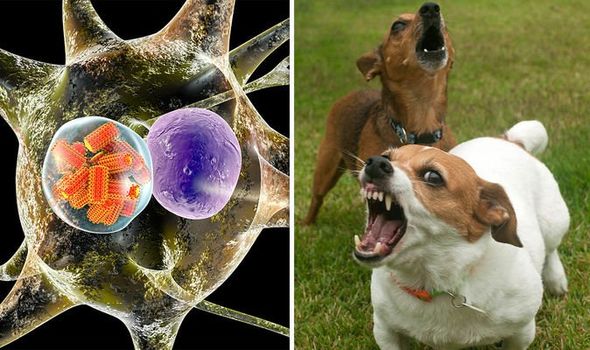
Rabies virus enters the body through a direct bite or contact with the mucous membranes like the eyes, mouth and nose. Once there, it slowly spreads into the nervous system, eventually reaching the brain.

There is no cure for the disease at this point. In fact, only because the virus multiplies and spreads so slowly is it possible for post-exposure immunization to work and save human lives.

Rabies is diagnosed after the brain of the suspect animal has been inspected. There is no way to diagnose the disease in a living patient.

HIGH NUMBER OF CASES

California is considered to have a high incidence of cases — over 400 cases in wildlife reported annually. Skunks and bats are the most frequent wildlife involved, but other carnivores like raccoons, foxes, coyotes and bobcats are often positive.

Each year one or two cases of human rabies is reported in the United States. Since 2002, 21 of 24 reported human rabies cases in the US were linked to bats, per the Center for Disease Control (CDC).

On July 24, 2013 a young girl was bitten by a rabid bat at the Oakland Zoo — it was not an exhibit animal, just local wildlife. She received post-exposure immunization and is fine.

Easter in Bakersfield, California of 2012 was grim for the family whose pet cat bit their child, after it contracted rabies from area bats.

In June 2011, an 8 year old girl from Willow Creek, California actually survived the disease after intensive treatment at UC Davis’s Childrens Hospital. She is only the third person in the U.S. to survive rabies without receiving the post-bite immunizations.

Most people die or become seriously disabled. In countries where vaccination vigilance is not as high as the United States, rabies is a serious threat : 60,000 people die from this entirely preventable disease every year.

Three “islands” are isolated enough to have no rabies : Hawaii, England and Australia. Traveling with pets to these places is a complicated process as they strive to remain rabies free, protecting people and their indigenous or native wildlife from sure death.

VACCINATION IS KEY TO PREVENTION

Because wildlife cannot be vaccinated against Rabies, your first line of defense is to vaccinate your pets — the carnivores at highest risk of coming in contact with wildlife.

All dogs and cats should be vaccinated against rabies. And you should never approach wildlife, especially when they seem sick.

If your dog or cat is bitten by a bat or suspect carnivore that isn’t available for brain examination it is presumed exposed to a rabid animal. If the bat or skunk is confirmed positive and rabid and the dog or cat is not current with rabies vaccination protection it may be recommended that it be immediately destroyed.

If the pet is current on vaccination, by law it will still be isolated for anywhere from 10 days to 6 months, depending on the individual circumstances of the case.

If a human is bitten, whether it be a pet or a stray dog or cat, or any wildlife, it should immediately be reported to a physician.

If the animal is available, it will be quarantined or its’ brain will be examined to check for rabies. The type of bite, animal involved, vaccination history and other factors will determine the recommendations made by your physician and public health authorities.

This is where your money for those darned rabies licenses go. This is what it’s all about.

The message : Vaccinate your pets against rabies. It’s the law — and it’s a good one!
Christine McFadden holds a license to practice veterinary medicine and surgery. She has cared for the family pets of Merced at Valley Animal Hospital for more than 30 years. Send questions or comments to drmc@mcmenagerie.com

World Rabies Day


Several years ago I wrote an article on Rabies (Merced Sun Star, June 2014), a viral disease carried from animal to animal and sometimes from animal to human. For both animals and humans the disease is considered a death sentence.  I recently came upon a series of articles in a veterinary journal and was sad to learn that the disease is still a serious threat in much of the world and that approximately 60,000 people die from this disease every year. Still.


Why do I take up the story again? Because it deserves to be heard and, most importantly, it is still a threat to you and your loved ones. A very real threat if you enjoy traveling to out-of-the-way places.

Rabies-outbreak-map-rabies-symptoms-rabies-dog-bite-1125644

Rabies is a slow-moving viral disease. It can affect any mammal, but is usually spread from one carnivore to another as the virus is passed in saliva by bites through the skin. Infection after contact with infected saliva on an open wound is a possible, though unlikely, mode of transmission. Once a new victim has been bitten, the virus slowly makes its way into the nerves and through the nervous system to the brain. This can take two weeks to 2 months or longer. By the time the rabies virus is present in the saliva, death is near. It is for this reason that when an unknown dog bites a person the dog will be quarantined for 2 weeks.  Two weeks is long enough to monitor the dog : If rabid, the animal will die. The dog’s brain can then be tested for rabies virus and the bitten person still has ample time to receive the anti-rabies protective vaccine.


Rabies has been found in the wildlife in and around Merced County. It is endemic in area bats, raccoons, skunks and foxes. You, the pet owner, have set up a terrific protective line of defense by the simple stratagem of vaccinating your pet dogs and cats. It is believed that by vaccinating 80% of a populations’ pets an effective barrier is created to protect people against exposure to the disease. In the United States more rabid cats have been reported to the CDC (Center for Disease Control) than dogs for several years. Vaccinate your cats! Vaccinate all dogs and cats older than 3 months of age. Keep them up-to-date.


There are a few island communities which have managed to keep rabies out or eradicate its presence : Hawaii, Great Britain, and Japan are three. You cannot easily take a dog or cat into those Islands. I applaud their high security. The regions most likely to have rabid animals that endanger humans are underdeveloped countries in Asia and Africa.


For the traveler to a foreign country, be aware that the dogs roaming the streets may be high risk for encountering rabies. The unsuspecting traveler may admire a puppy, letting it lick their hands. Food you carry could attract attention from a roving dog. Many of these countries have inadequate medical services for diagnosing rabies or offering post-exposure prophylaxis (prevention/ PEP) services.  Rabies prevention is not universally available. The more exotic your outpost, the higher the risk of encountering rabies. Of the 60,000 people who die every year, nearly every single case (99%) of human death started with a bite from an infected dog.


Whether at home or traveling, camping for a weekend or following your dreams of adventure exploring a foreign land, please take precautions. Enjoy wildlife, but don’t treat or keep wildlife as pets. They cannot be vaccinated against rabies and may have variable incubation times for rabies. Avoid attracting wild life to your home or campsite. Do not feed wildlife. Do not feed your pets outdoors, as this attracts wild life and strays.  Avoid animals acting unnaturally. Animal-proof your trash. Avoid stray dogs and cats. Stray animals may not be vaccinated and they run high risk of exposure and contact with wild animals that might harbor rabies. The message, Backpackers : stay away from unknown dogs and wild life. The life you save might be your own!


World Rabies Day is Thursday, September 28th this year. This day is sponsored by an alliance among the World Health Organization and many other organizations working towards the goal of eradicating Rabies deaths in people and animals by the year 2030. They are joined by the One Health Initiative, a group dedicated to promoting increased communication and joint action between physicians and veterinarians globally through the integration of human medicine, veterinary medicine and environmental science. Rabies is cited as a classic example of what “One Health” is all about, as the control of rabies in animals has reduced the death toll in people from that disease. Together, we CAN make a difference.


Christine B. McFadden, DVM

drmc@mcmenagerie.com

Photo Credit : https://www.express.co.uk