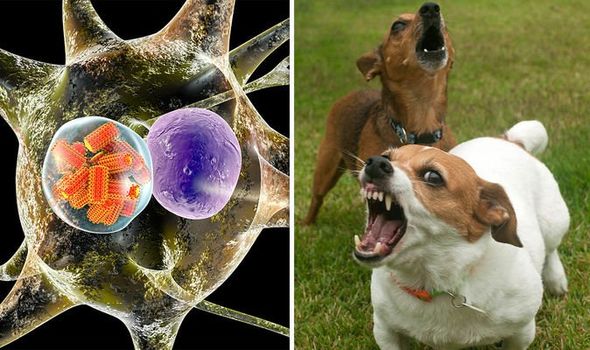
Rabies didn’t die with Old Yeller — and the disease is endemic to Merced

I’m going to talk about something scary today.

Not an alien life form but a very real live virus called rabies. Rabies didn’t die out with Old Yeller — it is still very much with us, and definitely present in the wildlife of Merced County.

They map where the rabid animals were discovered, watching for “hot spots” of possible contagion in the wildlife. Positive rabid bats and skunks have been identified, often after a dog or cat has carried it into the house or killed it.

In fact, Merced is considered an endemic area for the disease. We have positive cases every year. In the 30 plus years I have lived and worked here, I have watched both the Public Health Department and Animal Control cooperate to monitor rabies-positive cases turned in to the county.

But what about the animals that just quietly die in the wild, that may be carriers of the disease? This, of course, is how it is spread.

Rabies virus enters the body through a direct bite or contact with the mucous membranes like the eyes, mouth and nose. Once there, it slowly spreads into the nervous system, eventually reaching the brain.

There is no cure for the disease at this point. In fact, only because the virus multiplies and spreads so slowly is it possible for post-exposure immunization to work and save human lives.

Rabies is diagnosed after the brain of the suspect animal has been inspected. There is no way to diagnose the disease in a living patient.

HIGH NUMBER OF CASES

California is considered to have a high incidence of cases — over 400 cases in wildlife reported annually. Skunks and bats are the most frequent wildlife involved, but other carnivores like raccoons, foxes, coyotes and bobcats are often positive.

Each year one or two cases of human rabies is reported in the United States. Since 2002, 21 of 24 reported human rabies cases in the US were linked to bats, per the Center for Disease Control (CDC).

On July 24, 2013 a young girl was bitten by a rabid bat at the Oakland Zoo — it was not an exhibit animal, just local wildlife. She received post-exposure immunization and is fine.

Easter in Bakersfield, California of 2012 was grim for the family whose pet cat bit their child, after it contracted rabies from area bats.

In June 2011, an 8 year old girl from Willow Creek, California actually survived the disease after intensive treatment at UC Davis’s Childrens Hospital. She is only the third person in the U.S. to survive rabies without receiving the post-bite immunizations.

Most people die or become seriously disabled. In countries where vaccination vigilance is not as high as the United States, rabies is a serious threat : 60,000 people die from this entirely preventable disease every year.

Three “islands” are isolated enough to have no rabies : Hawaii, England and Australia. Traveling with pets to these places is a complicated process as they strive to remain rabies free, protecting people and their indigenous or native wildlife from sure death.

VACCINATION IS KEY TO PREVENTION

Because wildlife cannot be vaccinated against Rabies, your first line of defense is to vaccinate your pets — the carnivores at highest risk of coming in contact with wildlife.

All dogs and cats should be vaccinated against rabies. And you should never approach wildlife, especially when they seem sick.

If your dog or cat is bitten by a bat or suspect carnivore that isn’t available for brain examination it is presumed exposed to a rabid animal. If the bat or skunk is confirmed positive and rabid and the dog or cat is not current with rabies vaccination protection it may be recommended that it be immediately destroyed.

If the pet is current on vaccination, by law it will still be isolated for anywhere from 10 days to 6 months, depending on the individual circumstances of the case.

If a human is bitten, whether it be a pet or a stray dog or cat, or any wildlife, it should immediately be reported to a physician.

If the animal is available, it will be quarantined or its’ brain will be examined to check for rabies. The type of bite, animal involved, vaccination history and other factors will determine the recommendations made by your physician and public health authorities.

This is where your money for those darned rabies licenses go. This is what it’s all about.

The message : Vaccinate your pets against rabies. It’s the law — and it’s a good one!
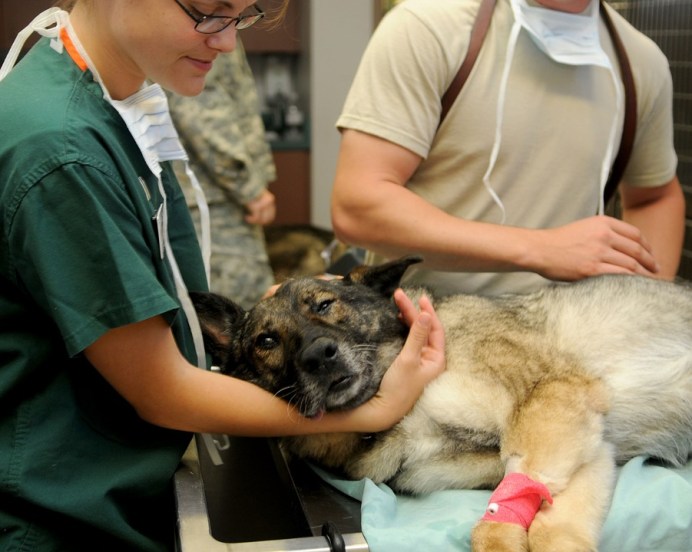
Christine McFadden holds a license to practice veterinary medicine and surgery. She has cared for the family pets of Merced at Valley Animal Hospital for more than 30 years. Send questions or comments to drmc@mcmenagerie.com

Castor the Police Dog

There are many fine working dogs out there – cattle and sheep dogs, Guide Dogs for the Blind, Special needs assistance dogs, Bomb and Drug dogs, and perhaps one of the finest working groups, the Working Police Dog, or K-9 Cops, complete with their own badge. Hired on by Police and Sheriff departments nationwide, they are largely made up of German Shephard and Belgian Malinois breeds. I have had the honor of working with these dogs for over 30 years. Both local Police Department and Sheriff’s Departments have working dogs, used on the SWAT team, for school protection, building searches, drug deals and of course, criminal apprehension.

Astor was a beautiful sable shepherd. High strung, as so many of these dogs need to be to perform their job, ever alert, he suffered from stomach issues, and his spleen would swell to enormous proportions. We had just gotten in 4 new dogs at the Police Department, and one had already been rejected for a permanent lameness in the right shoulder and returned to the seller. This was at great expense and nerve wracking for the new program. To have problems with another dog was near unbearable. I said he needed to have surgery, to biopsy the intestine and spleen. It was late in the day when his handler came down to visit him in recovery. Though the individual police departments own the dogs, it is their Peace Officer Handlers that live with the dog and develop an intense bond. These dogs – and their handlers – were new to me and I knew very little about them. I was ignorant that even off duty an officer is expected to be prepared to respond to an emergency, so when the handler bent over in post op to greet his dog, I was most startled to note a gun in his waistband! I wondered if he’d planned to shoot me if the surgery hadn’t gone well! (He said no).

Most of the dogs have German names, as many were and still are imported from Germany. Their commands are given in the German Schitzhund or obedience training language. Handlers lucky enough to be assigned a partnership with one of these dogs will spend weeks learning the cues and training required while forming a deep bond. You see, these dogs can go where a person cannot. These dogs serve as the first line of defense when things go bad. No one wants to lose a dog – but better the dog than a Peace Officer. The K-9 Cop can mark a perpetrator in a crowd and run him (or her) down. Once the fleeing person stops, they will stand still, not biting unless the person resists and provokes a bite. They can be sent into buildings with cameras on their backs to locate the offender. They can smell or hear where someone is hidden.

Castor was a Malinois from the Sheriff’s Department. He passed away naturally some years ago. A very “sharp” dog, he was a holy terror when he came into our clinic. He growled at all the staff. He was not walked during his brief stays, as we customarily do with all boarding pets. Except….Castor loved me. There was no rhyme nor reason to it. I poked him with needles, gave shots, drew blood. No problem. At first I wondered if I resembled the handler’s wife, but once I met her, blonde, petite, beautiful, sadly I knew that I did not. Whatever the reason, I was grateful. Castor had many arrests to his name, but my favorite story was the guy swimming in the canal to elude capture. His handler sent the dog, knowing if the guy made it to the far bank he might get away. The criminal decided to drown the dog. Castor took matters into his own hands, simply wrapping his jaws around the only body part he could reach – his neck. The man surrendered.

In the United States Air Force, fighter pilots are accompanied by a “Wingman”, another fighter plane which flies off the right wing and just behind the lead, whose job is primarily to protect the lead by “watching his back”. Our Canine Corps of Peace Officers serve as “Wingman” to the officers they shadow.  May we be humbled by their gifts and grateful for their service.

Starbucks Drama

Sometimes it is difficult to find the thread where it all began. Maybe this story started when I first stopped giving out my real name to people taking my order for pizza or coffee or things. People never seem to be able to spell my name. What with the influence on “finding yourself” and being recognized as a unique individual, it seems that all the rules of spelling went out the window and people came up with very creative ways to write their names. I just gave up. The time it took to spell out my name required too much effort for a combination pizza, hold the bell pepper, regular crust, please. So after noticing that a friend was never asked how to spell her name, I adopted it for myself. Across town, if you can order it by phone, chances are my cell number comes up as “Amy”. I assure you, everyone knows how to spell “Amy”. Irritating.


So on this morning I had just finished some minor surgery on an alpaca at the Zoo. One of my staff, Courteney, assisted. The alpaca had formed two large abscesses under its jaw, suspicious for a disease caused by the uncommon bacteria Corynebacterium pseudotuberculosis. These fist-sized masses were painful. The alpaca had to be sedated and the abscesses lanced open with a scalpel blade, then surgical drains placed to allow continued drainage while the antibiotics took effect. The operation went smoothly and best of all, neither of us were spit upon. This was excellent, as we still had most of the day before us. To celebrate, I offered to buy her a drink at Starbucks as we returned to the clinic.


She placed our order and the man behind the counter asked for a name. “Amy”, I declared without thinking. Courteney shot me a look, eyebrows raised, but the guy behind the counter said “I’ll just make that “Dr Amy”. Startled by all this attention, I mumbled that my real name was Christine but no one could spell it and retreated to a spot near the door where I tried to melt into the wall. Courteney came over to cheerfully inform me that he was a client. Had the dog been there I had a good chance of making the connection but as it wasn’t I stayed glued to my wall.


So when the Starbucks man came in today with his two dogs, one an adorable Golden Retriever puppy that looks like an overgrown stuffed toy and his chocolate Lab, I recognized him immediately and was again mildly embarrassed not to have identified him at Starbucks.

And then I remembered That Other Starbucks Drama. Talk about Déjà vu. I’m going to have to write the company a personal apology. Again.


Flashback about 4 years. Another Zoo call, this time in winter. For some reason I became completely chilled, my fingers painfully numb from the cold. My assistant that day was Tim. I offered to buy us both a hot chocolate to warm up. We pulled up in front of the Starbucks store, delighted to find parking directly in front. Large glass windows allowed everyone inside to watch us get out of the Jag. Wearing green scrub tops, we looked important, like proper doctors. It was only after placing our order that I realized I had left my purse at the clinic. I turned to Tim for help, but he didn’t have any cash on him. All eyes were upon us. Our drinks were ready. Horrified, I tried to explain the situation but the kind barista waved us off, telling us to take our drinks. This was worse, obviously they’d been scammed before. Red faced, I fled the scene. Once back at work, I immediately sent Tim back with $20. (I’d have gone myself but there was a surgery waiting for me.)


Tim returned, now red faced himself. After paying our tab, Tim apologized again while backing towards the door. Unfortunately he backed into a display being used as a room divider, which exploded as he bumped it.  Tim got down on his hands and knees to gather up items as fast as he could, but they asked him to leave. Please. They seemed to feel we’d done enough for one day. Back at work, the staff created a Starbucks “ Most Wanted” poster with Tim’s face on it.


So now you know why I pass myself off as “Amy” sometimes and as for personal apologies : I swear I won’t combine Zoo visits with Starbucks again and  oh yeah – I don’t even drink coffee!


Christine B. McFadden, DVM

drmc@mcmenagerie.com

Job Shadows

Job shadow. Verb? Noun? We aren’t talking ghosts here, nor what Peter Pan lost. A rather loose definition of a person who “job shadows” is someone who accompanies another on their job site all day, watching and learning what they do at work. Children are often paired with their parent. My own have never shown much interest in how the uterus is removed from the body or the many fascinating possible causes behind vomiting, so no luck there. People requesting to job shadow with me are usually students seriously contemplating a career in veterinary medicine. Because most veterinarians believe in the importance of education and love to share what we do with others, our clinic frequently has a student following one or another doctor around for a few hours to a few days. Over the years we’ve had several fine young people go on to find success at veterinary school. Currently I have just wrapped up a week with a young woman who has come up from Arizona every year for the last 7 years. She is not yet in high school.


What the Shadow sees on any particular day is entirely up to the stars and perhaps the humor of the receptionist taking in appointments. At best our schedules are a suggestion of how the day might go. At worst, emergencies and unexpectedly sick pets are rushed in or dropped off, disrupting the planned schedule. Although these cases are often highly challenging for the veterinarian, the pace and variety of pets and their injuries can place a strain on the interested but naïve observer.


A Shadow is not expected to actually handle animals. What they observe, however, is indeed our daily life. For the uninitiated, medicine can be extreme. I have personally dropped three (3) people into a dead faint over the years. In one case, as the young man collapsed in my arms, I initially thought he was making a grab for me and had started to back away. I caught him before he hit the floor.


Dentistry is a safe place to start for most Shadows, as they get to watch fossil-like brown teeth turn white under the skilled hands of our assistants and veterinarians.


Surgery is best approached slowly, with the Shadow seated strategically near and the case chosen deemed bloodless. We discuss anti-fainting tactics and monitor the Shadow for signs of sweating or turning green (who knew that was true, huh?).


The real test comes with exotics. Under this heading fall birds, snakes and lizards, hamsters and rabbits and the Zoo animals. Many Shadows are not familiar with these animals and have watched one too many horror films featuring same. Interestingly, some of my staff must have watched the same films. Over the years the pet phobias of my staff have come to light: this one trembles at frogs, another begs off assisting with snakes, several scream at wing-flapping birds. Ants are not seen as veterinary patients but someone at work has a marked phobia to ants. The Shadow’s phobias are unknown, sometimes by the Shadow themselves, until exposed on the job. Fireworks! Just another test of your devotion to this career. After all, as a veterinarian, we practice medicine and surgery on every living species on Earth – with one marked exception. And that species, of course, (homo sapien) is the ultimate exotic!


Christine B. McFadden, DVM

drmc@mcmenagerie.com


Summer Vacation / Hawaii 5 Days or Less

Well, I said helpfully, I just called up so you could yell at me.

Complete silence for a moment, followed by protestations. They had never been upset with me. Everyone was so lovely at the clinic. Their pet had never been away from them before.

Their dog boarded with us for a week. A joyous, boisterous good time was had by all. Their little Maltese, Princess, had never been anywhere where she could bark as much as she wanted. Once she realized there was no shushing, she barked herself hoarse. There was so much to see and do, dogs coming and going, the occasional call of a parrot, exotic sights and smells. New people to romp and play with, as her owners knew from receipt of photos and video outtake of their Princess at play. Not wanting to miss a moment of the party, Princess skipped her daytime naps. Accustomed to daily brushing at home, she submitted to some brushing at the clinic but wiggled uncontrollably because she wanted to play some more! Rules went out the window as this little Maltese took advantage of every new opportunity that came her way. We took to calling her the Energizer Bunny. The day she went home she had a bath and blow out and went trotting out the door, every inch the Princess.

Remind you of anyone you know? Ever needed a vacation after the vacation? Guess what, dogs do it, too. And for the pet owner who has never seen their dog like this, it’s scary. Understandably, their first reaction is to ask: what did we do to their dog? Often at high volume, because they’re worried. I no longer try to explain the “vacation syndrome”, I just offer to see their pet, courtesy, to check him or her over for any actual health issues. To date, I have never found a problem and all these pets have returned to normal behaviors and routines within a few days of going home.

And then there are the good folk who take their pet with them. Oh, to hit the open road, man’s best friend at your side. I’m supposed to tell you not to forget your health certificate, but unless you cross borders into another country you may not be asked to show them. I’ve heard national parks will often inspect these documents. They are technically required by law for interstate travel by car. Of course, some people get carried away and want to take their pet with them on vacation to places like Hawaii. We’ve discussed this in this column before that the State of Hawaii, a group of isolated islands, is rabies free, unlike the rest of the USA. They have stringent requirements before a pet may enter Hawaii. Some clever person named the program “5 Days or Less.”

Clients who come to see me are disbelieving when I explain that the 5-Day-or-Less Program is available AFTER 120 days from our first meeting. First their pet must meet the requirements for prior Rabies vaccinations and microchipping before we will submit a Rabies titer blood test (FAVN) to a government mandated lab. The 120-day countdown starts with their passing FAVN test. Four months later you may fly to Hawaii with your pet and enter the Islands that same day – 5-Days-or-Less! Ta-da! Should you fly your pet there earlier, they’ll just quarantine him/her on the island for 120 days at your expense. You are permitted to visit on-site.

I’ve worked on a lot of Health Certificates to foreign locales. I respect the concerns behind their requirements. I do wish that Hawaii had come up with a different name for their program, as the current title is misleading to many clients. Experience has taught me to quietly sidle into the room, smile brightly as I congratulate them on their big trip to Hawaii and ask when they are planning to travel? I roll out my paperwork and gently start to explain what actually lies ahead of us. Today I barely flinch when the client starts screaming. We work through it. And may I say that Hawaii is a piece of cake compared to Japan. Japan, also Rabies-free, requires that you start the process over 6 months in advance. I just completed one that we started in July of 2017. Two more are in the pipeline. That was me you heard screaming.

Christine McFadden, DVM

drmc@mcmenagerie.com

Dog flu has been reported in the Valley. Here’s what you need to know.

Serious news for all dog owners in recent weeks, folks: Canine influenza, or dog flu, has been documented both in San Francisco and the Bay Area and in Fresno. Up to 50 cases were diagnosed in the Bay Area in mid-January, with a confirmed case in Fresno announced Jan. 24.

holding-dog-head-e1519278244598.jpg

This dog flu is highly contagious between dogs, with 80 percent of all exposed dogs becoming sick. Most of these dogs will be only mildly sick. Symptoms include coughing, sneezing, runny eyes and noses. Some dogs whose respiratory system has been attacked by the flu virus will develop secondary bacterial infections and have thick purulent (pus) discharge from their nose and a very high fever. Occasionally even pneumonia can occur and in rare instances, death.

You’ve all probably heard of “kennel cough,” which is a generic name for a variety of viruses or bacterial infections that cause a cough contagious to other dogs. The actual cause of bronchitis can only be determined through tests. An oral cheek and eye tear swab can be sent to the lab for a PCR test (polymerase chain reaction – if you really want to know more on that kind of testing, please research!) When last checked, a PCR upper respiratory test in dogs looks for up to 13 different viruses and other agents, including both forms of the Canine Influenza, H3N8 and H3N2. Dogs in close contact easily spread the germs by coughing on each other – in a kennel, a grooming parlor, at a dog park, day care or shelter. Anywhere dogs meet. In addition the flu virus can be spread by contaminated objects like food or water dishes, collars and leashes.

Should your dog contract canine influenza you will need to see your veterinarian. Treatment is tailored to symptoms and whether secondary infections are a concern. All affected animals should be isolated from other pets for 1 month to prevent the spread of this disease.

Canine influenza first made headlines in 2004 when several racing Greyhounds dropped dead in Florida. This was the CI H3N8. It wasn’t until March 2015 that there was another crisis when an epidemic broke out in dogs in Chicago. This was a different form of CI, H3N2. They thought part of the reason for an outbreak in a big city had to do with large concentrations of dogs moving through airports. The dog flu has not been widespread and risk to pets in many parts of the U.S. has been low.

The dog flu H3N2 has been known to affect cats. One outbreak occurred in cats in a high-stress shelter environment. No cats are known to have died from the canine influenza viruses, and there is no approved vaccine for cats.

Canine influenza viruses have not been found to be transmissible to humans.

Should you like more information on the canine influenza viruses please look up the American Veterinary Medical Association article on-line. Your local veterinarian has information and protective vaccine available to your pet. This bivalent vaccine protects against both strains of dog flu. Two vaccinations are required to start, given approximately one month apart, and can be started as young as seven or eight weeks of age. Because it takes a month for your pet’s body to mount a complete immune response, and given the closeness geographically of the epidemic, we recommend all dog owners contact their veterinarian to start protection. Be aware that like the Bordetella vaccine (a better known “kennel cough”) and human “flu shots” even with proper vaccination your pet might contract a mild case. Many area clinics are offering the vaccination to their regular patients. Simply put, we want to protect your pets. We’re here for you.

Christine B. McFadden

drmc@mcmenagerie.com

World Rabies Day


Several years ago I wrote an article on Rabies (Merced Sun Star, June 2014), a viral disease carried from animal to animal and sometimes from animal to human. For both animals and humans the disease is considered a death sentence.  I recently came upon a series of articles in a veterinary journal and was sad to learn that the disease is still a serious threat in much of the world and that approximately 60,000 people die from this disease every year. Still.


Why do I take up the story again? Because it deserves to be heard and, most importantly, it is still a threat to you and your loved ones. A very real threat if you enjoy traveling to out-of-the-way places.

Rabies-outbreak-map-rabies-symptoms-rabies-dog-bite-1125644

Rabies is a slow-moving viral disease. It can affect any mammal, but is usually spread from one carnivore to another as the virus is passed in saliva by bites through the skin. Infection after contact with infected saliva on an open wound is a possible, though unlikely, mode of transmission. Once a new victim has been bitten, the virus slowly makes its way into the nerves and through the nervous system to the brain. This can take two weeks to 2 months or longer. By the time the rabies virus is present in the saliva, death is near. It is for this reason that when an unknown dog bites a person the dog will be quarantined for 2 weeks.  Two weeks is long enough to monitor the dog : If rabid, the animal will die. The dog’s brain can then be tested for rabies virus and the bitten person still has ample time to receive the anti-rabies protective vaccine.


Rabies has been found in the wildlife in and around Merced County. It is endemic in area bats, raccoons, skunks and foxes. You, the pet owner, have set up a terrific protective line of defense by the simple stratagem of vaccinating your pet dogs and cats. It is believed that by vaccinating 80% of a populations’ pets an effective barrier is created to protect people against exposure to the disease. In the United States more rabid cats have been reported to the CDC (Center for Disease Control) than dogs for several years. Vaccinate your cats! Vaccinate all dogs and cats older than 3 months of age. Keep them up-to-date.


There are a few island communities which have managed to keep rabies out or eradicate its presence : Hawaii, Great Britain, and Japan are three. You cannot easily take a dog or cat into those Islands. I applaud their high security. The regions most likely to have rabid animals that endanger humans are underdeveloped countries in Asia and Africa.


For the traveler to a foreign country, be aware that the dogs roaming the streets may be high risk for encountering rabies. The unsuspecting traveler may admire a puppy, letting it lick their hands. Food you carry could attract attention from a roving dog. Many of these countries have inadequate medical services for diagnosing rabies or offering post-exposure prophylaxis (prevention/ PEP) services.  Rabies prevention is not universally available. The more exotic your outpost, the higher the risk of encountering rabies. Of the 60,000 people who die every year, nearly every single case (99%) of human death started with a bite from an infected dog.


Whether at home or traveling, camping for a weekend or following your dreams of adventure exploring a foreign land, please take precautions. Enjoy wildlife, but don’t treat or keep wildlife as pets. They cannot be vaccinated against rabies and may have variable incubation times for rabies. Avoid attracting wild life to your home or campsite. Do not feed wildlife. Do not feed your pets outdoors, as this attracts wild life and strays.  Avoid animals acting unnaturally. Animal-proof your trash. Avoid stray dogs and cats. Stray animals may not be vaccinated and they run high risk of exposure and contact with wild animals that might harbor rabies. The message, Backpackers : stay away from unknown dogs and wild life. The life you save might be your own!


World Rabies Day is Thursday, September 28th this year. This day is sponsored by an alliance among the World Health Organization and many other organizations working towards the goal of eradicating Rabies deaths in people and animals by the year 2030. They are joined by the One Health Initiative, a group dedicated to promoting increased communication and joint action between physicians and veterinarians globally through the integration of human medicine, veterinary medicine and environmental science. Rabies is cited as a classic example of what “One Health” is all about, as the control of rabies in animals has reduced the death toll in people from that disease. Together, we CAN make a difference.


Christine B. McFadden, DVM

drmc@mcmenagerie.com

Photo Credit : https://www.express.co.uk