Cheese Whiz

So I was visiting with a friend when she decided it was time to pill her dog.  This was something new for her and she had questions. “What should I put the pill in?” She’d used peanut butter once before when she gave her dog some medicine. I shrugged. That’s ok. Told her I use bread with my dogs. Bread is something I usually have on hand, it’s cheap, and makes disgusting balls to mold around things like pills. My dogs would crawl through fire for a crust of bread. She opened her fridge (maybe she was out of peanut butter?) and called back from within its depths : “what about cheese?” “Sure”, I said.  She extracted herself from the refrigerator, bringing two slices of cheese with her. Pre-sliced orange cheese. Gotcha. Least it wasn’t in a can (and yes, I ate cheese whiz from a can growing up. Still here). Then she selected one slice and began to wrap up the pill. Sure seemed to be taking a while. The dog was starting to drool and I was my usual impatient self so I reached across to just mush it up, for heaven’s sake, no need to be dainty. In my expert hands the cheese completely crumbled and fell away from the pill. I stared. “What kind of cheese IS this?” I asked suspiciously. She glanced over at me. “Tillamook.” Tillamook? I reeled. Tillamook is some serious cheese. What happened to American Kraft? Where was the CAN, man? This was uncharted territory. Done trying to make silly putty out of real cheese, I simply reached down, opened her dogs’ mouth and pushed the pill and cheese crumbles in, letting the dog lick the last crumbs off my palm.
Real cheese, what a crazy idea. Invalidated my entire childhood’s culinary experiences! 
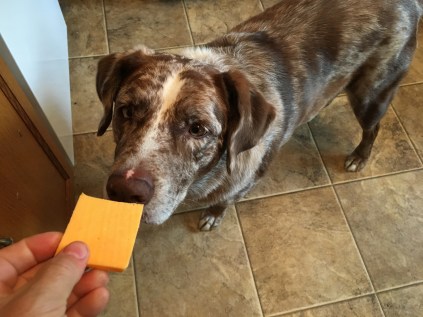
I Am The Cheese Dog

‘This is brand name organic right Karen?’

Sigh. Isn’t that the darndest thing? But I actually do find myself giving all sorts of recommendations on how to deliver medication to a pet. For many of my clients it’s fairly simple : they have a time tested treat that they can hide medication within and especially with the larger breeds of dogs and any garbage hound, down the hatch it goes. Medicine is a treat. For little dogs and those with pushed in faces and cats and birds and turtles and coyotes it can be surprisingly difficult to actually deliver the medication to its intended patient. Think about it. The brachycephalic breeds of dogs (Pugs, Bostons, Bulldogs) have all the body parts of a regular dog, just compressed into about 20% of the space. There’s no extra room in their mouth and they choke and turn blue if you try to get anything past them. Little dogs suffer from Napoleon Complex – they bite you if you try to force something on them. They know the Alligator Roll, too.


Cats? Hoo-boy, cats. We carry one medication for cats stocked in four forms: a tiny tablet, a chewable “gourmed” form, as a liquid and finally as a topical “transdermal” preparation. Yikes. Cat owners in particular are warned not to “dry pill” their cat, meaning do NOT shove a pill down your cat’s throat and forget about it. The pill or capsule may stick partway down, lodging in the folds of the esophagus. Without food or liquid to carry it down to the stomach, the medication may adhere and cause serious inflammation.  Most people have experienced the feeling at least once and don’t wish to repeat it. That’s why we swallow our meds with a glass of water. Esophagitis can affect a cats ability to swallow and in extreme cases lead to strictures or scar tissue in the esophagus. I often recommend that people be prepared to follow a pill with a syringe of warm water. This also helps cleanse the mouth of any aftertaste, making the experience more palatable (very helpful if you must repeat the medication in a few hours!). Feeding canned food afterwards is also effective. Many owners purchase special treats, some with a pocket to house the medication, to pill their pets.  Since medication in some form is almost inevitable for most dogs and cats, keep that in mind during training. Stay ahead of the game. And just to keep the record straight, the only cheese I eat out of a can these days has the word “Nacho” emblazoned across it. 


Christine B. McFadden, DVM

drmc@mcmenagerie.com 
Ronda and the Very Bad Paw

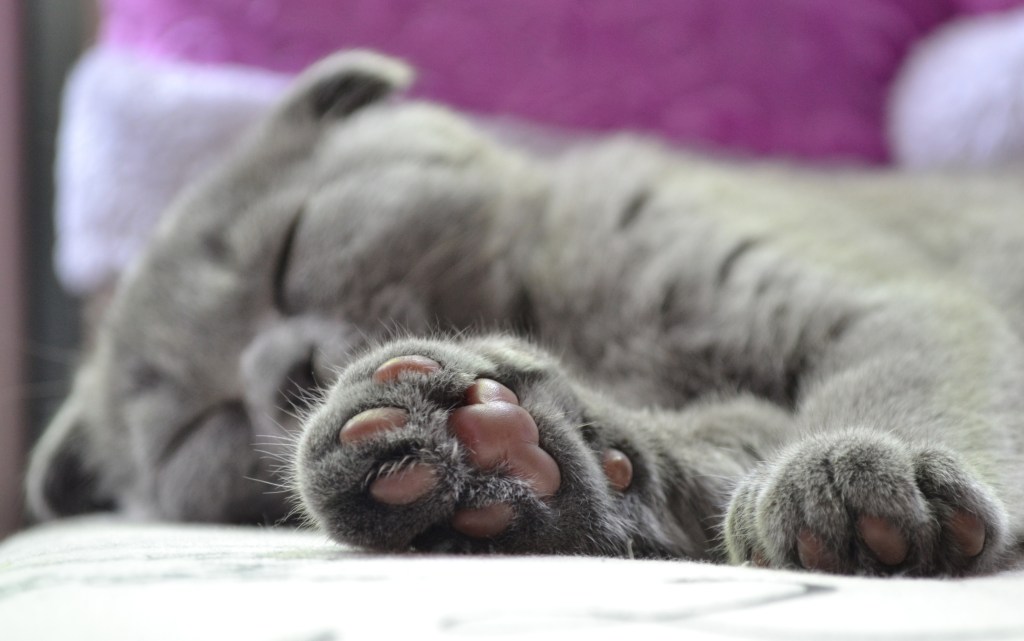
It was late in the day when the Animal Control Officer from the City of Merced Police Department brought us a stray cat that was in trouble. This service is provided to injured stray animals in the City, and it is up to us to determine if they can be helped or, sometimes, to help end their suffering. This little grey cat weighed in at 7 pounds and had a left front paw mildly swollen from what appeared to be a bite wound. She was running a fever, almost 104 degrees F, but was purring and in general seemed very happy to have been found. We shaved her wound; the paw didn’t look too bad. We could help her.

Under anesthesia I opened the abscess so that the pus could drain out, using a sterilized rubber band to act as a seton or drain to keep the tiny wound open for healing; otherwise it might close up too quickly, sealing bacteria inside and the abscess would not resolve. The cat was temporarily named “Ronda” by the staff, given an antibiotic injection and some subcutaneous fluids for her fever and placed in a cage with her own comfy blanket.

End of story, yes? I moved on to other patients, leaving the daily nursing to our extremely capable nursing staff. When no one claimed Ronda after several days, we approached the local Rescue Group, New Beginnings For Merced County Animals, to ask if they might be able to find a home for her. They agreed to take her in. New Beginnings was founded over 11 years ago by a remarkable local woman, Sharon Lohman. The non-profit organization works with over 70 volunteers and pet Foster parents to find homes and care for well over 5,000 dogs and cats each year. It is estimated that they have saved the lives of up to 75% of the dogs who enter our local shelters.

Well, Ronda’s story didn’t end with that first minor surgery. Her swollen paw didn’t respond to treatment. Irritating. Abscesses like this just aren’t that medically challenging. I threw a second, high powered antibiotic at her, and added twice daily foot soaks in antibacterial wash. Kindergarten medicine! Open an abscess up, drain it, and voila, they practically heal themselves! Ronda, however, hadn’t read that medical bulletin. Pus was leaking around the drain, but her paw wasn’t healing. We tested her for the feline leukemia/FELV and feline aids/ FIV viruses, in case Ronda was immunosuppressed. She tested negative for both (and people CANNOT get HIV or AIDs from cats).

Eight days after she had been admitted, Ronda was still there, her paw enormous! We took x-rays, looking for signs of abnormal bone tissue, maybe a sliver of metal acting as a foreign object. Zilch. Normal. I was worried that Rescue wouldn’t take her. (They do a lot of fundraisers, but sometimes it comes down to “do you want THIS animal, or will helping 5 others be better?”). Now we were discussing amputating her front leg to save her life. I was furious with that paw. Because of the progression, I was certain that I was dealing with an anaerobic bacteria, one that didn’t require oxygen to grow. These bacteria can be difficult to kill. I asked for the weekend, and told Ronda she had one last chance.

I took her to surgery again. Knowing that I had to expose all possible tissue to oxygen, leaving no place for bacteria to hide, I literally dug through each toe, around each pad. I placed two ¼ inch penrose drains (don’t ask me how) in that tiny paw. I added on an antibiotic better known for fighting anaerobic infections and we all sat back and held our breath. In 48 hours her paw was fine. Ronda kept her leg, healed quickly from that point on and went to her new home. Lesson re-learned: Never assume.

Christine B. McFadden, DVM

drmc@mcmenagerie.com

Follow drmcsveterinarytales on Facebook for even more!

Missy and Hypoglycemia

She was so small that her big sister was a Beanie Baby. She’d been sold straight from a cardboard box in the parking lot of a Big Box store. Her owners were entranced from the moment her fluffy 1 ½ pound body hit their hands. The sellers were short on details like birthdates. We guessed her to be 2 months old? She was christened Missy, her basic exam checked out, and she had her first vaccination before they took her home.

The roller coaster ride had begun. Sadly, Missy had already been exposed to Parvo virus. Parvo is dreaded throughout our Valley, as we seem to see a lot of this viral disease in young, usually unvaccinated dogs. With no immunity, they fall ill, exhibiting extreme vomiting and a watery bloody diarrhea. The virus further attacks their body by dropping their white cell count, so they can’t fight off the infection. Many puppies die from the disease. Supportive therapy in-hospital with intravenous fluids and medication provide life support while their body recovers. It’s a puppy’s best chance to survive. Missy was sick so quickly we knew that she had been incubating the disease when she was brought in and the vaccine wouldn’t have had time to provide protection. (The vaccine itself does not cause the disease) Further complicating matters was her very small size. She had no body fat to speak of. Placing an intravenous catheter in her threadlike leg vein was a miracle. And like many tiny, tiny puppies she couldn’t keep her blood sugar up without constant eating – and Missy couldn’t keep anything down. If her blood glucose levels plummeted she might faint, seizure or even die. To counteract this, we added dextrose to her IV fluid drip. And then we worried about overloading her tiny body with fluids or we might flood her heart! We have an IV syringe pump that carefully meters each drop to these most extremely small of all patients.

Missy was a fighter. She gamely held on and after four days Missy turned around and successfully fought off parvo. Hurrah! But within days it became obvious that Missy’s body couldn’t regulate her blood sugar levels on it’s own. She would appear dazed and weak at home for no obvious reason. I had to explain that Missy couldn’t waste a mouthful on treats – many treats are high in sugar (check the labels for corn syrup, dextrose, sugar beets, etc) and just as with diabetics, it gives a quick sugar high and then just as quickly dips back down. The dangerous Sugar Rollercoaster. Don’t take that ride! Missy needed to eat dog food, with protein, fat, slow-release complex carbohydrates (carbs are the sugars in food) and the calcium, vitamins and minerals a growing puppy needs. For several days she had to be fed every two hours, including at least once during the night. We expected her to outgrow this…. but when?

Missy’s body did learn to self-regulate. She grew to over 4 pounds. She finished her series of puppy shots and had no further health set-backs. We set the date for her ovariohysterectomy /spay for 8 months of age, when I could reevaluate her teeth – tiny dogs often have delayed dental eruption (they are slow to lose their baby teeth) and if retained, the baby teeth will crowd the adult teeth, trapping food particles and eventually rot out both teeth! It is so much easier on the puppy to remove these excess baby teeth under the same anesthesia they undergo for their spay / neuter surgery. We schedule the surgery when the adult teeth have come in. The big day came. We checked Missy’s blood sugar before surgery. Normal. We checked her teeth – she had retained three deciduous canine (fang) teeth. We extracted them. Hurrah!

Monitors beeping calmly, we proceeded to spay Missy. She acted like a completely normal patient, recovering beautifully. Hurrah! Postoperative blood glucose tests were all normal. Another hurrah! I don’t know if her little feet ever touch the ground (spoiled by love), but in addition to all the other miracles, Missy is a superb outgoing doggie friend to everyone she meets. Hurrah!


Christine B. McFadden, DVM
drmc@mcmenagerie.com
Hysterical Clients

Who said veterinary medicine wasn’t fun?

There’s the man who got out of jail (he didn’t say why- either for going in or getting out) and came home to find his dog sick. This enraged him. We know this because he brought the dog to us (he was passing by, thought he’d drop in) and he was very thorough in his explanations to us of society’s injustices, particularly that he might have to take financial responsibility for his pet. We couldn’t diagnose the illness without a blood test – and magic wands are out of date, though I kept one on my desk for years. We’ve kept statues of the Virgin Mary, Buddha, dice, and a crystal ball. We do not turn our nose up at anything that might intervene on behalf of our patients. In the science-based world of medicine we have seen miracles – but we have also seen cases where the pet should have lived, by all rights, but died. In the end, we fall back upon diagnostic tests because they do just that: they help us to diagnose your pet’s illness, to unlock the pieces of the medical mystery so that we may help the patient.


This man was very angry. The time spent in jail seemed not to have been used for self-reflection or internal contemplation. It seemed unlikely that he read poetry. We thought we should focus on the dog. We weren’t entirely sure he could focus well enough to drive. He had no interest in paying to care for his dog nor did he wish to surrender it to a Rescue group. So he left. Only to return a half hour later, which we noticed immediately because his car was sideswiped as he drove in to the parking lot. While he was waiting for the police to show up (to investigate the accident) he surrendered the dog to Rescue. Post-script : dog did great.

And I fondly recall Crack-A-Nose. Her name alone kinda gives you a heads-up, yes? A pitbull, she had a huge pink mass of doughnut-shaped tissue protruding from her vulva. Bigger than your fist. It was very dramatic. This dog had a condition called vaginal hyperplasia, or swollen vaginal tissue. It is not a true prolapse of the vagina nor a cancerous tumor. It occurs when a female dog has been in heat, producing high amounts of estrogen. The swollen tissue will shrink back to normal size when the estrogen hormone has declined – and the fastest, most effective and permanent cure for that is to recommend an ovariohysterectomy or spay. I explained all of this to her owner, a young woman who was rail thin with blond hair, beautiful, a little twitchy. The young woman pulled a fistful of hundred dollar bills out of her bag. She requested that I perform whatever services were required and informed me that she would pay in full right then. I agreed to her terms and performed surgery successfully that night. I figure the dog must’ve been a great guard dog for some very important stash, oops, stuff.

Now stop me if I’ve told you this one before. This was when I worked in a small office off Highway 59, still called “J” street back then. I remember the skirt I was wearing because it was the last time I’d ever wear it. It was quiet, around lunchtime. A man in his twenties came in. He announced that his dog had been run over by a mower. I was nearby and nodded, told him to bring the dog in. Occasionally you see an overactive puppy bouncing around a lawn mower and accidentally getting a toe clipped. Not very serious. He stared at me. But he’s bleeding, he said. I nodded again. This was to be expected. Please bring him in.

And he did. Only he hadn’t been talking about some little push mower, he meant a tractor hay/disc mower (the tractor weighs over a half ton) and it had practically amputated the dogs’ leg, so the “bleeding” he’d mentioned was an enormous spraying jet of blood from the severed femoral artery. The dog was going to bleed out – I was surprised it hadn’t died already. I stepped in with a pair of hemostats to stop the gushing fountain and got lucky. I completed the amputation in a sterile surgery and the dog lived. But my clothes were history.

Christine B. McFadden, DVM

drmc@mcmenagerie.com

Stayner and Queenie (A Boy and His Dog)

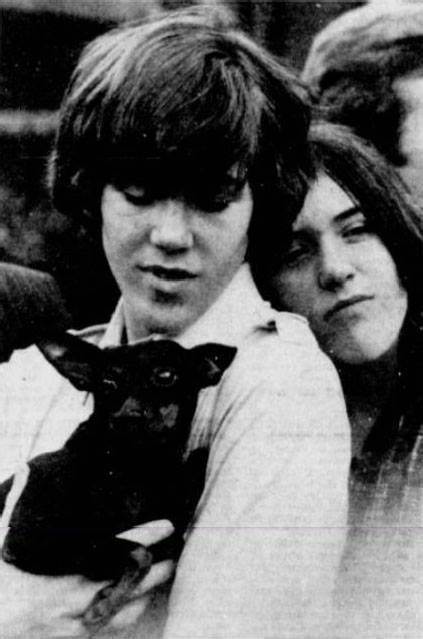
On January 23, 2019 the Merced Sun Star newspaper printed a front page photo that showed both of the Stayner boys together in 1980, shortly after Steven Stayner had been reunited with his family. Steven’s story was remarkable. Steven disappeared when he was 7 years old, simply vanished from his neighborhood one day. It was 1972. Missing for over 7 years, he was reunited with his family only after his captor kidnapped a second child. Steven couldn’t endure seeing this child’s anguish and he hiked the little boy out to a police station. Although rarely mentioned, he also brought with him a dog. The child Steven aimed to rescue ultimately led to his own rescue. It was an incredible story, one that mesmerized the nation. This photograph, taken during the family reunification, shows Steven with his older brother Cary and their father, Delbert Stayner. The portent was only realized in hindsight : one brother, Steven, had saved a life.  Sadly, Steven died an untimely early death in 1989. Ten years later, in 1999, his older brother Cary Stayner was to gain notoriety for committing the unbearable murders of four women. Overall, a very grim and sad story for the family and the town of Merced.

This was a rare photo that captured both Steven and his older brother together, a moment in a time of celebration. But my eyes saw only the dog. Hey! What about Queenie? That’s a picture of Steven and his DOG! She’s right there, just to the side of Delbert Stayner’s elbow! A little black dog with tan legs, Queenie had been with Steven throughout the years of his captivity. She looks happy in this photo, bright eyed.         (Link to Photo from Modesto Bee Here)

I’m a veterinarian. Of course I noticed the dog. That and – I knew Queenie, knew them both, she and Steven. I knew them because I took care of Queenie at her life’s end. That was many years ago. Her importance was to Steven, her passing private. I share a bit of this story because in today’s world we talk about the “human-animal bond”. We use scientific methods to analyze the effects that animals have in sharing our lives. C’mon people – it’s simple : love.

Queenie. Steven was very young, only 7 years old, when he was torn away from home and family. Queenie entered his captive life early on and remained a constant throughout the years to follow. She gave him unwavering loyalty, and non-judgmental constant cheerful companionship. It is notable that when he left that night to return the little boy, Steven never considered leaving his dog behind.

I met Queenie and Steven in late 1982 or early 1983. She was very ill. The little dog looked thin compared to her bloated abdomen. Steven was very quiet. A polite young man, he desperately wanted to save her. I think, in many ways, she had saved him.

Queenie’s abdomen was enlarged due to fluid build up, a condition called ascites and often caused by liver failure. Back in the early 80’s, blood tests, ultrasounds and other diagnostic tests were not readily available in the Central Valley. Neither was overnight care. I lived in Turlock and commuted to my job in Merced that year. So I started Queenie on IV fluids and other medications and drove her home with me that night. I rigged her IV fluids first to my car door strap, then used a coat hanger to suspend them from a towel rack. She was a sweet dog, but had no energy left to fight her illness. Queenie passed away quietly in my living room at home in Turlock. Steven took her from me the next morning. Although no autopsy was performed, I believed she had liver cancer.

Although I saw Steven with other pets after that, we did not have a personal friendship and I lost touch with him over the years. The love that he and Queenie had for each other has stayed in my heart and I was touched to see her once again, that doggie laugh on her face as she forever follows the love of her life, Steven.

Christine B. McFadden, DVM

drmc@mcmenagerie.com

Castor the Police Dog

There are many fine working dogs out there – cattle and sheep dogs, Guide Dogs for the Blind, Special needs assistance dogs, Bomb and Drug dogs, and perhaps one of the finest working groups, the Working Police Dog, or K-9 Cops, complete with their own badge. Hired on by Police and Sheriff departments nationwide, they are largely made up of German Shephard and Belgian Malinois breeds. I have had the honor of working with these dogs for over 30 years. Both local Police Department and Sheriff’s Departments have working dogs, used on the SWAT team, for school protection, building searches, drug deals and of course, criminal apprehension.

Astor was a beautiful sable shepherd. High strung, as so many of these dogs need to be to perform their job, ever alert, he suffered from stomach issues, and his spleen would swell to enormous proportions. We had just gotten in 4 new dogs at the Police Department, and one had already been rejected for a permanent lameness in the right shoulder and returned to the seller. This was at great expense and nerve wracking for the new program. To have problems with another dog was near unbearable. I said he needed to have surgery, to biopsy the intestine and spleen. It was late in the day when his handler came down to visit him in recovery. Though the individual police departments own the dogs, it is their Peace Officer Handlers that live with the dog and develop an intense bond. These dogs – and their handlers – were new to me and I knew very little about them. I was ignorant that even off duty an officer is expected to be prepared to respond to an emergency, so when the handler bent over in post op to greet his dog, I was most startled to note a gun in his waistband! I wondered if he’d planned to shoot me if the surgery hadn’t gone well! (He said no).

Most of the dogs have German names, as many were and still are imported from Germany. Their commands are given in the German Schitzhund or obedience training language. Handlers lucky enough to be assigned a partnership with one of these dogs will spend weeks learning the cues and training required while forming a deep bond. You see, these dogs can go where a person cannot. These dogs serve as the first line of defense when things go bad. No one wants to lose a dog – but better the dog than a Peace Officer. The K-9 Cop can mark a perpetrator in a crowd and run him (or her) down. Once the fleeing person stops, they will stand still, not biting unless the person resists and provokes a bite. They can be sent into buildings with cameras on their backs to locate the offender. They can smell or hear where someone is hidden.

Castor was a Malinois from the Sheriff’s Department. He passed away naturally some years ago. A very “sharp” dog, he was a holy terror when he came into our clinic. He growled at all the staff. He was not walked during his brief stays, as we customarily do with all boarding pets. Except….Castor loved me. There was no rhyme nor reason to it. I poked him with needles, gave shots, drew blood. No problem. At first I wondered if I resembled the handler’s wife, but once I met her, blonde, petite, beautiful, sadly I knew that I did not. Whatever the reason, I was grateful. Castor had many arrests to his name, but my favorite story was the guy swimming in the canal to elude capture. His handler sent the dog, knowing if the guy made it to the far bank he might get away. The criminal decided to drown the dog. Castor took matters into his own hands, simply wrapping his jaws around the only body part he could reach – his neck. The man surrendered.

In the United States Air Force, fighter pilots are accompanied by a “Wingman”, another fighter plane which flies off the right wing and just behind the lead, whose job is primarily to protect the lead by “watching his back”. Our Canine Corps of Peace Officers serve as “Wingman” to the officers they shadow.  May we be humbled by their gifts and grateful for their service.

Marijuana Toxicosis

Now it is possible that some of you may succumb to the same little habit I am guilty of: reading the popular magazines while standing in line at the grocery store. Never buying them, of course. This is where I follow the stars (we aren’t talking astronomy here) and gather knowledge of my fellow human beings. Consider it human resource research. It doesn’t take many pages for me to feel that I have gleaned everything of interest that one of these magazines might offer, so imagine my surprise when I came across an entire page devoted to the subject of: “What’s In My Bag?” It is actually believed to be of interest to American readers to know what a Hollywood actress might carry in her purse. I am stuck on that: who cares and why? First, I decided to look in my own purse. I have one, though I rarely carry it.  Wallet, ID, keys. A pen. Sometimes I have actual money in there, sometimes not. I cannot imagine this being of interest to anyone else. Even potential purse snatchers have divined that it’s not worth their time.

Now, if I was going to be interviewed for a magazine with full page glossies, would I lie and embellish all that? You bet. Do people really carry extra shoes, whole bottles of water, and apples in their purses? Why don’t THEIR apples bruise after being jostled in a bag with shoes all day long? Are those shoes… gym shoes? Ewww. Is it possible that I am the only person in the world who doesn’t carry protein bars as their snack, sweetened preferably with honey or agave or stevia leaves, no white sugar please? Help! These women have no need for gym class – their purses are “free weights”. Crunches, curls, lunges -just lift and press that purse. The possibilities are endless.

One item missing from these lists of “What’s In My Bag” are marijuana products. Ooops, did I just say that? Hollywood has a bit of a rep for extreme partying, for a lifestyle of too many pills, alcohol, and drugs. Now that marijuana has been legalized in California I thought someone’s “Bag” might be the first place it would show up. So I’m happy they’ve shown restraint. I’m not very happy about marijuana, legal or not. Legalization has opened up a host of dangers for my patients, mostly the dogs.  As a veterinarian, I am appalled at the people who, through carelessness or on purpose, allow it to be shared with their pets. Over the years I have cared for several dogs that were “stoned”. Marijuana-laced brownies or other food items were usually the culprit, but about half the time the item was shared with the dog because their owner was high and thought their dog should be allowed to experience the same “joy”. The reason I saw the dog was because even in their fog, the owners recognized something was terribly wrong and sought emergency care for their pet.

A pet affected by marijuana toxicosis will exhibit a host of neurological abnormalities. Dogs may become so agitated they appear manic, drooling, dilated pupils, constant vocalization and walk uncoordinated. Seizures, coma and death may occur. There is no ready test at present to detect marijuana levels in a dog, so we must rely on the owner’s honest history if we are to help their pet. That said, there is also no true antidote – we must watch the dog suffer the effects, which we try to minimize and flush out the drug with IV fluids, oral charcoal, sedatives and  sometimes enemas. The active chemicals in marijuana are stored in body fat, broken down in the liver and exit the body in the feces. It can take 24 miserable hours or longer for your pet to recover. Some trip. I am not impressed.

Years ago, fatalities related to marijuana exposure were rare. Most pets ingested only small amounts of a natural plant, containing a relatively small amount of the primary psychotropic chemical THC (tetrahydrocannabinol). That is no longer true. You see, in developing medical-grade marijuana products they have synthesized and concentrated the most potent chemicals in marijuana. Pets that ingest these medical-grade products have a much higher risk of toxicity.

The American Veterinary Medical Association (AVMA) is undertaking research to see if there are any medical benefits to the non-hallucinatory, non-psychotropic chemical CBD (cannabidiol) that is also found in marijuana. Could it be part of a treatment plan for problems such as arthritis in pets or epileptic seizure control? At this time there is little scientific evidence on this subject. Legitimate research has been hampered by the fact that while many State laws have legalized restricted uses for marijuana in people, the Federal Laws have not changed. Until the safety and risks of CBD products have been studied there is little advice on the subject from veterinarians. In the meantime, PLEASE prevent exposure of your pet to any THC / marijuana products !

Christine McFadden holds a license to practice veterinary medicine and surgery. She has cared for the family pets of Merced at Valley Animal Hospital for more than 30 years. Send questions or comments to drmc@mcmenagerie.com.

New Life for an Old Dog

She had been all black in her youth, but now at the age of 14 she is showing some gray around her muzzle. She used to jump and romp and play. Now she walks sedately across the yard, a faint weakness in her hindquarters. But always, Bella has class. Always, the gentle tail wag to let you know that she’s listening, she’s here.

Two years ago, Bella exhibited marked signs of difficulty when she tried to stand up in the morning. Upon examination, it was obvious that she was losing feeling in her back feet. Our X-rays showed degeneration of the spine in her back. We discussed options and Bella’s owners decided to see a specialist, where Belle underwent laminectomy spinal surgery. She recovered beautifully and even though she needed to stay on arthritis medications she moved quite fluidly again. Bella enjoyed her people and her life.

Bella is a Labrador Retriever, and though I don’t believe she has ever retrieved anything more interesting than a goodie from her owners’ hands, she shares a fate common to many Labs. Bred to be high energy dogs, capable of hunting all day and swimming in frigid waters to retrieve ducks, these dogs seem to naturally have an extra layer of protective fat. Given snacks and a soft life in the suburbs, many a Lab will put on a few extra pounds.

As I surveyed Bella in the exam room on Tuesday, I felt a deep unease. By no means obese, Bella could have stood to “lose a few” but not like this – Bella had lost 10 pounds over a two month period of time. Nothing in her diet or routine had changed, though her owners noted that she frequently passed a soft stool. Given her weight loss, I recommended that we start with a blood panel for diagnostic tests. Her physical exam was unremarkable for her age and existing medical history.

When the lab tests returned, the “biggies” were all good. No sign of diabetes, liver and kidney function within normal limits. Her body proteins were low. Hmmm.

Bella’s body either wasn’t making proteins or it was losing protein. In this case, with further testing, we were able to verify that she wasn’t losing protein in her urine, and that her small intestine wasn’t absorbing nutrients properly (her cobalamin levels, or vitamin B12, was too low). Of course, we knew she had chronic diarrhea, so it was only a small step towards the diagnosis of a protein-losing enteropathy, or PLE. Plowing ahead, what was the underlying cause of THAT? We asked that Bella return for abdominal x-rays and ultrasound. While corroborating thickened bowel loops, we also found a mass on her spleen. We didn’t know if that mass might be cancerous or not, but we hadn’t found any other signs of cancer and dogs can get along without their spleens very nicely. If it wasn’t cancer but a hematoma on the spleen, there was a risk of it rupturing and Bella bleeding to death. After several talks, we scheduled Bella for surgery. She would undergo a splenectomy to remove the spleen and have her intestine biopsied to confirm the cause of her PLE.

This was a lot to ask of an old dog. Bella was in surgery for over an hour, requiring her to lay on her back, not a terrific position for a dog that had undergone major back surgery. Positioned in a foam support tray throughout, I still worried. Surgery was successful and her recovery from anesthesia rapid.

We kept her on intravenous pain meds, but there was no denying that Bella was slow to “bounce back”. Her owner cried that first day. Because of her IV fluids, Bella couldn’t move around easily. She struggled. We disconnected the fluids to take her outdoors to walk in the sunshine. Pain medication can cause a loss of appetite. I hand fed her. We slowly decreased the pain meds and upped her recreation. On Day four post-op, Bella met her owner in the parking lot. Moving slowly, she walked over to her, tail gently wagging. Bella went home. Her biopsy report diagnosed Inflammatory Bowel Disease (IBD) which responded well simply by feeding a specialty diet. The diarrhea disappeared. Her spleen was cancer free. Bella was on the road to a full recovery, as classy as ever.

Christine McFadden holds a license to practice veterinary medicine and surgery. She has cared for the family pets of Merced at Valley Animal Hospital for more than 30 years. Send questions or comments to drmc@mcmenagerie.com.

A Border Collie called ‘Dunkin’

The afternoon was humming along as I made my way from one exam room to the next. Behind Door No. 1 was a kitten with a snotty nose. Behind Door No. 2 was a tiny parrot with a broken leg. And behind Door No. 3 there was Dunkin.

Dunkin (not, his owner assured me, named after the doughnut store) was a gorgeous Border Collie, marked with crisp whites blending beautifully into black highlights. Not quite yet a year old, both he and his owner appraised me as I entered. I greeted them and settled in to hear the story behind their unexpected visit.

Dunkin and his owner had been playing a game of fetch. Lithe, athletic, I could see the dog in my mind making a fantastic leap into the air to grab the flying stick. Nothing is more beautiful to me than a good athlete at the top of their game. Only when Dunkin caught the stick he’d made an odd sound, and blood had trickled out of his mouth. They had come straight away to the vet clinic.

I first performed a full physical exam, then gently asked Dunkin if I could look into the back of his mouth. Say what you will, politeness counts with dogs who have been taught manners. Sure enough, way back, I could see a bruised area, though not terribly well. I asked his owner for permission to anesthetize Dunkin for a full exam of the back of his throat.

On the surgery table, Dunkin lay in a deep, non-painful sleep. He was intubated and his heart rate and blood-oxygenation levels were excellent. We examined teeth, gums and around his tongue. All fine. Farther back, I could see the source of blood coming from his right tonsil area. It looked odd. Stretching out his neck, I could see the tonsillar crypt, a pouch-like indentation in the back of the throat, behind the base of the tongue. Something that looked like a fuzzy caterpillar was suspended below the purple, bruised and bloody hole. Momentarily puzzled, I examined his left side, where both tonsillar crypt and tonsil were intact and a normal glossy pink. Wow! The stick that Dunkin caught had sheared off his right tonsil in a near perfect excision. It hung on by a tattered shred. There was no question of reattaching it, so I completed the tonsillectomy and sutured the battered crypt back together. Some antibiotics, some anti-inflammatory and pain medications and Dunkin was set to go.

And go he did. I followed up with Dunkin about two weeks later and he sat perfectly still as I examined the back of his throat. He had healed beautifully. His owner reported that she had stopped tossing sticks for him but it seemed hopeless – if she wouldn’t play, Dunkin would happily toss a stick as high into the air as he could and then leap joyfully after it! You just can’t keep a good dog down!

Christine McFadden holds a license to practice veterinary medicine and surgery. She has cared for the family pets of Merced at Valley Animal Hospital for more than 30 years. Send questions or comments to drmc@mcmenagerie.com

Starbucks Drama

Sometimes it is difficult to find the thread where it all began. Maybe this story started when I first stopped giving out my real name to people taking my order for pizza or coffee or things. People never seem to be able to spell my name. What with the influence on “finding yourself” and being recognized as a unique individual, it seems that all the rules of spelling went out the window and people came up with very creative ways to write their names. I just gave up. The time it took to spell out my name required too much effort for a combination pizza, hold the bell pepper, regular crust, please. So after noticing that a friend was never asked how to spell her name, I adopted it for myself. Across town, if you can order it by phone, chances are my cell number comes up as “Amy”. I assure you, everyone knows how to spell “Amy”. Irritating.


So on this morning I had just finished some minor surgery on an alpaca at the Zoo. One of my staff, Courteney, assisted. The alpaca had formed two large abscesses under its jaw, suspicious for a disease caused by the uncommon bacteria Corynebacterium pseudotuberculosis. These fist-sized masses were painful. The alpaca had to be sedated and the abscesses lanced open with a scalpel blade, then surgical drains placed to allow continued drainage while the antibiotics took effect. The operation went smoothly and best of all, neither of us were spit upon. This was excellent, as we still had most of the day before us. To celebrate, I offered to buy her a drink at Starbucks as we returned to the clinic.


She placed our order and the man behind the counter asked for a name. “Amy”, I declared without thinking. Courteney shot me a look, eyebrows raised, but the guy behind the counter said “I’ll just make that “Dr Amy”. Startled by all this attention, I mumbled that my real name was Christine but no one could spell it and retreated to a spot near the door where I tried to melt into the wall. Courteney came over to cheerfully inform me that he was a client. Had the dog been there I had a good chance of making the connection but as it wasn’t I stayed glued to my wall.


So when the Starbucks man came in today with his two dogs, one an adorable Golden Retriever puppy that looks like an overgrown stuffed toy and his chocolate Lab, I recognized him immediately and was again mildly embarrassed not to have identified him at Starbucks.

And then I remembered That Other Starbucks Drama. Talk about Déjà vu. I’m going to have to write the company a personal apology. Again.


Flashback about 4 years. Another Zoo call, this time in winter. For some reason I became completely chilled, my fingers painfully numb from the cold. My assistant that day was Tim. I offered to buy us both a hot chocolate to warm up. We pulled up in front of the Starbucks store, delighted to find parking directly in front. Large glass windows allowed everyone inside to watch us get out of the Jag. Wearing green scrub tops, we looked important, like proper doctors. It was only after placing our order that I realized I had left my purse at the clinic. I turned to Tim for help, but he didn’t have any cash on him. All eyes were upon us. Our drinks were ready. Horrified, I tried to explain the situation but the kind barista waved us off, telling us to take our drinks. This was worse, obviously they’d been scammed before. Red faced, I fled the scene. Once back at work, I immediately sent Tim back with $20. (I’d have gone myself but there was a surgery waiting for me.)


Tim returned, now red faced himself. After paying our tab, Tim apologized again while backing towards the door. Unfortunately he backed into a display being used as a room divider, which exploded as he bumped it.  Tim got down on his hands and knees to gather up items as fast as he could, but they asked him to leave. Please. They seemed to feel we’d done enough for one day. Back at work, the staff created a Starbucks “ Most Wanted” poster with Tim’s face on it.


So now you know why I pass myself off as “Amy” sometimes and as for personal apologies : I swear I won’t combine Zoo visits with Starbucks again and  oh yeah – I don’t even drink coffee!


Christine B. McFadden, DVM

drmc@mcmenagerie.com