The Raw Movement

There has been a call for us to return to the simpler life, back towards the days when all things were more “natural”. Sounds healthier, yes? “Natural equals healthy” they shout. Raw milk for the family and raw meat for the dog. Ummmmmm. Not always. I myself am happy to be the beneficiary of many scientific discoveries. Let’s take a look.

In 1928, Penicillin, the first true antibiotic, was discovered. An antibiotic is a medicine that destroys bacteria and other microorganisms (germs). Prior to that, the average life expectancy for a person was around 48 years of age. Before antibiotics people and animals often died from infection. Childbirth, surgery, and many diseases were often a death sentence because of the attendant infection. In the year 2019, the average person may expect to live until they are 80 years of age. Why the change? In large part, because of the decrease in deaths from infectious diseases. Antibiotics, Vaccinations, Disinfectants and Sterilization, improved hygiene. Thank you, research scientists!

In 1950 over half the American population lived on farms. Over the next 20 years farms and the multi-party line telephone would disappear as young people moved to the cities and family farms consolidated into mega-businesses. Suburbia was born. Also in flux was how we viewed and cared for our pets. There are fewer working dogs today, and their work has evolved from livestock assistance on the farm into service roles, stepping in to assist people with physical or emotional disabilities. Dogs and cats are recognized for the vital role they play in our everyday lives. We want to care for them the very best that we can, and how we feed them has come under scrutiny as we question our own diet.

It’s true that wolves, foxes and other wild canidae eat raw meat. The average life expectancy of a wolf in the wild is 6-8 years. In captivity, a wolf may live 16-18 years. A wild fox may live 2-5 years; captive, 14 years. Wildlife face a host of “natural” hardships: starvation, infection from contagious diseases (no vaccinations!), infection from wounds and parasites. This is life at its most natural. Most pet dog breeds have been domesticated for centuries. Most can expect to live 10-15 years.

It’s interesting to me that the raw food which people purchase to feed their dog is still a processed food (unless you’ve farmed and slaughtered the meat yourself), susceptible to all the bacterial infections they’re supposed to be trying to avoid.  Raw meat can be contaminated by listeria, salmonella, E Coli, campylobacter and more. What is interesting is that the proponents of RAW claim healthier coats or more energy – not a longer life or true overall health. One on-line site stated that a benefit to feeding a raw diet was that you had total control of what was included in your dog’s food – laughable! We are all aware of the food recalls for both human and animal products : listeria in cheese, E coli in spinach, campylobacter in chicken, salmonella and listeria in commercial raw dog foods.

The truth is : Bacteria aren’t going away. Like us, they fight for survival. They mutate and re-form and will turn up again and again. The Center for Disease Control (CDC), our national public health institute in Atlanta, Georgia, has a battalion of researchers and scientists that follow disease trends throughout the United States and around the world. They’re work is to safeguard us – sometimes from ourselves.

When a client requests advice on what to feed their pets I have a stock answer : Go with the tried and true. Go with a company that has been making pet food for decades, with decades of investment into research of breed needs, life stage requirements, and years of following pets to monitor their health, making any necessary adjustments to their foods along the way. They have invested their livelihood in formulating foods to help your pet to thrive. Often there are a variety of choices within each brand, with ingredient modification to meet the financial abilities of the buyer while still providing decent nutrition for the pet. Bon appetit!

Christine B. McFadden, DVM

drmc@mcmenagerie.com
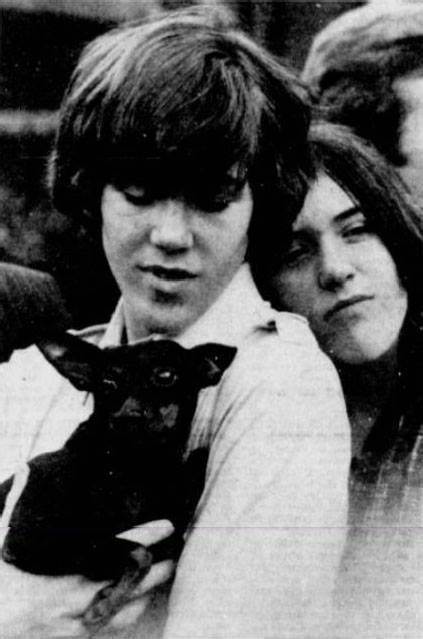
Stayner and Queenie (A Boy and His Dog)

On January 23, 2019 the Merced Sun Star newspaper printed a front page photo that showed both of the Stayner boys together in 1980, shortly after Steven Stayner had been reunited with his family. Steven’s story was remarkable. Steven disappeared when he was 7 years old, simply vanished from his neighborhood one day. It was 1972. Missing for over 7 years, he was reunited with his family only after his captor kidnapped a second child. Steven couldn’t endure seeing this child’s anguish and he hiked the little boy out to a police station. Although rarely mentioned, he also brought with him a dog. The child Steven aimed to rescue ultimately led to his own rescue. It was an incredible story, one that mesmerized the nation. This photograph, taken during the family reunification, shows Steven with his older brother Cary and their father, Delbert Stayner. The portent was only realized in hindsight : one brother, Steven, had saved a life.  Sadly, Steven died an untimely early death in 1989. Ten years later, in 1999, his older brother Cary Stayner was to gain notoriety for committing the unbearable murders of four women. Overall, a very grim and sad story for the family and the town of Merced.

This was a rare photo that captured both Steven and his older brother together, a moment in a time of celebration. But my eyes saw only the dog. Hey! What about Queenie? That’s a picture of Steven and his DOG! She’s right there, just to the side of Delbert Stayner’s elbow! A little black dog with tan legs, Queenie had been with Steven throughout the years of his captivity. She looks happy in this photo, bright eyed.         (Link to Photo from Modesto Bee Here)

I’m a veterinarian. Of course I noticed the dog. That and – I knew Queenie, knew them both, she and Steven. I knew them because I took care of Queenie at her life’s end. That was many years ago. Her importance was to Steven, her passing private. I share a bit of this story because in today’s world we talk about the “human-animal bond”. We use scientific methods to analyze the effects that animals have in sharing our lives. C’mon people – it’s simple : love.

Queenie. Steven was very young, only 7 years old, when he was torn away from home and family. Queenie entered his captive life early on and remained a constant throughout the years to follow. She gave him unwavering loyalty, and non-judgmental constant cheerful companionship. It is notable that when he left that night to return the little boy, Steven never considered leaving his dog behind.

I met Queenie and Steven in late 1982 or early 1983. She was very ill. The little dog looked thin compared to her bloated abdomen. Steven was very quiet. A polite young man, he desperately wanted to save her. I think, in many ways, she had saved him.

Queenie’s abdomen was enlarged due to fluid build up, a condition called ascites and often caused by liver failure. Back in the early 80’s, blood tests, ultrasounds and other diagnostic tests were not readily available in the Central Valley. Neither was overnight care. I lived in Turlock and commuted to my job in Merced that year. So I started Queenie on IV fluids and other medications and drove her home with me that night. I rigged her IV fluids first to my car door strap, then used a coat hanger to suspend them from a towel rack. She was a sweet dog, but had no energy left to fight her illness. Queenie passed away quietly in my living room at home in Turlock. Steven took her from me the next morning. Although no autopsy was performed, I believed she had liver cancer.

Although I saw Steven with other pets after that, we did not have a personal friendship and I lost touch with him over the years. The love that he and Queenie had for each other has stayed in my heart and I was touched to see her once again, that doggie laugh on her face as she forever follows the love of her life, Steven.

Christine B. McFadden, DVM

drmc@mcmenagerie.com

My Husband’s Hospital Vacation

My first indication that text messaging had gone too far in my household was the afternoon I checked my phone and discovered the following message : “Just wanted to let you know. I thought I might be having a heart attack so I checked myself into the hospital.” It had been sent from my husband’s cell phone.


What you need to know were the events preceding this text message. My husband had taken our children skiing two days earlier. On this morning, he had done some moaning and groaning around the house. The problem is, I not only have to get ready for work myself, but I oversee care of the kids, the cats and the chickens before leaving. Getting to school on time is a mountain we climb every day. If it’s not worth opening your mouth to speak up about something, I’m not going to slow down long enough to start an inquiry. He knows where to find his Advil.


I confess I felt more irritation than anxiety when I read the message. Really? I’d had a full day and no lunch up to that point. So I called him. He answered. He sounded cheerful. Enough hours had passed before I’d discovered his message that he could assure me that his chest x-rays, his blood tests and his EKG were all normal and he wasn’t having a heart attack. So why are you still there? I reasoned. Well, he rambled on, this doesn’t explain the pain. “What about arthritis?” I asked. Oh no, he assured me, I’ve never had arthritis here. It’s on my right side. I was driving myself to the golf course and felt pain in my right arm, so I pulled over and googled heart attacks. It said they would be on the left side, but I thought I should be sure. They’re going to run another test to see if I have blood clots. If it’s abnormal, I’ll stay for a CT scan.


OK, honey. I returned to my own patients. There was a cat that had been tumbled in the dryer for 7 minutes. She appeared dazed, with tiny bruises starting to appear on her skin where patches of fur were missing. She was a lucky cat; only last month, another cat had actually died in a similar accident. We began treatment for shock and started the cat on IV fluids.


It was closing time when my husband called. My test is abnormal, he said. “What’s the name of that test, hon?” D-Dimer. We use the D-dimer test in veterinary medicine. Platelets, the cells that help blood coagulate or clot so you don’t bleed out, will slowly break down after they’ve served their purpose. If your body is forming big blood clots where it shouldn’t, the by-product of platelet breakdown will be very high in the blood stream. The D-dimer test measures this level.


For a variety of reasons, I didn’t believe it. So while getting the kids squared away I researched the normal blood levels for humans. Armed with this info, I went down to visit my husband in the ER. He looked remarkably fit. In fact, he wasn’t feeling any pain, though he’d not been given any medication. I asked his nurse for the actual number on his D-dimer test. It was less than 200. I stared at the nurse. “But that’s normal”. Yes, the nurse agreed. I stared at my husband. “Who told you it was abnormal?” He frowned, concentrating. He wasn’t sure (What else did he have to do?). About then they came to wheel him down for his CT scan. They said it would be read that night. Forgive me my skepticism, but having assured myself that my husband was doing very well, I kissed him and told him to enjoy his scan. At this point I reflected that if they did find something wrong with him, it would not be what he’d gone in for. I slept poorly (despite my brave front). At 2:20 in the morning (5 hours later) my husband sent a text message that he had completed his CT scan but it wouldn’t be read until the next day.


I visited him on my way to work the next morning. He was cheerful and even complimentary on the hospital breakfast. They were going to run some more blood tests. I left him to it.


At work, my own patients were well. My dryer tumbled cat looked much better and was enjoying a hearty breakfast herself. Her bloodwork was excellent. By early afternoon I was discharging my patient to her ecstatic owner. Back at the human hospital, my husband had been leaked the information that he had a “non-displaced hairline fracture in his right rib”. My husband was now being offered an echocardiogram and had begun to call me every hour or so. I told him if he couldn’t relieve the babysitter by 3:30 to let me know. If he wanted to stay another night in the hospital that was on him. I was worn out.


Once he knew it was just a cracked rib, my husband felt lots better. I arrived home that night to find he had invited several people to dinner and cooked up a storm. Even better, he could go on his golf vacation next week.


I am SO grateful my patients can’t talk!


Christine B. McFadden, DVM

drmc@mcmenagerie.com

My Christmas-motif salad wreath emoji

My staff said they needed to speak with me this afternoon. Well, of course. Had we not just enjoyed a dinner and dancing together on Saturday to celebrate the holidays? I met their loved ones. We shared food together. There were contests and prizes and drinkable holiday cheer and overall it was quite the festive occasion. With a day in between to recuperate, everyone was at their sparkly best back at work.

Monday started with a raccoon from the zoo. Her swollen cheek was returning to normal and no abscessed teeth were found, so we shipped her back to the zoo. We tackled two broken legs, a cat and a Great Pyrenees puppy. Both are expected to heal. We saw several birds. One, an enormous 30-year-old Blue and Gold Macaw parrot, screams the entire time we work with him. Oh, sorry, you heard him, too? My ears are still ringing. He was having his annual exam and a nail trim, for pete’s sake. We tended to an elderly rabbit whose x-rays revealed severe arthritis in the lower spine. We prescribed both an anti-inflammatory medication and one for nerve pain (neuropathy). We enjoyed a visit (with vaccinations) with a young Shepherd puppy that just found its Forever Home.

Good news arrived on another front : A 7 pound little stray with breast nodules and rotting teeth had been adopted. For Christmas this little dog not only found a Good Samaritan (shout out to the Stouts!) to address all of her considerable medical needs, but today the biopsy of the breast masses showed that they were benign! With no evidence of a deeper cancer, she can look forward to many healthy years to come. (Side note: I’ve said it before, but can’t help point it out again: Older unspayed female dogs run a 25-percent risk of developing breast cancer, usually malignant. Have your puppy “fixed” while she’s young to prevent this. It really is that simple.).

I fielded questions about pet snakes, lice on rats, a pet pig, and found time to do a little surgery. So when my staff flagged me down I slowed down to give them my attention. “DrMac, when you send an emoji on your phone, do you think you’re sending a Christmas wreath?” First I had to redirect my mind, away from veterinary medicine and onto “emoji”.

Just in case you’ve spent the last 20 years stuck in a Jumanji game, an “emoji” is a cute little symbol meant to convey a person’s thoughts or facial expressions or a symbol. Emoji’s can be inserted into a conversation during text messaging on the ubiquitous cell phones. You needn’t say you are happy, you can simply send a smiley face. Same with “sad”, “embarrassed” and a host of other feelings. These little cell phone symbols also pop up unexpectedly, as your “smartphone” detects the theme in a sentence and suggests a complementary emoji. A turkey showed up around Thanksgiving on my phone, and with the advent of the Christmas holidays, I noted a tree symbol pop up, trimmed in holiday ball ornaments, and another of a Christmas wreath.

So I began to include a Christmas tree in my text messages, whether or not it was pertinent to the conversation. I was being festive. As soon as I saw the wreath, I began to send that out, also, alternating one with the other.

On Monday afternoon this non-medicine related question came out of left field and I took a moment to adjust. Yes, I admitted, I’ve been sending out text messages with Christmas wreaths. I was puzzled.

Three of them began to howl, collapsing into themselves with laughter, barely able to sputter out “You’ve been sending salads!”

What?

The sad truth came out. Those tiny little colored balls decorating my “wreath” were cucumber and tomato slices. Worse, when the emoji was sent from my I-phone to an android phone, it transformed into a bowl of….salad. Not remotely wreath-like. Well, you can’t let little things like this get you down. I have now sent out a text to my nearest and dearest saying “Greetings! I’m sending you my exclusive Christmas-motif salad wreath emoji, which I mistakenly thought was the accompaniment to the tree….” So here’s to happy holidays to all and if I send you a salad wreath just enjoy it, ok? Related image Image result for salad emoji

Christine McFadden holds a license to practice veterinary medicine and surgery. She has cared for the family pets of Merced at Valley Animal Hospital for more than 30 years. Send questions or comments to drmc@mcmenagerie.com.

Cloning

For roughly $50,000 you can clone your favorite dog or cat. Speaking strictly for myself, I was somewhat startled. Are we there already?

Since I’m still sewing up cuts with plain old needle and thread, I find some of this high-tech stuff interesting. And amusing. And disturbing. So while I’m still healing the old fashioned way, somewhere out there veterinarians are offering to clone your pet.

They start with something as simple as a skin biopsy, a little 6 mm circle of tissue taken from your pet and carefully preserved for the genetic material found in its DNA. From this they can replicate the DNA and fuse the sample with an egg. This grows into an embryo that can be implanted into a surrogate mother. Once born you have a “clone” – a pet produced asexually from one ancestor to which they are genetically identical “twins.” A lot of this original work was being done in South Korea. There are now companies based in the United States that also offer either to preserve your pets’ DNA for future cloning or you can order up your very own clone today. In humans, identical twins result from the natural splitting of an egg in utero and both children contain identical DNA genetic makeup. Someone labeled identical twins “natural clones”?! Canine clones appear to have been the most popular pet clones requested by the public in this early work.

There’s a lot to consider here.

Say everything goes smoothly with the pregnancy and your little clone is born. Let’s name her “Clonia.” In the old nature-versus nurture-debate, right from the get-go we may have the same genetic material but it is going to be raised by another mother. That surrogate doggie mom may have been chosen for her availability as a uterus (think “animal shelter rescue”) and may not be particularly personable towards humans. And everyone, mom-dog and puppies, are living in a laboratory setting, not on Grandma’s comforter in your kids’ bedroom closet. So the first six weeks or so are not in a home environment and raise some serious questions about early socialization for the beloved Clonia. From what I could gather, responsible lab researchers provide careful monitoring to rule out abnormalities in the little clones, so many don’t go to their homes until they are several months old. Developmentally, they cannot be properly evaluated until then. This means even more time spent in a laboratory setting, coddled and cossetted, no doubt, for $50,000, but not a home. So when you do bring home your old pets’ genetic double, Clonia may not act exactly the same as her ancestor. Maybe not at all. Nurture versus nature.

And what happens to the mother dog, once she has performed her duties? This issue is clouded by lack of information. Clonia, by the way, cannot be registered with the American Kennel Club, no matter how prestigious her ancestral pedigree. Since the first dog cloned in the United States was born in February 2016, as of this writing, there isn’t a lot of information out there about “identical personalities” to the original pet. Somehow liking to chew up your sneakers or wagging your tail clockwise isn’t enough to convince me that you have reincarnated the original pet. Isn’t that really what this is all about? Clonia may not physically be an identical twin and again, her personality, shaped by very different early experiences, may be substantially different.

There are so many hearts and homes out there looking for each other that I find it hard to recommend seeking love through a clone. Would a clone of Shakespeare, father to twins Hamnet and Judith, still pen his famous works, such as “Romeo and Juliet” wherein he wrote “What’s in a name? that which we call a rose By any other name would smell as sweet.” I suspect that that which we call a dog is each an unique individual and that the search to duplicate your beloved pet by cloning borders on smoke-and-mirrors shell games, not something sweet.

Christine McFadden, DVM

drmc@mcmenagerie.com

BBBD (Bit By Big Dog) / Flail Chest

The office was closed for a staff meeting. We were stuffing pizza in our mouths and watching a power point presentation when the doorbell buzzer screeched over our heads. Everyone jumped. We need to get that thing adjusted to a gentle chime before one of us has a heart attack. Someone went to investigate, then signaled a nurse for triage and suddenly there was an urgent request for a veterinarian. Since I was neither presenting the power point speech nor suctioning the throat of a vomiting dog I was the obvious choice. I moved.


My patient was a tiny golden Chihuahua barely making weight at 5 pounds. He probably shouldn’t have mouthed off to the pit bull, but boys will be boys. He’d been BBBD (Bit By Big Dog). I examined him on the floor. This proved to be a good choice, because he promptly stood up on all 4 legs and ran away, screaming. One, he didn’t jump off the exam table and two, his legs weren’t broken. Good, we were already getting somewhere. His name was “Peru”.


His owner agreed to our basic plan : Anesthetize little Peru. This would allow us to fully assess his injuries. We could clean up his wounds, take x-rays, start IV fluids and antibiotics all without causing further discomfort. Given his continued shrieks if we even looked at him we all felt relief at this plan. His owner left and we set up for him as the meeting finished.


Initial assessment was ugly. Peru had multiple punctures over his shoulders and left flank. Two ribs were broken on his left side, one of them flopping about, unhinged. It was unnerving. We taped it loosely in place. Miraculously, although the x-rays showed some lung contusions (light bleeding into the lungs), there did not appear to be major tears into the chest cavity. Peru was such a tiny dog and so thinned skinned that you could see the purple bruises along his side where his tissue had been crushed. There was an odd lump on his belly, just behind his belly button. The skin over it was perfectly intact. I gently pressed the bump, and felt my finger slide into a hole, a hernia created when teeth ripped his belly muscles apart!  I rechecked the x-rays, looking especially hard at the edges of the rib cage where the diaphragm joins the body wall.  The diaphragm is the thin sheet of muscle that separates the chest cavity from the abdomen. The movement of the diaphragm helps to inflate the lungs. If there was a tear through the diaphragm and I opened up the belly, the lungs wouldn’t be able to expand properly and Peru wouldn’t be able to breathe on his own. He would die unless we provided assisted breathing (ventilation) for him. I couldn’t be completely certain from the x-ray.


We prepared to breathe for Peru and took him to surgery. Less than 30 minutes had passed since he entered. I carefully opened the skin over the abdomen, exposing the jagged hole punctured through his belly wall, and listened for the tell-tale sucking noise of a damaged diaphragm. For a long moment no one else in the room was breathing except Peru, and he was doing just fine. His oxygen saturation (SpO2) stayed at 99%. I cautiously explored his insides. More miracles : the diaphragm, liver and spleen were all intact. He had two jagged tears through the abdominal wall (outer skin intact!) and I connected them up and tidied the edges. This would both remove tissue directly crushed and possibly infected by teeth. Healthy tissue heals better. I “ran” the intestine through my fingers and discovered a 1 cm section of small bowel that had been pierced on each side by teeth. We tested with sterile saline and it spurted out like a geyser! Well, that wouldn’t do. Rather than resection I chose to repair the damaged bowel and sutured it.  We injected more sterile saline to test it twice – water tight. We cleaned and sutured all his other wounds and placed a protective chest wrap to support those ribs. When little Peru awakened he was happily groggy on pain medication and we all breathed easier.


By Day 2 Peru tried to jump into his owner’s arms when she came to visit. His recovery has been slow but steady, especially since I figured out that the first antibiotic made him vomit. He’ll wear his supportive chest wrap for several weeks while the ribs heal but the bruises are fading and soon enough he will be golden tan again rather than purple. But he’s still feisty around big dogs!


Christine B. McFadden, DVM

drmc@mcmenagerie.com


Christmas Kittens


I blame it all on the Christmas season and Fed Ex. The year that Christmas almost didn’t come. The pressure began in November. Each year I brace myself for the Holiday Onslaught. I understand that Santa has his elves and all those reindeer, but it’s just too iffy for me. Even if I can’t one-up the competition, I’d like to give a special gift, especially to my children.


Somehow, each year, it all comes as a new and dreadful surprise. BAM! the holidays rush at me. Turkeys and Black Friday and Cyber Monday and the Nutcracker and the Hallelujah Chorus, the Babe in the Manger, Wise Men and candy canes and oh, there’s not enough space to fit it all in.


Remembering the year that Christmas fell apart still fills me with dread. THAT year I entered the holiday season prepared. I had a plan. Full of confidence, I placed my orders in early November. Weeks to spare, but not so far in advance that I’d hide something in a safe place and completely forget about it until I cleaned a closet 4 years later. Who cared about Santa’s List? No need to check mine twice. I was done! New winter coats for the twins? Check. New curtains for their room? Fabric samples in the mail? Check.  New bed? New bedding to accompany? Check and check. I was done, done, done; let the holidays come. I sat back, humming a bit to limber my voice up for some Christmas carols. Stirred a few marshmallows into my hot chocolate.


And then it happened.  Three weeks before Christmas someone stole one of the Christmas coats. Fed Ex, an overachiever in seasonal delivery, had dropped the package on our doorstep at 7 PM. We were away, attending the Nutcracker ballet. Never expecting a package delivery on a Saturday night at 7 o’clock, I had not checked our porch before going to bed. Someone else did. I found it hard to believe that they were a child’s size 8 but never mind, it was gone. A replacement coat was not to be had for love nor money. Even E-Bay failed me. When you have twin girls, one coat is not enough. Someone had stolen Christmas.


Other blows were to come. The fabric swatches for those curtains hadn’t arrived, and on my third try I finally got through to the wonderful woman who had made me another set 20 years earlier, only to realize that she had dementia. Not only were my swatches not in the mail, but the time frame for “custom” anything had run out. I sadly wished her happy holidays as I got off the phone. I had a headache and my confidence was slipping.


And then, 2 weeks before Christmas, they told me they would not deliver the bed. In November they had guaranteed delivery in less than 4 weeks, but now the holidays congested their schedule and suddenly they were telling me December 26th.


Santa has broad shoulders but he needs them to carry his own pack. I just needed something under that Christmas tree that I could count on for my children.


In full panic mode, I wailed over my misfortunes at work. Cyndi popped off and said, “Why don’t you get them a kitten?” Staggered, I shut up full cry. My brain fogged. I stalled for time, looking for other options. I had to admit, nothing would best a kitten. So off to the Animal Shelter I went, looking over what seemed to be hundreds of cats and kittens of all variety, color and sizes. Most of them sick with the Christmas crud. I grimly adopted two, noses streaming and eyes goopy. Back at work I had them both tested for Feline leukemia and Feline HIV viruses and both tested negative. OK. Deep breath. I gave them a spacious cage in the Isolation ward and plied them with antibiotics and good food. I glared at them and said “10 days. You have 10 days to get well or you’ll miss Christmas. Don’t even think of it.” I will never forget the stress of that Christmas. The count-down was excruciating, but by golly, those kittens came through for me! They cleaned up, dried up and plumped up all in time for Christmas. And when the great day came……. Santa got all the credit. Thank you, Santa Claus.


Christine B. McFadden, DVM

drmc@mcmenagerie.com

Snow Globes and Other Christmas Dangers


I suppose there might be a deeper meaning to snow globes than just pure enjoyment. But me, I don’t really care to go deeper. I am entranced by the swirling snow and glitter that light so many pretty scenes. Scenes of trees and mountain tops, families, Nutcracker stories, elf and Santa stories, Nativity scenes. I am open to all of them at this time of year. I give ‘em a swirl whether they play music or not. The snow never drifts long enough.


So I was a little indignant when I first heard that snow globes might be dangerous to pets. What old Grinch was picking on my snow globe love? There was truth to the story, sad to say. It seems that some snow globes are filled not only with water, but with ethylene glycol – good old-fashioned antifreeze. Antifreeze is used in cars. It serves to cool the radiator and is also found in brake fluid, motor oil and many de-icing products.


ETHylene glycol (EG) antifreeze is sweet to taste and attractive to both cats and dogs. Antifreeze produced after 2012 is supposed to have a bitter taste added to it. All ethylene glycol antifreeze has a greenish color. This antifreeze kills. A different antifreeze product made with PROPylene glycol is unlikely to poison a pet and is orange-pink in color.


As little as 5 ml’s or 1 teaspoon can kill a cat or small dog. They lick the sweet antifreeze up and within the hour may begin to show side effects of vomiting, seizuring and staggering. This first stage of poisoning progresses rapidly over the next 12-72 hours to the third stage, where odd crystals of calcium oxalate settle in the kidneys. Kidney failure is quick to follow. At this stage there is no reversal. The affected pet dies.


Should you see your pet licking up a puddle of green antifreeze spilled from your car’s leaking radiator, take your pet to your veterinarian immediately. Ethanol, which is the same alcohol used in cocktails, is the antidote to antifreeze poisoning. Straight vodka will do. I know, I have given it intravenously in an emergency and the dog lived. Strange but true.


So why on earth is this stuff in snow globes? The snow globe is reputed to have originated in France (late 1800’s) or in Vienna, Austria in the early 1900’s. Many people were still using candles for light, and one clever method used by shoemakers to create a larger spotlight involved placing a large round vase (globe) filled with water in front of a candle flame, so that the reflective light on the other side was enlarged to the size of a person’s hand. The electric light bulb had been invented but would remain under intense development for improvements over the next 100 plus years. The early electric bulbs weren’t very bright. A Mr. Erwin Perzy in Austria tried the same candle-maker’s trick for brighter spotlights by placing globes of water in front of electric bulbs, but to no avail. So he added something to make the water more dense, hoping to reflect the light from the bulb better. He tried semolina flaked baby food. The effect reminded him of falling snow……….he added a picture diorama, and the modern snow globe was born.


Water-only filled globes weren’t very satisfactory as the swirling flakes just dropped to the bottom.  After many trials, it was found that adding water mixed with glycol made the “snow” fall more slowly, prolonging the effect. Because a 50:50 mixture of water and ethylene glycol doesn’t freeze easily (negative 35 degrees Fahrenheit!), it had the added benefit of keeping snow globes stable both when shipping and selling them in colder climes. As long as the snow globe remains intact the addition of antifreeze is a good thing.


Beware if you and your family dog rent a cabin in very cold regions – antifreeze is sometimes added to the toilet water to keep it from freezing. Don’t let your dog drink from the toilet! And do not, under any circumstances, leave a broken snow globe for clean-up later! Hold larger globes over the couch to make it snow. And let it snow, let it snow, let it snow.


Christine B. McFadden, DVM

drmc@mcmenagerie.com


Thanksgiving without Martha Stewart


Anybody ever hear of Martha Stewart? It’s been many a year since I received my first genuine M.S. cookbook. Having subscribed to “Gourmet” magazine for years I felt reasonably accomplished in the kitchen, my yardstick for comparison being fellow vet students who lived on Top Ramen and cheap hamburgers. Spaghetti and big salads were also popular.


I was entranced by that first book. A Big City girl at first, Martha used her bathtub, as I recall, to cool down drinks before a party. And then she got that country house. There was no stopping her then. And as for me? I sucked up every glossy page of recipes and food presentation. Yes, presentation was everything! How could you enjoy time with your friends if the crusts were not removed from the bread? Wait, back up! Make that home-made bread (get out the yeast! Is it alive? Did somebody proof this yeast?) And the chicken breasts, skinned (no one sold them already skinless back then), pounded thin and carefully rolled around the filling. Martha’s looked sleek and elegant. I stuffed as much ricotta filling in as I could and they looked, well, lumpy. We loved that recipe. Ahhh, those were the days.


Books make a good Christmas present and one year Santa granted me my wish. I received the Martha Stewart Christmas Cook book. I forget the actual title. Being the sort of person that reads the introduction, I found my holiday anticipation deflating faster than, well, a soufflé. By this time in my life I had a couple of kids and worked up to 6 days a week, with nights on emergency duty thrown in for good measure. I still loved cooking and planning dinners but reality in the form of only-so-many-minutes-in-a-day simply clubbed me over the head every night. Bedtime. In her Christmas cook book Martha detailed how she started Christmas preparations in November. Her cookies may have been home baked, but they were made many weeks before Christmas and stuck in the freezer. It sounded like she had a big freezer. And she mentioned her several merry little helpers – six? seven? who assisted her in the kitchen around the clock. Help? She had HELP? I had my own merry little helpers, all of them under the age of 5 and nearly impossible to keep OUT of the kitchen. They stirred enthusiastically and sent the flour flying. They measured out chocolate chips and ate half when I turned to get the vanilla. They shared with the dogs, who also refused to leave the kitchen, and spilled anything and everything to test Newton’s Law of Gravity and my patience. Don’t talk to me about eggs. There’s some movie where Audrey Hepburn learns to crack an egg and turns out gorgeous (Audrey, not the egg) (It was in “Sabrina”). My kids mastered the art of egg cracking at an early age, often while still in the crate. We did collaborate once on cracking an egg on the sidewalk to see if it would cook, but that wasn’t over the holidays, too cold, and now perhaps I see where they got their childlike curiosity….


I had had my doubts about Martha, but this book was the tipping point. Henceforth I viewed her recommendations with suspicion. In the years to follow I did occasionally succumb to some new Martha-ism. I bought the big turkey molds to make cornbread. Ten pounds of cornbread later, after everyone took a single bite because the turkey wasn’t the only thing stuffed, I threw in my apron.


And then, in her monthly magazine, she published a Martha Thanksgiving. Martha has horses, kept in a barn cozy with warming tiles for those cold Eastern winters. And that year she proposed to serve her annual Thanksgiving dinner in the barn, on tables covered with fine linens. There were pictures to prove it. I, too, love horses. I’m sure I would love Martha Stewarts’ horses. But did anyone tell the HORSES that it was Thanksgiving? I can’t imagine saying grace with the noise of a horse whizzing comfortably in the background. Making the Holiday Toast while the aroma, not of your Cab Franc, but rather horse manure, fills the barn air. A happy horse was pictured leaning over his stall door, a cart of goodies nearby. When excited, horses snort and spray flies. I have never recovered from this Thanksgiving with Martha and was in stitches when I came across an on-line letter “Martha Stewart Will Not Be Dining with Us” (author unknown). I shall be thankful this year that I have not consulted M.S. about any of my dishes. And this Christmas, when you consider your book list, be careful what you wish for.


Christine B. McFadden, DVM

drmc@mcmenagerie.com


X-Ray Vision / Halloween Horrors


For those who wish for x-ray vision, I say “Have at it, and good luck to you”. Of course, in the cartoons, x-ray vision meant the ability to see through walls and other people’s clothes. In the military, the phrase “night vision” is a desire to see clear as daylight – in pitch darkness.  For me, x-ray vision is the ability to look at radiographs of my patients and find the needle in the haystack – or whatever oddity has made my patient ill and prompted the order for x-rays in the first place!  The original “x-ray” (“x” meant unknown) was discovered in 1895 by a German scientist named W. C. Roentgen. This new ray could pass through the flesh but not through bones or metal objects. Roentgen was able to capture a picture of a hand using these mysterious invisible rays with a photography plate. Ta da! This work was shared among scientists of the day and ultimately led to a mobile radiograph station used in World War 1 to serve injured soldiers on the battlefields of France. Led by Mme. Marie Curie, various automobiles were transformed into x-ray taking centers, complete with the ability to develop the film on-site and were called “Little Curie’s”. It is said that Marie Curie herself drove one to the battlefields.


This was over 100 years ago and astounds me. Antibiotics were a thing of the future, anesthesia was crude, but we could take see-through pictures of people’s bones and hunt for bullets to guide their removal. Amazing!


Today the digital age has improved radiographs to a very high-def picture (ok, not like the TV in your living room). Although “x-rays” are used to make the picture, the actual image produced on the plate or screen is called a radiograph. Truth is, most of us still just call the pictures “x-rays”. That’s ok. X-ray images are only two dimensional. You must combine two views, usually one taken laying on the side and a second with the pet laying down flat on its back. Then the reader , a radiologist or just your local veterinarian, must put these images together in their mind to decide if the swallowed object (or whatever you’re looking for) is on the right or left side, closer to the backbone or by the belly button.  You must join these two images together in your mind to create a grid. For 3 dimensional x-rays, turn to the CT or CAT scan (computerized axial tonometry) images. In this technique a series of x-rays views are taken from multiple angles, then a computer processes it into neat slices of the body part under discussion. Confusing? You get used to it after awhile.


The devil, as they say, is in the details. What appears simple at first look may in fact be hiding something very important. Like a grainy black and white polaroid photo, X-rays are a mess of shades of grey. (Sorry, didn’t read the book. I was reading x-rays!) Many x-rays are easy to read. They give you false confidence. A large bone snapped in half, got it. An enlarged heart, bladder stones, a calcified disc in the backbone. All easy to read. As you progress in more detail, the headache starts. Are those doughnuts in the lungs? Nope, no dunking here, we’re scanning for round tubes of thickened bronchi in a coughing dog. No kidding, these unhappy, inflamed lungs will show up as white circles called “doughnuts”, at least by those in the veterinary medical profession.  Calorie free, may I add.

We often confirm a pregnancy by x-ray. Blood tests can confirm the pregnancy after the first 30 days of a roughly 2 month pregnancy (dogs and cats) but is close to the cost of x-rays and gives no details beyond yes or no. Ultrasound can confirm the pregnancy and check on live fetal heartbeats but isn’t reliable for giving you an accurate head count. Radiographic images taken after 45 days of pregnancy, when the babies’ skeletons are calcified, gives an accurate head count and is tremendously useful on the day of delivery, as the breeder knows what to expect and when labor is over.


In the last three days we x-rayed two dogs, a kitten and a guinea pig with broken bones. We took chest x rays on more than 6 pets and found  4 enlarged hearts, a tumor in the lungs and a case of bleeding into the chest. A macaw parrot did not have an intestinal obstruction. A pregnancy had 3 puppies. One dog had hip dysplasia, two had severe arthritis of the spine, another a slipped disc. “Patty” had nothing wrong at all on her x-ray image. But she screamed if you tried to gently touch her tail and was found to have a deep bruise to the soft tissue over her hip. The radiographs gave us peace of mind that Patty had not broken any bones, and steered our course of treatment towards the correct use of anti-inflammatories to speed her to a quick recovery.


Christine B. McFadden, DVM

drmc@mcmenagerie.com