Little Old Ladies

She was a little old lady, short and round as a dumpling. She energetically grabbed her dog from the exam table and tipped him onto his paws. You’d never have guessed her age except for the grey hair. Her dog found his footing and waited expectantly by her feet. “I’ve got to go”, she declared, “I have to decorate the Hall for my sister’s 50th wedding anniversary.” Wow, I marveled, that’s something! A blaze of blue eyes flashed at me. “It’s a pain in the-you-know-what” she said. “My 50th was 2 years ago and every day I wake up and wonder if we’re going to make it.”  She gave me a saucy grin and danced out the door, her dog following her in adoration. I stared after them open-mouthed. Awesome woman.

People and pets share their lives with me. It’s a jumble and a jungle out there, and hanging on to these moments builds a life. On a long work day, I spend more awake time with fellow staff than I do with my family. 

When I’d first started out in town I struggled to put my textbook medical knowledge together with my patient’s needs. My focus was on the animals and I learned their names first. This fact appalled me the day I rounded a clothing carousel at a local store and came face to face with a client. The woman looked up, a smile starting and then fading as I blurted out “Beau!” – not her name at all, but her dogs. Good grief! I worked harder to learn BOTH their names in future but don’t test me on that one. Over the years my brain often refuses to let go of the first impression, the pet we bonded over who is now deceased, so that I continue to call the next dog, or worse, the third or fourth pet that follows, by the original dog’s name. My staff cringes at these mistakes, occasionally alarmed as they search for other signs of dementia. There’s Zoie’s Mom. Oh, she has another dog now. Mrs. R is 87 years old. Last year she took a trip to China with her daughter. Next year they’re thinking of Australia. Zoie was a 10 pound black miniature poodle who had epilepsy and the sweetest disposition you could ask for. Her new dog is 3 years old, but she will always be the “new” dog. When we get together we talk more about Zoie. The new dog is very healthy and we don’t have twelve years of medical battles fought and won to look back upon with her. 

And I have fond memories of the family matriarch, in her 90’s, who put out condensed milk for her cats every day. They were all terribly obese. She confided to me once that if they turned up their nose at a can of food she’d just open another flavor. Sometimes, she said, there would be as many as 7 cans lined up along her porch. I marveled at the ability of our pets to train us. She took in many neighborhood strays and it pleased her to spoil them. She laughed at my dietary advice. Condensed milk had seen her into her 90’s and I wasn’t going to convince her otherwise.  She gave me a chocolate colored blanket she’d hand crocheted. I have it yet.

old ladydog-walking-4426782.jpg

It was a little old lady who taught me about the bluing older woman used to take the grey out of their hair and make it lustrous white. True, sometimes it turned their hair a delicate blue. This invaluable knowledge helped me make white poodles whiter. 

I’ll be a little old lady someday. I’ll hoard cats and keep too large of a dog and goodness knows what other kinds of critters. I plan to wear purple with a red hat and act up just like those women in the Red Hat Society, because I love the poem by Jenny Joseph. And to all the older women who have shared their pets and their lives with me, thank you for enriching my days and just for being you.


Christine B. McFadden, DVM

drmc@mcmenagerie.com

Missy and Hypoglycemia

She was so small that her big sister was a Beanie Baby. She’d been sold straight from a cardboard box in the parking lot of a Big Box store. Her owners were entranced from the moment her fluffy 1 ½ pound body hit their hands. The sellers were short on details like birthdates. We guessed her to be 2 months old? She was christened Missy, her basic exam checked out, and she had her first vaccination before they took her home.

The roller coaster ride had begun. Sadly, Missy had already been exposed to Parvo virus. Parvo is dreaded throughout our Valley, as we seem to see a lot of this viral disease in young, usually unvaccinated dogs. With no immunity, they fall ill, exhibiting extreme vomiting and a watery bloody diarrhea. The virus further attacks their body by dropping their white cell count, so they can’t fight off the infection. Many puppies die from the disease. Supportive therapy in-hospital with intravenous fluids and medication provide life support while their body recovers. It’s a puppy’s best chance to survive. Missy was sick so quickly we knew that she had been incubating the disease when she was brought in and the vaccine wouldn’t have had time to provide protection. (The vaccine itself does not cause the disease) Further complicating matters was her very small size. She had no body fat to speak of. Placing an intravenous catheter in her threadlike leg vein was a miracle. And like many tiny, tiny puppies she couldn’t keep her blood sugar up without constant eating – and Missy couldn’t keep anything down. If her blood glucose levels plummeted she might faint, seizure or even die. To counteract this, we added dextrose to her IV fluid drip. And then we worried about overloading her tiny body with fluids or we might flood her heart! We have an IV syringe pump that carefully meters each drop to these most extremely small of all patients.

Missy was a fighter. She gamely held on and after four days Missy turned around and successfully fought off parvo. Hurrah! But within days it became obvious that Missy’s body couldn’t regulate her blood sugar levels on it’s own. She would appear dazed and weak at home for no obvious reason. I had to explain that Missy couldn’t waste a mouthful on treats – many treats are high in sugar (check the labels for corn syrup, dextrose, sugar beets, etc) and just as with diabetics, it gives a quick sugar high and then just as quickly dips back down. The dangerous Sugar Rollercoaster. Don’t take that ride! Missy needed to eat dog food, with protein, fat, slow-release complex carbohydrates (carbs are the sugars in food) and the calcium, vitamins and minerals a growing puppy needs. For several days she had to be fed every two hours, including at least once during the night. We expected her to outgrow this…. but when?

Missy’s body did learn to self-regulate. She grew to over 4 pounds. She finished her series of puppy shots and had no further health set-backs. We set the date for her ovariohysterectomy /spay for 8 months of age, when I could reevaluate her teeth – tiny dogs often have delayed dental eruption (they are slow to lose their baby teeth) and if retained, the baby teeth will crowd the adult teeth, trapping food particles and eventually rot out both teeth! It is so much easier on the puppy to remove these excess baby teeth under the same anesthesia they undergo for their spay / neuter surgery. We schedule the surgery when the adult teeth have come in. The big day came. We checked Missy’s blood sugar before surgery. Normal. We checked her teeth – she had retained three deciduous canine (fang) teeth. We extracted them. Hurrah!

Monitors beeping calmly, we proceeded to spay Missy. She acted like a completely normal patient, recovering beautifully. Hurrah! Postoperative blood glucose tests were all normal. Another hurrah! I don’t know if her little feet ever touch the ground (spoiled by love), but in addition to all the other miracles, Missy is a superb outgoing doggie friend to everyone she meets. Hurrah!


Christine B. McFadden, DVM
drmc@mcmenagerie.com
Hysterical Clients

Who said veterinary medicine wasn’t fun?

There’s the man who got out of jail (he didn’t say why- either for going in or getting out) and came home to find his dog sick. This enraged him. We know this because he brought the dog to us (he was passing by, thought he’d drop in) and he was very thorough in his explanations to us of society’s injustices, particularly that he might have to take financial responsibility for his pet. We couldn’t diagnose the illness without a blood test – and magic wands are out of date, though I kept one on my desk for years. We’ve kept statues of the Virgin Mary, Buddha, dice, and a crystal ball. We do not turn our nose up at anything that might intervene on behalf of our patients. In the science-based world of medicine we have seen miracles – but we have also seen cases where the pet should have lived, by all rights, but died. In the end, we fall back upon diagnostic tests because they do just that: they help us to diagnose your pet’s illness, to unlock the pieces of the medical mystery so that we may help the patient.


This man was very angry. The time spent in jail seemed not to have been used for self-reflection or internal contemplation. It seemed unlikely that he read poetry. We thought we should focus on the dog. We weren’t entirely sure he could focus well enough to drive. He had no interest in paying to care for his dog nor did he wish to surrender it to a Rescue group. So he left. Only to return a half hour later, which we noticed immediately because his car was sideswiped as he drove in to the parking lot. While he was waiting for the police to show up (to investigate the accident) he surrendered the dog to Rescue. Post-script : dog did great.

And I fondly recall Crack-A-Nose. Her name alone kinda gives you a heads-up, yes? A pitbull, she had a huge pink mass of doughnut-shaped tissue protruding from her vulva. Bigger than your fist. It was very dramatic. This dog had a condition called vaginal hyperplasia, or swollen vaginal tissue. It is not a true prolapse of the vagina nor a cancerous tumor. It occurs when a female dog has been in heat, producing high amounts of estrogen. The swollen tissue will shrink back to normal size when the estrogen hormone has declined – and the fastest, most effective and permanent cure for that is to recommend an ovariohysterectomy or spay. I explained all of this to her owner, a young woman who was rail thin with blond hair, beautiful, a little twitchy. The young woman pulled a fistful of hundred dollar bills out of her bag. She requested that I perform whatever services were required and informed me that she would pay in full right then. I agreed to her terms and performed surgery successfully that night. I figure the dog must’ve been a great guard dog for some very important stash, oops, stuff.

Now stop me if I’ve told you this one before. This was when I worked in a small office off Highway 59, still called “J” street back then. I remember the skirt I was wearing because it was the last time I’d ever wear it. It was quiet, around lunchtime. A man in his twenties came in. He announced that his dog had been run over by a mower. I was nearby and nodded, told him to bring the dog in. Occasionally you see an overactive puppy bouncing around a lawn mower and accidentally getting a toe clipped. Not very serious. He stared at me. But he’s bleeding, he said. I nodded again. This was to be expected. Please bring him in.

And he did. Only he hadn’t been talking about some little push mower, he meant a tractor hay/disc mower (the tractor weighs over a half ton) and it had practically amputated the dogs’ leg, so the “bleeding” he’d mentioned was an enormous spraying jet of blood from the severed femoral artery. The dog was going to bleed out – I was surprised it hadn’t died already. I stepped in with a pair of hemostats to stop the gushing fountain and got lucky. I completed the amputation in a sterile surgery and the dog lived. But my clothes were history.

Christine B. McFadden, DVM

drmc@mcmenagerie.com

My Husband’s Hospital Vacation

My first indication that text messaging had gone too far in my household was the afternoon I checked my phone and discovered the following message : “Just wanted to let you know. I thought I might be having a heart attack so I checked myself into the hospital.” It had been sent from my husband’s cell phone.


What you need to know were the events preceding this text message. My husband had taken our children skiing two days earlier. On this morning, he had done some moaning and groaning around the house. The problem is, I not only have to get ready for work myself, but I oversee care of the kids, the cats and the chickens before leaving. Getting to school on time is a mountain we climb every day. If it’s not worth opening your mouth to speak up about something, I’m not going to slow down long enough to start an inquiry. He knows where to find his Advil.


I confess I felt more irritation than anxiety when I read the message. Really? I’d had a full day and no lunch up to that point. So I called him. He answered. He sounded cheerful. Enough hours had passed before I’d discovered his message that he could assure me that his chest x-rays, his blood tests and his EKG were all normal and he wasn’t having a heart attack. So why are you still there? I reasoned. Well, he rambled on, this doesn’t explain the pain. “What about arthritis?” I asked. Oh no, he assured me, I’ve never had arthritis here. It’s on my right side. I was driving myself to the golf course and felt pain in my right arm, so I pulled over and googled heart attacks. It said they would be on the left side, but I thought I should be sure. They’re going to run another test to see if I have blood clots. If it’s abnormal, I’ll stay for a CT scan.


OK, honey. I returned to my own patients. There was a cat that had been tumbled in the dryer for 7 minutes. She appeared dazed, with tiny bruises starting to appear on her skin where patches of fur were missing. She was a lucky cat; only last month, another cat had actually died in a similar accident. We began treatment for shock and started the cat on IV fluids.


It was closing time when my husband called. My test is abnormal, he said. “What’s the name of that test, hon?” D-Dimer. We use the D-dimer test in veterinary medicine. Platelets, the cells that help blood coagulate or clot so you don’t bleed out, will slowly break down after they’ve served their purpose. If your body is forming big blood clots where it shouldn’t, the by-product of platelet breakdown will be very high in the blood stream. The D-dimer test measures this level.


For a variety of reasons, I didn’t believe it. So while getting the kids squared away I researched the normal blood levels for humans. Armed with this info, I went down to visit my husband in the ER. He looked remarkably fit. In fact, he wasn’t feeling any pain, though he’d not been given any medication. I asked his nurse for the actual number on his D-dimer test. It was less than 200. I stared at the nurse. “But that’s normal”. Yes, the nurse agreed. I stared at my husband. “Who told you it was abnormal?” He frowned, concentrating. He wasn’t sure (What else did he have to do?). About then they came to wheel him down for his CT scan. They said it would be read that night. Forgive me my skepticism, but having assured myself that my husband was doing very well, I kissed him and told him to enjoy his scan. At this point I reflected that if they did find something wrong with him, it would not be what he’d gone in for. I slept poorly (despite my brave front). At 2:20 in the morning (5 hours later) my husband sent a text message that he had completed his CT scan but it wouldn’t be read until the next day.


I visited him on my way to work the next morning. He was cheerful and even complimentary on the hospital breakfast. They were going to run some more blood tests. I left him to it.


At work, my own patients were well. My dryer tumbled cat looked much better and was enjoying a hearty breakfast herself. Her bloodwork was excellent. By early afternoon I was discharging my patient to her ecstatic owner. Back at the human hospital, my husband had been leaked the information that he had a “non-displaced hairline fracture in his right rib”. My husband was now being offered an echocardiogram and had begun to call me every hour or so. I told him if he couldn’t relieve the babysitter by 3:30 to let me know. If he wanted to stay another night in the hospital that was on him. I was worn out.


Once he knew it was just a cracked rib, my husband felt lots better. I arrived home that night to find he had invited several people to dinner and cooked up a storm. Even better, he could go on his golf vacation next week.


I am SO grateful my patients can’t talk!


Christine B. McFadden, DVM

drmc@mcmenagerie.com

Starbucks Drama

Sometimes it is difficult to find the thread where it all began. Maybe this story started when I first stopped giving out my real name to people taking my order for pizza or coffee or things. People never seem to be able to spell my name. What with the influence on “finding yourself” and being recognized as a unique individual, it seems that all the rules of spelling went out the window and people came up with very creative ways to write their names. I just gave up. The time it took to spell out my name required too much effort for a combination pizza, hold the bell pepper, regular crust, please. So after noticing that a friend was never asked how to spell her name, I adopted it for myself. Across town, if you can order it by phone, chances are my cell number comes up as “Amy”. I assure you, everyone knows how to spell “Amy”. Irritating.


So on this morning I had just finished some minor surgery on an alpaca at the Zoo. One of my staff, Courteney, assisted. The alpaca had formed two large abscesses under its jaw, suspicious for a disease caused by the uncommon bacteria Corynebacterium pseudotuberculosis. These fist-sized masses were painful. The alpaca had to be sedated and the abscesses lanced open with a scalpel blade, then surgical drains placed to allow continued drainage while the antibiotics took effect. The operation went smoothly and best of all, neither of us were spit upon. This was excellent, as we still had most of the day before us. To celebrate, I offered to buy her a drink at Starbucks as we returned to the clinic.


She placed our order and the man behind the counter asked for a name. “Amy”, I declared without thinking. Courteney shot me a look, eyebrows raised, but the guy behind the counter said “I’ll just make that “Dr Amy”. Startled by all this attention, I mumbled that my real name was Christine but no one could spell it and retreated to a spot near the door where I tried to melt into the wall. Courteney came over to cheerfully inform me that he was a client. Had the dog been there I had a good chance of making the connection but as it wasn’t I stayed glued to my wall.


So when the Starbucks man came in today with his two dogs, one an adorable Golden Retriever puppy that looks like an overgrown stuffed toy and his chocolate Lab, I recognized him immediately and was again mildly embarrassed not to have identified him at Starbucks.

And then I remembered That Other Starbucks Drama. Talk about Déjà vu. I’m going to have to write the company a personal apology. Again.


Flashback about 4 years. Another Zoo call, this time in winter. For some reason I became completely chilled, my fingers painfully numb from the cold. My assistant that day was Tim. I offered to buy us both a hot chocolate to warm up. We pulled up in front of the Starbucks store, delighted to find parking directly in front. Large glass windows allowed everyone inside to watch us get out of the Jag. Wearing green scrub tops, we looked important, like proper doctors. It was only after placing our order that I realized I had left my purse at the clinic. I turned to Tim for help, but he didn’t have any cash on him. All eyes were upon us. Our drinks were ready. Horrified, I tried to explain the situation but the kind barista waved us off, telling us to take our drinks. This was worse, obviously they’d been scammed before. Red faced, I fled the scene. Once back at work, I immediately sent Tim back with $20. (I’d have gone myself but there was a surgery waiting for me.)


Tim returned, now red faced himself. After paying our tab, Tim apologized again while backing towards the door. Unfortunately he backed into a display being used as a room divider, which exploded as he bumped it.  Tim got down on his hands and knees to gather up items as fast as he could, but they asked him to leave. Please. They seemed to feel we’d done enough for one day. Back at work, the staff created a Starbucks “ Most Wanted” poster with Tim’s face on it.


So now you know why I pass myself off as “Amy” sometimes and as for personal apologies : I swear I won’t combine Zoo visits with Starbucks again and  oh yeah – I don’t even drink coffee!


Christine B. McFadden, DVM

drmc@mcmenagerie.com

Adam’s Rib

So our school held a softball banquet for the team. Parents were asked to provide potluck. We brought ribs. Which somehow reminded a physician friend of her med-school days and the particular anatomy class when one of her classmates suddenly realized that both male and female human beings had the same number of rib bones. Every time. He counted. He was so distraught that he had to leave the classroom. How to account for Adam’s rib?

That story put me in fine mood to remember another story which I read in a sort of can-you-believe–this column written by veterinarians for other veterinarians.

An elderly client was bereft when her cat went missing. After several months passed, she showed up at her vet’s office grinning from ear to ear, delighted to have recovered “Tiger.” The veterinarian exhibited great delicacy and restraint, gently pointing out that this couldn’t be her long lost Tiger, because her cat had been an orange tabby and this one was a black tabby. Her Tiger was an old cat and this cat was much younger, which he could tell by looking at the cat’s teeth. The woman countered his remarks with comments of being in the sun and the dental benefits of hunting mice for a living. Triumphantly, the veterinarian pointed out that this clearly wasn’t Tiger, because Tiger had been neutered and this one was an intact tomcat! His client nodded back at him, flashing a brilliant smile as she indulgently explained what had happened. Tiger had always liked to sleep on top of the television set. (Note: This story is way before “flat screen” TV’s. I suspect it had “tubes” in it and bunny ear antennae for reception, not digital mother boards. The tops of these TVs were broad and flat and warmed up nicely after a little use. Perfect for napping cats.) There was a Christian evangelist she especially enjoyed watching. She suspected that Tiger had never really liked having that neuter surgery done, and she believed his prayers were answered as he lay on top of her TV, listening to the Word of God. So, she shrugged happily, they just regrew.

Like the client who brought their mother dog into me a couple of weeks after a C-section delivery of her puppies. Her pups were doing well and, they assured me, they had been very happy with my services and skillful surgery. But, and here they paused, glancing at each other, but, Doc, you missed a puppy. I was extremely puzzled myself. This was impossible, as after delivering the puppies I had proceeded to perform an ovariohysterectomy, or spay, so had not left any reproductive tissue behind. They plopped their dog on the table and turned her onto her side, revealing a large, engorged and rather angry breast that was inflamed with infection, called mastitis. In size and shape it did look about the size of one of her newborn puppies. They believed that this “puppy” had slipped through the belly button into her breast! Only their sincerity and kindness saved my composure, as I explained what was happening and how glad I was to be able to treat the mastitis, an infection that can quickly turn ugly and is very painful.

I care for pets belonging to people from all walks of life. They come from a variety of faiths. It is humbling to be allowed to be a partner in the caregiving for their beloved pets. I do not presume to explain the myriad mysteries found in daily life. There is an art and a science to medicine. Scientifically, I know that once neutered, a cat stays neutered. I know that wasn’t the original Tiger. But I do believe in miracles. Why not?

Christine McFadden, DVM

drmc@mcmenagerie.com

World Rabies Day


Several years ago I wrote an article on Rabies (Merced Sun Star, June 2014), a viral disease carried from animal to animal and sometimes from animal to human. For both animals and humans the disease is considered a death sentence.  I recently came upon a series of articles in a veterinary journal and was sad to learn that the disease is still a serious threat in much of the world and that approximately 60,000 people die from this disease every year. Still.


Why do I take up the story again? Because it deserves to be heard and, most importantly, it is still a threat to you and your loved ones. A very real threat if you enjoy traveling to out-of-the-way places.

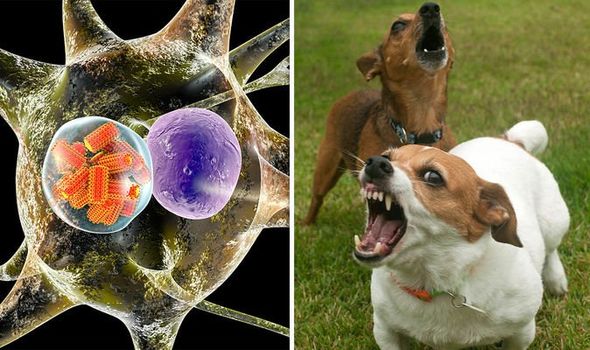
Rabies-outbreak-map-rabies-symptoms-rabies-dog-bite-1125644

Rabies is a slow-moving viral disease. It can affect any mammal, but is usually spread from one carnivore to another as the virus is passed in saliva by bites through the skin. Infection after contact with infected saliva on an open wound is a possible, though unlikely, mode of transmission. Once a new victim has been bitten, the virus slowly makes its way into the nerves and through the nervous system to the brain. This can take two weeks to 2 months or longer. By the time the rabies virus is present in the saliva, death is near. It is for this reason that when an unknown dog bites a person the dog will be quarantined for 2 weeks.  Two weeks is long enough to monitor the dog : If rabid, the animal will die. The dog’s brain can then be tested for rabies virus and the bitten person still has ample time to receive the anti-rabies protective vaccine.


Rabies has been found in the wildlife in and around Merced County. It is endemic in area bats, raccoons, skunks and foxes. You, the pet owner, have set up a terrific protective line of defense by the simple stratagem of vaccinating your pet dogs and cats. It is believed that by vaccinating 80% of a populations’ pets an effective barrier is created to protect people against exposure to the disease. In the United States more rabid cats have been reported to the CDC (Center for Disease Control) than dogs for several years. Vaccinate your cats! Vaccinate all dogs and cats older than 3 months of age. Keep them up-to-date.


There are a few island communities which have managed to keep rabies out or eradicate its presence : Hawaii, Great Britain, and Japan are three. You cannot easily take a dog or cat into those Islands. I applaud their high security. The regions most likely to have rabid animals that endanger humans are underdeveloped countries in Asia and Africa.


For the traveler to a foreign country, be aware that the dogs roaming the streets may be high risk for encountering rabies. The unsuspecting traveler may admire a puppy, letting it lick their hands. Food you carry could attract attention from a roving dog. Many of these countries have inadequate medical services for diagnosing rabies or offering post-exposure prophylaxis (prevention/ PEP) services.  Rabies prevention is not universally available. The more exotic your outpost, the higher the risk of encountering rabies. Of the 60,000 people who die every year, nearly every single case (99%) of human death started with a bite from an infected dog.


Whether at home or traveling, camping for a weekend or following your dreams of adventure exploring a foreign land, please take precautions. Enjoy wildlife, but don’t treat or keep wildlife as pets. They cannot be vaccinated against rabies and may have variable incubation times for rabies. Avoid attracting wild life to your home or campsite. Do not feed wildlife. Do not feed your pets outdoors, as this attracts wild life and strays.  Avoid animals acting unnaturally. Animal-proof your trash. Avoid stray dogs and cats. Stray animals may not be vaccinated and they run high risk of exposure and contact with wild animals that might harbor rabies. The message, Backpackers : stay away from unknown dogs and wild life. The life you save might be your own!


World Rabies Day is Thursday, September 28th this year. This day is sponsored by an alliance among the World Health Organization and many other organizations working towards the goal of eradicating Rabies deaths in people and animals by the year 2030. They are joined by the One Health Initiative, a group dedicated to promoting increased communication and joint action between physicians and veterinarians globally through the integration of human medicine, veterinary medicine and environmental science. Rabies is cited as a classic example of what “One Health” is all about, as the control of rabies in animals has reduced the death toll in people from that disease. Together, we CAN make a difference.


Christine B. McFadden, DVM

drmc@mcmenagerie.com

Photo Credit : https://www.express.co.uk

Walking Your Dog

Walking the dog is good exercise, good for the dog, good for the family. Done properly, you take in some sunshine and fresh air. You have time to admire the blossoming trees and critique your neighbor’s landscape. Wait a minute, there’s a “proper” way to walk your dog? Hmmmm…


Young puppies need exercise to build strong bones and muscle. Psychologically their mind will be more focused if their body is relaxed after a good run. Good manners and obedience training is then maximized. The average dog needs 30 to 60 minutes of hard exercise every day – not just a leashed walk around the block. Some breeds, like hunting breeds bred to run for hours, may need more exercise than a breed bred to be a lap dog. Different personalities require more exercise to tire. Know your pet.


Because of the high prevalence of canine Parvovirus infection locally, all puppies should have received three or four vaccinations for this and Distemper by four months of age before hitting the streets of Merced.

walking dog.jpg

Dogs that do not receive adequate exercise are often bored and that pent-up energy can turn into destructive habits: tearing up furniture and household items, digging up the back yard, constant barking. Yech! No wonder you see those ads for free dog, needs big back yard.


As your dog grows older his or her exercise needs change, especially if your pet has any health issues. Arthritis is as common in older dogs as in older people, and regular exercise is even more important to keep them moving. You can fall into a vicious cycle : it hurts to walk, so you let your dog stay home and sleep. His muscle tone deteriorates further and can’t carry the weight of his own limbs. Muscle atrophy occurs, and now your dog walks bone-on-bone. This is where regularly scheduled daily exercise helps to keep that muscle tone built up and will improve your dog’s mobility. This is also a good time to consider working with your veterinarian to consider arthritis medication options, customized to your dog’s kidney and liver function. Your vet will review with you dietary options, over the counter supplements and anti-inflammatory and analgesic (pain) medications. Working together we can optimize your dog’s athleticism and enjoyment of life well past what used to be achieved.


Explore the lovely foot paths along Bear Creek and Black Rascal Creek. Merced neighborhoods enjoy our climate by showcasing flowers throughout most of the year. Clean up after your pet’s waste, don’t let your dog soil someone’s yard. There are many handy gadgets available today to make the minor chore quick and easy.


Please review the weather before setting out. The Valley rarely suffers severely cold days but there’s no denying that our summer weather includes many scorching days over 100 degrees. Feel the asphalt with your palm. Even after the sun has gone to bed, you may find the road too hot for doggie feet. They aren’t walking on rubber-soled athletic shoes that insulate their feet from the baking asphalt! Early mornings are most cool for pet and people if you can motivate yourself to get out there and enjoy our sunrise.

I feel I must add a word of caution to all would-be dog walkers and perhaps especially to parents of young children who wish to take the dog for a walk. Dogs attract other dogs. Your pet may be walking obediently on a leash, minding its own business and another dog or dogs may come from nowhere. These loose dogs may attack your dog. If you try to intervene they may leave your dog to attack you. Some of my clients walk their dog and carry a stout walking stick for possible defense. Some carry pepper spray but I have heard that it is often ineffective on dogs, not to mention you must be close enough to aim for the eyes. An inventive scheme is to carry an umbrella, and if a stray approaches rapidly open and close the umbrella to fend off an attack. Loud noises, such as produced by an air horn, could also frighten away a dog. Always stand your ground and face an approaching dog, saying “NO” in a loud, commanding voice. Hold your hand out firmly in the universal gesture for “Stop!” Do NOT scream and jump around as you have now become prey. Should your dog actually be attacked do NOT use your hands and arms to try to pry them apart – every year I have a client or two sent to the hospital when the attacking dog turns upon them (or their own dog bites them, frenzied as it tries to protect itself). Only a stick, a broom, a chair, some kind of physical object can be used to wedge the dogs apart. Know your neighborhood. Do not walk your dog near homes with chronically loose pets or dogs that bark viciously along the fence line and might jump over.


Taking a walk has benefits that far outweigh the risks. Get out and enjoy our spring!


Christine B. McFadden, DVM

drmc@mcmenagerie.com


Are We Communicating, Doctor?

National Veterinary Technician Week

As a veterinarian I have been called upon to explore deeply into the human psyche. They never told me about this in vet school. My instructors cautioned against saying “oops” in the exam room, and pulling the ears too tightly on a pug-nosed bulging-eye breed of toy dog lest the eyeballs pop out (and yes, do you know it’s true? But I won’t tell about that one.). No, my teachers fell short in preparing me for the Late-Night-Emergency-Phone-Caller.

How would you respond to this call at quarter to eleven in the P.M., deep into REM sleep?

Veterinarian, “Hello?”

“Hello, Doctor? Meow, meow, meow. That’s what my kitty is saying. Meow, meow, meow…” (OK, I stopped counting. It went on for some time.) The voice on the telephone drew breath finally (one can only imagine her capacity under water), then queried, “Do you know what it is, Doctor?” I confess that I was at a diagnostic loss.

Then there was the time that an owner telephoned and wanted me to tell them if their pet was dead. The difficulty was that I had never seen their dog, and it was laying in their living room at home. Quoting a story from the “National Enquirer”, they were convinced that the pet was catatonic and might be buried alive. Convinced as they were, the question was surprisingly difficult to field. I’m ashamed to say that I finally told them to place the dog in a box and if it still hadn’t moved the next day or so I felt it would be okay to bury. Catatonic dogs were something else they didn’t discuss in vet school. It’s a subject I plan to take up with the dean.

Christine McFadden, DVM
DrMc@mcmenagerie.com