Stayner and Queenie (A Boy and His Dog)

On January 23, 2019 the Merced Sun Star newspaper printed a front page photo that showed both of the Stayner boys together in 1980, shortly after Steven Stayner had been reunited with his family. Steven’s story was remarkable. Steven disappeared when he was 7 years old, simply vanished from his neighborhood one day. It was 1972. Missing for over 7 years, he was reunited with his family only after his captor kidnapped a second child. Steven couldn’t endure seeing this child’s anguish and he hiked the little boy out to a police station. Although rarely mentioned, he also brought with him a dog. The child Steven aimed to rescue ultimately led to his own rescue. It was an incredible story, one that mesmerized the nation. This photograph, taken during the family reunification, shows Steven with his older brother Cary and their father, Delbert Stayner. The portent was only realized in hindsight : one brother, Steven, had saved a life.  Sadly, Steven died an untimely early death in 1989. Ten years later, in 1999, his older brother Cary Stayner was to gain notoriety for committing the unbearable murders of four women. Overall, a very grim and sad story for the family and the town of Merced.

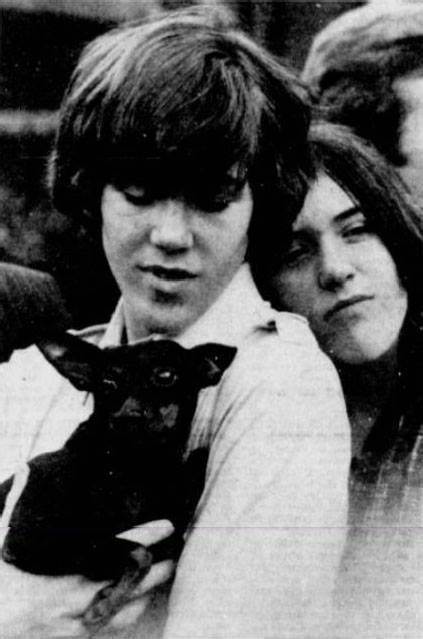
This was a rare photo that captured both Steven and his older brother together, a moment in a time of celebration. But my eyes saw only the dog. Hey! What about Queenie? That’s a picture of Steven and his DOG! She’s right there, just to the side of Delbert Stayner’s elbow! A little black dog with tan legs, Queenie had been with Steven throughout the years of his captivity. She looks happy in this photo, bright eyed.         (Link to Photo from Modesto Bee Here)

I’m a veterinarian. Of course I noticed the dog. That and – I knew Queenie, knew them both, she and Steven. I knew them because I took care of Queenie at her life’s end. That was many years ago. Her importance was to Steven, her passing private. I share a bit of this story because in today’s world we talk about the “human-animal bond”. We use scientific methods to analyze the effects that animals have in sharing our lives. C’mon people – it’s simple : love.

Queenie. Steven was very young, only 7 years old, when he was torn away from home and family. Queenie entered his captive life early on and remained a constant throughout the years to follow. She gave him unwavering loyalty, and non-judgmental constant cheerful companionship. It is notable that when he left that night to return the little boy, Steven never considered leaving his dog behind.

I met Queenie and Steven in late 1982 or early 1983. She was very ill. The little dog looked thin compared to her bloated abdomen. Steven was very quiet. A polite young man, he desperately wanted to save her. I think, in many ways, she had saved him.
Queenie’s abdomen was enlarged due to fluid build up, a condition called ascites and often caused by liver failure. Back in the early 80’s, blood tests, ultrasounds and other diagnostic tests were not readily available in the Central Valley. Neither was overnight care. I lived in Turlock and commuted to my job in Merced that year. So I started Queenie on IV fluids and other medications and drove her home with me that night. I rigged her IV fluids first to my car door strap, then used a coat hanger to suspend them from a towel rack. She was a sweet dog, but had no energy left to fight her illness. Queenie passed away quietly in my living room at home in Turlock. Steven took her from me the next morning. Although no autopsy was performed, I believed she had liver cancer.

Although I saw Steven with other pets after that, we did not have a personal friendship and I lost touch with him over the years. The love that he and Queenie had for each other has stayed in my heart and I was touched to see her once again, that doggie laugh on her face as she forever follows the love of her life, Steven.

Christine B. McFadden, DVM

drmc@mcmenagerie.com

My Christmas-motif salad wreath emoji

My staff said they needed to speak with me this afternoon. Well, of course. Had we not just enjoyed a dinner and dancing together on Saturday to celebrate the holidays? I met their loved ones. We shared food together. There were contests and prizes and drinkable holiday cheer and overall it was quite the festive occasion. With a day in between to recuperate, everyone was at their sparkly best back at work.

Monday started with a raccoon from the zoo. Her swollen cheek was returning to normal and no abscessed teeth were found, so we shipped her back to the zoo. We tackled two broken legs, a cat and a Great Pyrenees puppy. Both are expected to heal. We saw several birds. One, an enormous 30-year-old Blue and Gold Macaw parrot, screams the entire time we work with him. Oh, sorry, you heard him, too? My ears are still ringing. He was having his annual exam and a nail trim, for pete’s sake. We tended to an elderly rabbit whose x-rays revealed severe arthritis in the lower spine. We prescribed both an anti-inflammatory medication and one for nerve pain (neuropathy). We enjoyed a visit (with vaccinations) with a young Shepherd puppy that just found its Forever Home.

Good news arrived on another front : A 7 pound little stray with breast nodules and rotting teeth had been adopted. For Christmas this little dog not only found a Good Samaritan (shout out to the Stouts!) to address all of her considerable medical needs, but today the biopsy of the breast masses showed that they were benign! With no evidence of a deeper cancer, she can look forward to many healthy years to come. (Side note: I’ve said it before, but can’t help point it out again: Older unspayed female dogs run a 25-percent risk of developing breast cancer, usually malignant. Have your puppy “fixed” while she’s young to prevent this. It really is that simple.).

I fielded questions about pet snakes, lice on rats, a pet pig, and found time to do a little surgery. So when my staff flagged me down I slowed down to give them my attention. “DrMac, when you send an emoji on your phone, do you think you’re sending a Christmas wreath?” First I had to redirect my mind, away from veterinary medicine and onto “emoji”.

Just in case you’ve spent the last 20 years stuck in a Jumanji game, an “emoji” is a cute little symbol meant to convey a person’s thoughts or facial expressions or a symbol. Emoji’s can be inserted into a conversation during text messaging on the ubiquitous cell phones. You needn’t say you are happy, you can simply send a smiley face. Same with “sad”, “embarrassed” and a host of other feelings. These little cell phone symbols also pop up unexpectedly, as your “smartphone” detects the theme in a sentence and suggests a complementary emoji. A turkey showed up around Thanksgiving on my phone, and with the advent of the Christmas holidays, I noted a tree symbol pop up, trimmed in holiday ball ornaments, and another of a Christmas wreath.

So I began to include a Christmas tree in my text messages, whether or not it was pertinent to the conversation. I was being festive. As soon as I saw the wreath, I began to send that out, also, alternating one with the other.

On Monday afternoon this non-medicine related question came out of left field and I took a moment to adjust. Yes, I admitted, I’ve been sending out text messages with Christmas wreaths. I was puzzled.

Three of them began to howl, collapsing into themselves with laughter, barely able to sputter out “You’ve been sending salads!”

What?

The sad truth came out. Those tiny little colored balls decorating my “wreath” were cucumber and tomato slices. Worse, when the emoji was sent from my I-phone to an android phone, it transformed into a bowl of….salad. Not remotely wreath-like. Well, you can’t let little things like this get you down. I have now sent out a text to my nearest and dearest saying “Greetings! I’m sending you my exclusive Christmas-motif salad wreath emoji, which I mistakenly thought was the accompaniment to the tree….” So here’s to happy holidays to all and if I send you a salad wreath just enjoy it, ok? Related image Image result for salad emoji

Christine McFadden holds a license to practice veterinary medicine and surgery. She has cared for the family pets of Merced at Valley Animal Hospital for more than 30 years. Send questions or comments to drmc@mcmenagerie.com.

World Rabies Day


Several years ago I wrote an article on Rabies (Merced Sun Star, June 2014), a viral disease carried from animal to animal and sometimes from animal to human. For both animals and humans the disease is considered a death sentence.  I recently came upon a series of articles in a veterinary journal and was sad to learn that the disease is still a serious threat in much of the world and that approximately 60,000 people die from this disease every year. Still.


Why do I take up the story again? Because it deserves to be heard and, most importantly, it is still a threat to you and your loved ones. A very real threat if you enjoy traveling to out-of-the-way places.

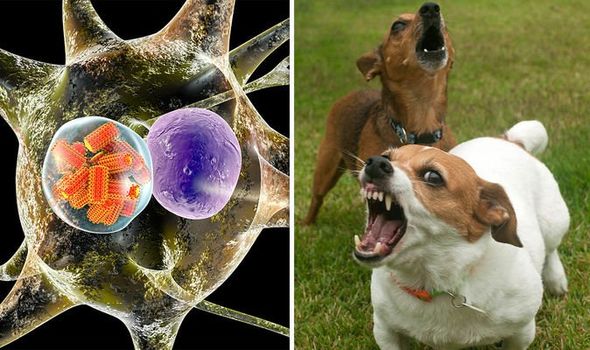
Rabies-outbreak-map-rabies-symptoms-rabies-dog-bite-1125644

Rabies is a slow-moving viral disease. It can affect any mammal, but is usually spread from one carnivore to another as the virus is passed in saliva by bites through the skin. Infection after contact with infected saliva on an open wound is a possible, though unlikely, mode of transmission. Once a new victim has been bitten, the virus slowly makes its way into the nerves and through the nervous system to the brain. This can take two weeks to 2 months or longer. By the time the rabies virus is present in the saliva, death is near. It is for this reason that when an unknown dog bites a person the dog will be quarantined for 2 weeks.  Two weeks is long enough to monitor the dog : If rabid, the animal will die. The dog’s brain can then be tested for rabies virus and the bitten person still has ample time to receive the anti-rabies protective vaccine.


Rabies has been found in the wildlife in and around Merced County. It is endemic in area bats, raccoons, skunks and foxes. You, the pet owner, have set up a terrific protective line of defense by the simple stratagem of vaccinating your pet dogs and cats. It is believed that by vaccinating 80% of a populations’ pets an effective barrier is created to protect people against exposure to the disease. In the United States more rabid cats have been reported to the CDC (Center for Disease Control) than dogs for several years. Vaccinate your cats! Vaccinate all dogs and cats older than 3 months of age. Keep them up-to-date.


There are a few island communities which have managed to keep rabies out or eradicate its presence : Hawaii, Great Britain, and Japan are three. You cannot easily take a dog or cat into those Islands. I applaud their high security. The regions most likely to have rabid animals that endanger humans are underdeveloped countries in Asia and Africa.


For the traveler to a foreign country, be aware that the dogs roaming the streets may be high risk for encountering rabies. The unsuspecting traveler may admire a puppy, letting it lick their hands. Food you carry could attract attention from a roving dog. Many of these countries have inadequate medical services for diagnosing rabies or offering post-exposure prophylaxis (prevention/ PEP) services.  Rabies prevention is not universally available. The more exotic your outpost, the higher the risk of encountering rabies. Of the 60,000 people who die every year, nearly every single case (99%) of human death started with a bite from an infected dog.


Whether at home or traveling, camping for a weekend or following your dreams of adventure exploring a foreign land, please take precautions. Enjoy wildlife, but don’t treat or keep wildlife as pets. They cannot be vaccinated against rabies and may have variable incubation times for rabies. Avoid attracting wild life to your home or campsite. Do not feed wildlife. Do not feed your pets outdoors, as this attracts wild life and strays.  Avoid animals acting unnaturally. Animal-proof your trash. Avoid stray dogs and cats. Stray animals may not be vaccinated and they run high risk of exposure and contact with wild animals that might harbor rabies. The message, Backpackers : stay away from unknown dogs and wild life. The life you save might be your own!


World Rabies Day is Thursday, September 28th this year. This day is sponsored by an alliance among the World Health Organization and many other organizations working towards the goal of eradicating Rabies deaths in people and animals by the year 2030. They are joined by the One Health Initiative, a group dedicated to promoting increased communication and joint action between physicians and veterinarians globally through the integration of human medicine, veterinary medicine and environmental science. Rabies is cited as a classic example of what “One Health” is all about, as the control of rabies in animals has reduced the death toll in people from that disease. Together, we CAN make a difference.


Christine B. McFadden, DVM

drmc@mcmenagerie.com

Photo Credit : https://www.express.co.uk