The Ex-Husband

Dr Mc Blog

October 20, 2015
Some days I find myself spending most of my waking day with other people and their pets rather than my own family. I think that’s why I enjoy a homey feel at work, books on the shelves, paintings on the walls. And I love getting to know our clients, learning their stories as their lives intertwine with mine. Sometimes the pet stands out, sometimes the people.

One young woman showed up two years ago with her much loved but very old dog. When a pet has been with you since childhood the attachment goes deep. In this case, cancer was involved. Although we were able to ameliorate many of the side effects of the disease, eventually her dog passed away.  I did not know if I would ever see her again.

Six months had passed when I noticed her name on the day’s calendar with the annotation “new pet”. And that is how I came to meet “Sadie”. Sadie was a Rescue, a Shephard mix that seemed a poor choice for adoption. I would not have selected this timid animal cowering between her new owners knees, none too certain she’d found a safe haven. The dog looked like she wanted to bite someone, and I was the most handy! Sadie was not a young puppy, either, making these temperament problems even less susceptible to change. I kept my distance across the room, asking questions and studying this unlikely pair, letting the dog get used to hearing my voice. Hopefully, time to collect her wits about her.

I abandoned the usual approaches and carefully took a seat in the other chair, next to Sadie’s new owner. We continued talking and eventually I was able to touch Sadie and perform an exam, though lightly. I did my best to avoid anything that might startle Sadie or make her snap at me as fear and bad behavior during one visit will build into more problems at the next. Amazingly, over the course of the next eight months, I saw Sadie several times and each visit she was visibly more relaxed and much easier to work with. There was no longer any question of her biting. (Having said that, let me impress upon you the maxim “all dogs bite”, given enough pain, fear or whatever!)

Sadie came with a few problems. She had a bit of a runny nose and her paws turned beet red and swelled up. Perhaps as a reaction to meadow grass on one of her walks? Each time the problems responded well to medication and her owner is documenting general events in Sadie’s life to differentiate whether contact irritants or an allergen might have caused these reactions. As examples, cigarette smoke is an irritant; heavy pollens in the Valley air may cause hay fever, an allergic reaction. Sometimes the way the body reacts looks the same. Through documentation of her activities we hoped to be able to avoid Sadie’s “triggers”.

Sadie dropped in for a visit today because her ears were bothering her again. She greeted me as I came into the room and allowed a full examination, though I admit this was still from the chair next to her owner. (It works!). After we’d discussed her medical condition I admired the incredible progress her owner had made in socializing this dog. Many people rescue an especially “sad” case but few have the knack to turn them into happy socialized pets that interact with and enjoy the world around them. Then both pet and people are miserable for years to come. It was tremendously uplifting to see the change in this dog. I asked her owner how Sadie was doing in the home environment.

“Great!” she said. “My Mom says I’ve gone too far, that I’ve spoiled her. She’s (Sadie) doing well with men, too. Well, except my ex-husband. My Mom had him over to her house last Sunday for a recipe. I haven’t seen him in 10 years. Sadie did NOT like him!” She laughed happily. “She’s a good judge of character.”

I said, “Wait a minute, what’s this about a recipe? Why did your mom have him over?”

“Oh, she replied, “his banana cream pie. She’s been using his recipe all these years and she thought hers was missing something, so she asked him to come over and make it with her. She kept saying, you didn’t write that down before!” Sadie’s owner scowled briefly. “I think hers is better anyway.” We were both laughing by now. “Yes!” I said, “That pie sounds amazing! You must name it “Darlene’s Ex-Husbands’ Banana Cream Pie Greatly Improved!”

Christine B. McFadden, DVM
drmc@mcmenagerie.com


Egg Bound Bird

When I first fielded the call I wasn’t overly concerned, probably because the caller was about 80 miles away and somebody else’s patient. It’s easy to give telephone advice. I am, in truth, happy to share knowledge that might benefit another veterinarian’s patient as it is by similar sharing that I have been taught how to heal.  So I carefully shared my experiences in Avian Obstetrics and wished all a good outcome. Then I cheerfully went about my own day.

Sometimes that is not the end of the story. Many days later I found myself enmeshed in the case personally. It started out simply enough. A young family owned several parrots. One of them, a delightful little green-cheeked Conure was a clown and gentle enough to tolerate their young toddler. The bird was named Salsa, for her green and red feathers. I say “her” loosely, because most birds in the psittacine or parrot family groups cannot be sexed visually and require a DNA blood test to know whether you have a boy or girl. We used to surgically sex birds years ago, entering the abdomen only on the left side because most birds have one sole functioning ovary, on the left. Males have two testes, located in the same area in the abdomen, in front of the kidneys, tucked up under their protective spine.

So nobody knew if Salsa was a boy or a girl, which hadn’t been very important until the family left for vacation and Salsa became ill.  She began to sit in the corner of the cage bottom, very quietly. Her breathing was fine, and if disturbed she was a little snippy but hopped about brightly. The babysitter noticed that Salsa was straining, maybe trying to poop, and her abdomen seemed distended. A quick trip to her regular veterinarian confirmed that Salsa had an egg stuck inside! (This also confirmed she was a female! Smile).

Welcome to the world of birds and their babies! Remember, birds are not mammals. Any female bird can make an egg, fertilization is not required. Nothing hatches from these eggs. The eggs produced by chickens for grocery store sale I call “baking” eggs, the kind you cook with. The formation of an egg is fascinating. The left ovary is attached to an oviduct, similar to the uterine horn in a dog and cat. The ovum or egg looks like a miniature yolk as it is first released into the oviduct, where it travels to the shell gland or uterus to become coated in calcium carbonate as a hard shell. The whole process takes around 24 hours. Most parrots lay an egg every 2 to 3 days, until they have a full “clutch” which completes their nest. Certain external stimuli such as increased sunlight, warmer temperatures and more food may promote egg production. In a pet bird there is no denying that egg laying can be a risky business.

Sometimes the egg shell is not properly hard, termed a “soft-shelled” egg. This is a warning sign that the bird may be malnourished, particularly deficient in calcium and vitamin D. Birds that live exclusively indoors and on seed diets are at high risk of this type of malnutrition. Calcium is needed not only for strong bones and firm egg shells, but also to produce the muscle contractions that will allow the egg to be laid. First time eggs may be too large to pass easily. Once the egg is stuck, things can go bad very quickly. The egg may be so large to prevent the bird from breathing easily. It may squish the intestines and block passage of fecal matter. The egg may press against the sciatic nerve, causing permanent left leg paralysis. It may lose moisture and become stuck to the tissues of the oviduct, eventually starting an infection that leads to death. Egg binding is a serious medical emergency in birds.

Salsa didn’t have a mate, so we knew this was just an empty egg inside her. Because Salsa couldn’t pass the egg on her own, her veterinarian, very appropriately, anesthetized the little Conure and attempted oocentesis, (don’t you love new words? Pronounce it “oh-oh-sent-e-sis”). A needle is inserted into the egg to withdraw the contents, in an effort to collapse and allow passage of the now much smaller egg. Salsa’s egg collapsed but did not pass. However, she was bright and perky once the pressure in her abdomen was relieved so no one was worried. When the owners returned home Salsa was delighted to see them. Over the next few days they noted, however, that she became increasingly less active, until finally she was sitting at the bottom of her cage again. Which is when she was referred to me, 17 days after becoming egg bound. I started her on antibiotics,  gave her injections of Vitamin D and Calcium, and rehydrated her with fluids before taking her to surgery. I use a surgical laser instead of a “cold steel” scalpel for surgical incisions as there is minimal blood loss. The oviduct with the collapsed egg and a second egg behind it (!) was isolated and carefully removed. The ovary was left in place. Her little abdomen was flushed and sutured up and within 15 minutes Salsa was back in her incubator, recovering from her “spay” surgery. At her recheck two weeks later her family reported that Salsa was back to her old self, all fun and games. She weighed exactly 65 grams on that visit, smaller than a cockatiel. Her diet had been fortified with pellets, fresh fruits, vegetables and a calcium supplement. Salsa celebrated her recovery with a pistachio nut!

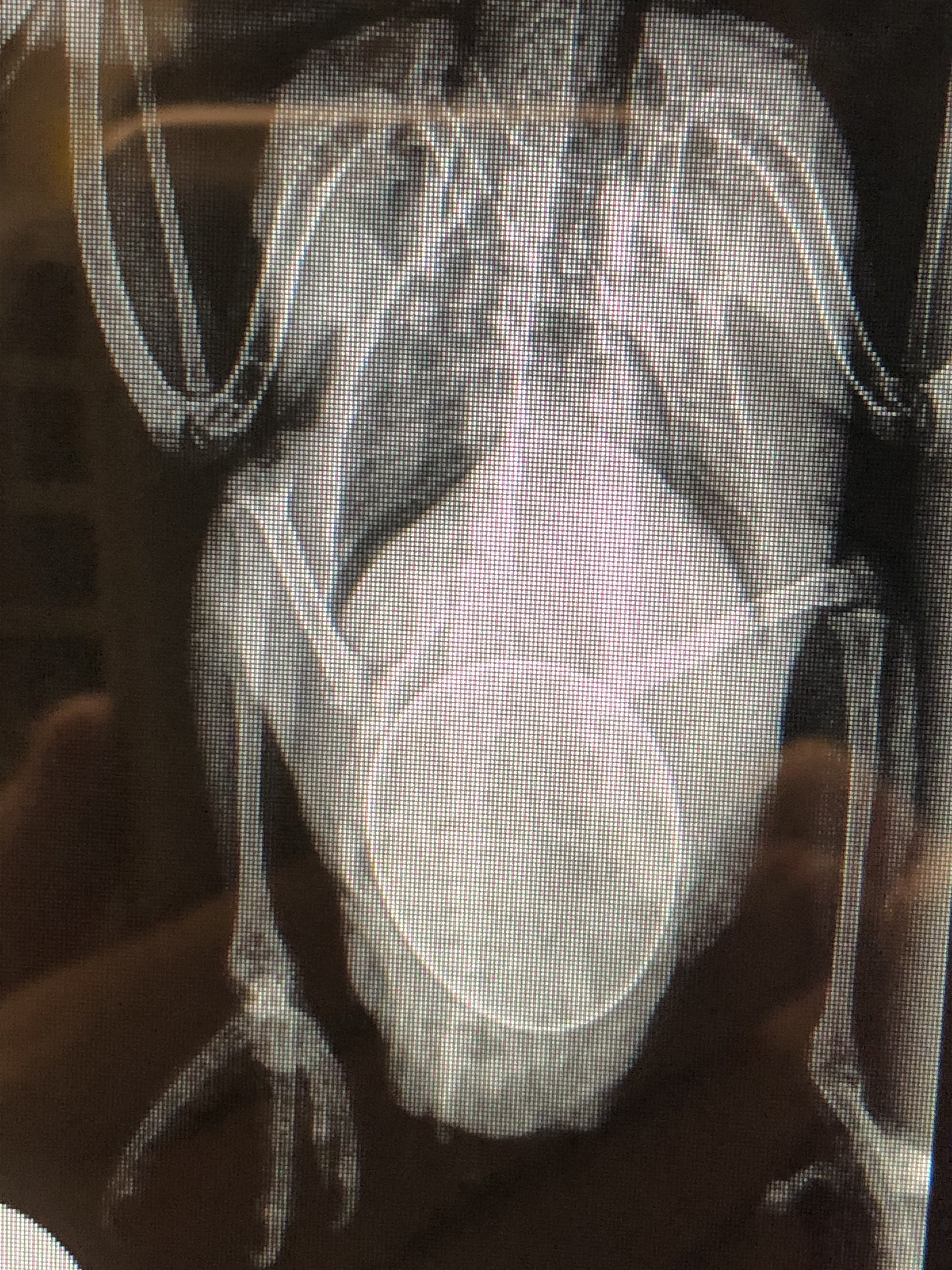
****Please note : The images and video used in this post are NOT the same patient being discussed in the ‘Egg Bound Bird’ blog post. In the video, the obstetrical problem was managed medically. This video is shown with permission from the gracious owner of another egg bound patient. The Sun conure in the video is roughly twice the size of the little conure in the story, which required surgical intervention, similar to a C-section and hysterectomy. Now you can have visual aids to go along with the blog!

WARNING THE VIDEO BELOW CONTAINS SENSITIVE MATERIAL THAT MAY BE TOO MUCH FOR SOME TO VIEW.

Christine B. McFadden, DVM
drmc@mcmenagerie.com

Seizure Disorders

Dr Mc Blog


September 9, 2015
There was a tremendous commotion at the front door. I looked up to see a tiny ball of fur writhing in circles in the open doorway as her owner struggled to balance the door and simultaneously pick up her pet. Just as I reached them, the dog suddenly stopped her flailing, stood up, shook her coat and trotted the rest of the way in. Her owner looked up at me and shrugged wearily. “Coco does this every time she comes in for a bath.”

Really? Her dog had a SEIZURE every time she was groomed? I found this incredible. Actually, I didn’t believe it. There were some gaps in my medical training which Coco was going to neatly plug. Oh, I knew a lot about seizure disorders. A seizure or convulsion is when the brain has an electrical misfire and the body loses control, most often recognized when a pet falls to the ground, its legs jerking uncontrollably. In humans this is called a grand mal seizure. Any kind of animal may suffer from a seizure, sometimes as simple as staring blankly at a wall, to chasing butterflies to a full-blown fit.

There are many causes for seizures. One big group that lumps many chemicals together is “poison”. Thirty years ago strychnine poisonings were still being seen here in Merced – leftover coyote bait? I don’t know. Most of those chemicals are long gone and illegal today. Some have been replaced by less toxic yet effective products. The snail bait metaldehyde that can lead to seizures and death in pets is slowly disappearing as an iron chelate compound takes its place.

Many pets which have their first seizure at home scare their family no end, but are up and running around like normal by the time they arrive – emergency! at the clinic. Why do we ask you to come in? Because we don’t know if your dog will stop seizing on its own, and when the seizure continues over 10 minutes or longer, called status epilepticus, your pet may be at risk of dying. Dogs in status epilepticus, for example, may need to be completely anesthetized to allow his or her muscles to unclench from their rigor, and may have to be kept heavily sedated for a prolonged period of time. This requires hospitalization, IV fluid support and intensive nursing care.

If your pet DOES have a seizure, try to time it (yes, it feels like an eternity!). Most last less than 2 minutes. Do NOT try to grab your pet’s head – it may bite you. Dogs do not swallow their tongue while seizing. Most pets recover quickly from a seizure. If not on emergency, have your pet seen by a veterinarian as soon as possible.

If the pet is not still seizing when brought to the hospital we will want to run some blood tests. There are a wide variety of organic diseases that may lead to a seizure. Oddly enough, low blood calcium is one. Calcium is not only needed for strong bones, but it is vital for every muscle contraction, including the beating of the heart. A mother dog with a large litter of pups or possibly a poor diet may present in tetany when milk production drains her body of calcium. Low blood sugar is a common problem in toy breeds. Electrolyte disturbances, the body’s salts, can lead to seizure like activity. The liver, the pancreas, the parathyroid glands, the brain! It all becomes very complicated. Many times when we find a problem on the blood tests we can treat the underlying disease specifically and the seizures will disappear. Sometimes, when the blood tests are normal and the seizures recurrent, we diagnose Epilepsy. If there is reason to be concerned about brain cancer a test by CT brain scan is available for pets at several centers in the Valley.

Epilepsy is still incompletely understood. It may be inherited or may occur secondary to severe head trauma, like being kicked by a cow. Often we diagnose “idiopathic” epilepsy meaning “I don’t know why”. Most epileptic cases are treated with similar medications, regardless of underlying cause. Anticonvulsant medications work through their sedative effect on the brain, calming the electrical impulses so they do not cross the excitement or seizure “threshold” that results in a “fit”.

While the onset of most seizures is never understood – so there is no preventing nor anticipating the next one – Coco set out to prove that yes, doggie drama queens do exist! We ran her blood work. Normal. We started her on anticonvulsants. She seizured “like always” at her next bath. We changed meds. Another seizure with the suds. Her owner swore that Coco never had a seizure at home. We never saw a seizure with vaccinations! Not over a blood draw! Not with the clippers! Something about running water and shampoo just pushed her over the edge. It was not worth medicating her for such infrequent events. Though possibly less stylish, Coco was home bathed after that and sternly warned to stay out of mud puddles!

Christine B. McFadden, DVM
drmc@mcmenagerie.com


The Scam

Dr Mc Blog


July 28, 2015
I know we all hear about credit card fraud, identity theft, and internet scams, but it is still shocking when it happens to you.

There are many ways to obtain a new pet. My guess is most of them come to us as strays or we go in search to rescue a pet from a local animal shelter or humane group. Some are given to us as a gift (a little risky), some purchased on impulse from a pet store window, others found in a newspaper ad or off Craig’s List. Those looking for a particular breed of dog or cat, bird or reptile may research the breed, interview breeders and go on waiting lists as they wait patiently for the “right” one. In the age of the Internet you have an opportunity to connect with breeders all over the country, potentially finding some truly exquisite animals that are not available locally.

I have many clients who have found wonderful dogs this way. With the ability to review photos and see videos of their choice, they can even watch their puppy “grow up” from birth. This requires interaction with the breeder, signed contracts, deposits and yes, some faith. Until you physically have the puppy in your arms there is still a possibility of disappointment even with extensive communication on both sides. Perhaps your beautiful new puppy is already larger than an adult should be for that breed. Maybe his eyes run or her knee dislocates. Now you have the extra expense of fixing it. Things that a breeder may accept or not have noticed may bother you. But if this is not the puppy of your dreams or there are truly serious health issues you must consider how you will return the dog to the breeder. This should be considered and written out between both parties in advance, as returns across country are not simple. Most reputable breeders accept returns, even full refunds (read your contract carefully first) but most also require that you return the pet on your own dime. Average flights for dogs run over $100, a lot of dimes. Just for the opportunity to meet a dog you might not have accepted in the first place. And ALL puppies are cute! Needless to say, very few are returned, however unhappy the first meeting may be. By and large I have observed that most pet owners accept a few flaws and enjoy years of companionship with their internet-found pets.

But the Internet has allowed all manner of people to put up pets for sale. Reputable show breeders who carefully breed for the finest qualities in their dogs; backyard breeders who have purebred dogs which they’ve bred for fun (doesn’t mean they aren’t pretty or loveable!); the “Puppy Mills” which churn out “pedigreed” dogs in large batches, with a minimum of care towards congenital defects and sometimes minimal care, period; and….some that offer puppies for sale when they have none – a total scam!

We recently went online, searching for a specific breed in the Bay Area. We wanted to stay local enough to go check out the puppy but broaden our search as there was very little choice locally. This seemed like a good idea. Immediately a website popped up, advertising for a multitude of breeders from various cities around the Bay. All had pictures of puppies for sale, some referred you to personal websites where you could view their kennel. Prices seemed good. Hmm, maybe too good. But they had testimonials! And before they would talk with you, you needed to answer several questions about yourself, asking if you could provide a “forever home” and promised to care for this puppy with all your heart and did you have a veterinarian?  Initial contact was easy and if you like instant gratification, wow! They could have the puppy on your doorstep within 10 hours. From Delaware. Or Texas. But wait, didn’t it say Bay Area? Yes, but they had to go care for their ill father and took the puppy with them (the ad was placed 2 hours earlier). To make a long story short, be wary of a quick deal. Question a price too good to be true. If the puppy is no longer in the city or state listed when the ad was placed, walk away. Ask to see a current photo with an object in it, like your first name on a card. Their camera is broken? Move on. If at all possible meet the puppy first. If you are considering a purchase in the thousands of dollars (not me), the price of an airline ticket to meet your puppy in person may be reasonable. Even a meeting in a public supermarket parking lot will give you a chance to fully look your pup over before making the decision to open your heart and home to a new family member.

Christine B. McFadden, DVM
drmc@mcmenagerie.com
Valley Animal Hospital, Merced

Cat Scratch Fever

Dr Mc Blog

July 9, 2015
My mother wanted more articles on cats, but this time she’s gone too far. While her cats swirled about her feet in a breakfast feeding frenzy one nudged her along a little too hard, breaking skin. Three days later she almost landed in the hospital as her leg swelled up, an angry red color.

Diagnosis : Cat Scratch Fever.

Cat Scratch Fever, more properly Cat Scratch Disease, is caused by a little known bacteria, Bartonella henselae. Because cats themselves rarely suffer any effects from this bacteria, your veterinarian is not “looking” for it. Oddly enough, statistics from the Center for Disease Control (CDC) in Georgia report that up to 40 % of cats may harbor this bacteria on their claws or teeth sometime during their life, with the most likely period being when they are kittens. This, of course, is when young cats are most playful, most likely to play bite or scratch during a wrestling match. If your skin is broken the Bartonella bacteria has an opportunity to start an infection in you – the human. The cat will be fine.

Even more oddly, your cat probably picked the bacteria up when it was scratching at a flea! Infected fleas carry the bacteria, and your cat will get flea dirt caught under its nails or in its’ teeth. Once a person’s skin is broken, the bacteria is transmitted through the saliva or from under the cats nail. Even allowing a cat to lick an open wound which you may have (irritated mosquito bite?) may transfer the bacteria. We’re back to flea control, again! In our mild climate, fleas are a reality year round in Merced. If you think you have them under control, keep treating – keep it that way!

Washing any scratch or bite wound will prevent most people from developing an infection. Once Bartonella has taken hold, it can be readily treated with antibiotics by your physician. Your cat does not require treatment. On rare occasion an infection with Bartonella can land a person in the hospital for intensive care.

Does Bartonella EVER bother the cat? Maybe. There are tests to demonstrate if anti-Bartonella antibodies are present in the blood stream. This only proves exposure to the bacteria, not current infection. Rarely an ill cat, perhaps with an eye infection, may be tested for Bartonella. If you have high concern about acquiring a new cat or are faced with a family member who is immunocompromised and must guard against any disease encounter you can request these tests for your cat and even a course of treatment as a preventative, though it can’t guarantee against future re-infections.

My mothers’ cats are on flea control and are older, but one of them goes outdoors and inevitably brings fleas back into the house. I knew the source of infection and how to contain it. I must admit it was interesting to follow how her physician handled it. As a veterinarian, I am familiar with the rejection one must inevitably face when serving in a “helping profession”. Everyone wants to help. They want to help even more when it’s outside their scope of expertise – it’s so tempting to give advice! I am sometimes the last stop in a desperate quest to heal a pet, after the owner has purchased a variety of compelling exotic potions over-the-counter or whipped up a guaranteed home remedy recommended by the neighbor’s cousin passing through town.  My mothers’ leg improved slowly but surely under the extremely watchful eye of her physician (he even offered to make a house call to check on her over the weekend). So it was with some interest as I followed her recovery to hear her inform me that she was going to have the gardener check her leg that day. That gave me pause. I double-checked. The gardener? I silently chewed this over in my mind. She was seeing her physician every other day, if not daily. Her veterinarian daughter was stopping by every night. The gardener?  It felt good to know these things didn’t happen just to me. I wondered if the gardener would argue the merits of herbal remedies….? I could tell this was a turning point for the better in her case and that I could step out now. And her physician? A miraculous cure. My hat’s off to you, Dr. De La Pena.

Christine B. McFadden, DVM
drmc@mcmenagerie.com
Valley Animal Hospital, Merced

Femoral Head Ostectomy and Mercy


Dr Mc Blog

June 3, 2015
She named her “Mercy”, a nod towards her future as an elementary school mascot. She was a cute little black and white ball of fluff, guaranteed part Border Collie. Part what else wasn’t mentioned. A bright puppy, Mercy suffered no fools. People wielding needles were not popular with her (picture a grown veterinarian trying to explain how vaccinations are lifesaving to a tiny puppy throwing a tantrum. Score : Puppy 1/ vet 0). By the time she’d been through all her puppy visits and spayed Mercy had had it! She began to stalk me when she saw me, sounding the alarm far and wide to all who’d listen. If I ignored her and walked away she’d bounce after me, stiff legged and barking in staccato yaps. If I turned to her she’d stop and lower her head to graciously allow me to pet her – but growled under her breath the entire time. Mercy is not good advertising for me.

Mercy takes her school duties seriously, snuggling up with children who need a friend and a furry hug while they find their way through problems. Mercy doesn’t choose sides on the playground. She has been known to dress up in ridiculous costumes for a rally or fundraiser. Most of all, Mercy can be depended upon to dispose of unwanted lunch items without tattling.

The dog has it made.

So I was a little surprised to find her in my office early one Monday morning. At a family picnic over the weekend she had joined in some doggie games and got rolled. She came up limping in back and hadn’t used the leg since, though bravely she didn’t cry. Her big brown eyes followed me quietly. After a gentle exam I recommended we start with a set of x-rays taken under sedation, so she wouldn’t feel further pain during the necessary manipulation to get good pictures of her bones.

We discovered that Mercy had dislocated her hip. The head or ball of the upper thigh bone is cupped inside a socket, called the acetabulum, of the hip. It swivels securely here, held in place by the depth of the socket and one very strong ligament.   This ball-and-socket joint allows tremendous range of motion and is very difficult to separate. Usually only blunt trauma, like hit-by-car can create a strong shearing force that breaks the ligament, yet not the bones. Mercy had not had a severe accident, but the clue to the underlying cause for her leg to succumb to a lesser injury was there on the x-ray : Mercy’s hip socket was flat, not deeply cupped. It had been so much easier for a quick blow to snap the ligament since the whole set-up was already relatively unstable. Once knocked out of place the strong thigh muscles kept the leg pulled forward.

Mercy was already under anesthesia for the x-rays, so after notifying the owner of her diagnosis we manipulated the head of her femur or thigh bone back into place. This is called a “closed” reduction of a dislocated leg (as opposed to an “open” or surgical reduction).The procedure went smoothly, probably for the wrong reasons : it was easier to pop back in place because it was more of a slide over the flattened edges of the acetabulum than a real “pop” into place. We bandaged her leg in an old fashioned sling and sent her home. On re-check 2 weeks later we found, not surprisingly, that her femur had slipped back out of place and we moved on to a salvage surgery called a femoral head ostectomy – translated backwards it means “to cut off the head of the femur”. It sounds awful and I’m surprised more people don’t faint when confronted with this description. The ligament cannot be repaired or replaced. Left alone, the ball part of the bone will grind into the pelvic bones, creating severe pain. However, remove the ball, leaving an unconnected “stick” of thigh bone but with all muscles attached and the leg will align where it should and a strong band of scar tissue called a “false joint” will form over time. Small dogs and cats will often have 100% recovery, larger dogs may exhibit a small sway to their gait. Mercy was walking on her injured leg before the sutures came out.

It’s been a couple of years now and I suspect most people have forgotten she ever had the injury. A testament to the benefits of orthopedic surgery, Mercy walks and trots just fine. (Mercy does not deign to run. A dog of her stature has no need to comport herself in such common fashion. My suggestion that a few too many corn dogs might be slowing her down was rejected with disbelief. Shame on me!).

Though Mercy continues to energetically terrorize me whenever we meet, I have one small revenge. As she has grown, it’s become obvious that very little of a Border Collie’s genes are included in her genetic makeup. In fact, while she was routing me one day I was reminded of a scene straight out of the Wizard of Oz, where a little dog of similar build bit the leg of a neighbor lady (soon to become the Wicked Witch of the West) and started that whole journey through the tornado…… I now call her “Toto” and darned if she doesn’t come running up to me for a long pet, growling the entire time. We have reached a mutual understanding and I am content.

Christine B. McFadden, DVM
drmc@mcmenagerie.com
Valley Animal Hospital, Merced

Miliary Eczema in Cats


Dr Mc Blog

May 27, 2015
My mother has complained of a dearth of articles about cats. Here you are, Mom. The domestic feline or house cat is believed to have appeared as a companion as early as 7,000 or more years BC. Whether part of ancient religions or welcomed as a mouse catcher, the cat was also made to be a pet. Although today many argue the value of a cat compared to a dog, statistics indicate that there are as many, or more pet cats in the world as dogs.

Cats are athletic, inquisitive, intelligent and independent.

One such special cat was Alfred. A sleek golden orange tabby, he had grown into a magnificent 12 pound, well-muscled  cat. Alfred ran his house, assuring punctual meals with scheduled outdoor exercise and afternoon naps in between.  He was about three years old when his owner noticed that his coat was looking a little patchy, and when she picked him up to pet him she felt tiny scabs over his back. Alfred seemed a little irritable when she tried to pet him, squirming away as if his skin hurt. This would not do, so off Alfred and owner went to the vet!

Close examination revealed that Alfred had scratched at himself, evidence of itchy, or pruritic skin. The fine little scabs were clustered close together over his skin, with a few slightly bald patches where he must have scratched off some fur. The working diagnosis for a cat with this kind of skin condition or dermatopathy is called “miliary eczema”. “Miliary” meaning “a rash that resembles tiny seeds” and “eczema” meaning inflamed skin, often itchy or red. This is sort of a catch-all term that describes the rash but not necessarily the underlying cause.

Most often a rash might occur in response to an allergy. But allergy to what? In Alfred’s case his owner medicated him monthly with a flea preventative and indeed, there was no evidence of flea “dirt” (blood sucked from an unlucky pet, passed through the flea’s rudimentary digestive system, and deposited in the fur as flea poop) or any live fleas on the cat. Flea allergies are the most common cause of miliary eczema in cats. Other possible sources of allergens might include contact allergens, something the cat might walk on or roll in, or airborne pollens.

Diet might be another cause of allergies.

Since “miliary eczema” defines only the appearance of the rash, other clues to its cause may be found by noting where the rash occurs on the body. For example, if a rash has broken out near the ears, your vet may look for ear mites. Both bacterial and fungal skin infections may cause similar looking rashes. After questions about your cat’s environment, in particular about any changes or recent introductions to your home or yard, your veterinarian will try to pinpoint a precise cause. Sometimes a skin biopsy is recommended for definitive diagnosis. In some instances the underlying cause is never fully understood.

In Alfred’s case the rash appeared to be a response to an unknown allergen and a trial medication with an injectable steroid was administered. This kind of steroid is a glucocorticoid, not the anabolic steroids infamously abused by some athletes. Cats are somewhat unique here, being resistant to the effects that steroids have on dogs (and people) – they suffer far fewer side effects such as hunger and thirst, as a general rule, but they also respond less well to steroid medications in general. Most cats require injectable medication rather than oral steroid medication for allergies.

Alfred was most gracious about receiving an injection in his derriere and went home to convalesce. Overnight his owner reported that he seemed more comfortable, less restless. By day three Alfred was no longer over-grooming himself (it had crept up so slowly she hadn’t noticed his frantic licking increasing) and was eating at a leisurely pace, not jumping about as if suddenly pricked by something. Within the week the little scabs began to dry up and melt away, leaving smooth skin underneath. By the second week it was clear his fur was growing back in. Alfred was once again a gorgeous golden mini panther!

Alfred was lucky. As the effects of the medication wore off around week six there was no sign of recurrence of the rash. For many cats, if the owner is diligent about flea control their cat will remain clear skinned. For others, a combination of injectable or oral medication may be necessary year round to keep their cat comfortable.

Christine B. McFadden, DVM
drmc@mcmenagerie.com
Valley Animal Hospital, Merced

Merced’s Loss

Dr Mc Blog


May 5, 2015
In the wake of this weeks’ horror story it has been very difficult to write about a pet disease or the function of a particular body organ. I have been in practice in this town, this community for over thirty years. I have seen incredible acts of kindness towards all manner of animals and I have witnessed cruelty and abuse towards many pets. The story of Lucious is perhaps the most violent case of pet abuse I have ever heard of in Merced.

Dogs and cats are called “companion” animals because of all that they give to humans in the way of companionship. Companion by definition being “a helpful friend”. Some say there are more pet dogs and cats in this country than children. That homes with children are very likely to own a pet dog or cat. Seniors are noted to have special bonds with their pets. The handicapped rely on service pets to assist them physically (and may be their best buds). Peace Officers and Military personnel count on them to have their backs. Dogs and cats, it seems, are everywhere, there is one to fit anybody, a pet to fill virtually every need.

Pets love you. You will never feel alone with a pet. They follow you around the house. Like kids, they wait outside the bathroom door until you’re done. Or inside, if you forget to shut the door. They’ll garden with you. When the kids have all grown up and left home they’re there, waiting to be touched and petted when maybe you don’t get the hugs you were used to. Pets are right there for the child who needs to talk to someone when no one else understands. Pets cuddle and will often sleep under the covers.  They hog the bed. They help you brave the dark. Pets coerce you to join them in outdoor outings, get some exercise. They bring you back to the simple things in life, like enjoying a nap in a sunbeam coming through the window. They are there to go on walks with you. They rarely snore when you’re talking to them. They won’t switch channels on you, either. They’re pretty much always willing to join you in the kitchen and in case your clock batteries run down they’ll keep you on time for meals. You are loved whether or not you have wrinkles, a bad hair day, or belch. They aren’t impressed by a degree nor do they care how much money you make. Their love is the closest you may get to “unconditional”. Dogs and cats do require some food, water, a few basics. Veterinary health care will fulfill most of their medical needs. Vaccinations, deworming, parasite prevention being key for all life stages. You add food and love to the recipe and it usually turns out alright.

As I write this my dog is at my feet, having followed me over to the computer. A cat sleeps nearby, having considered the situation and being somewhat put out that I won’t (cannot) make lap space at present. The rest of the household is asleep. I am not alone. According to the American Humane Society of the United States, in 2012 62% of all American households owned at least one pet.

I am not alone in the greater community of Merced that was horrified to learn of the brutal attack and ultimate death of a Merced dog last week. No need to repaint the ugly scene. I find words inadequate at such times. Animal abuse is reportable for the sake of the animals. Animal abuse is reportable for the sake of people, as pet abuse has been linked with a heightened risk of domestic violence towards children and women especially. Our lives are intertwined, all peoples, all animals on this planet.  Laws are in place to process this catastrophe in our community.

Dogs and cats serve many roles throughout our lives. We hear of the “human-animal” bond – is that just some fancy jargon for a college paper to label or define the inter-dependence we all share in this world? Looking past the analysts and academic studies of people and how we relate with pets (which most of us understand intuitively), there was a shocking reality that came to light when Hurricane Katrina devastated New Orleans in 2005. Disaster preparedness plans were in place – rescue groups swung into action – and the world watched in horror as some people chose to perish rather than leave their pets behind to die in the flood, because the plans called for saving people first – and only. Resources were limited, time of the essence. But leaving people right in front of you, to die, was unthinkable. The numbers of people who refused to abandon their pets was high enough that the Red Cross and communities have since been advised to redraw their plans so that people with pets can be accommodated without compromising the priority of rescuing all people in a disaster.

Take note : the human-animal bond is very, very strong. Respect for all life is paramount in our interactions on earth.  My sincere condolences to the community of Merced for our recent loss.

Christine B. McFadden, DVM
Valley Animal Hospital, Merced


Pretzel and the Dislocating Knee


Dr Mc Blog

April 7, 2015
“Call me Pretzel”, the note said. I peered over the top of it to look at my patient. She was aptly named, wriggling and dancing on the exam table, tongue flashing as she air kissed in happy anticipation of meeting me. “Well, alright then! Pleased to meet you, Pretzel!” I greeted her. With a surge of energy she tried to jump towards me and instead collapsed in a heap as her back leg buckled under her. I righted her with one hand and glanced at her chart again. “Sometimes lame” it read.

I looked again at Pretzel, a little toy breed dog weighing less than 10 pounds. She was just over 1 year of age. Her owner reported that although her little dog usually ran around happily, recently she had noticed that sometimes she picked up one of her back legs when running, or might kick it out behind her then resume her pace. Pretzel didn’t like to jump as much as she used to, and occasionally gave a little cry when landing on her rear legs. As I examined her, I gently pressed on her tiny kneecaps, or patella’s, and felt the right kneecap slip out of place, bumping over the groove at the bottom of the upper thigh bone, the femur, that was supposed to hold it in place. The kneecap slid to the inside of her leg – but as soon as I straightened the leg, it popped back into place. Diagnosis : Luxating patella, also called a dislocating kneecap.

Dislocating kneecaps are very common in many toy breeds. In some breeds it is estimated that over 50% of all puppies are so afflicted, a hereditary predisposition that is evident by a year of age or sooner. Some people believe that as these toy breeds are bred for ever smaller “extreme” sizes more anatomical problems crop up. Certainly these dogs were bred for looks, as lap companions and not as “working dogs” –  attention to strong teeth, big muscles and performance were not a first priority.

The knee of a dog is an interesting joint, being very similar to that of a human in general construction. Kind of bony, it is held together by tendons and ligaments, without much muscle to cover and protect it. Hard working, it must flex and bend with every step taken, as the entire backside of the body is supported on it. So can you picture all this? The big heavy femur with this small sliding patellar bone-and-ligament-show that connects and allows bending when attached to the lower tibia/calf bone. What keeps the patella in place? It is supposed to be nestled deep in the valley of the femoral groove, and helped to stay there by being firmly attached in a straight line to the bony ridge of the tibial crest below it.

In toy breeds, the femoral groove is often formed FLAT. Imagine! With nothing to cup it, the patella is at the mercy of the inner pull of the thigh muscles and off it goes, dislocating sideways towards the inside of the knee. Because the dog was born that way, it doesn’t know that that’s not the way it should be; truthfully, although they walk a little oddly, most young dogs don’t show serious discomfort. But as the patella bobs back and forth over the rim of the distal femur, it rubs ever so slightly, just a touch of friction….and eventually arthritis. At first just a little breakdown of the cartilage covering the bone. Over time, as year pass, from an erosion of the cartilage little pits and bumps appear and the knee becomes more painful. Eventually some dogs become so crippled they can no longer use the leg at all. Surgery is too late by then.

Pretzel, happily, was young and could benefit greatly from corrective surgery. It was easy to recommend it – all the telltale signs were there, from the hard pop when her knee dislocated (painful!) to the changes in activity her owner recognized at home. After x-rays to be certain she had no other orthopedic problems that might affect the outcome and to document the flattened femoral groove, she was taken to surgery – there is no other remedy for such a knee – and her knee rebuilt. A new groove was fashioned deep into the femur and the surrounding joint capsule and ligaments were tightened to hold it in place while healing. Although Pretzel’s leg was straight, in some crooked-legged breeds the tibial crest will also be transplanted.

In case you’re wondering, large breed dogs also can develop dislocating knees, though for most it is caused by some kind of accident or trauma. Surgery is always a necessity in these cases.

During surgery we looked at her original bone, where a thin line of angry red could be seen on the inside rim where Pretzel’s patella had been rubbing as it popped back and forth. We couldn’t undo that damage, but we could stop it right there, and with no further rubbing there was a good chance she would have minimal arthritis in that joint as she aged. Once the groove was deepened, the kneecap sat firmly in place! Pretzel awakened to a fully functional knee for the first time in her life. Helped by anti-inflammatory and pain medications she was walking gingerly in the first few days; had her stitches out by the second week, and began swimming in her bathtub at home as a form of non-weight bearing physical therapy. Within 6 weeks Pretzel was flying across rooms again, taking couches in a single bound, and dispensing crazy doggie kisses to all comers.

Christine B. McFadden, DVM
Valley Animal Hospital, Merced

Heartworm

Dr Mc Blog

March 24, 2015
Moonshadow gently waved his tail from side to side, tongue pink as he greeted us. The older black lab moved with a stately grace across the exam room, a gentle cough escaping from his throat. “There, did you hear that? Why is he coughing like that?”, his owner queried anxiously. I stared down at him, mind running through possibilities. Moonshadow was old, so I had to put cancer on the list. Not a happy place to start. I said nothing as I began a full exam, checking out his teeth, moving over areas where lymph nodes lurked, probing his tummy, riffling through his fur. Moonshadow cooperated with everything, seeming to enjoy it all as one big petting fest. I pulled out my stethoscope and listened carefully to his chest, timing his heart rate and listening to his lungs expand and contract with each breath. A lot of times you don’t hear much listening to healthy lungs, maybe a quiet whoosh. Today I was hearing crackles and rales, sort of like Rice Krispy cereal when you first pour the milk on. Not a good thing to hear. I stood up from the floor where I’d been kneeling at Moonshadow’s side. He side-swiped me with a lick of appreciation, then coughed gently with the extra effort. His owner, in her late twenties, shifted from foot to foot anxiously. “We’ve been through so much together. He’s travelled across the country with me.” Her voice trailed off, tears threatening. Her dog walked over to her and pushed his head up under her hand.

I asked to run a blood panel and take a set of chest x-rays. The x-rays would show me any masses in his chest that could be cancerous or might point to an odd disease like the fungal infection Valley Fever. I could evaluate his heart size and shape and find markers for other lung diseases. The bloodwork would check for signs of infection, diabetes, thyroid disorders and see if his liver and kidneys were functioning ok. Not much point in making a diagnosis of one problem and later finding out that my patient’s renal function was toast. Obtaining a complete picture up front was in the best interests of my patient so I could help him – or know that I couldn’t, should that be the case.

One of the blood tests was for Heartworm, Dirofilaria immitis, a long spaghetti-like worm that lives in the blood stream, bobbing around through little capillaries and veins as larvae until they eventually grow up and take up residence in the lungs and heart. There can a fistful of worms clogging the heart. Nothing microscopic about it – unfortunately, the patient is usually dead when you get to see it that graphically.

Heartworm goes through one of its life stages in the mosquito. It is when the mosquito bites your dog, sucking out a bit of blood (the mosquito’s meal) that it injects the microscopic larval form of Dirofilaria into your pets’ bloodstream. If you give your dog the heartworm preventative EACH MONTH it kills off all first-stage larvae encountered and the story ends there. If your dog isn’t protected by a heartworm preventative, or you forget to give it for a couple weeks (even if you re-start it and get back on track), then there is a window of opportunity for the first-stage larvae to grow on to the second stage and into the adult worms living in the chest. The whole process from mosquito bite to worms clogging the lungs and heart can take up to 2 years. The symptoms your pet shows may range from something mild like restless sleeping to wheezing to full out coughing and heart failure.

Todays’ tests are very sophisticated, requiring only a few drops of blood to detect antigen, the bodies’ response to invasion by a foreign invader, in this case the heart worm. If your dog does test positive for heartworm, a second test is done to look for actual microfilaria larvae circulating in the blood, which helps stage the disease progression and predict the prognosis for your pets chances of beating this disease.

Is there a treatment for dogs that have heartworm? Yes, an injectable form of arsenic. Can some dogs die from the treatment or get very sick from it? Yes. Does the treatment work 100% all the time? No. Once a dog has had heartworm and been successfully treated do its lungs go back to normal? It depends. Sometimes. Can cats get heartworm? Yes, statistically 5-10% as often as the dogs in a given area of California.

In February 2015 there were two (2) cases of heartworm diagnosed in local dogs : a little Yorkie in Merced and a medium sized dog that lives in Atwater. Both are house pets and neither has ever travelled outside of town. For years we have known that pets that travel to the foothills, such as Mariposa or Sonora, are at very high risk; also the Delta area of Stockton. Most of the United States is infiltrated, so ALL travelling dogs and cats should be on monthly preventative. Heartworm is HERE in Merced County. Most dogs can be protected for less than $100 a year. Talk to your veterinarian about the best choices for your pet and family.

And Moonshadow? He tolerated the arsenic treatments. His lungs were permanently damaged and he needed medicine for the rest of his life to keep the post-heartworm immune reaction under control. He was a dog that appreciated everything done for him and gave another two years of love to all he met in his journey through life.

Christine B. McFadden, DVM
drmc@mcmenagerie.com
Valley Animal Hospital, Merced