The French Fry Challenge

Beware! Traveling veterinarians are everywhere!

Along with the vast hordes of people who undergo summer migration in odd patterns they refer to as “vacations,” we made our way across the North Pole to Europe, specifically France.

You may (or may not) recall that we had entertained an exchange student from that country earlier this year and that she had left us with the declaration (politely) that no where on Earth could the fabulous French Fry be found as it existed in her country, specifically the north of France.

The gauntlet had been thrown. Valiantly I threw all my free air miles into the purchase of plane tickets and we set off on our summer adventure. Our first venture with the French pommes frites (french fry) was …. drum roll, please : at an airport McDonald’s. Oooh la la!

Oddly enough, they tasted like a McDonald’s french fry here. Except they were accompanied by a lime green packet of “pommes-frites-sauce” which was a mysterious white color inside and tasted a bit like sweetened mayonnaise (if you’ve ever had sweetened mayonnaise?).

We passed. It must be an acquired taste, and in all fairness, we had to ask for ketchup everywhere we went, but they did have it.

I suspect when the shoe is on the other foot and the French are visiting us, we may not be so accommodating. We sampled the frites in Paris and across the south of France, then headed north to Lille, almost on the border with Belgium.

Here we met up with our exchange student, whose family welcomed us into their home. We sampled “les frites” in restaurants and roadside stands across Northern France and into Belgium. We ate them with dishes whose names we couldn’t pronounce and sometimes ingredients we couldn’t guess at.

We ate them wrapped in newspaper cones, served in clever tiny wire baskets and scattered across plates. Without exception they were served fresh from the fryer, hot enough to burn the skin off your fingers and tongue, and were indeed crispy/crunchy on the outside and soft and melting on the inside (or was that my tongue giving way?).

With a deep bow of respect, may I say that round one went to northern France in the “Pommes Frites Contestation.”

Wish this could become an annual event! We made the acquaintance of their cat, Plume, and several other pets along the way. We very much enjoyed our trip to another country and found ourselves, delightedly, also happy to come home.

There was much fun with “bonjour” and the French kiss, kiss greeting upon our return and then I got down to work. What a joy! I truly love my work and the people with whom I work.

In my absence, at the Applegate Zoo, our new Black-tailed Mule deer, Lily, had birthed twin fawns! Lily came to our Zoo only weeks before giving birth. She had been taken in by Fish and Game staff after reports of a deer coming up to people in traffic and trying to climb into their cars or mooch something to eat.

Obviously she had been hand-raised (surreptitiously, not legally) then released. Too imprinted on humans to live safely in the wild, Lily found a home here with us, where Donna, the head Zookeeper, watched over her vigilantly and assisted in the twins’ safe delivery on June 15.

Mule deer have a gestation period of about 200 days (compared with a human pregnancy of 280 days). Anxious that the mother and babies bond, Donna kept everyone away initially – not to worry, the little ones are as wild as the proverbial March hares! Right now they have their spots and are slightly smaller than the rooster they share a pen with. Both little does, the fawns will be able to stay with their mother at the Zoo.

Please come visit our City of Merced Applegate Zoo to welcome these newcomers and celebrate summer! A lively Special Celebration is offered this Sunday, July 22 from 10:30 a.m. to 1 p.m. at the Applegate Zoo. Meet the twins! A bounce house, water games, snow cones, popcorn and more will be offered.

Kids : Wear your swimsuits, shoes and shorts required! The zoo address is 1045 West 25th St. in Merced. Free parking.
Christine McFadden, DVM

Summer Vacation / Hawaii 5 Days or Less

Well, I said helpfully, I just called up so you could yell at me.

Complete silence for a moment, followed by protestations. They had never been upset with me. Everyone was so lovely at the clinic. Their pet had never been away from them before.

Their dog boarded with us for a week. A joyous, boisterous good time was had by all. Their little Maltese, Princess, had never been anywhere where she could bark as much as she wanted. Once she realized there was no shushing, she barked herself hoarse. There was so much to see and do, dogs coming and going, the occasional call of a parrot, exotic sights and smells. New people to romp and play with, as her owners knew from receipt of photos and video outtake of their Princess at play. Not wanting to miss a moment of the party, Princess skipped her daytime naps. Accustomed to daily brushing at home, she submitted to some brushing at the clinic but wiggled uncontrollably because she wanted to play some more! Rules went out the window as this little Maltese took advantage of every new opportunity that came her way. We took to calling her the Energizer Bunny. The day she went home she had a bath and blow out and went trotting out the door, every inch the Princess.

Remind you of anyone you know? Ever needed a vacation after the vacation? Guess what, dogs do it, too. And for the pet owner who has never seen their dog like this, it’s scary. Understandably, their first reaction is to ask: what did we do to their dog? Often at high volume, because they’re worried. I no longer try to explain the “vacation syndrome”, I just offer to see their pet, courtesy, to check him or her over for any actual health issues. To date, I have never found a problem and all these pets have returned to normal behaviors and routines within a few days of going home.

And then there are the good folk who take their pet with them. Oh, to hit the open road, man’s best friend at your side. I’m supposed to tell you not to forget your health certificate, but unless you cross borders into another country you may not be asked to show them. I’ve heard national parks will often inspect these documents. They are technically required by law for interstate travel by car. Of course, some people get carried away and want to take their pet with them on vacation to places like Hawaii. We’ve discussed this in this column before that the State of Hawaii, a group of isolated islands, is rabies free, unlike the rest of the USA. They have stringent requirements before a pet may enter Hawaii. Some clever person named the program “5 Days or Less.”

Clients who come to see me are disbelieving when I explain that the 5-Day-or-Less Program is available AFTER 120 days from our first meeting. First their pet must meet the requirements for prior Rabies vaccinations and microchipping before we will submit a Rabies titer blood test (FAVN) to a government mandated lab. The 120-day countdown starts with their passing FAVN test. Four months later you may fly to Hawaii with your pet and enter the Islands that same day – 5-Days-or-Less! Ta-da! Should you fly your pet there earlier, they’ll just quarantine him/her on the island for 120 days at your expense. You are permitted to visit on-site.

I’ve worked on a lot of Health Certificates to foreign locales. I respect the concerns behind their requirements. I do wish that Hawaii had come up with a different name for their program, as the current title is misleading to many clients. Experience has taught me to quietly sidle into the room, smile brightly as I congratulate them on their big trip to Hawaii and ask when they are planning to travel? I roll out my paperwork and gently start to explain what actually lies ahead of us. Today I barely flinch when the client starts screaming. We work through it. And may I say that Hawaii is a piece of cake compared to Japan. Japan, also Rabies-free, requires that you start the process over 6 months in advance. I just completed one that we started in July of 2017. Two more are in the pipeline. That was me you heard screaming.

Christine McFadden, DVM

drmc@mcmenagerie.com

Adam’s Rib

So our school held a softball banquet for the team. Parents were asked to provide potluck. We brought ribs. Which somehow reminded a physician friend of her med-school days and the particular anatomy class when one of her classmates suddenly realized that both male and female human beings had the same number of rib bones. Every time. He counted. He was so distraught that he had to leave the classroom. How to account for Adam’s rib?

That story put me in fine mood to remember another story which I read in a sort of can-you-believe–this column written by veterinarians for other veterinarians.

An elderly client was bereft when her cat went missing. After several months passed, she showed up at her vet’s office grinning from ear to ear, delighted to have recovered “Tiger.” The veterinarian exhibited great delicacy and restraint, gently pointing out that this couldn’t be her long lost Tiger, because her cat had been an orange tabby and this one was a black tabby. Her Tiger was an old cat and this cat was much younger, which he could tell by looking at the cat’s teeth. The woman countered his remarks with comments of being in the sun and the dental benefits of hunting mice for a living. Triumphantly, the veterinarian pointed out that this clearly wasn’t Tiger, because Tiger had been neutered and this one was an intact tomcat! His client nodded back at him, flashing a brilliant smile as she indulgently explained what had happened. Tiger had always liked to sleep on top of the television set. (Note: This story is way before “flat screen” TV’s. I suspect it had “tubes” in it and bunny ear antennae for reception, not digital mother boards. The tops of these TVs were broad and flat and warmed up nicely after a little use. Perfect for napping cats.) There was a Christian evangelist she especially enjoyed watching. She suspected that Tiger had never really liked having that neuter surgery done, and she believed his prayers were answered as he lay on top of her TV, listening to the Word of God. So, she shrugged happily, they just regrew.

Like the client who brought their mother dog into me a couple of weeks after a C-section delivery of her puppies. Her pups were doing well and, they assured me, they had been very happy with my services and skillful surgery. But, and here they paused, glancing at each other, but, Doc, you missed a puppy. I was extremely puzzled myself. This was impossible, as after delivering the puppies I had proceeded to perform an ovariohysterectomy, or spay, so had not left any reproductive tissue behind. They plopped their dog on the table and turned her onto her side, revealing a large, engorged and rather angry breast that was inflamed with infection, called mastitis. In size and shape it did look about the size of one of her newborn puppies. They believed that this “puppy” had slipped through the belly button into her breast! Only their sincerity and kindness saved my composure, as I explained what was happening and how glad I was to be able to treat the mastitis, an infection that can quickly turn ugly and is very painful.

I care for pets belonging to people from all walks of life. They come from a variety of faiths. It is humbling to be allowed to be a partner in the caregiving for their beloved pets. I do not presume to explain the myriad mysteries found in daily life. There is an art and a science to medicine. Scientifically, I know that once neutered, a cat stays neutered. I know that wasn’t the original Tiger. But I do believe in miracles. Why not?

Christine McFadden, DVM

drmc@mcmenagerie.com

Taking in an Exchange Student

It started with a phone call. Would we consider taking in an exchange student for 10 days? She came from France and would spend most of her days joining the rest of her group in planned activities. We were expected to feed her breakfast, dinner if she was there, and provide her her own bed. We figured we could do anything for 10 days. Not to mention I would love to visit France. We said “yes.” We were able to review letters written by several students to their prospective host families. I studied them carefully and narrowed our choices between two. My girls paid no attention to my detail and chose the girl with the same name as theirs.

Drumming up my best high school French, I wrote to the family. I received a telephone text message from our student through the internet app “WhatsApp?” She sounded nice. We made a welcome sign for her and sent her a picture of the sign so she could find us (just in case she forgot her name?). When she got off the bus she had been traveling for 24 hours. Unlike online dating sites, she looked just like her picture. We brought her home, my twins chattering happily away to her, while I interjected an occasional explanation in French and my husband just drove. I bet she had a headache.

We fed her dinner and sent her to bed. She closed the door on us all as she prepared to sleep and three cats started to yowl outside it, beyond curious at this new visitor in the house. Desperately I flapped kitchen towels at them to shoo them away without disturbing her. The next morning our first pictures were of her trying to unpack her suitcase as the cats prowled through all her belongings. They seemed to find French jeans exotic and believed she had traveled all this way specifically to meet and pet them.

She had a cat at home and was kind to ours. She was out of the house for most of the day and fell asleep on the couch at 8 p.m. each night, which was about 4 in the morning for her at home. Overall I was impressed with her adaptability to a somewhat grueling schedule. She fought jet lag far better than I.

I purchased croissants and French cornichon pickles for her. She ignored them. Ooh la la, what was this? She didn’t drink coffee or wear red lipstick. She didn’t come from Paris. She was a real girl, kinda just like us. Quel surprise!

I made sure she visited a Starbucks and my husband treated her to an American Hamburger. After eating the hamburger with knife and fork she pronounced it quite good – but the French fries, well, her part of Northern France makes the best French fries in the world! This outlandish statement assured my husband’s commitment to travel to her hometown in Northeastern France. He will follow his stomach anywhere.

I invited her and a friend to the veterinary clinic one morning when their schedule was open. She saw some surgery and took a photo with a monkey from the Zoo. They watched some dentistry and left before I could get into some really interesting bowel surgery. They didn’t seem sad to miss it! I’m pretty sure that I convinced her to continue with her current studies, which did not include the pursuit of veterinary medicine. We posed for pictures in front of the clinic sign to remember this moment, like the Treaty of Versailles.

When she returned home, her cat sent a picture to our cats. I’m still waiting to see if their veterinarian will offer me a job. I can say “heart” and “knee” and “medication” in French – surely on the strength of that I should be hired? As a last resort, I can always fall back on the allure of French fries – my husband will take me there. Vive les frites!

Christine McFadden, DVM

drmc@mcmenagerie.com

The Water Cycle

Kids say the darndest things! This year “The Water Cycle” is being taught in Science at the high school, which came to my attention when a story was relayed to me the other night.

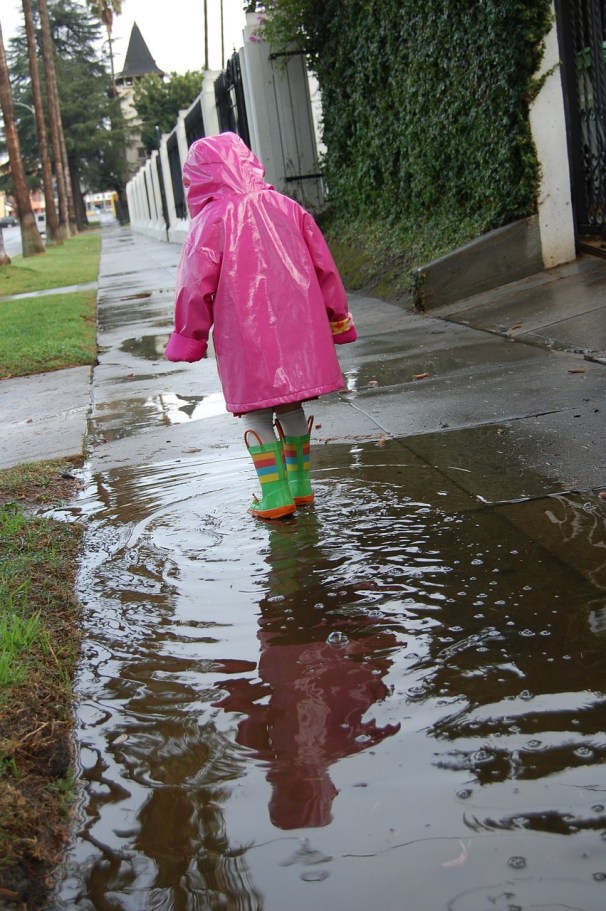
rainboots

It had been raining, and the young man was quite anxious. “It’s raining!” he exclaimed. “Yes, yes it is,” his teacher agreed. Drawing closer, he whispered, “Do I smell like pee?” Backing up, his teacher stared at him. “What are you talking about? Of course not!”

The student went on to explain his thought processes. He fully understood the Water Cycle and its importance to Earth’s replenishing and sustainability of its water sources. Taking it a step further, he reasoned that all the animals urinate outdoors – dogs, cats, horses and cows, bears and raccoons, all the wild birds, even the insects and fish. Well (his eyes widening), all that urine must leach into the soil and evaporate just like water! Which meant it was now returning to earth and raining urine on his head.

Having never thought this through to this degree I stopped to ponder these ideas, searching for merit. His teacher, I might add, did no such thing. She told him the clouds filtered out impurities and the rain was clean and he could retake his seat. He was most relieved. I was impressed at her quick-witted response. This is where the scientist in me gets bogged down. This is why I’d be a lousy teacher.

So, the Water Cycle, in its simplest form, explains how water covers 71 percent of the Earth’s surface. This water cycles through several steps: It evaporates into the atmosphere, where it condenses into droplets that form clouds and later falls back to the earth as precipitation (rain, snow, hail, sleet), which is collected or returned to our oceans, lakes and land.

Next, urine from mammals is composed of about 95-percent water plus some other compounds, including urea. Urea contains nitrogen. This fact is very important to a different science lesson, the Nitrogen Cycle. Nitrogen is necessary for all life as the building block of protein, which both plants and animals need to grow. Nitrogen is the most important nutrient that plants get from the soil. The soil receives this nitrogen in two ways – nitrates come from animal solid waste like manure. From liquid waste like urine comes urea. Another way nitrogen is acquired is through decomposing into the soil.

Birds and reptiles are uricotelic (I wrote this whole story so I could prove I know that word), meaning their urine waste is in the more solid form of urates (that white stuff in the bird’s droppings) than liquid urine. It’s simply how their non-mammalian rudimentary kidneys function.

This is a very long-winded way of explaining that only the water from body wastes can evaporate into the air. All the “impurities” or other compounds are left behind to enrich our soil. Rainwater is essentially distilled water, free from impurities unless it picks up local air pollution/ dust or other debris as it returns as precipitation during the Water Cycle.

This is the most amazing win-win ever! So put on your galoshes and go splash in some puddles!

And have a great day!

Christine McFadden, DVM

Send questions or comments to drmc@mcmenagerie.com.

Have A Nice Day !

George Carlin, a comedian I’m not much familiar with, found fault with the phrase “Have a nice day,” saying it was “probably unrealistic to expect someone to have a nice day all day long.”

I am as guilty as the next person at wishing people I meet to “have a nice day” upon taking their leave. It has become an ingrained auto-response. The phrase is depersonalized and meaningless more often than not. Carlin’s riposte struck home because it has only been a few weeks since that very phrase landed me in the middle of a hostile exchange between my staff and a client.

The first I knew that we had a problem was finding a chart on my desk with a note “Client upset. Please call.” We get very few complaints, surprising, perhaps, given the number of animal patients we see in a day and the variety of human clients attached to them. I suppose some people never discuss their dissatisfaction with us and simply go elsewhere with their pets. Our best clients tell us when we have let them down and I very much appreciate that – how else to improve our services? And then there are, well, those days that we just mess up. We don’t just drop the ball, we kick it over the fence. No half measures for us, no sir.

So I read the chart. It landed on my desk because I had examined a cute little Maltese dog and vaccinated her when she first arrived to board with us. That had been days earlier and I had not heard of any problems during her stay. I then requested to speak with any personnel who might be able to enlighten me. This can be a dicey tightrope – understandably your staff wants to feel that you’ve got their back and truthfully, the client is not always right.

With half the story under my belt, I felt prepared to call the client, who was pleasantly surprised that I even called. The saga was not life threatening in any way but was important. The client had requested her dog be bathed upon arriving at the clinic. This made no sense to the staff because like some people, a dog away from home may exhibit different behaviors than their owner is accustomed to. He may stay up until all hours of the night. She may bark joyfully nonstop. Both will engage in food fights, scattering food willy nilly. Someone peed on their favorite blanket then ate it. In short, your calm little house pet may have the manners of the worst frat boy party animal you’ve ever seen depicted in a movie once you step away. I know, I’ve seen ‘em. So we always suggest a bath and fluff up right before heading home. Time to put the leash back on. Momma’s coming and you don’t want to disappoint Momma.

In this case, the staff just thought someone heard it wrong, so they waited to give the bath 4 days later, when the dog was scheduled to go home. Only Momma came back a day early. We absolutely would have given the bath then but everything got bolloxed up in the explanations and finally the good woman took her dog (bathless) and went home. The final insult? As she was leaving in high dudgeon, one of my staff called out “Have A Nice Day.”

Ouch! Hit that ball right out of the park.

I was treated to a delightful lunch at a Ruth Chris Steakhouse recently and noted that at every request the staff responded “with pleasure.” I considered trying to incorporate this into my daily interactions with clientele, but somehow, when asked to express anal glands I think saying “with pleasure” could backfire on me. I am trying to rid myself of “Have a Nice Day.”.

Christine McFadden, DVM

drmc@mcmenagerie.com

Reflections Back on 2017 from the New Year

I can’t speak for you, but let me start this by saying that I spent my first night of the new year sleeping on the floor. No, you too? So let our first resolution be to stay home next year! Nothing stronger than water had crossed my lips, we missed the ball drop in New York because we were arguing too much as we channel-surfed at the last minute and I couldn’t tell you if there were midnight fireworks because we were all asleep long before the year crossed over. Some of us on the floor. I was there mostly because the makeshift mattress set up for the kids was very narrow. If you were next to your mom you would be snuggling, but if forced to share the same space with your sister it would have been a war zone all night. I chose “some sleep” over “none”. The great thing to come out of this? Everything settled to the down side and I’m convinced my silhouette, as seen from the left, is much slimmer.

I had lots of time to think while performing this balancing act. I remembered the faces of some I’d said goodbye to in the previous year. “Nella” was a gallant Golden Retriever. He was named as a young dog by a child too young to know a girl name from a boys and owned by a war veteran too kind to correct the child. Nella was the color of a vanilla wafer cookie. He was a big-hearted dog, always gently greeting me with a wave of his plumed tail, no matter the exams, the blood tests or x-rays that were needed. At 16 years of age, he suffered from severe arthritis. His owner always had a kind smile and a silly joke when he came in. He thanked us for our efforts to keep the big dog comfortable. He cooked for Nella when needed. On the bad days we hugged. And finally there was no denying that the most loving thing he could do for his dog was to let him go.

I started 2017 with a C-section delivery on Jan. 1. Ring in the new!

I ended 2017 with an 18 pound cat, Shrek, that had his bladder obstructed by tiny bladder stones they call “sand.” He couldn’t urinate. His bladder filled up tight as an over-filled balloon and the plumbing backed up until the pressure shut down his kidneys. It is hard to walk when your bladder feels like a large boulder in your stomach. When your kidneys shut down you feel tremendous nausea. It’s called uremic poisoning, because the body waste that the kidneys should filter out are reabsorbed into the bloodstream, poisoning you. It is impossible to eat when your kidneys shut down. A true emergency, his bladder at risk of rupture, we rushed Shrek into surgery. Under anesthesia we spent long minutes trying to break down the plug of small grit blocking his urethra until we could place a bladder catheter and empty his bladder. Then we pumped him full of intravenous fluids to encourage his kidneys to go back to work. Shrek looked a little odd, with one tube dripping fluids in at the front end and another dripping out more fluids (urine) at the back end. Key to prevent recurrent formation of this “sand” in Shrek will be his conversion to a diet of food developed specifically to prevent urinary sand of Feline Lower Urinary Tract Disease (FLUTD) syndrome.

My final thoughts before drifting off to sleep were of the first stanza of a poem I memorized years ago. The poem is by Alfred, Lord Tennyson.

Ring out, wild bells, to the wild sky,

The flying cloud, the frosty light:

The year is dying in the night;

Ring out, wild bells, and let him die.


May the new year be kind to you and your pets.

Christine B. McFadden, DVM

drmc@mcmenagerie.com

World Rabies Day


Several years ago I wrote an article on Rabies (Merced Sun Star, June 2014), a viral disease carried from animal to animal and sometimes from animal to human. For both animals and humans the disease is considered a death sentence.  I recently came upon a series of articles in a veterinary journal and was sad to learn that the disease is still a serious threat in much of the world and that approximately 60,000 people die from this disease every year. Still.


Why do I take up the story again? Because it deserves to be heard and, most importantly, it is still a threat to you and your loved ones. A very real threat if you enjoy traveling to out-of-the-way places.

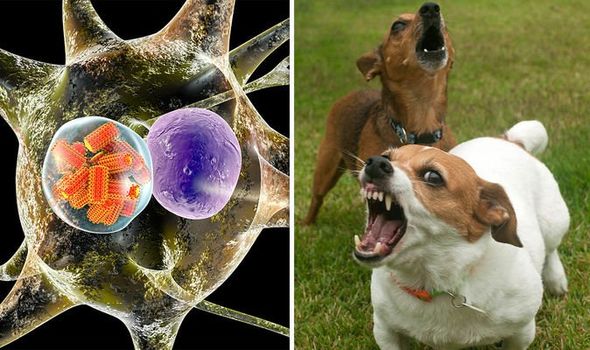
Rabies-outbreak-map-rabies-symptoms-rabies-dog-bite-1125644

Rabies is a slow-moving viral disease. It can affect any mammal, but is usually spread from one carnivore to another as the virus is passed in saliva by bites through the skin. Infection after contact with infected saliva on an open wound is a possible, though unlikely, mode of transmission. Once a new victim has been bitten, the virus slowly makes its way into the nerves and through the nervous system to the brain. This can take two weeks to 2 months or longer. By the time the rabies virus is present in the saliva, death is near. It is for this reason that when an unknown dog bites a person the dog will be quarantined for 2 weeks.  Two weeks is long enough to monitor the dog : If rabid, the animal will die. The dog’s brain can then be tested for rabies virus and the bitten person still has ample time to receive the anti-rabies protective vaccine.


Rabies has been found in the wildlife in and around Merced County. It is endemic in area bats, raccoons, skunks and foxes. You, the pet owner, have set up a terrific protective line of defense by the simple stratagem of vaccinating your pet dogs and cats. It is believed that by vaccinating 80% of a populations’ pets an effective barrier is created to protect people against exposure to the disease. In the United States more rabid cats have been reported to the CDC (Center for Disease Control) than dogs for several years. Vaccinate your cats! Vaccinate all dogs and cats older than 3 months of age. Keep them up-to-date.


There are a few island communities which have managed to keep rabies out or eradicate its presence : Hawaii, Great Britain, and Japan are three. You cannot easily take a dog or cat into those Islands. I applaud their high security. The regions most likely to have rabid animals that endanger humans are underdeveloped countries in Asia and Africa.


For the traveler to a foreign country, be aware that the dogs roaming the streets may be high risk for encountering rabies. The unsuspecting traveler may admire a puppy, letting it lick their hands. Food you carry could attract attention from a roving dog. Many of these countries have inadequate medical services for diagnosing rabies or offering post-exposure prophylaxis (prevention/ PEP) services.  Rabies prevention is not universally available. The more exotic your outpost, the higher the risk of encountering rabies. Of the 60,000 people who die every year, nearly every single case (99%) of human death started with a bite from an infected dog.


Whether at home or traveling, camping for a weekend or following your dreams of adventure exploring a foreign land, please take precautions. Enjoy wildlife, but don’t treat or keep wildlife as pets. They cannot be vaccinated against rabies and may have variable incubation times for rabies. Avoid attracting wild life to your home or campsite. Do not feed wildlife. Do not feed your pets outdoors, as this attracts wild life and strays.  Avoid animals acting unnaturally. Animal-proof your trash. Avoid stray dogs and cats. Stray animals may not be vaccinated and they run high risk of exposure and contact with wild animals that might harbor rabies. The message, Backpackers : stay away from unknown dogs and wild life. The life you save might be your own!


World Rabies Day is Thursday, September 28th this year. This day is sponsored by an alliance among the World Health Organization and many other organizations working towards the goal of eradicating Rabies deaths in people and animals by the year 2030. They are joined by the One Health Initiative, a group dedicated to promoting increased communication and joint action between physicians and veterinarians globally through the integration of human medicine, veterinary medicine and environmental science. Rabies is cited as a classic example of what “One Health” is all about, as the control of rabies in animals has reduced the death toll in people from that disease. Together, we CAN make a difference.


Christine B. McFadden, DVM

drmc@mcmenagerie.com

Photo Credit : https://www.express.co.uk

The Large Animal Vet


Perhaps the title sounds misleading. A “large animal” vet develops a veterinary practice caring for the needs of livestock such as cattle (dairy or beef), sheep, goats and pigs. A “small animal” veterinarian like me is usually slotted into the care of companion pets such as dogs and cats. So when I examine a 200 pound dog, it is still a small animal and likewise there is often confusion about whom to call when the patient is a pot-belly/miniature pig. Not me.


The life of a small animal vet and that of a large animal practitioner are markedly different. One works almost exclusively indoors, dressed neatly, white coat in place. The other weathers life outdoors, facing extremes of blazing heat to icy cold, rain and snow. One always has a sink handy to tidy up. The other uses outdoor hoses more than they’d like. A dairy vet may check over 100 head of cattle in a morning and four “farm calls” make a full day. A small animal vet may follow the medical strands of more than 25 patients a day, winding through exams, blood results, x-rays and working in a surgery or two.  All juggle the demands of unexpected emergency work.


Being in an office most of the day, I rarely interact with my brother and sister large animal veterinarians. So when the pygmy goat from the petting zoo fell over dead I was unhappy, but proceeded to perform a post-mortem examination and sent tissue samples off to our regular lab. I had overseen the care of these goats for many years, but they were on the back burner when it came to my interest in the truly exotic Zoo collection. My concerns centered on whether or not the public might have fed something odd to the goat? (I’ll jump ahead here : No. The public did not harm the goat). I mulled over the problem but prepared to wait until the pathology report was finished sometime in the next week. And then another goat died.


I was unnerved. The goats were being closely watched and none had shown any outward signs of sickness. They had all lived for more than 8 years at the Zoo and had never, collectively, suffered a single injury amongst themselves. I immediately sought the expertise of a Large Animal veterinarian. The Goat Expert was on a dairy farm. The return call came in as I was finishing one surgery and about to start another. Gloves still on, I was staring at some x-rays

in-between these surgeries when they told me they had Dr. B on the line. Multi-tasking at its best.


I hurried over, snapping gloves into the waste receptacle and grabbing pen and paper. I introduced myself and LAUNCHED into a recital of my goat woes. I verified that he had goat experience? Yes. I gave him dates, genders, date of deaths, lack of lab results, still pending. I drew breath to spew forth another list of details and heard him gently respond, “Yes…. I think…. I might be able…. to help”. His measured tones were from a man used to the gentle rhythms of milking machines, contented cows swishing their tails, chewing their cuds. Da-dum da-dum to my staccato dop-dop-dop-dop-dop! I managed to squeeze in a few more hurried sentences (surgery! Waiting!) before he responded calmly, “I think I drive past your practice on my way up from this dairy….”. I opened my mouth. Closed my mouth. I could hear the clouds, feel the sunshine, almost see the shining black and white hides of the gentle Holsteins he surveyed as we spoke. It was all there in the rhythm of his speech. I told myself to stop yapping before he decided my goat problem would be too stressful for him to bother with.


An hour later Dr. Thomas Bauman drove up in a large truck outfitted for all manner of veterinary ministrations. He spent an hour and a half doing a post-mortem on one goat. He had a wicked knife and mulled over the cause of sand in the stomach. He felt it was too much. Did we feed on the ground? No. But little kids feed the Zoo goats oat hay pellets and they often dropped to the sand, with all the goats scrambling to get their share. Hmmm. He gave the problem his full attention and we submitted a gazillion samples to the State Lab, including an intact eyeball because it would be useful for trace metal analyses. The final answer was a copper deficiency in the feed, to which Pygmy goats are especially susceptible. Hay grown in the San Joaquin Valley is often deficient in copper. The salt lick fed at the Zoo did not have added copper because Alpacas are in with the goats and they are susceptible to copper toxicity (too much) if supplemented. So we now feed our goats little capsules of copper wire every six months and all is good. But sometimes I find myself wishing that I was a Large Animal veterinarian. Just so I could slow down and smell the …..never mind.


Christine B. McFadden, DVM

drmc@mcmenagerie.com

Emergency Work


Dr Mc Blog

January 14, 2016
Emergency work is not as much fun as it’s cracked up to be. I imagine it’s easier when that’s ALL you do, and staying up all night takes on a kind of rhythm, you adjust to sleeping during part of the day. I am one of those unfortunates who do not do well after 24 hours of being on my feet and some adjustments have had to be made in my career because of it.

They should have recognized this back in vet school. One particularly hellish week I was assigned to the Small Animal Intensive Care rotation. I am certain they used this to weed out the weak : I was assigned evenings, over-nights, and mixed them back and forth. I had one day. In addition, we were all to present for Rounds at 11 AM, or else. By the end of the week I was so groggy from lack of proper sleep that I had to stand, then sit, then jump up again during rounds just to keep awake. My remaining memories from this time were of a dog that presented for near-fatal bleeding ulcers of the stomach, caused not by the 5 pound box of Valentine’s candy he ingested (chocolate can be very toxic to dogs) but by the helpful owner who heard you can give them hydrogen peroxide to make them throw up and instead of a tablespoon (which would have been the recommended amount for a 90 pound dog by her veterinarian) she managed to throw a good pint down his throat. The dog lived, but it was nip and tuck for a while. There was a parrot caught in a typewriter. (We ended up dismantling the typewriter. The bird suffered a small laceration on one toe, which healed beautifully). And there was a female client who was so impressed with her station in life that she addressed her husband as “Dr” and we all wondered if she wasn’t allowed to use his first name. I’ve met more of that type since and now understand that they just need to get over themselves. But these days in school only served to underscore what I already knew – some of us just can’t pull all-nighters.

And of course my first job (yes, here in Merced) involved rotation through emergency work. To be more precise, an emergency medical call can occur at any time of day – seizures, poisoning, hit-by-cars – and it can be inconvenient to drop everything, annoying your other clients, to attend to that pet. On the other hand, at least here in Merced, most clients recognize that that could be them with their pet and they graciously forgive you.

So during the daytime, I can pretty much handle whatever walks through that door. My definition of emergency work is confined to those cases that come in after normal day time business hours, during sleep, on days of presumed rest.

My very first week of being on call in Merced I had two hit-by-cars on different nights and removed two bleeding spleens around 2 AM. They both lived. The third spleen (yes, things come in three’s) came in with a little dog suffering from an immune disorder. He also survived and improved after his splenectomy. So in the first month that I worked as a veterinarian fresh out of school I removed three spleens! I found that odd, but this career has always provided many unusual and odd things to get through.

There was the night I was driving to an emergency call (yes, driving the speed limit) and a cop pulled me over. He knew me (I took care of the police dogs) and he said he thought I’d wobbled. I assured him I’d had nothing stronger than orange juice (it is extremely rare for me to drink alcohol. The effects are worse than emergency work). He replied that he believed my story about an emergency because he knew I never looked that way in the daytime………..

So it is to everyone’s benefit that I procure 8 hours of sleep every night. You might say it’s just what the doctor ordered!

Christine B. McFadden, DVM
drmc@mcmenagerie.com