The Raw Movement

There has been a call for us to return to the simpler life, back towards the days when all things were more “natural”. Sounds healthier, yes? “Natural equals healthy” they shout. Raw milk for the family and raw meat for the dog. Ummmmmm. Not always. I myself am happy to be the beneficiary of many scientific discoveries. Let’s take a look.

In 1928, Penicillin, the first true antibiotic, was discovered. An antibiotic is a medicine that destroys bacteria and other microorganisms (germs). Prior to that, the average life expectancy for a person was around 48 years of age. Before antibiotics people and animals often died from infection. Childbirth, surgery, and many diseases were often a death sentence because of the attendant infection. In the year 2019, the average person may expect to live until they are 80 years of age. Why the change? In large part, because of the decrease in deaths from infectious diseases. Antibiotics, Vaccinations, Disinfectants and Sterilization, improved hygiene. Thank you, research scientists!

In 1950 over half the American population lived on farms. Over the next 20 years farms and the multi-party line telephone would disappear as young people moved to the cities and family farms consolidated into mega-businesses. Suburbia was born. Also in flux was how we viewed and cared for our pets. There are fewer working dogs today, and their work has evolved from livestock assistance on the farm into service roles, stepping in to assist people with physical or emotional disabilities. Dogs and cats are recognized for the vital role they play in our everyday lives. We want to care for them the very best that we can, and how we feed them has come under scrutiny as we question our own diet.

It’s true that wolves, foxes and other wild canidae eat raw meat. The average life expectancy of a wolf in the wild is 6-8 years. In captivity, a wolf may live 16-18 years. A wild fox may live 2-5 years; captive, 14 years. Wildlife face a host of “natural” hardships: starvation, infection from contagious diseases (no vaccinations!), infection from wounds and parasites. This is life at its most natural. Most pet dog breeds have been domesticated for centuries. Most can expect to live 10-15 years.

It’s interesting to me that the raw food which people purchase to feed their dog is still a processed food (unless you’ve farmed and slaughtered the meat yourself), susceptible to all the bacterial infections they’re supposed to be trying to avoid.  Raw meat can be contaminated by listeria, salmonella, E Coli, campylobacter and more. What is interesting is that the proponents of RAW claim healthier coats or more energy – not a longer life or true overall health. One on-line site stated that a benefit to feeding a raw diet was that you had total control of what was included in your dog’s food – laughable! We are all aware of the food recalls for both human and animal products : listeria in cheese, E coli in spinach, campylobacter in chicken, salmonella and listeria in commercial raw dog foods.

The truth is : Bacteria aren’t going away. Like us, they fight for survival. They mutate and re-form and will turn up again and again. The Center for Disease Control (CDC), our national public health institute in Atlanta, Georgia, has a battalion of researchers and scientists that follow disease trends throughout the United States and around the world. They’re work is to safeguard us – sometimes from ourselves.

When a client requests advice on what to feed their pets I have a stock answer : Go with the tried and true. Go with a company that has been making pet food for decades, with decades of investment into research of breed needs, life stage requirements, and years of following pets to monitor their health, making any necessary adjustments to their foods along the way. They have invested their livelihood in formulating foods to help your pet to thrive. Often there are a variety of choices within each brand, with ingredient modification to meet the financial abilities of the buyer while still providing decent nutrition for the pet. Bon appetit!

Christine B. McFadden, DVM

drmc@mcmenagerie.com
Marijuana Toxicosis

Now it is possible that some of you may succumb to the same little habit I am guilty of: reading the popular magazines while standing in line at the grocery store. Never buying them, of course. This is where I follow the stars (we aren’t talking astronomy here) and gather knowledge of my fellow human beings. Consider it human resource research. It doesn’t take many pages for me to feel that I have gleaned everything of interest that one of these magazines might offer, so imagine my surprise when I came across an entire page devoted to the subject of: “What’s In My Bag?” It is actually believed to be of interest to American readers to know what a Hollywood actress might carry in her purse. I am stuck on that: who cares and why? First, I decided to look in my own purse. I have one, though I rarely carry it.  Wallet, ID, keys. A pen. Sometimes I have actual money in there, sometimes not. I cannot imagine this being of interest to anyone else. Even potential purse snatchers have divined that it’s not worth their time.

Now, if I was going to be interviewed for a magazine with full page glossies, would I lie and embellish all that? You bet. Do people really carry extra shoes, whole bottles of water, and apples in their purses? Why don’t THEIR apples bruise after being jostled in a bag with shoes all day long? Are those shoes… gym shoes? Ewww. Is it possible that I am the only person in the world who doesn’t carry protein bars as their snack, sweetened preferably with honey or agave or stevia leaves, no white sugar please? Help! These women have no need for gym class – their purses are “free weights”. Crunches, curls, lunges -just lift and press that purse. The possibilities are endless.

One item missing from these lists of “What’s In My Bag” are marijuana products. Ooops, did I just say that? Hollywood has a bit of a rep for extreme partying, for a lifestyle of too many pills, alcohol, and drugs. Now that marijuana has been legalized in California I thought someone’s “Bag” might be the first place it would show up. So I’m happy they’ve shown restraint. I’m not very happy about marijuana, legal or not. Legalization has opened up a host of dangers for my patients, mostly the dogs.  As a veterinarian, I am appalled at the people who, through carelessness or on purpose, allow it to be shared with their pets. Over the years I have cared for several dogs that were “stoned”. Marijuana-laced brownies or other food items were usually the culprit, but about half the time the item was shared with the dog because their owner was high and thought their dog should be allowed to experience the same “joy”. The reason I saw the dog was because even in their fog, the owners recognized something was terribly wrong and sought emergency care for their pet.

A pet affected by marijuana toxicosis will exhibit a host of neurological abnormalities. Dogs may become so agitated they appear manic, drooling, dilated pupils, constant vocalization and walk uncoordinated. Seizures, coma and death may occur. There is no ready test at present to detect marijuana levels in a dog, so we must rely on the owner’s honest history if we are to help their pet. That said, there is also no true antidote – we must watch the dog suffer the effects, which we try to minimize and flush out the drug with IV fluids, oral charcoal, sedatives and  sometimes enemas. The active chemicals in marijuana are stored in body fat, broken down in the liver and exit the body in the feces. It can take 24 miserable hours or longer for your pet to recover. Some trip. I am not impressed.

Years ago, fatalities related to marijuana exposure were rare. Most pets ingested only small amounts of a natural plant, containing a relatively small amount of the primary psychotropic chemical THC (tetrahydrocannabinol). That is no longer true. You see, in developing medical-grade marijuana products they have synthesized and concentrated the most potent chemicals in marijuana. Pets that ingest these medical-grade products have a much higher risk of toxicity.

The American Veterinary Medical Association (AVMA) is undertaking research to see if there are any medical benefits to the non-hallucinatory, non-psychotropic chemical CBD (cannabidiol) that is also found in marijuana. Could it be part of a treatment plan for problems such as arthritis in pets or epileptic seizure control? At this time there is little scientific evidence on this subject. Legitimate research has been hampered by the fact that while many State laws have legalized restricted uses for marijuana in people, the Federal Laws have not changed. Until the safety and risks of CBD products have been studied there is little advice on the subject from veterinarians. In the meantime, PLEASE prevent exposure of your pet to any THC / marijuana products !

Christine McFadden holds a license to practice veterinary medicine and surgery. She has cared for the family pets of Merced at Valley Animal Hospital for more than 30 years. Send questions or comments to drmc@mcmenagerie.com.

Well your cat doesn’t have lice, but…

It is remarkable what word associations may trip in your brain.

Someone was talking about head lice in children the other day and I found myself mulling over my encounters with the louse, an ectoparsite (“ecto” pertaining to bugs found crawling around on the outside of the body, as opposed to those living in your intestine, lungs, blood or brains, which would be “endo”parasites and even scarier). Infestations with lice are called “pediculosis.”

I have had the possibly unique experience, compared to the average person, of contracting a brief case of horse lice and another of ostrich lice. In my line of work I have also been called upon to identify and treat lice on chickens, pigeons and guinea pigs. Probably the lice on the ostrich and that of the other birds was the same stuff – namely, avian lice, but I’ve never researched it at any length to determine if they might have been different between KINDS of birds. My sole concern was how to get rid of the pests. My methods have been successful for my patients.

The big message I wish to convey is that all lice are “species-specific.” What this means is that a bird louse can only live and multiply on other birds-of-a-feather. An equine louse can only thrive on horses or other equus species. Sure, they may jump onto another creature, an example being the veterinary student trimming the horse’s hooves with her head buried in its flank – but apart from running around for a few riotous minutes, once scraped off, they are of no further concern to a different species. Period. Bird lice can’t live on people, horse lice can’t live on people. Bird lice can’t live on horses. I know, I’ve tested this theory! I was not a willing participant, but I will bear witness that indeed, the louse of one kind of animal cannot live on another species. Species-specific! Promise! Big sigh of relief.

Many years ago I encountered the only case of lice I have ever seen in a cat. Her owner dropped her cat off in the morning on her way to work, stating that the cat had “bugs” and for heaven’s sake fix it because the cat slept with her.

Lice can often be seen with the naked eye and I quickly found a few on this black cat. Ensnared on some scotch tape, I examined the sample under the microscope. This was more than 25 years ago. There was no Internet to speak of, no cell phones, no Google or other search engines.

What I had was good old text books, several devoted strictly to the parasites of animals. And what showed up on the microscope didn’t look like any lice I recognized. Odd. Searching my books, I came across a photo demonstrating the finer points of the human head louse. I called Public Health. I called the owner, hesitating to discuss my findings. How to delicately convey that her cat was fine.

She was horrified. Turned out she taught first graders and there was a notice circulating that a head lice problem had cropped up in class. She realized that she had contracted it from her student and brought head lice home. I gave the cat a medicated bath, which cured the cat. And although this was one louse I avoided, it made my head itch every time I thought about it!

Christine McFadden holds a license to practice veterinary medicine and surgery. She has cared for the family pets of Merced at Valley Animal Hospital for more than 30 years. Send questions or comments to drmc@mcmenagerie.com.

New Life for an Old Dog

She had been all black in her youth, but now at the age of 14 she is showing some gray around her muzzle. She used to jump and romp and play. Now she walks sedately across the yard, a faint weakness in her hindquarters. But always, Bella has class. Always, the gentle tail wag to let you know that she’s listening, she’s here.

Two years ago, Bella exhibited marked signs of difficulty when she tried to stand up in the morning. Upon examination, it was obvious that she was losing feeling in her back feet. Our X-rays showed degeneration of the spine in her back. We discussed options and Bella’s owners decided to see a specialist, where Belle underwent laminectomy spinal surgery. She recovered beautifully and even though she needed to stay on arthritis medications she moved quite fluidly again. Bella enjoyed her people and her life.

Bella is a Labrador Retriever, and though I don’t believe she has ever retrieved anything more interesting than a goodie from her owners’ hands, she shares a fate common to many Labs. Bred to be high energy dogs, capable of hunting all day and swimming in frigid waters to retrieve ducks, these dogs seem to naturally have an extra layer of protective fat. Given snacks and a soft life in the suburbs, many a Lab will put on a few extra pounds.

As I surveyed Bella in the exam room on Tuesday, I felt a deep unease. By no means obese, Bella could have stood to “lose a few” but not like this – Bella had lost 10 pounds over a two month period of time. Nothing in her diet or routine had changed, though her owners noted that she frequently passed a soft stool. Given her weight loss, I recommended that we start with a blood panel for diagnostic tests. Her physical exam was unremarkable for her age and existing medical history.

When the lab tests returned, the “biggies” were all good. No sign of diabetes, liver and kidney function within normal limits. Her body proteins were low. Hmmm.

Bella’s body either wasn’t making proteins or it was losing protein. In this case, with further testing, we were able to verify that she wasn’t losing protein in her urine, and that her small intestine wasn’t absorbing nutrients properly (her cobalamin levels, or vitamin B12, was too low). Of course, we knew she had chronic diarrhea, so it was only a small step towards the diagnosis of a protein-losing enteropathy, or PLE. Plowing ahead, what was the underlying cause of THAT? We asked that Bella return for abdominal x-rays and ultrasound. While corroborating thickened bowel loops, we also found a mass on her spleen. We didn’t know if that mass might be cancerous or not, but we hadn’t found any other signs of cancer and dogs can get along without their spleens very nicely. If it wasn’t cancer but a hematoma on the spleen, there was a risk of it rupturing and Bella bleeding to death. After several talks, we scheduled Bella for surgery. She would undergo a splenectomy to remove the spleen and have her intestine biopsied to confirm the cause of her PLE.

This was a lot to ask of an old dog. Bella was in surgery for over an hour, requiring her to lay on her back, not a terrific position for a dog that had undergone major back surgery. Positioned in a foam support tray throughout, I still worried. Surgery was successful and her recovery from anesthesia rapid.

We kept her on intravenous pain meds, but there was no denying that Bella was slow to “bounce back”. Her owner cried that first day. Because of her IV fluids, Bella couldn’t move around easily. She struggled. We disconnected the fluids to take her outdoors to walk in the sunshine. Pain medication can cause a loss of appetite. I hand fed her. We slowly decreased the pain meds and upped her recreation. On Day four post-op, Bella met her owner in the parking lot. Moving slowly, she walked over to her, tail gently wagging. Bella went home. Her biopsy report diagnosed Inflammatory Bowel Disease (IBD) which responded well simply by feeding a specialty diet. The diarrhea disappeared. Her spleen was cancer free. Bella was on the road to a full recovery, as classy as ever.

Christine McFadden holds a license to practice veterinary medicine and surgery. She has cared for the family pets of Merced at Valley Animal Hospital for more than 30 years. Send questions or comments to drmc@mcmenagerie.com.

The Water Cycle

Kids say the darndest things! This year “The Water Cycle” is being taught in Science at the high school, which came to my attention when a story was relayed to me the other night.

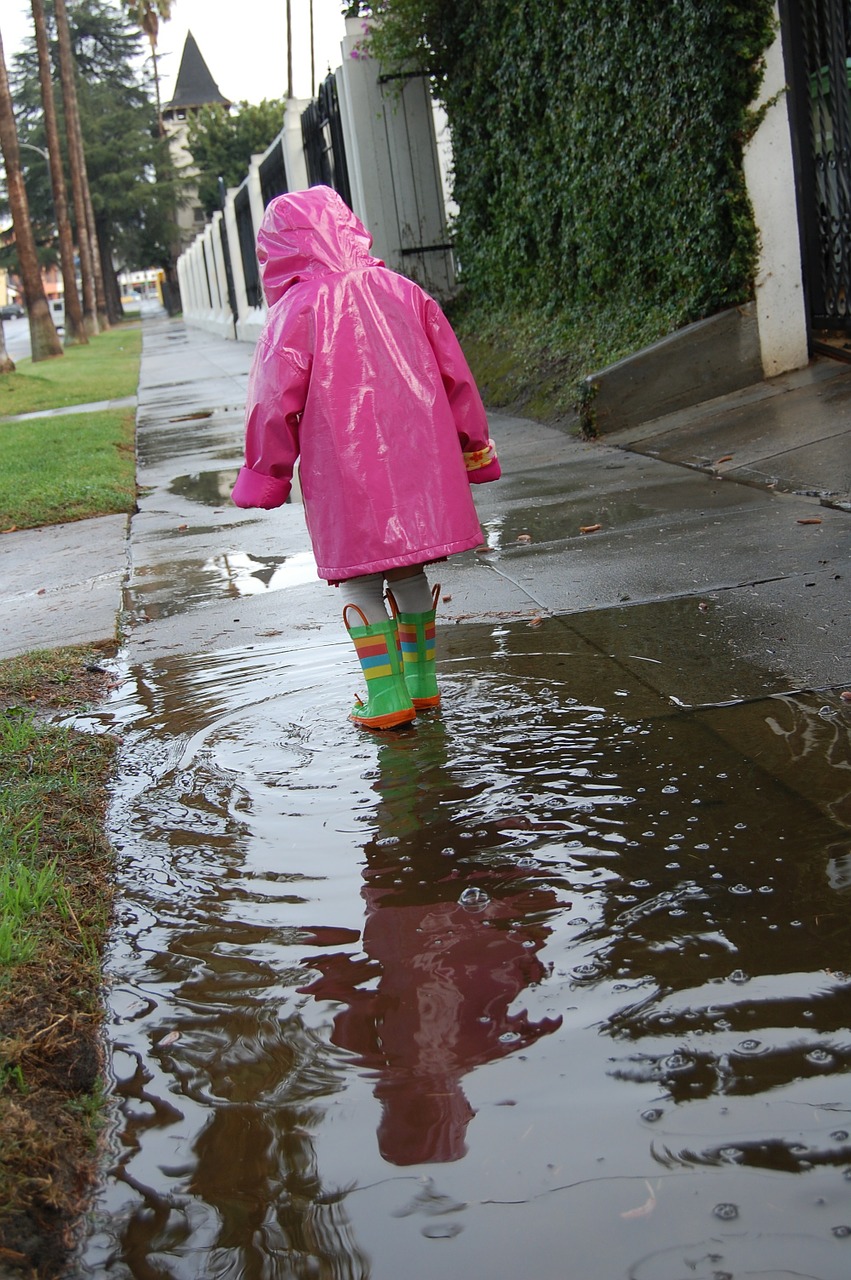
rainboots

It had been raining, and the young man was quite anxious. “It’s raining!” he exclaimed. “Yes, yes it is,” his teacher agreed. Drawing closer, he whispered, “Do I smell like pee?” Backing up, his teacher stared at him. “What are you talking about? Of course not!”

The student went on to explain his thought processes. He fully understood the Water Cycle and its importance to Earth’s replenishing and sustainability of its water sources. Taking it a step further, he reasoned that all the animals urinate outdoors – dogs, cats, horses and cows, bears and raccoons, all the wild birds, even the insects and fish. Well (his eyes widening), all that urine must leach into the soil and evaporate just like water! Which meant it was now returning to earth and raining urine on his head.

Having never thought this through to this degree I stopped to ponder these ideas, searching for merit. His teacher, I might add, did no such thing. She told him the clouds filtered out impurities and the rain was clean and he could retake his seat. He was most relieved. I was impressed at her quick-witted response. This is where the scientist in me gets bogged down. This is why I’d be a lousy teacher.

So, the Water Cycle, in its simplest form, explains how water covers 71 percent of the Earth’s surface. This water cycles through several steps: It evaporates into the atmosphere, where it condenses into droplets that form clouds and later falls back to the earth as precipitation (rain, snow, hail, sleet), which is collected or returned to our oceans, lakes and land.

Next, urine from mammals is composed of about 95-percent water plus some other compounds, including urea. Urea contains nitrogen. This fact is very important to a different science lesson, the Nitrogen Cycle. Nitrogen is necessary for all life as the building block of protein, which both plants and animals need to grow. Nitrogen is the most important nutrient that plants get from the soil. The soil receives this nitrogen in two ways – nitrates come from animal solid waste like manure. From liquid waste like urine comes urea. Another way nitrogen is acquired is through decomposing into the soil.

Birds and reptiles are uricotelic (I wrote this whole story so I could prove I know that word), meaning their urine waste is in the more solid form of urates (that white stuff in the bird’s droppings) than liquid urine. It’s simply how their non-mammalian rudimentary kidneys function.

This is a very long-winded way of explaining that only the water from body wastes can evaporate into the air. All the “impurities” or other compounds are left behind to enrich our soil. Rainwater is essentially distilled water, free from impurities unless it picks up local air pollution/ dust or other debris as it returns as precipitation during the Water Cycle.

This is the most amazing win-win ever! So put on your galoshes and go splash in some puddles!

And have a great day!

Christine McFadden, DVM

Send questions or comments to drmc@mcmenagerie.com.

World Rabies Day


Several years ago I wrote an article on Rabies (Merced Sun Star, June 2014), a viral disease carried from animal to animal and sometimes from animal to human. For both animals and humans the disease is considered a death sentence.  I recently came upon a series of articles in a veterinary journal and was sad to learn that the disease is still a serious threat in much of the world and that approximately 60,000 people die from this disease every year. Still.


Why do I take up the story again? Because it deserves to be heard and, most importantly, it is still a threat to you and your loved ones. A very real threat if you enjoy traveling to out-of-the-way places.

Rabies-outbreak-map-rabies-symptoms-rabies-dog-bite-1125644

Rabies is a slow-moving viral disease. It can affect any mammal, but is usually spread from one carnivore to another as the virus is passed in saliva by bites through the skin. Infection after contact with infected saliva on an open wound is a possible, though unlikely, mode of transmission. Once a new victim has been bitten, the virus slowly makes its way into the nerves and through the nervous system to the brain. This can take two weeks to 2 months or longer. By the time the rabies virus is present in the saliva, death is near. It is for this reason that when an unknown dog bites a person the dog will be quarantined for 2 weeks.  Two weeks is long enough to monitor the dog : If rabid, the animal will die. The dog’s brain can then be tested for rabies virus and the bitten person still has ample time to receive the anti-rabies protective vaccine.


Rabies has been found in the wildlife in and around Merced County. It is endemic in area bats, raccoons, skunks and foxes. You, the pet owner, have set up a terrific protective line of defense by the simple stratagem of vaccinating your pet dogs and cats. It is believed that by vaccinating 80% of a populations’ pets an effective barrier is created to protect people against exposure to the disease. In the United States more rabid cats have been reported to the CDC (Center for Disease Control) than dogs for several years. Vaccinate your cats! Vaccinate all dogs and cats older than 3 months of age. Keep them up-to-date.


There are a few island communities which have managed to keep rabies out or eradicate its presence : Hawaii, Great Britain, and Japan are three. You cannot easily take a dog or cat into those Islands. I applaud their high security. The regions most likely to have rabid animals that endanger humans are underdeveloped countries in Asia and Africa.


For the traveler to a foreign country, be aware that the dogs roaming the streets may be high risk for encountering rabies. The unsuspecting traveler may admire a puppy, letting it lick their hands. Food you carry could attract attention from a roving dog. Many of these countries have inadequate medical services for diagnosing rabies or offering post-exposure prophylaxis (prevention/ PEP) services.  Rabies prevention is not universally available. The more exotic your outpost, the higher the risk of encountering rabies. Of the 60,000 people who die every year, nearly every single case (99%) of human death started with a bite from an infected dog.


Whether at home or traveling, camping for a weekend or following your dreams of adventure exploring a foreign land, please take precautions. Enjoy wildlife, but don’t treat or keep wildlife as pets. They cannot be vaccinated against rabies and may have variable incubation times for rabies. Avoid attracting wild life to your home or campsite. Do not feed wildlife. Do not feed your pets outdoors, as this attracts wild life and strays.  Avoid animals acting unnaturally. Animal-proof your trash. Avoid stray dogs and cats. Stray animals may not be vaccinated and they run high risk of exposure and contact with wild animals that might harbor rabies. The message, Backpackers : stay away from unknown dogs and wild life. The life you save might be your own!


World Rabies Day is Thursday, September 28th this year. This day is sponsored by an alliance among the World Health Organization and many other organizations working towards the goal of eradicating Rabies deaths in people and animals by the year 2030. They are joined by the One Health Initiative, a group dedicated to promoting increased communication and joint action between physicians and veterinarians globally through the integration of human medicine, veterinary medicine and environmental science. Rabies is cited as a classic example of what “One Health” is all about, as the control of rabies in animals has reduced the death toll in people from that disease. Together, we CAN make a difference.


Christine B. McFadden, DVM

drmc@mcmenagerie.com
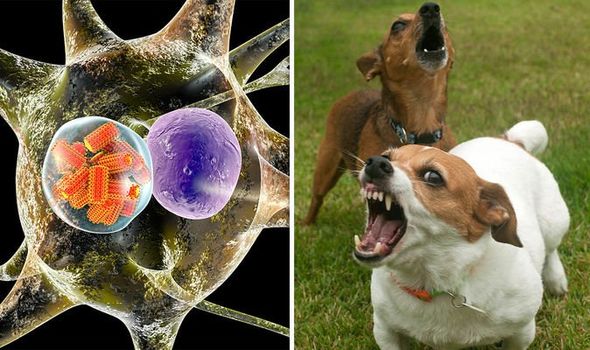
Photo Credit : https://www.express.co.uk