Little Old Ladies

She was a little old lady, short and round as a dumpling. She energetically grabbed her dog from the exam table and tipped him onto his paws. You’d never have guessed her age except for the grey hair. Her dog found his footing and waited expectantly by her feet. “I’ve got to go”, she declared, “I have to decorate the Hall for my sister’s 50th wedding anniversary.” Wow, I marveled, that’s something! A blaze of blue eyes flashed at me. “It’s a pain in the-you-know-what” she said. “My 50th was 2 years ago and every day I wake up and wonder if we’re going to make it.”  She gave me a saucy grin and danced out the door, her dog following her in adoration. I stared after them open-mouthed. Awesome woman.

People and pets share their lives with me. It’s a jumble and a jungle out there, and hanging on to these moments builds a life. On a long work day, I spend more awake time with fellow staff than I do with my family. 

When I’d first started out in town I struggled to put my textbook medical knowledge together with my patient’s needs. My focus was on the animals and I learned their names first. This fact appalled me the day I rounded a clothing carousel at a local store and came face to face with a client. The woman looked up, a smile starting and then fading as I blurted out “Beau!” – not her name at all, but her dogs. Good grief! I worked harder to learn BOTH their names in future but don’t test me on that one. Over the years my brain often refuses to let go of the first impression, the pet we bonded over who is now deceased, so that I continue to call the next dog, or worse, the third or fourth pet that follows, by the original dog’s name. My staff cringes at these mistakes, occasionally alarmed as they search for other signs of dementia. There’s Zoie’s Mom. Oh, she has another dog now. Mrs. R is 87 years old. Last year she took a trip to China with her daughter. Next year they’re thinking of Australia. Zoie was a 10 pound black miniature poodle who had epilepsy and the sweetest disposition you could ask for. Her new dog is 3 years old, but she will always be the “new” dog. When we get together we talk more about Zoie. The new dog is very healthy and we don’t have twelve years of medical battles fought and won to look back upon with her. 

And I have fond memories of the family matriarch, in her 90’s, who put out condensed milk for her cats every day. They were all terribly obese. She confided to me once that if they turned up their nose at a can of food she’d just open another flavor. Sometimes, she said, there would be as many as 7 cans lined up along her porch. I marveled at the ability of our pets to train us. She took in many neighborhood strays and it pleased her to spoil them. She laughed at my dietary advice. Condensed milk had seen her into her 90’s and I wasn’t going to convince her otherwise.  She gave me a chocolate colored blanket she’d hand crocheted. I have it yet.

old ladydog-walking-4426782.jpg

It was a little old lady who taught me about the bluing older woman used to take the grey out of their hair and make it lustrous white. True, sometimes it turned their hair a delicate blue. This invaluable knowledge helped me make white poodles whiter. 

I’ll be a little old lady someday. I’ll hoard cats and keep too large of a dog and goodness knows what other kinds of critters. I plan to wear purple with a red hat and act up just like those women in the Red Hat Society, because I love the poem by Jenny Joseph. And to all the older women who have shared their pets and their lives with me, thank you for enriching my days and just for being you.


Christine B. McFadden, DVM

drmc@mcmenagerie.com
Molly and the Spider Plant

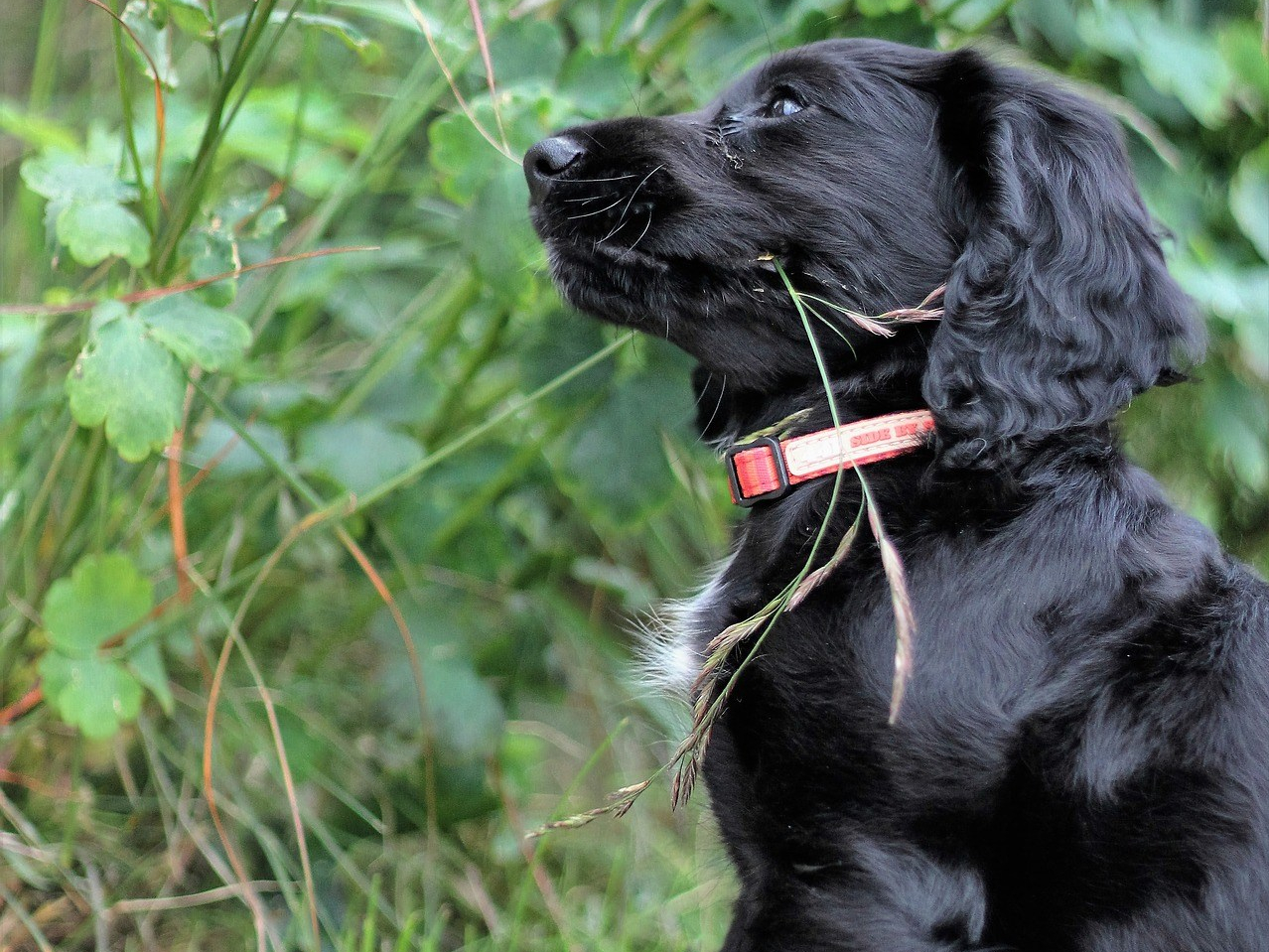
It was Molly who reminded me. Molly is an English Springer Spaniel. Her soft, silky black ears make it irresistible to gently pull them. Her owner was bewailing the fate of her garden, as young Molly had developed a fascination for a particular potted spider plant. She sought my advice.

MollyandtheSpiderPlant

My mind went drifting back to my third Irish Wolfhound, named Shredder. ( You can see photos of Shredder and I on my Facebook Page) If there can be karma in the name you give your dog then he was blessed with boatloads of karma. He lived up to his name. The glue on envelopes fascinated him, and given his size, no kitchen counter was safe for the deposition of mail. He took what he pleased and to this day I blame him for receiving a 5 day cut-off notice from the electricity people. He’s the only dog I’ve ever had who actually did eat the children’s homework. No one laughed. But the real pain in the neck was his attitude towards a tiny potted lemon tree I had started on the back patio. One morning, as I made my garden rounds, I noticed that the tree was a little crooked. Doubtless the dirt was settling, so I carefully righted it, tamping the soil down gently at the base. A few days later I noted it was tilted again. Puzzled, I again returned it to its proper position. As the days passed, I began to realize a pattern here, namely that the tree was being knocked sideways again and again. I was righting it on a daily basis! And then I caught him, Shredder, with a lemon leaf in his mouth, grinning happily, tail wagging. Such fun! Sigh.

So I moved the plant. Nope. Now, as a veterinarian, I had lots of training for behavioral problems. This was drummed into us students as very important, because poor animal behavior can lead straight to the Pound. I became annoyed. I staked the tree with a bamboo stake. Apparently this was not deemed fair play by the dog and next morning I found the tree completely sideways, a branch broken. I righted it. He knocked it sideways. Finally I took metal rebar, settled the tree more deeply in the pot, and firmly staked the trunk every few inches. Satisfied that I had prevailed, I went to bed.

The following morning the lemon tree was nowhere to be seen. When it was no longer fun, Shredder had simply removed the entire plant and shredded it. Who says dogs don’t have a sense of humor?

I did not share this story with Molly and her owner. I wanted them to have confidence in my advice. But when next I saw her, Molly had become truly devious. She not only enjoyed her spider plant but had branched out to include ALL the potted plants. I understood her owner’s angst. I wished I had a fabulous know-it-all answer. There are special Behaviorists in the field of veterinary medicine. They listen for hours to your problems and have reams of questionnaires to fill out. They have many inventive cures to modify and “cure” your dog of his or her behavioral problems. Most of them involve owner intensive time: “Take your dog for a 5 mile walk twice a day, he’ll be tired out and have less energy”(me, too); “Tell him no! sharply every time he goes near your plant, then distract him with a fun activity” (but I needed to run to the grocery store, I won’t be home to distract him); “Use the dimes or rocks-in-the–tin-can method” (but first, how do you really securely seal the thing and second, my aim REALLY is that poor – ouch!). Somehow, behaviorists always have the answers and most of it involves time that most of us don’t have – or the dog wouldn’t be doing it to begin with, right? Fence either your dog or your plants in (expensive! Not attractive!).

In the end, I wanted to tell her to dump the spider plants and try roses. It’s karma. You see, one of the meanings associated with the name “Molly” is “rebellion”. They should have looked it up first.

Christine B. McFadden, DVM

drmc@mcmenagerie.com

Connect with me on Facebook for shared photos and more!

My Husband’s Hospital Vacation

My first indication that text messaging had gone too far in my household was the afternoon I checked my phone and discovered the following message : “Just wanted to let you know. I thought I might be having a heart attack so I checked myself into the hospital.” It had been sent from my husband’s cell phone.


What you need to know were the events preceding this text message. My husband had taken our children skiing two days earlier. On this morning, he had done some moaning and groaning around the house. The problem is, I not only have to get ready for work myself, but I oversee care of the kids, the cats and the chickens before leaving. Getting to school on time is a mountain we climb every day. If it’s not worth opening your mouth to speak up about something, I’m not going to slow down long enough to start an inquiry. He knows where to find his Advil.


I confess I felt more irritation than anxiety when I read the message. Really? I’d had a full day and no lunch up to that point. So I called him. He answered. He sounded cheerful. Enough hours had passed before I’d discovered his message that he could assure me that his chest x-rays, his blood tests and his EKG were all normal and he wasn’t having a heart attack. So why are you still there? I reasoned. Well, he rambled on, this doesn’t explain the pain. “What about arthritis?” I asked. Oh no, he assured me, I’ve never had arthritis here. It’s on my right side. I was driving myself to the golf course and felt pain in my right arm, so I pulled over and googled heart attacks. It said they would be on the left side, but I thought I should be sure. They’re going to run another test to see if I have blood clots. If it’s abnormal, I’ll stay for a CT scan.


OK, honey. I returned to my own patients. There was a cat that had been tumbled in the dryer for 7 minutes. She appeared dazed, with tiny bruises starting to appear on her skin where patches of fur were missing. She was a lucky cat; only last month, another cat had actually died in a similar accident. We began treatment for shock and started the cat on IV fluids.


It was closing time when my husband called. My test is abnormal, he said. “What’s the name of that test, hon?” D-Dimer. We use the D-dimer test in veterinary medicine. Platelets, the cells that help blood coagulate or clot so you don’t bleed out, will slowly break down after they’ve served their purpose. If your body is forming big blood clots where it shouldn’t, the by-product of platelet breakdown will be very high in the blood stream. The D-dimer test measures this level.


For a variety of reasons, I didn’t believe it. So while getting the kids squared away I researched the normal blood levels for humans. Armed with this info, I went down to visit my husband in the ER. He looked remarkably fit. In fact, he wasn’t feeling any pain, though he’d not been given any medication. I asked his nurse for the actual number on his D-dimer test. It was less than 200. I stared at the nurse. “But that’s normal”. Yes, the nurse agreed. I stared at my husband. “Who told you it was abnormal?” He frowned, concentrating. He wasn’t sure (What else did he have to do?). About then they came to wheel him down for his CT scan. They said it would be read that night. Forgive me my skepticism, but having assured myself that my husband was doing very well, I kissed him and told him to enjoy his scan. At this point I reflected that if they did find something wrong with him, it would not be what he’d gone in for. I slept poorly (despite my brave front). At 2:20 in the morning (5 hours later) my husband sent a text message that he had completed his CT scan but it wouldn’t be read until the next day.


I visited him on my way to work the next morning. He was cheerful and even complimentary on the hospital breakfast. They were going to run some more blood tests. I left him to it.


At work, my own patients were well. My dryer tumbled cat looked much better and was enjoying a hearty breakfast herself. Her bloodwork was excellent. By early afternoon I was discharging my patient to her ecstatic owner. Back at the human hospital, my husband had been leaked the information that he had a “non-displaced hairline fracture in his right rib”. My husband was now being offered an echocardiogram and had begun to call me every hour or so. I told him if he couldn’t relieve the babysitter by 3:30 to let me know. If he wanted to stay another night in the hospital that was on him. I was worn out.


Once he knew it was just a cracked rib, my husband felt lots better. I arrived home that night to find he had invited several people to dinner and cooked up a storm. Even better, he could go on his golf vacation next week.


I am SO grateful my patients can’t talk!


Christine B. McFadden, DVM

drmc@mcmenagerie.com

My Christmas-motif salad wreath emoji

My staff said they needed to speak with me this afternoon. Well, of course. Had we not just enjoyed a dinner and dancing together on Saturday to celebrate the holidays? I met their loved ones. We shared food together. There were contests and prizes and drinkable holiday cheer and overall it was quite the festive occasion. With a day in between to recuperate, everyone was at their sparkly best back at work.

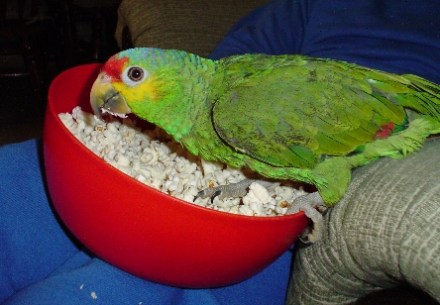
Monday started with a raccoon from the zoo. Her swollen cheek was returning to normal and no abscessed teeth were found, so we shipped her back to the zoo. We tackled two broken legs, a cat and a Great Pyrenees puppy. Both are expected to heal. We saw several birds. One, an enormous 30-year-old Blue and Gold Macaw parrot, screams the entire time we work with him. Oh, sorry, you heard him, too? My ears are still ringing. He was having his annual exam and a nail trim, for pete’s sake. We tended to an elderly rabbit whose x-rays revealed severe arthritis in the lower spine. We prescribed both an anti-inflammatory medication and one for nerve pain (neuropathy). We enjoyed a visit (with vaccinations) with a young Shepherd puppy that just found its Forever Home.

Good news arrived on another front : A 7 pound little stray with breast nodules and rotting teeth had been adopted. For Christmas this little dog not only found a Good Samaritan (shout out to the Stouts!) to address all of her considerable medical needs, but today the biopsy of the breast masses showed that they were benign! With no evidence of a deeper cancer, she can look forward to many healthy years to come. (Side note: I’ve said it before, but can’t help point it out again: Older unspayed female dogs run a 25-percent risk of developing breast cancer, usually malignant. Have your puppy “fixed” while she’s young to prevent this. It really is that simple.).

I fielded questions about pet snakes, lice on rats, a pet pig, and found time to do a little surgery. So when my staff flagged me down I slowed down to give them my attention. “DrMac, when you send an emoji on your phone, do you think you’re sending a Christmas wreath?” First I had to redirect my mind, away from veterinary medicine and onto “emoji”.

Just in case you’ve spent the last 20 years stuck in a Jumanji game, an “emoji” is a cute little symbol meant to convey a person’s thoughts or facial expressions or a symbol. Emoji’s can be inserted into a conversation during text messaging on the ubiquitous cell phones. You needn’t say you are happy, you can simply send a smiley face. Same with “sad”, “embarrassed” and a host of other feelings. These little cell phone symbols also pop up unexpectedly, as your “smartphone” detects the theme in a sentence and suggests a complementary emoji. A turkey showed up around Thanksgiving on my phone, and with the advent of the Christmas holidays, I noted a tree symbol pop up, trimmed in holiday ball ornaments, and another of a Christmas wreath.

So I began to include a Christmas tree in my text messages, whether or not it was pertinent to the conversation. I was being festive. As soon as I saw the wreath, I began to send that out, also, alternating one with the other.

On Monday afternoon this non-medicine related question came out of left field and I took a moment to adjust. Yes, I admitted, I’ve been sending out text messages with Christmas wreaths. I was puzzled.

Three of them began to howl, collapsing into themselves with laughter, barely able to sputter out “You’ve been sending salads!”

What?

The sad truth came out. Those tiny little colored balls decorating my “wreath” were cucumber and tomato slices. Worse, when the emoji was sent from my I-phone to an android phone, it transformed into a bowl of….salad. Not remotely wreath-like. Well, you can’t let little things like this get you down. I have now sent out a text to my nearest and dearest saying “Greetings! I’m sending you my exclusive Christmas-motif salad wreath emoji, which I mistakenly thought was the accompaniment to the tree….” So here’s to happy holidays to all and if I send you a salad wreath just enjoy it, ok? Related image Image result for salad emoji

Christine McFadden holds a license to practice veterinary medicine and surgery. She has cared for the family pets of Merced at Valley Animal Hospital for more than 30 years. Send questions or comments to drmc@mcmenagerie.com.

The French Fry Challenge

Beware! Traveling veterinarians are everywhere!

Along with the vast hordes of people who undergo summer migration in odd patterns they refer to as “vacations,” we made our way across the North Pole to Europe, specifically France.

You may (or may not) recall that we had entertained an exchange student from that country earlier this year and that she had left us with the declaration (politely) that no where on Earth could the fabulous French Fry be found as it existed in her country, specifically the north of France.

The gauntlet had been thrown. Valiantly I threw all my free air miles into the purchase of plane tickets and we set off on our summer adventure. Our first venture with the French pommes frites (french fry) was …. drum roll, please : at an airport McDonald’s. Oooh la la!

Oddly enough, they tasted like a McDonald’s french fry here. Except they were accompanied by a lime green packet of “pommes-frites-sauce” which was a mysterious white color inside and tasted a bit like sweetened mayonnaise (if you’ve ever had sweetened mayonnaise?).

We passed. It must be an acquired taste, and in all fairness, we had to ask for ketchup everywhere we went, but they did have it.

I suspect when the shoe is on the other foot and the French are visiting us, we may not be so accommodating. We sampled the frites in Paris and across the south of France, then headed north to Lille, almost on the border with Belgium.

Here we met up with our exchange student, whose family welcomed us into their home. We sampled “les frites” in restaurants and roadside stands across Northern France and into Belgium. We ate them with dishes whose names we couldn’t pronounce and sometimes ingredients we couldn’t guess at.

We ate them wrapped in newspaper cones, served in clever tiny wire baskets and scattered across plates. Without exception they were served fresh from the fryer, hot enough to burn the skin off your fingers and tongue, and were indeed crispy/crunchy on the outside and soft and melting on the inside (or was that my tongue giving way?).

With a deep bow of respect, may I say that round one went to northern France in the “Pommes Frites Contestation.”

Wish this could become an annual event! We made the acquaintance of their cat, Plume, and several other pets along the way. We very much enjoyed our trip to another country and found ourselves, delightedly, also happy to come home.

There was much fun with “bonjour” and the French kiss, kiss greeting upon our return and then I got down to work. What a joy! I truly love my work and the people with whom I work.

In my absence, at the Applegate Zoo, our new Black-tailed Mule deer, Lily, had birthed twin fawns! Lily came to our Zoo only weeks before giving birth. She had been taken in by Fish and Game staff after reports of a deer coming up to people in traffic and trying to climb into their cars or mooch something to eat.

Obviously she had been hand-raised (surreptitiously, not legally) then released. Too imprinted on humans to live safely in the wild, Lily found a home here with us, where Donna, the head Zookeeper, watched over her vigilantly and assisted in the twins’ safe delivery on June 15.

Mule deer have a gestation period of about 200 days (compared with a human pregnancy of 280 days). Anxious that the mother and babies bond, Donna kept everyone away initially – not to worry, the little ones are as wild as the proverbial March hares! Right now they have their spots and are slightly smaller than the rooster they share a pen with. Both little does, the fawns will be able to stay with their mother at the Zoo.

Please come visit our City of Merced Applegate Zoo to welcome these newcomers and celebrate summer! A lively Special Celebration is offered this Sunday, July 22 from 10:30 a.m. to 1 p.m. at the Applegate Zoo. Meet the twins! A bounce house, water games, snow cones, popcorn and more will be offered.

Kids : Wear your swimsuits, shoes and shorts required! The zoo address is 1045 West 25th St. in Merced. Free parking.

Christine McFadden, DVM

Adam’s Rib

So our school held a softball banquet for the team. Parents were asked to provide potluck. We brought ribs. Which somehow reminded a physician friend of her med-school days and the particular anatomy class when one of her classmates suddenly realized that both male and female human beings had the same number of rib bones. Every time. He counted. He was so distraught that he had to leave the classroom. How to account for Adam’s rib?

That story put me in fine mood to remember another story which I read in a sort of can-you-believe–this column written by veterinarians for other veterinarians.

An elderly client was bereft when her cat went missing. After several months passed, she showed up at her vet’s office grinning from ear to ear, delighted to have recovered “Tiger.” The veterinarian exhibited great delicacy and restraint, gently pointing out that this couldn’t be her long lost Tiger, because her cat had been an orange tabby and this one was a black tabby. Her Tiger was an old cat and this cat was much younger, which he could tell by looking at the cat’s teeth. The woman countered his remarks with comments of being in the sun and the dental benefits of hunting mice for a living. Triumphantly, the veterinarian pointed out that this clearly wasn’t Tiger, because Tiger had been neutered and this one was an intact tomcat! His client nodded back at him, flashing a brilliant smile as she indulgently explained what had happened. Tiger had always liked to sleep on top of the television set. (Note: This story is way before “flat screen” TV’s. I suspect it had “tubes” in it and bunny ear antennae for reception, not digital mother boards. The tops of these TVs were broad and flat and warmed up nicely after a little use. Perfect for napping cats.) There was a Christian evangelist she especially enjoyed watching. She suspected that Tiger had never really liked having that neuter surgery done, and she believed his prayers were answered as he lay on top of her TV, listening to the Word of God. So, she shrugged happily, they just regrew.

Like the client who brought their mother dog into me a couple of weeks after a C-section delivery of her puppies. Her pups were doing well and, they assured me, they had been very happy with my services and skillful surgery. But, and here they paused, glancing at each other, but, Doc, you missed a puppy. I was extremely puzzled myself. This was impossible, as after delivering the puppies I had proceeded to perform an ovariohysterectomy, or spay, so had not left any reproductive tissue behind. They plopped their dog on the table and turned her onto her side, revealing a large, engorged and rather angry breast that was inflamed with infection, called mastitis. In size and shape it did look about the size of one of her newborn puppies. They believed that this “puppy” had slipped through the belly button into her breast! Only their sincerity and kindness saved my composure, as I explained what was happening and how glad I was to be able to treat the mastitis, an infection that can quickly turn ugly and is very painful.

I care for pets belonging to people from all walks of life. They come from a variety of faiths. It is humbling to be allowed to be a partner in the caregiving for their beloved pets. I do not presume to explain the myriad mysteries found in daily life. There is an art and a science to medicine. Scientifically, I know that once neutered, a cat stays neutered. I know that wasn’t the original Tiger. But I do believe in miracles. Why not?

Christine McFadden, DVM

drmc@mcmenagerie.com

The Parrot Who Ate Caramel Corn / Heart Failure

Unbelievable. If I dared roll my eyes during an interaction with a client, my eyes should have been doing cartwheels during the intake history I was noting on the chart.

My patient, an African Grey Parrot named Joe, was lying face down in his carrier, his beautiful red tail inelegantly dragging in the muck and mire. I was afraid to handle him, for fear it would push him over the brink. As I stalled for time I observed him from a safe distance, thoughts milling through my head. It creates a poor first impression when you touch your patient and he falls over dead.

tequilapalomitas.jpg

The question I’d just asked was about his preferred foods. I was secretly hoping to hear that he ate a sunflower seed only diet, because this is the pinnacle of poor nutrition for the average parrot and was quite popular 30 years ago when most birds were imported and went through the rigors of quarantine stations before finding their way into homes. Thousands of parrots seemed to subsist on sunflower seed alone, whose nutritional value, though high in protein and fats, was loathsomely deficient in calcium and other life-sustaining vitamins and nutrients. 

The secret card up my sleeve? African Grey parrots, both the Congo species and their smaller cousins the Tymneh, were unusually susceptible to severe sickness from hypocalcemia. In addition to building strong bones, calcium is needed for all muscle contractions, including the heart muscle, and low calcium led to seizures or tetany and cardiac arrest. The treatment was simply supplying calcium and a little vitamin D to the afflicted parrot and most would turn around. The stuff of miracles and who doesn’t want to see a miracle?

But this woman! What was she saying? Forget seeds. Her bird subsisted on caramel corn? Peanut M&M’s? Pizza? Impossible that this bird could survive the high salts and fats and sugars of this diet! Let alone live to 42 years of age. But here he was. Although, as I knelt to get a closer view, one could not say that he was “living.” Not yet dead was more accurate. Gingerly I opened the cage door and slowly pulled him out. Joe didn’t move. I finally placed my stethoscope to his chest without disturbing his position on the towel. Oh dear. He had a heart murmur and his heart was beating very erratically. Cardiac arrhythmia. His abdomen bulged ominously. A tumor? The case was hopeless. The bird had never been to a veterinarian before and this was clearly too little, too late.

Which I tried to explain to his owner. We could do diagnostic tests, but he might die while we were trying to help him. The tests would be expensive and some would take a day or more to get results. I didn’t think he’d live long enough to find out what was killing him, let alone help him. I hate cases like this.

Joe’s owner requested that we proceed.

We placed him in an oxygen cage. Then, using gas anesthesia, we let him breathe himself into a state of non-painful peace and took x-rays, drew blood, obtained culture samples and tapped his abdomen (abdomenocentesis). No tumor. Joe appeared to be in congestive heart failure. What’s more, he woke up. I had given him several medications while he was still out and he remained on supplemental oxygen. Fast forward 24 hours. Joe is standing, a little wobbly, and has lost 50 grams of retained fluid overnight (10 percent of his entry weight). His blood calcium test is normal. Too weak to eat well on his own, we gavage fed him, using a tube to place baby mush directly into his crop. Fast forward 72 hours. Joe is talking, grooming himself and cracking seed. We take him off oxygen. On Day Five I sit down with his owner and explain that against all odds, her bird is adjusting well to oral medication and can go home. He will need medication the rest of his life. Given the seriousness of his condition, I tell her each day is a blessing. This is good enough for Joe and his owner.

We stayed in touch. Joe continued to improve. On Day 10 his owner happily reported that Joe was eating caramel corn again. Tongue-tied, I pulled back and stared at the phone. Not the goal I had in mind. I kept quiet. It’s been more than one month since I first met Joe. He is doing very well on his heart medications. I may start eating caramel corn myself.

Christine McFadden, DVM

Send questions or comments to drmc@mcmenagerie.com

Walking Your Dog

Walking the dog is good exercise, good for the dog, good for the family. Done properly, you take in some sunshine and fresh air. You have time to admire the blossoming trees and critique your neighbor’s landscape. Wait a minute, there’s a “proper” way to walk your dog? Hmmmm…


Young puppies need exercise to build strong bones and muscle. Psychologically their mind will be more focused if their body is relaxed after a good run. Good manners and obedience training is then maximized. The average dog needs 30 to 60 minutes of hard exercise every day – not just a leashed walk around the block. Some breeds, like hunting breeds bred to run for hours, may need more exercise than a breed bred to be a lap dog. Different personalities require more exercise to tire. Know your pet.


Because of the high prevalence of canine Parvovirus infection locally, all puppies should have received three or four vaccinations for this and Distemper by four months of age before hitting the streets of Merced.

walking dog.jpg

Dogs that do not receive adequate exercise are often bored and that pent-up energy can turn into destructive habits: tearing up furniture and household items, digging up the back yard, constant barking. Yech! No wonder you see those ads for free dog, needs big back yard.


As your dog grows older his or her exercise needs change, especially if your pet has any health issues. Arthritis is as common in older dogs as in older people, and regular exercise is even more important to keep them moving. You can fall into a vicious cycle : it hurts to walk, so you let your dog stay home and sleep. His muscle tone deteriorates further and can’t carry the weight of his own limbs. Muscle atrophy occurs, and now your dog walks bone-on-bone. This is where regularly scheduled daily exercise helps to keep that muscle tone built up and will improve your dog’s mobility. This is also a good time to consider working with your veterinarian to consider arthritis medication options, customized to your dog’s kidney and liver function. Your vet will review with you dietary options, over the counter supplements and anti-inflammatory and analgesic (pain) medications. Working together we can optimize your dog’s athleticism and enjoyment of life well past what used to be achieved.


Explore the lovely foot paths along Bear Creek and Black Rascal Creek. Merced neighborhoods enjoy our climate by showcasing flowers throughout most of the year. Clean up after your pet’s waste, don’t let your dog soil someone’s yard. There are many handy gadgets available today to make the minor chore quick and easy.


Please review the weather before setting out. The Valley rarely suffers severely cold days but there’s no denying that our summer weather includes many scorching days over 100 degrees. Feel the asphalt with your palm. Even after the sun has gone to bed, you may find the road too hot for doggie feet. They aren’t walking on rubber-soled athletic shoes that insulate their feet from the baking asphalt! Early mornings are most cool for pet and people if you can motivate yourself to get out there and enjoy our sunrise.

I feel I must add a word of caution to all would-be dog walkers and perhaps especially to parents of young children who wish to take the dog for a walk. Dogs attract other dogs. Your pet may be walking obediently on a leash, minding its own business and another dog or dogs may come from nowhere. These loose dogs may attack your dog. If you try to intervene they may leave your dog to attack you. Some of my clients walk their dog and carry a stout walking stick for possible defense. Some carry pepper spray but I have heard that it is often ineffective on dogs, not to mention you must be close enough to aim for the eyes. An inventive scheme is to carry an umbrella, and if a stray approaches rapidly open and close the umbrella to fend off an attack. Loud noises, such as produced by an air horn, could also frighten away a dog. Always stand your ground and face an approaching dog, saying “NO” in a loud, commanding voice. Hold your hand out firmly in the universal gesture for “Stop!” Do NOT scream and jump around as you have now become prey. Should your dog actually be attacked do NOT use your hands and arms to try to pry them apart – every year I have a client or two sent to the hospital when the attacking dog turns upon them (or their own dog bites them, frenzied as it tries to protect itself). Only a stick, a broom, a chair, some kind of physical object can be used to wedge the dogs apart. Know your neighborhood. Do not walk your dog near homes with chronically loose pets or dogs that bark viciously along the fence line and might jump over.


Taking a walk has benefits that far outweigh the risks. Get out and enjoy our spring!


Christine B. McFadden, DVM

drmc@mcmenagerie.com