The French Fry Challenge

Beware! Traveling veterinarians are everywhere!

Along with the vast hordes of people who undergo summer migration in odd patterns they refer to as “vacations,” we made our way across the North Pole to Europe, specifically France.

You may (or may not) recall that we had entertained an exchange student from that country earlier this year and that she had left us with the declaration (politely) that no where on Earth could the fabulous French Fry be found as it existed in her country, specifically the north of France.

The gauntlet had been thrown. Valiantly I threw all my free air miles into the purchase of plane tickets and we set off on our summer adventure. Our first venture with the French pommes frites (french fry) was …. drum roll, please : at an airport McDonald’s. Oooh la la!

Oddly enough, they tasted like a McDonald’s french fry here. Except they were accompanied by a lime green packet of “pommes-frites-sauce” which was a mysterious white color inside and tasted a bit like sweetened mayonnaise (if you’ve ever had sweetened mayonnaise?).

We passed. It must be an acquired taste, and in all fairness, we had to ask for ketchup everywhere we went, but they did have it.

I suspect when the shoe is on the other foot and the French are visiting us, we may not be so accommodating. We sampled the frites in Paris and across the south of France, then headed north to Lille, almost on the border with Belgium.

Here we met up with our exchange student, whose family welcomed us into their home. We sampled “les frites” in restaurants and roadside stands across Northern France and into Belgium. We ate them with dishes whose names we couldn’t pronounce and sometimes ingredients we couldn’t guess at.

We ate them wrapped in newspaper cones, served in clever tiny wire baskets and scattered across plates. Without exception they were served fresh from the fryer, hot enough to burn the skin off your fingers and tongue, and were indeed crispy/crunchy on the outside and soft and melting on the inside (or was that my tongue giving way?).

With a deep bow of respect, may I say that round one went to northern France in the “Pommes Frites Contestation.”

Wish this could become an annual event! We made the acquaintance of their cat, Plume, and several other pets along the way. We very much enjoyed our trip to another country and found ourselves, delightedly, also happy to come home.

There was much fun with “bonjour” and the French kiss, kiss greeting upon our return and then I got down to work. What a joy! I truly love my work and the people with whom I work.

In my absence, at the Applegate Zoo, our new Black-tailed Mule deer, Lily, had birthed twin fawns! Lily came to our Zoo only weeks before giving birth. She had been taken in by Fish and Game staff after reports of a deer coming up to people in traffic and trying to climb into their cars or mooch something to eat.

Obviously she had been hand-raised (surreptitiously, not legally) then released. Too imprinted on humans to live safely in the wild, Lily found a home here with us, where Donna, the head Zookeeper, watched over her vigilantly and assisted in the twins’ safe delivery on June 15.

Mule deer have a gestation period of about 200 days (compared with a human pregnancy of 280 days). Anxious that the mother and babies bond, Donna kept everyone away initially – not to worry, the little ones are as wild as the proverbial March hares! Right now they have their spots and are slightly smaller than the rooster they share a pen with. Both little does, the fawns will be able to stay with their mother at the Zoo.

Please come visit our City of Merced Applegate Zoo to welcome these newcomers and celebrate summer! A lively Special Celebration is offered this Sunday, July 22 from 10:30 a.m. to 1 p.m. at the Applegate Zoo. Meet the twins! A bounce house, water games, snow cones, popcorn and more will be offered.

Kids : Wear your swimsuits, shoes and shorts required! The zoo address is 1045 West 25th St. in Merced. Free parking.
Christine McFadden, DVM

The Parrot Who Ate Caramel Corn / Heart Failure

Unbelievable. If I dared roll my eyes during an interaction with a client, my eyes should have been doing cartwheels during the intake history I was noting on the chart.

My patient, an African Grey Parrot named Joe, was lying face down in his carrier, his beautiful red tail inelegantly dragging in the muck and mire. I was afraid to handle him, for fear it would push him over the brink. As I stalled for time I observed him from a safe distance, thoughts milling through my head. It creates a poor first impression when you touch your patient and he falls over dead.

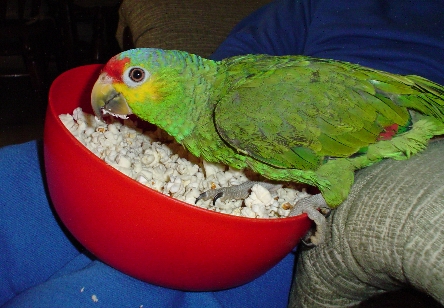
tequilapalomitas.jpg

The question I’d just asked was about his preferred foods. I was secretly hoping to hear that he ate a sunflower seed only diet, because this is the pinnacle of poor nutrition for the average parrot and was quite popular 30 years ago when most birds were imported and went through the rigors of quarantine stations before finding their way into homes. Thousands of parrots seemed to subsist on sunflower seed alone, whose nutritional value, though high in protein and fats, was loathsomely deficient in calcium and other life-sustaining vitamins and nutrients. 

The secret card up my sleeve? African Grey parrots, both the Congo species and their smaller cousins the Tymneh, were unusually susceptible to severe sickness from hypocalcemia. In addition to building strong bones, calcium is needed for all muscle contractions, including the heart muscle, and low calcium led to seizures or tetany and cardiac arrest. The treatment was simply supplying calcium and a little vitamin D to the afflicted parrot and most would turn around. The stuff of miracles and who doesn’t want to see a miracle?

But this woman! What was she saying? Forget seeds. Her bird subsisted on caramel corn? Peanut M&M’s? Pizza? Impossible that this bird could survive the high salts and fats and sugars of this diet! Let alone live to 42 years of age. But here he was. Although, as I knelt to get a closer view, one could not say that he was “living.” Not yet dead was more accurate. Gingerly I opened the cage door and slowly pulled him out. Joe didn’t move. I finally placed my stethoscope to his chest without disturbing his position on the towel. Oh dear. He had a heart murmur and his heart was beating very erratically. Cardiac arrhythmia. His abdomen bulged ominously. A tumor? The case was hopeless. The bird had never been to a veterinarian before and this was clearly too little, too late.

Which I tried to explain to his owner. We could do diagnostic tests, but he might die while we were trying to help him. The tests would be expensive and some would take a day or more to get results. I didn’t think he’d live long enough to find out what was killing him, let alone help him. I hate cases like this.

Joe’s owner requested that we proceed.

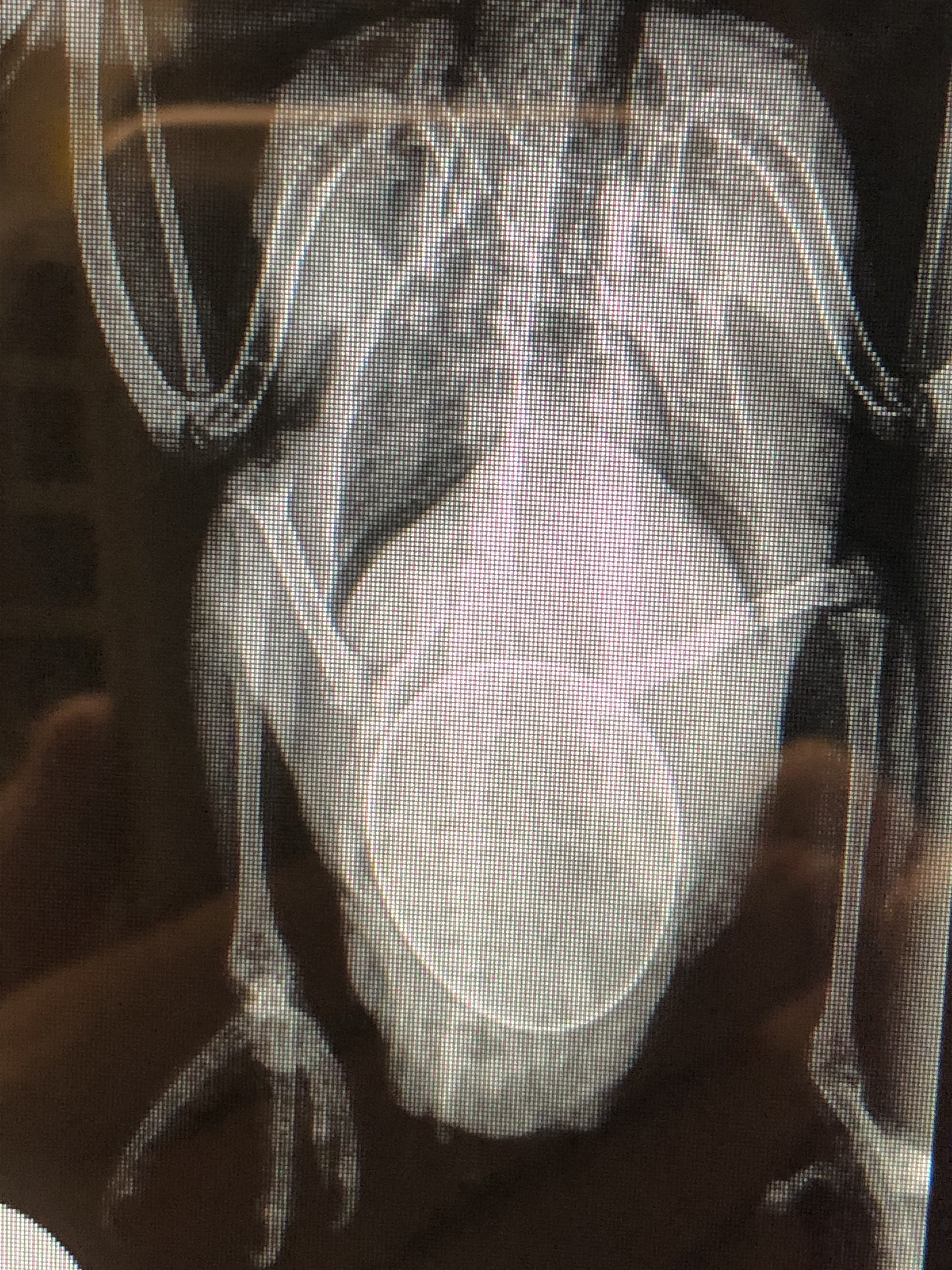
We placed him in an oxygen cage. Then, using gas anesthesia, we let him breathe himself into a state of non-painful peace and took x-rays, drew blood, obtained culture samples and tapped his abdomen (abdomenocentesis). No tumor. Joe appeared to be in congestive heart failure. What’s more, he woke up. I had given him several medications while he was still out and he remained on supplemental oxygen. Fast forward 24 hours. Joe is standing, a little wobbly, and has lost 50 grams of retained fluid overnight (10 percent of his entry weight). His blood calcium test is normal. Too weak to eat well on his own, we gavage fed him, using a tube to place baby mush directly into his crop. Fast forward 72 hours. Joe is talking, grooming himself and cracking seed. We take him off oxygen. On Day Five I sit down with his owner and explain that against all odds, her bird is adjusting well to oral medication and can go home. He will need medication the rest of his life. Given the seriousness of his condition, I tell her each day is a blessing. This is good enough for Joe and his owner.

We stayed in touch. Joe continued to improve. On Day 10 his owner happily reported that Joe was eating caramel corn again. Tongue-tied, I pulled back and stared at the phone. Not the goal I had in mind. I kept quiet. It’s been more than one month since I first met Joe. He is doing very well on his heart medications. I may start eating caramel corn myself.

Christine McFadden, DVM

Send questions or comments to drmc@mcmenagerie.com

The Large Animal Vet


Perhaps the title sounds misleading. A “large animal” vet develops a veterinary practice caring for the needs of livestock such as cattle (dairy or beef), sheep, goats and pigs. A “small animal” veterinarian like me is usually slotted into the care of companion pets such as dogs and cats. So when I examine a 200 pound dog, it is still a small animal and likewise there is often confusion about whom to call when the patient is a pot-belly/miniature pig. Not me.


The life of a small animal vet and that of a large animal practitioner are markedly different. One works almost exclusively indoors, dressed neatly, white coat in place. The other weathers life outdoors, facing extremes of blazing heat to icy cold, rain and snow. One always has a sink handy to tidy up. The other uses outdoor hoses more than they’d like. A dairy vet may check over 100 head of cattle in a morning and four “farm calls” make a full day. A small animal vet may follow the medical strands of more than 25 patients a day, winding through exams, blood results, x-rays and working in a surgery or two.  All juggle the demands of unexpected emergency work.


Being in an office most of the day, I rarely interact with my brother and sister large animal veterinarians. So when the pygmy goat from the petting zoo fell over dead I was unhappy, but proceeded to perform a post-mortem examination and sent tissue samples off to our regular lab. I had overseen the care of these goats for many years, but they were on the back burner when it came to my interest in the truly exotic Zoo collection. My concerns centered on whether or not the public might have fed something odd to the goat? (I’ll jump ahead here : No. The public did not harm the goat). I mulled over the problem but prepared to wait until the pathology report was finished sometime in the next week. And then another goat died.


I was unnerved. The goats were being closely watched and none had shown any outward signs of sickness. They had all lived for more than 8 years at the Zoo and had never, collectively, suffered a single injury amongst themselves. I immediately sought the expertise of a Large Animal veterinarian. The Goat Expert was on a dairy farm. The return call came in as I was finishing one surgery and about to start another. Gloves still on, I was staring at some x-rays

in-between these surgeries when they told me they had Dr. B on the line. Multi-tasking at its best.


I hurried over, snapping gloves into the waste receptacle and grabbing pen and paper. I introduced myself and LAUNCHED into a recital of my goat woes. I verified that he had goat experience? Yes. I gave him dates, genders, date of deaths, lack of lab results, still pending. I drew breath to spew forth another list of details and heard him gently respond, “Yes…. I think…. I might be able…. to help”. His measured tones were from a man used to the gentle rhythms of milking machines, contented cows swishing their tails, chewing their cuds. Da-dum da-dum to my staccato dop-dop-dop-dop-dop! I managed to squeeze in a few more hurried sentences (surgery! Waiting!) before he responded calmly, “I think I drive past your practice on my way up from this dairy….”. I opened my mouth. Closed my mouth. I could hear the clouds, feel the sunshine, almost see the shining black and white hides of the gentle Holsteins he surveyed as we spoke. It was all there in the rhythm of his speech. I told myself to stop yapping before he decided my goat problem would be too stressful for him to bother with.


An hour later Dr. Thomas Bauman drove up in a large truck outfitted for all manner of veterinary ministrations. He spent an hour and a half doing a post-mortem on one goat. He had a wicked knife and mulled over the cause of sand in the stomach. He felt it was too much. Did we feed on the ground? No. But little kids feed the Zoo goats oat hay pellets and they often dropped to the sand, with all the goats scrambling to get their share. Hmmm. He gave the problem his full attention and we submitted a gazillion samples to the State Lab, including an intact eyeball because it would be useful for trace metal analyses. The final answer was a copper deficiency in the feed, to which Pygmy goats are especially susceptible. Hay grown in the San Joaquin Valley is often deficient in copper. The salt lick fed at the Zoo did not have added copper because Alpacas are in with the goats and they are susceptible to copper toxicity (too much) if supplemented. So we now feed our goats little capsules of copper wire every six months and all is good. But sometimes I find myself wishing that I was a Large Animal veterinarian. Just so I could slow down and smell the …..never mind.


Christine B. McFadden, DVM

drmc@mcmenagerie.com

Calcium

Dr Mc Blog


May 3, 2016
It was a very odd week. Monday started out with an African Grey parrot that was rushed in because of odd seizures observed by the owner. Popeye made the trip in a cat carrier since he couldn’t perch, and when I opened the grated door I had to laugh : a sizeable grey parrot with a dark maroon tail was fluttering convulsively but at the same time reaching out greedily to gobble down some peanuts just out of reach. He had figured out how to roll just right with each shake of his wings and was inching ever closer. Popeye wasn’t at all perturbed by his mild convulsions but was very upset that the peanuts kept evading him. After a brief discussion where I learned that he was fed almost exclusively on sunflower seeds I drew some blood tests and treated him for a calcium deficiency. Seeds may be high in protein and fat but are notoriously deficient in calcium and trace minerals. No single food item will ever provide complete nutrition to any animal. Popeye’s recovery was dramatic.

On Tuesday an owner presented his middle-aged Dachshund “Dracula” for a second opinion. The little dog just seemed to have muscle twitches all the time. He’d had some blood tests run, but nothing conclusive had turned up and regular anti-seizure medication had been of no help. Dracula lived a quiet life, mostly indoors and had never had any other medical issues. He trotted around the exam room, with a fine tremor marring his step. He wasn’t shaking from anxiety, nor did he act oddly in any other way. Looking over the chart shared by my colleague I noted that his blood calcium test was quite low. Since any single test may occasionally be off due to lab error I recommended we repeat these tests as a starting place. Again, his calcium levels came back very low. Diagnosis : A disorder of his parathyroid gland, which regulates calcium in the body. Treatment with calcium and Vitamin D supplements provided immediate relief while his case was fully worked up.

When the Green Iguana showed up on Wednesday I had a sneaking suspicion that I was having a “run” on calcium related issues. The lizards’ lower jaw was puffed out, looking mismatched to her upper face. She had an odd crook in her front leg from a “folding fracture”, indicating soft bones. Once again I investigated her diet and light exposure – never outdoors in natural sunlight (no creature was bred to live totally indoors!) and fed iceberg lettuce, no dark leafy greens, no vitamin supplements. Diagnosis : Metabolic Bone Disease or “Iguana Rickets”. Real sunshine and an improved diet did wonders for her.

By Thursday the staff had started to joke about it. Our 10 o’clock appointment was a young man with a muscular Pit Bull puppy, only 12 weeks old. The puppy had broken both his front legs. As I observed the heavy bodied male, named “Oscar”, I noted that he was unusually cheerful as he ran around the room, clumsily trying to chew on my assistant’s pants leg. He looked bow legged in front and indeed, both of his wrists (carpi) bulged and kind of knuckled over. He was walking on these legs, which a dog with a fracture usually cannot do, as it’s too painful and the bone actually can’t support weight as it slides apart. Questioning brought out the history of a puppy fed an exclusive diet of steak and hamburger. Oscar’s owner was proud of his beautiful dog and wanted to provide only the best for him. He had spared no expense by feeding an all-meat diet. What I was looking at was a very old-fashioned case of rickets or osteomalacia (soft bones). Without a balanced diet – and without bones meat alone is deficient in calcium – Oscar’s rapidly growing bones had softened and he couldn’t support the weight of his own body. The bones had started to fold down. Caught early, a corrected diet of simple commercial puppy food could reverse the process and over time the bones will straighten, though not always 100%. Happily, within two weeks Oscar was moving more normally.

The body is a marvel. Calcium is rich in many foods: dairy products like cheese, yogurt and milk, dark leafy greens, fish canned with their bones, bone meal by-products. Calcium is added to all pet foods formulated commercially, just as it is added to products like orange juice for people. But eating calcium rich food is not enough. The body requires Vitamin D3 to absorb and use the calcium taken in. Dogs, cats, birds and reptiles can all make their own Vitamin D when exposed to natural sunlight, through a complex interaction with UV light on their skin. Vitamin D is found naturally in egg yolk, fish oils and fatty fish like salmon or tuna, and cheese. Many animals, especially birds and reptiles, don’t naturally eat these foods and if kept deprived of sunlight (indoors/caged) will develop rickets, broken bones, and even seizures or death because they cannot make the Vitamin D they need. Even if their diet includes a calcium supplement they will suffer. For this reason special UV lights are recommended for indoor pets and at least weekly outings into real sunshine. All diets should include both fresh foods and commercial foods fortified with Vitamin D and Calcium, from turtle pellets to bird feed and other pet foods. Leave the balancing up to the professionals!

Christine B. McFadden, DVM
drmc@mcmenagerie.com


Egg Bound Bird

When I first fielded the call I wasn’t overly concerned, probably because the caller was about 80 miles away and somebody else’s patient. It’s easy to give telephone advice. I am, in truth, happy to share knowledge that might benefit another veterinarian’s patient as it is by similar sharing that I have been taught how to heal.  So I carefully shared my experiences in Avian Obstetrics and wished all a good outcome. Then I cheerfully went about my own day.

Sometimes that is not the end of the story. Many days later I found myself enmeshed in the case personally. It started out simply enough. A young family owned several parrots. One of them, a delightful little green-cheeked Conure was a clown and gentle enough to tolerate their young toddler. The bird was named Salsa, for her green and red feathers. I say “her” loosely, because most birds in the psittacine or parrot family groups cannot be sexed visually and require a DNA blood test to know whether you have a boy or girl. We used to surgically sex birds years ago, entering the abdomen only on the left side because most birds have one sole functioning ovary, on the left. Males have two testes, located in the same area in the abdomen, in front of the kidneys, tucked up under their protective spine.

So nobody knew if Salsa was a boy or a girl, which hadn’t been very important until the family left for vacation and Salsa became ill.  She began to sit in the corner of the cage bottom, very quietly. Her breathing was fine, and if disturbed she was a little snippy but hopped about brightly. The babysitter noticed that Salsa was straining, maybe trying to poop, and her abdomen seemed distended. A quick trip to her regular veterinarian confirmed that Salsa had an egg stuck inside! (This also confirmed she was a female! Smile).

Welcome to the world of birds and their babies! Remember, birds are not mammals. Any female bird can make an egg, fertilization is not required. Nothing hatches from these eggs. The eggs produced by chickens for grocery store sale I call “baking” eggs, the kind you cook with. The formation of an egg is fascinating. The left ovary is attached to an oviduct, similar to the uterine horn in a dog and cat. The ovum or egg looks like a miniature yolk as it is first released into the oviduct, where it travels to the shell gland or uterus to become coated in calcium carbonate as a hard shell. The whole process takes around 24 hours. Most parrots lay an egg every 2 to 3 days, until they have a full “clutch” which completes their nest. Certain external stimuli such as increased sunlight, warmer temperatures and more food may promote egg production. In a pet bird there is no denying that egg laying can be a risky business.

Sometimes the egg shell is not properly hard, termed a “soft-shelled” egg. This is a warning sign that the bird may be malnourished, particularly deficient in calcium and vitamin D. Birds that live exclusively indoors and on seed diets are at high risk of this type of malnutrition. Calcium is needed not only for strong bones and firm egg shells, but also to produce the muscle contractions that will allow the egg to be laid. First time eggs may be too large to pass easily. Once the egg is stuck, things can go bad very quickly. The egg may be so large to prevent the bird from breathing easily. It may squish the intestines and block passage of fecal matter. The egg may press against the sciatic nerve, causing permanent left leg paralysis. It may lose moisture and become stuck to the tissues of the oviduct, eventually starting an infection that leads to death. Egg binding is a serious medical emergency in birds.

Salsa didn’t have a mate, so we knew this was just an empty egg inside her. Because Salsa couldn’t pass the egg on her own, her veterinarian, very appropriately, anesthetized the little Conure and attempted oocentesis, (don’t you love new words? Pronounce it “oh-oh-sent-e-sis”). A needle is inserted into the egg to withdraw the contents, in an effort to collapse and allow passage of the now much smaller egg. Salsa’s egg collapsed but did not pass. However, she was bright and perky once the pressure in her abdomen was relieved so no one was worried. When the owners returned home Salsa was delighted to see them. Over the next few days they noted, however, that she became increasingly less active, until finally she was sitting at the bottom of her cage again. Which is when she was referred to me, 17 days after becoming egg bound. I started her on antibiotics,  gave her injections of Vitamin D and Calcium, and rehydrated her with fluids before taking her to surgery. I use a surgical laser instead of a “cold steel” scalpel for surgical incisions as there is minimal blood loss. The oviduct with the collapsed egg and a second egg behind it (!) was isolated and carefully removed. The ovary was left in place. Her little abdomen was flushed and sutured up and within 15 minutes Salsa was back in her incubator, recovering from her “spay” surgery. At her recheck two weeks later her family reported that Salsa was back to her old self, all fun and games. She weighed exactly 65 grams on that visit, smaller than a cockatiel. Her diet had been fortified with pellets, fresh fruits, vegetables and a calcium supplement. Salsa celebrated her recovery with a pistachio nut!

****Please note : The images and video used in this post are NOT the same patient being discussed in the ‘Egg Bound Bird’ blog post. In the video, the obstetrical problem was managed medically. This video is shown with permission from the gracious owner of another egg bound patient. The Sun conure in the video is roughly twice the size of the little conure in the story, which required surgical intervention, similar to a C-section and hysterectomy. Now you can have visual aids to go along with the blog!

WARNING THE VIDEO BELOW CONTAINS SENSITIVE MATERIAL THAT MAY BE TOO MUCH FOR SOME TO VIEW.

Christine B. McFadden, DVM
drmc@mcmenagerie.com

Talking Birds

Dr Mc Blog

May 26, 2014

Now birds are an altogether different sort of animal. It goes beyond having feathers instead of fur – they are NOT mammals. And somehow “animals” and “mammals” share a bunch of “m’s” and the words start to sound the same and it all becomes very confusing. So let’s get back to the basics – birds are NOT mammals. Ignoring the occasional exception to the rule, it’s kind of interesting that birds have feathers instead of fur, have scales and claws instead of pads and paws, fly much better than they walk or run, and lay eggs instead of giving live birth to their young. Baby mammals receive nourishment from their mother’s milk. Birds regurgitate already chewed up food into their babies crops! Ewww! Science fiction come to life! The crop is a modified stomach, though birds do have a true stomach called the proventriculus, and a gizzard or ventriculus for heavy duty grinding of food. If we narrow bird-dom down to the parrot family we find a group of birds that are highly companionable, brightly colored, and can even talk human! Research with an African Grey parrot named Alex at ASU University demonstrated he could think and figure things out at the level of about a 3 year old child. If you haven’t spent time with a toddler lately, watch out! For example, Alex could differentiate not just a wooden key from a metal key, but a green, square wooden key. Parrots are noted for the use of “tools” such as sticks to obtain food, a sign of higher intelligence.

Although veterinarians traditionally receive training in a wide number of species, from companion dogs and cats to livestock cattle and horses, they are all mammals. Birds are very different. Birds don’t even have normal lungs, but do most of their breathing through cellophane-like little bags throughout their body called air sacs. Some of these air sacs invade the larger wing and leg bones (pneumatic bones), which keeps bone density lighter and helps to deliver oxygen directly where needed for long flights. Pretty amazing!

Since I have been known to say that I have a license to practice medicine and surgery on every living species on earth, with one exception (you), it’s probably obvious that it is the diversity of working with birds that makes them fascinating. Parrots in particular, large and small, are so interactive that they are a joy to study. Sylvester Stallone referred to parakeets as “flying candy” in one of his movies. Of course, working with them up close and personal brings certain features to the forefront. Like beaks. They all come with them and yes, they all bite. That little 30 gram parakeet can dig just so into your cuticle and the lumbering Macaw, a 2 to 3 pound parrot (454 grams to the pound) is capable of breaking fingers. We treat them all with respect.

Birds are adaptable. One of my staff, Amanda, recalled a little bird that had crippled legs. Her owner wrapped the bird in a little shirt with a piece of Velcro, and herself had a broad patch she had sewn onto her clothes. Sure enough, the little bird could fly around, then return to her owner via her personal landing pad.

And if you thought kids say the darnedest things, try birds. Say one bad word once (chances are you said it loudly and with energy) and the bird has it nailed forever. One client taught his Amazon to say “Let me outta here!”  I wasn’t aware of this until the bird boarded with us. This was in a small clinic where the ward rooms were very near the exam rooms. Sound carried. You can imagine the look on my clients face – and mine – when suddenly someone started to scream “Let me outta here! Let me outta here!” I actually had to show a few people that indeed it was a talking bird before I could calm them down (the bird thought he was hysterical – we began to feed him special treats about a half hour before afternoon calls to occupy his little mind).

My favorite story of all, though, centers around a woman staff member who opened the clinic early Saturdays. Pat loved her job and usually rushed down extra early to be the first one there, so she was by herself that day, walking from room to room as she checked on patients. She had just turned on the lights as she entered one ward and was crossing the room to open another when behind her she heard a soft voice say “I know what you like”. The hair rose at the back of her neck and she froze – just as the Mynah bird screeched “bananas!” Bananas indeed. Took about 5 years off Pat’s life and we had to post a sign after that warning everyone when that particular bird stayed with us.


Christine B. McFadden, DVM
Valley Animal Hospital, Merced
drmc@mcmenagerie.com

Humor On The Job

Dr Mc Blog

May 4, 2014

After years of working together my staff has a few stories to tell.

Like about the crazy cat that bolted from her carrier like a wild thing (“oh, I should have told you she’s never been touched before. We had to put her food in there to catch her….”) and raced across the hospital to seek refuge in the staff break room. And jumped up onto the microwave. Which was in use, warming up some hot cocoa. In her distress the cat released her bladder…which dribbled into the microwave…which smoked and fizzled….and smelled. Probably forever, we don’t really know. We threw it out that very day. Some things you just don’t try to fix. (Except the cat. We “fixed” her. She did great!).

Or the day I gave up Ostrich Practice. Ostriches live in large fields like cows. They aren’t trained to lead on halters, you’re supposed to wait until one comes up to the fence to bite you out of curiosity, grab its’ beak and swiftly pull a cut-off sweatshirt sleeve over their head – once blinded, they won’t move (I’m not kidding. I’ve really done this. Past tense). It was raining and very muddy, and this particular ostrich, though injured from a dog attack and “down”, struggled rather fiercely against the examination so that I had to straddle him for restraint. Among other problems the ostrich had lice and shared some with me. I stopped off at the clinic long enough to glare at my staff, cancel my morning, and go home to clean up. Good news? Lice are “species-specific” parasites, meaning an ostrich louse may be able to run around on a person briefly but it can’t live and breed on you, so once picked off you’re clean. This is true for all types of louse or lice.

Then there was the episode of the Peach Parrot with diarrhea. A Moluccan Cockatoo weighing about 2 ½ pounds, “Peaches” was brought in because of the large puddles of poop she was passing, instead of the neat white and green droppings most birds have. Peaches was droopy and had lost weight, quietly squawking in pain when another puddle flowed out. She was ill enough that we hospitalized her while waiting for some lab test results to come back. Early the next morning I approached my patient in her incubator to see how she had fared overnight. Surprisingly, her bedding was clean. How could her diarrhea have cleared up overnight?  Hmmm. As much as I wish to see a strong response to treatment there was no real way to tell if the diarrhea had improved until I actually saw her droppings. Some birds will not go to the bathroom in their cage and will literally “hold it” until taken out in the morning.  I needed to see her fecal droppings. Hmmm. I examined the incubator floor again, noting a lot of cracked seed shells and some chewed up grapes. What goes in must come out, right? Now, I know a thing or two about birds and I know that most birds will defecate when picked up. So I opened the lid of the incubator, speaking gently to the bird while asking her to perch on my arm. I picked her up. Forgetful that the bird was fully flighted. Bird knew it. Bird took off. Peaches flew straight towards Jillian standing a few feet away. Jillian shrieked and dropped to the ground (anyone remember Alfred Hitchcock’s “The Birds”?). And, OF COURSE the bird flew right to her, landing on her prostrate back as Jillian buried her face in the floor (so the bird couldn’t pick out her eyeballs? Parrots don’t do that!). During the flapping and shrieking I attempted to reassure Jillian by yelling across the space “It’s ok, the bird’s nice!” (she was scaring my patient). Jillian remained (rather rigidly) face down, so I swooped over and re-perched the bird to return her to the incubator. Over my shoulder I heard a staff member assisting Jillian to her feet exclaim “Oh, let me clean that poop off!” I wheeled around and shouted “Wait! I need that!” Faces swiveled and stared at me. Dumbfounded, unbelieving silence. I faced them weakly. “I really need that sample” I begged, sort of inching my way towards the still crouched form of my employee. “Um, thanks” I said as I wielded a tongue depressor to obtain the desired sample.  To this day not a one of them glories in the case assistance given to help this bird. Jillian says she’s forgiven me but I noticed they moved the incubator far away from her work station.

Christine McFadden, DVM

drmc@mcmenagerie.com

Summer Hiatus

So all the plans for blogs, journaling and the excitement of a new web page were swept away – drowned, actually – in the wake of disturbance created by our new computer program! Indeed, summer seemed to get swept away. I have yet to find that computers are great time savers, though there is no denying that for retrieval of history they are awesome. As long as you input the data to begin with, that is. Oh. So having wrestled the new software into submission (we submitted, actually), we are now back at it. Hello, Blog!

And right there with us have been the chickens. So I conceived a wonderful idea (note light bulb over my head on your next visit): let’s get chickens! I have a small fruit tree orchard at home and am opposed to spraying pesticides and have noted over the years the slow but steady increase of insect varieties amongst my trees. Nothing terribly serious (until the cherry fruit fly moved in) but the trend was disturbing – I’m willing to share my fruit, but the bugs appeared to have their own agenda. And I’m not an entomologist! I’m saving my love for the pets! Hence nature’s little natural bug factory: chickens! Bonus: eggs!

Did you know they mail order day old chicks? They arrived at the post office safely, little peepers! A mixed variety of unusual breeds, all girly chicks because we only wanted “baking eggs” like you buy at the grocery store. No danger of cracking into the kind that might hatch… no need to traumatize children or ME. So we set up the little sweethearts and watched them GROW every DAY. It was amazing!

They got their own little coop and an exercise yard and fresh greens every day and… and… the incidental expenses can be overwhelming! But we really enjoyed our chicks in the Summer of the Computer and found their feathered baby antics quite soothing. It was a family affair – we took deck chairs out back to watch them. So I am now heartily recommending adding a few chickens to your yard – and once those eggs start coming, let me know if you’d like a few “baking eggs” – they’re a special kind that every family needs.

Christine McFadden, DVM

Pedicures For Pooches And Winged Critters

Just a short note today. Had a bird in last week with nails curling back into his feet. We see the same problem in dogs, and to a lesser extent in some cats (cat nails grow differently- instead of continuous growth, they grow and shed the tips intact, with tiny new tips or sheaths underneath). So there’s always the question of HOW to trim nails, and sometimes WHY they over-grow.
For many dogs and birds, their nail tips may be lightly clipped with a “human” nail trimmer. If the nail itself is white, you may be able to see the pink vein inside and avoid cutting into it, or  “quicking” the nail and making it bleed. BUY yourself some “QuickStop” at the pet supply store, so if a nail does bleed you can stop it by simply pressing a dab of quick stop powder hard into the end. The bleeding itself isn’t a big deal – your dog or bird will not die! It may be more uncomfortable, and I think the styptic powder stings a tad, but sometimes it’s necessary to cut a nail back hard to get things under control.
If a birds nails curl, the bird may be unable to perch! I have also seen dogs that are nearly crippled by curled nails that turn their toes sideways and splay their foot apart! A proper pedicure (sans nail polish) is important to a pets health!
Older dogs with arthritis are especially prone to foot problems and benefit from regular nail trims and shaping. Dogs can develop fungal infections of the nail and weeping infections in the nail bed and tissue that surrounds the toe. Overgrown nails are prone to cracks, splitting, and fractures- which can be so painful that I recommend a mild anesthetic when we repair them (think about digging out a deep splinter!).
One myth I find aggravating on the pets behalf is that cutting a nail back slowly (in stages over a few days) into the quick, causes the vein to recede. The idea is that multiple trims will eventually get the nail to the desired short length without significant bleeding. Let’s walk through this idea (flip flops are fine, hiking boots not required). If you get a paper cut on your finger, it bleeds. The miracle of clotting platelets occurs. You stop bleeding. Within a matter of hours, even if you irritate the same site, it won’t bleed again because the little vessels have naturally retracted! Same with nails! Instead of torturing your pet with every-other-day trims, get it over with once, then maintain regularly!
Regular pedicures vary from pet to pet. Some may need monthly attention, others quarterly . Stay tuned for our soon-to-be-released YouTube how-to video on this subject! Guaranteed seriously good info and hilarious delivery!