My Husband’s Hospital Vacation

My first indication that text messaging had gone too far in my household was the afternoon I checked my phone and discovered the following message : “Just wanted to let you know. I thought I might be having a heart attack so I checked myself into the hospital.” It had been sent from my husband’s cell phone.


What you need to know were the events preceding this text message. My husband had taken our children skiing two days earlier. On this morning, he had done some moaning and groaning around the house. The problem is, I not only have to get ready for work myself, but I oversee care of the kids, the cats and the chickens before leaving. Getting to school on time is a mountain we climb every day. If it’s not worth opening your mouth to speak up about something, I’m not going to slow down long enough to start an inquiry. He knows where to find his Advil.


I confess I felt more irritation than anxiety when I read the message. Really? I’d had a full day and no lunch up to that point. So I called him. He answered. He sounded cheerful. Enough hours had passed before I’d discovered his message that he could assure me that his chest x-rays, his blood tests and his EKG were all normal and he wasn’t having a heart attack. So why are you still there? I reasoned. Well, he rambled on, this doesn’t explain the pain. “What about arthritis?” I asked. Oh no, he assured me, I’ve never had arthritis here. It’s on my right side. I was driving myself to the golf course and felt pain in my right arm, so I pulled over and googled heart attacks. It said they would be on the left side, but I thought I should be sure. They’re going to run another test to see if I have blood clots. If it’s abnormal, I’ll stay for a CT scan.


OK, honey. I returned to my own patients. There was a cat that had been tumbled in the dryer for 7 minutes. She appeared dazed, with tiny bruises starting to appear on her skin where patches of fur were missing. She was a lucky cat; only last month, another cat had actually died in a similar accident. We began treatment for shock and started the cat on IV fluids.


It was closing time when my husband called. My test is abnormal, he said. “What’s the name of that test, hon?” D-Dimer. We use the D-dimer test in veterinary medicine. Platelets, the cells that help blood coagulate or clot so you don’t bleed out, will slowly break down after they’ve served their purpose. If your body is forming big blood clots where it shouldn’t, the by-product of platelet breakdown will be very high in the blood stream. The D-dimer test measures this level.


For a variety of reasons, I didn’t believe it. So while getting the kids squared away I researched the normal blood levels for humans. Armed with this info, I went down to visit my husband in the ER. He looked remarkably fit. In fact, he wasn’t feeling any pain, though he’d not been given any medication. I asked his nurse for the actual number on his D-dimer test. It was less than 200. I stared at the nurse. “But that’s normal”. Yes, the nurse agreed. I stared at my husband. “Who told you it was abnormal?” He frowned, concentrating. He wasn’t sure (What else did he have to do?). About then they came to wheel him down for his CT scan. They said it would be read that night. Forgive me my skepticism, but having assured myself that my husband was doing very well, I kissed him and told him to enjoy his scan. At this point I reflected that if they did find something wrong with him, it would not be what he’d gone in for. I slept poorly (despite my brave front). At 2:20 in the morning (5 hours later) my husband sent a text message that he had completed his CT scan but it wouldn’t be read until the next day.


I visited him on my way to work the next morning. He was cheerful and even complimentary on the hospital breakfast. They were going to run some more blood tests. I left him to it.


At work, my own patients were well. My dryer tumbled cat looked much better and was enjoying a hearty breakfast herself. Her bloodwork was excellent. By early afternoon I was discharging my patient to her ecstatic owner. Back at the human hospital, my husband had been leaked the information that he had a “non-displaced hairline fracture in his right rib”. My husband was now being offered an echocardiogram and had begun to call me every hour or so. I told him if he couldn’t relieve the babysitter by 3:30 to let me know. If he wanted to stay another night in the hospital that was on him. I was worn out.


Once he knew it was just a cracked rib, my husband felt lots better. I arrived home that night to find he had invited several people to dinner and cooked up a storm. Even better, he could go on his golf vacation next week.


I am SO grateful my patients can’t talk!


Christine B. McFadden, DVM

drmc@mcmenagerie.com
World Rabies Day


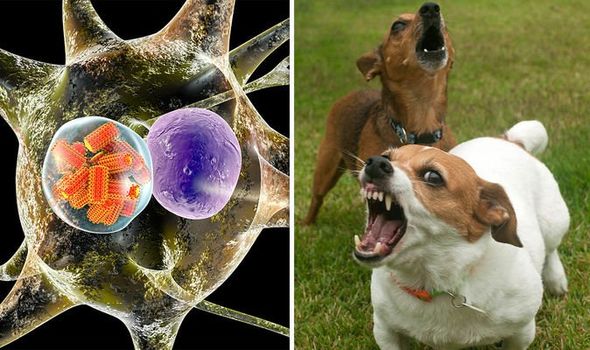
Several years ago I wrote an article on Rabies (Merced Sun Star, June 2014), a viral disease carried from animal to animal and sometimes from animal to human. For both animals and humans the disease is considered a death sentence.  I recently came upon a series of articles in a veterinary journal and was sad to learn that the disease is still a serious threat in much of the world and that approximately 60,000 people die from this disease every year. Still.


Why do I take up the story again? Because it deserves to be heard and, most importantly, it is still a threat to you and your loved ones. A very real threat if you enjoy traveling to out-of-the-way places.

Rabies-outbreak-map-rabies-symptoms-rabies-dog-bite-1125644

Rabies is a slow-moving viral disease. It can affect any mammal, but is usually spread from one carnivore to another as the virus is passed in saliva by bites through the skin. Infection after contact with infected saliva on an open wound is a possible, though unlikely, mode of transmission. Once a new victim has been bitten, the virus slowly makes its way into the nerves and through the nervous system to the brain. This can take two weeks to 2 months or longer. By the time the rabies virus is present in the saliva, death is near. It is for this reason that when an unknown dog bites a person the dog will be quarantined for 2 weeks.  Two weeks is long enough to monitor the dog : If rabid, the animal will die. The dog’s brain can then be tested for rabies virus and the bitten person still has ample time to receive the anti-rabies protective vaccine.


Rabies has been found in the wildlife in and around Merced County. It is endemic in area bats, raccoons, skunks and foxes. You, the pet owner, have set up a terrific protective line of defense by the simple stratagem of vaccinating your pet dogs and cats. It is believed that by vaccinating 80% of a populations’ pets an effective barrier is created to protect people against exposure to the disease. In the United States more rabid cats have been reported to the CDC (Center for Disease Control) than dogs for several years. Vaccinate your cats! Vaccinate all dogs and cats older than 3 months of age. Keep them up-to-date.


There are a few island communities which have managed to keep rabies out or eradicate its presence : Hawaii, Great Britain, and Japan are three. You cannot easily take a dog or cat into those Islands. I applaud their high security. The regions most likely to have rabid animals that endanger humans are underdeveloped countries in Asia and Africa.


For the traveler to a foreign country, be aware that the dogs roaming the streets may be high risk for encountering rabies. The unsuspecting traveler may admire a puppy, letting it lick their hands. Food you carry could attract attention from a roving dog. Many of these countries have inadequate medical services for diagnosing rabies or offering post-exposure prophylaxis (prevention/ PEP) services.  Rabies prevention is not universally available. The more exotic your outpost, the higher the risk of encountering rabies. Of the 60,000 people who die every year, nearly every single case (99%) of human death started with a bite from an infected dog.


Whether at home or traveling, camping for a weekend or following your dreams of adventure exploring a foreign land, please take precautions. Enjoy wildlife, but don’t treat or keep wildlife as pets. They cannot be vaccinated against rabies and may have variable incubation times for rabies. Avoid attracting wild life to your home or campsite. Do not feed wildlife. Do not feed your pets outdoors, as this attracts wild life and strays.  Avoid animals acting unnaturally. Animal-proof your trash. Avoid stray dogs and cats. Stray animals may not be vaccinated and they run high risk of exposure and contact with wild animals that might harbor rabies. The message, Backpackers : stay away from unknown dogs and wild life. The life you save might be your own!


World Rabies Day is Thursday, September 28th this year. This day is sponsored by an alliance among the World Health Organization and many other organizations working towards the goal of eradicating Rabies deaths in people and animals by the year 2030. They are joined by the One Health Initiative, a group dedicated to promoting increased communication and joint action between physicians and veterinarians globally through the integration of human medicine, veterinary medicine and environmental science. Rabies is cited as a classic example of what “One Health” is all about, as the control of rabies in animals has reduced the death toll in people from that disease. Together, we CAN make a difference.


Christine B. McFadden, DVM

drmc@mcmenagerie.com
Photo Credit : https://www.express.co.uk

The Large Animal Vet


Perhaps the title sounds misleading. A “large animal” vet develops a veterinary practice caring for the needs of livestock such as cattle (dairy or beef), sheep, goats and pigs. A “small animal” veterinarian like me is usually slotted into the care of companion pets such as dogs and cats. So when I examine a 200 pound dog, it is still a small animal and likewise there is often confusion about whom to call when the patient is a pot-belly/miniature pig. Not me.


The life of a small animal vet and that of a large animal practitioner are markedly different. One works almost exclusively indoors, dressed neatly, white coat in place. The other weathers life outdoors, facing extremes of blazing heat to icy cold, rain and snow. One always has a sink handy to tidy up. The other uses outdoor hoses more than they’d like. A dairy vet may check over 100 head of cattle in a morning and four “farm calls” make a full day. A small animal vet may follow the medical strands of more than 25 patients a day, winding through exams, blood results, x-rays and working in a surgery or two.  All juggle the demands of unexpected emergency work.


Being in an office most of the day, I rarely interact with my brother and sister large animal veterinarians. So when the pygmy goat from the petting zoo fell over dead I was unhappy, but proceeded to perform a post-mortem examination and sent tissue samples off to our regular lab. I had overseen the care of these goats for many years, but they were on the back burner when it came to my interest in the truly exotic Zoo collection. My concerns centered on whether or not the public might have fed something odd to the goat? (I’ll jump ahead here : No. The public did not harm the goat). I mulled over the problem but prepared to wait until the pathology report was finished sometime in the next week. And then another goat died.


I was unnerved. The goats were being closely watched and none had shown any outward signs of sickness. They had all lived for more than 8 years at the Zoo and had never, collectively, suffered a single injury amongst themselves. I immediately sought the expertise of a Large Animal veterinarian. The Goat Expert was on a dairy farm. The return call came in as I was finishing one surgery and about to start another. Gloves still on, I was staring at some x-rays

in-between these surgeries when they told me they had Dr. B on the line. Multi-tasking at its best.


I hurried over, snapping gloves into the waste receptacle and grabbing pen and paper. I introduced myself and LAUNCHED into a recital of my goat woes. I verified that he had goat experience? Yes. I gave him dates, genders, date of deaths, lack of lab results, still pending. I drew breath to spew forth another list of details and heard him gently respond, “Yes…. I think…. I might be able…. to help”. His measured tones were from a man used to the gentle rhythms of milking machines, contented cows swishing their tails, chewing their cuds. Da-dum da-dum to my staccato dop-dop-dop-dop-dop! I managed to squeeze in a few more hurried sentences (surgery! Waiting!) before he responded calmly, “I think I drive past your practice on my way up from this dairy….”. I opened my mouth. Closed my mouth. I could hear the clouds, feel the sunshine, almost see the shining black and white hides of the gentle Holsteins he surveyed as we spoke. It was all there in the rhythm of his speech. I told myself to stop yapping before he decided my goat problem would be too stressful for him to bother with.


An hour later Dr. Thomas Bauman drove up in a large truck outfitted for all manner of veterinary ministrations. He spent an hour and a half doing a post-mortem on one goat. He had a wicked knife and mulled over the cause of sand in the stomach. He felt it was too much. Did we feed on the ground? No. But little kids feed the Zoo goats oat hay pellets and they often dropped to the sand, with all the goats scrambling to get their share. Hmmm. He gave the problem his full attention and we submitted a gazillion samples to the State Lab, including an intact eyeball because it would be useful for trace metal analyses. The final answer was a copper deficiency in the feed, to which Pygmy goats are especially susceptible. Hay grown in the San Joaquin Valley is often deficient in copper. The salt lick fed at the Zoo did not have added copper because Alpacas are in with the goats and they are susceptible to copper toxicity (too much) if supplemented. So we now feed our goats little capsules of copper wire every six months and all is good. But sometimes I find myself wishing that I was a Large Animal veterinarian. Just so I could slow down and smell the …..never mind.


Christine B. McFadden, DVM

drmc@mcmenagerie.com

Emergency Work


Dr Mc Blog

January 14, 2016
Emergency work is not as much fun as it’s cracked up to be. I imagine it’s easier when that’s ALL you do, and staying up all night takes on a kind of rhythm, you adjust to sleeping during part of the day. I am one of those unfortunates who do not do well after 24 hours of being on my feet and some adjustments have had to be made in my career because of it.

They should have recognized this back in vet school. One particularly hellish week I was assigned to the Small Animal Intensive Care rotation. I am certain they used this to weed out the weak : I was assigned evenings, over-nights, and mixed them back and forth. I had one day. In addition, we were all to present for Rounds at 11 AM, or else. By the end of the week I was so groggy from lack of proper sleep that I had to stand, then sit, then jump up again during rounds just to keep awake. My remaining memories from this time were of a dog that presented for near-fatal bleeding ulcers of the stomach, caused not by the 5 pound box of Valentine’s candy he ingested (chocolate can be very toxic to dogs) but by the helpful owner who heard you can give them hydrogen peroxide to make them throw up and instead of a tablespoon (which would have been the recommended amount for a 90 pound dog by her veterinarian) she managed to throw a good pint down his throat. The dog lived, but it was nip and tuck for a while. There was a parrot caught in a typewriter. (We ended up dismantling the typewriter. The bird suffered a small laceration on one toe, which healed beautifully). And there was a female client who was so impressed with her station in life that she addressed her husband as “Dr” and we all wondered if she wasn’t allowed to use his first name. I’ve met more of that type since and now understand that they just need to get over themselves. But these days in school only served to underscore what I already knew – some of us just can’t pull all-nighters.

And of course my first job (yes, here in Merced) involved rotation through emergency work. To be more precise, an emergency medical call can occur at any time of day – seizures, poisoning, hit-by-cars – and it can be inconvenient to drop everything, annoying your other clients, to attend to that pet. On the other hand, at least here in Merced, most clients recognize that that could be them with their pet and they graciously forgive you.

So during the daytime, I can pretty much handle whatever walks through that door. My definition of emergency work is confined to those cases that come in after normal day time business hours, during sleep, on days of presumed rest.

My very first week of being on call in Merced I had two hit-by-cars on different nights and removed two bleeding spleens around 2 AM. They both lived. The third spleen (yes, things come in three’s) came in with a little dog suffering from an immune disorder. He also survived and improved after his splenectomy. So in the first month that I worked as a veterinarian fresh out of school I removed three spleens! I found that odd, but this career has always provided many unusual and odd things to get through.

There was the night I was driving to an emergency call (yes, driving the speed limit) and a cop pulled me over. He knew me (I took care of the police dogs) and he said he thought I’d wobbled. I assured him I’d had nothing stronger than orange juice (it is extremely rare for me to drink alcohol. The effects are worse than emergency work). He replied that he believed my story about an emergency because he knew I never looked that way in the daytime………..

So it is to everyone’s benefit that I procure 8 hours of sleep every night. You might say it’s just what the doctor ordered!

Christine B. McFadden, DVM
drmc@mcmenagerie.com

Heatstroke

Dr Mc Blog


May 24, 2016
Summer is coming. In Merced that can mean baking temperatures over 100 degrees. Even if the day doesn’t go over the 90’s, the black asphalt paths that line Bear Creek, Black Rascal Creek and many other favorite walking paths will heat up significantly, holding the heat well into the evening hours. People walking in rubber soled sneakers may not notice how hot the ground feels. I actually recommend that clients who take their pets out for an evening stroll bend down and place a flattened palm to the sidewalk or path – only then will they recognize what their dogs’ feet are feeling. Sometimes my hand has burned at 9 o’clock at night! If at all possible, consider early morning walks with your dog – they can be quite refreshing and you might take in an egret or hawk flying overhead.

Dogs are digitigrade (love words!), meaning they stand and bear their weight on their toes, not a sole or heel like a person. Each toe is covered by a protective pad of keratin, a horned callus that protects them from injury. Inside that is thick fatty tissue, a good shock absorber. This pad is soft in young puppies, thickening and hardening with the use they get from exercise and exposure to different terrain. A dog that has sat on the couch all summer will have tender feet if suddenly expected to go game hunting for miles in the fall. That bicycle ride you took, with your dog running gamely behind? Don’t be surprised if he or she comes up lame the next day, bare patches of pad rubbed away to expose bleeding sores. This goes way beyond blisters and will take weeks to heal, as the lost tissue can’t be sewn back on, but must slowly granulate in from the sides of the wound. Walking on soft grass is about all those dogs can bear to do for some time. Don’t take your dog’s feet or athleticism for granted – they need regular, planned exercise for peak performance and health. This is your chance to shine as a Personal Trainer! Don’t blow it!

I would like to believe everyone knows not to leave a dog in a car in a parking lot during our summers. Forget cracking the windows. A CRACKED WINDOW WILL NOT PREVENT HEAT BUILD UP IN THE CAR. It has been estimated that even on a day when the outdoors temperature is in the mid-70’s, that the interior of a car can rise to over 100 degrees or higher in less than 30 minutes. Seventy degrees? Can you imagine how quickly that temperature spikes in our area on a real summer day? One estimate I read stated that on a 90 degree day the inside of a car could reach 110 degrees in less than 10 minutes! The American Veterinary Medical Association (AVMA) posts some interesting and horrible facts from several studies on Pets in Vehicles.  The car acts like a greenhouse, with the air unable to circulate or get back out through the windows. The pet cannot breathe in the overheated air and dies from heatstroke. The dogs core (inside) body temperature may go over 104 degrees. The highest temperature I ever recorded in the stomach of a dog that had died from heatstroke was 110 degrees – our thermometer didn’t register any higher. It was too hot to keep my gloved hand inside to perform the necropsy. (The word “autopsy” is reserved for post-mortem examinations of humans or “self”. An autopsy is an examination done to determine the cause of death. In animals we most commonly use the word necropsy.). These are very sad moments, indeed. California does have laws restricting leaving pets confined inside a car under conditions that endanger the pet’s life. Please, leave your pet at home while you run errands. Here in the Valley make sure your outdoor kennels are not all concrete, baking in the sun. Shade cloth is not enough protection, either. Mature trees, watered and shaded grass, even outdoor misters should all be considered for your dog’s health and comfort during the summer days when they are outdoors. As we see each summer, it is a matter of life or death.

Christine B. McFadden, DVM
drmc@mcmenagerie.com


Snap the Cat and the Broken Jaw

Dr Mc Blog

October 22, 2014
His name was Snap. He had some Siamese in there somewhere because he had huge blue eyes and a white body with orange fur on his ears, tail and feet, a color we call “flame point”. A stunning kitten, he was all male : big, rangy body with long legs, on the prowl to explore my exam room as soon as he was set free from his carrier. Outgoing, slightly aggressive, he was not a cat to take well to indoor confinement. Fortunately Snap’s owners had a large yard and felt their kitten could grow up there safely. No animal is bred to live a life totally indoors, never seeing the sunshine.

Snap grew quickly, losing his first kitten baby tooth as he approached 4 months of age. Most kittens gain about one pound a month as they grow, but Snap gained more – he was going to be BIG! His owners reported that Snap, who got his name when he ran to them every time someone  snapped their fingers, had added fetching to his repertoire. Green beans were a favorite for some odd reason. Snap never ate the beans himself, but his family hated to be wasteful and found themselves researching new green bean recipes as they tried to keep up with his passion. Thanksgiving was the only time of year they could look forward to without guilt (add canned mushroom soup and French fried onions for a traditional casserole).

When Snap was neutered at about 6 months of age he was just losing his baby fang (canine) teeth and looked quite adorable. Neutering helped to suppress his urge to wander and would markedly decrease the likelihood of fights with other cats, which in turn could expose him to diseases like feline leukemia, feline AIDS (FIV, the Feline immunodeficiency virus, NOT infectious to people) or problems like abscesses. “Tomcats”, an old fashioned expression for unaltered or intact male cats can also develop “stud tail” – you don’t want this folks, however manly the name may sound. It’s a greasy patch that dirties the hair of the upper tail. Yech! And the urine of an intact male cat has a unique smell that can only be called a “stench”. It’s hard to draw breath in the same room. The good news is that one surgery and the smell, the greasy tail, and all just go away and you are left to enjoy your cat.

If the average cat weighs 10 pounds, Snap was out to prove that he was anything but average. By 2 years he was 14 pounds of lean muscle, extremely athletic and he enjoyed accompanying his owners on their nightly neighborhood walks. He was a powerful hunter of toy mice. He could jump from a standstill straight up ten feet. He talked frequently, expressing his disapproval if they were a little slow serving him breakfast. Snap had scheduled petting times, also, and showed his displeasure if one was missed by turning his back to the family when they finally came home.

But one night it was Snap who didn’t come home.

The following day we received a phone call that he had been found and was being rushed down to the hospital. And oh, the look of him made our collective stomachs drop. The beautiful fur was wet from mud and blood. His jaw hung crookedly and his nostrils were plugged with clots of blood. He was able to stand and even walk, though there were long scratches abrading one side of his body. It was obvious that Snap had been hit by a car, thrown through the air, and slid hard coming down. The broken face had been the site of impact.

Animals suffer from concussion the same as people. Snap’s pupils were pinpoint (meiotic) but he was responsive and even in a daze he was able to follow visual cues to show us he could still see. We started him on IV fluids and shock therapy and under gentle sedation assessed and cleaned his wounds and took x-rays of his skull. It was pretty bad. He had fractured the center of his lower jaw, so the right side of the mandible was split from the left. Worse, his upper jaw or maxilla had broken and the pieces shifted so that part of the roof of his mouth, the hard palate, was shoved upwards on the right, crunching into his nasal passage and sinus. Oddly, the soft tissue of the hard palate, though bruised, was intact. We were able to wire the lower jaw together on the spot. There wasn’t much we could do about the roof of his mouth but wait and see. All the teeth still overlapped correctly, so he could close his mouth properly. We inserted a feeding tube down his esophagus to the stomach and threaded it out the side of his neck to facilitate eating during recovery. And what a recovery. By day 3 his pupils were normal and his attitude improving. By day 5 he was eating soft food on his own, so IV fluids and feeding tubes were removed. Snap went home, returning to have the wire in his lower jaw removed 6 weeks later. Snap lived to be 15 years old. He never liked to have his mouth examined after all that and his face was a little crooked, but we knew he’d made it when he left a green bean on his owner’s pillow one night.

Christine McFadden, DVM

Valley Animal Hospital

A Helping Hand (Corneal Ulcers)

Dr Mc Blog

May 14, 2014
“As I was saying, my daughter says that there’s something wrong with her eye. You see it’s kind of mattering and she keeps it closed pretty tight. My daughter gave me some medicine to put in it, but it’s not better, so she said maybe I should see you.”

“Ah”, I said, a trifle overcome. As I gazed at the little cocker spaniel quivering on the exam table I could only be grateful that at last they had sought professional help. She was a pretty little dog but today her head hung low, the eyelids of her right eye neatly pasted together. It looked painful. I had to place eye drops infiltrated with a local anesthetic into her eye before she would let me examine it.

And what an eye! The entire cornea, or outer clear layer that covers the eyeball, was fuzzy blue, a sign of swelling and fluid accumulation (corneal edema) between the thin corneal layers. At the center of the eye a small pit could be seen. This was an ulcer, a hole punctured in the eye by a sharp object – shrubs, cats, foxtails, a bit of trash caught by a face hanging out the car window? It was obvious, too, that the body had tried to heal itself : a fine network of thin vessels traced their way to the edge of the ulcer, to increase circulation and carry off infection cells. (This is why products like Visine are a no-no – constricting the blood vessels prolongs irritation, though the eye will look more clear). Fortunately the ulcer, though severe, was not very deep. A very deep ulcer that has almost pierced the eye will have a deep blue-black appearance and is called a descemetocoele, named for the last of the last ten thin corneal layers that prevent a dog’s eyeball from leaking all over his face. A descemetocoele ulcer often requires corneal surgery.

I applied a small amount of an orange stain containing fluorescein dye to the cornea and watched it turn green over the ulcerated area, outlining the extent of the ulcer nicely. An intact cornea will not take the dye.

I turned to the couple to discuss treatment, now satisfied that I knew the extent of the problem. As I opened my mouth the elderly gentleman hurried to fill me in on my options. “Now don’t you be suggesting surgery. My daughter warned me about those. Said she had a dog done once where they sewed the eyelid up and she could hardly get the medicine in.” Helplessly I asked, “But did it get better?” “Oh yeah, but my daughter didn’t like it.” “But”, I protested, “sewing the third eyelid (inner eyelid – dogs and cats have them, people don’t) up and over the ulcer protects it from further injury and keeps it from drying out. For a small ulcer it isn’t necessary but this has been going on for some time.” “No, ma’am”, the man held firm. “My daughter told me not to do it.”

Well, you do the best you can. The little cocker was given some antibiotic eye drops and some other eye medications, with strict instructions to return within 5 days. That eye took more than twice as long as most to heal, until it would no longer take up the fluorescein stain, and she would always bear a scar. The little dog felt much better, but the client had his own views. On our last visit he surveyed the eye with deep satisfaction. “Yep”, he said, “My daughter told me it was healing up just fine. I only brought her in cuz I knew you’d want to learn from this.”

Christine B. McFadden, DVM

drmc@mcmenagerie.com