Starbucks Drama

Sometimes it is difficult to find the thread where it all began. Maybe this story started when I first stopped giving out my real name to people taking my order for pizza or coffee or things. People never seem to be able to spell my name. What with the influence on “finding yourself” and being recognized as a unique individual, it seems that all the rules of spelling went out the window and people came up with very creative ways to write their names. I just gave up. The time it took to spell out my name required too much effort for a combination pizza, hold the bell pepper, regular crust, please. So after noticing that a friend was never asked how to spell her name, I adopted it for myself. Across town, if you can order it by phone, chances are my cell number comes up as “Amy”. I assure you, everyone knows how to spell “Amy”. Irritating.


So on this morning I had just finished some minor surgery on an alpaca at the Zoo. One of my staff, Courteney, assisted. The alpaca had formed two large abscesses under its jaw, suspicious for a disease caused by the uncommon bacteria Corynebacterium pseudotuberculosis. These fist-sized masses were painful. The alpaca had to be sedated and the abscesses lanced open with a scalpel blade, then surgical drains placed to allow continued drainage while the antibiotics took effect. The operation went smoothly and best of all, neither of us were spit upon. This was excellent, as we still had most of the day before us. To celebrate, I offered to buy her a drink at Starbucks as we returned to the clinic.


She placed our order and the man behind the counter asked for a name. “Amy”, I declared without thinking. Courteney shot me a look, eyebrows raised, but the guy behind the counter said “I’ll just make that “Dr Amy”. Startled by all this attention, I mumbled that my real name was Christine but no one could spell it and retreated to a spot near the door where I tried to melt into the wall. Courteney came over to cheerfully inform me that he was a client. Had the dog been there I had a good chance of making the connection but as it wasn’t I stayed glued to my wall.


So when the Starbucks man came in today with his two dogs, one an adorable Golden Retriever puppy that looks like an overgrown stuffed toy and his chocolate Lab, I recognized him immediately and was again mildly embarrassed not to have identified him at Starbucks.

And then I remembered That Other Starbucks Drama. Talk about Déjà vu. I’m going to have to write the company a personal apology. Again.


Flashback about 4 years. Another Zoo call, this time in winter. For some reason I became completely chilled, my fingers painfully numb from the cold. My assistant that day was Tim. I offered to buy us both a hot chocolate to warm up. We pulled up in front of the Starbucks store, delighted to find parking directly in front. Large glass windows allowed everyone inside to watch us get out of the Jag. Wearing green scrub tops, we looked important, like proper doctors. It was only after placing our order that I realized I had left my purse at the clinic. I turned to Tim for help, but he didn’t have any cash on him. All eyes were upon us. Our drinks were ready. Horrified, I tried to explain the situation but the kind barista waved us off, telling us to take our drinks. This was worse, obviously they’d been scammed before. Red faced, I fled the scene. Once back at work, I immediately sent Tim back with $20. (I’d have gone myself but there was a surgery waiting for me.)


Tim returned, now red faced himself. After paying our tab, Tim apologized again while backing towards the door. Unfortunately he backed into a display being used as a room divider, which exploded as he bumped it.  Tim got down on his hands and knees to gather up items as fast as he could, but they asked him to leave. Please. They seemed to feel we’d done enough for one day. Back at work, the staff created a Starbucks “ Most Wanted” poster with Tim’s face on it.


So now you know why I pass myself off as “Amy” sometimes and as for personal apologies : I swear I won’t combine Zoo visits with Starbucks again and  oh yeah – I don’t even drink coffee!


Christine B. McFadden, DVM

drmc@mcmenagerie.com
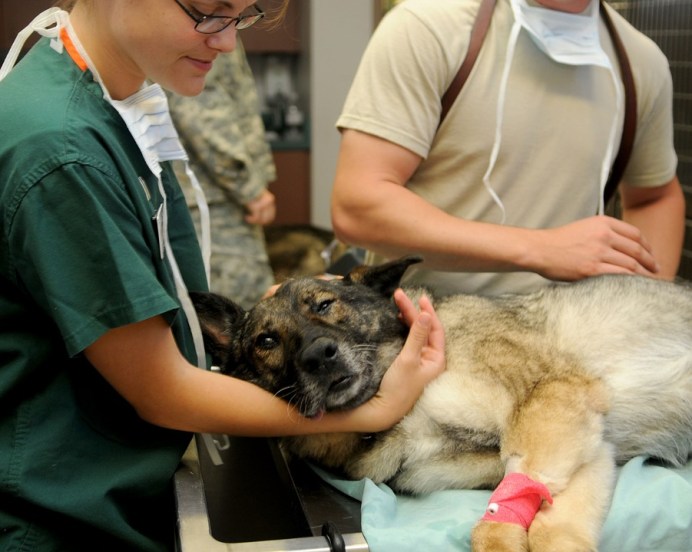
The French Fry Challenge

Beware! Traveling veterinarians are everywhere!

Along with the vast hordes of people who undergo summer migration in odd patterns they refer to as “vacations,” we made our way across the North Pole to Europe, specifically France.

You may (or may not) recall that we had entertained an exchange student from that country earlier this year and that she had left us with the declaration (politely) that no where on Earth could the fabulous French Fry be found as it existed in her country, specifically the north of France.

The gauntlet had been thrown. Valiantly I threw all my free air miles into the purchase of plane tickets and we set off on our summer adventure. Our first venture with the French pommes frites (french fry) was …. drum roll, please : at an airport McDonald’s. Oooh la la!

Oddly enough, they tasted like a McDonald’s french fry here. Except they were accompanied by a lime green packet of “pommes-frites-sauce” which was a mysterious white color inside and tasted a bit like sweetened mayonnaise (if you’ve ever had sweetened mayonnaise?).

We passed. It must be an acquired taste, and in all fairness, we had to ask for ketchup everywhere we went, but they did have it.

I suspect when the shoe is on the other foot and the French are visiting us, we may not be so accommodating. We sampled the frites in Paris and across the south of France, then headed north to Lille, almost on the border with Belgium.

Here we met up with our exchange student, whose family welcomed us into their home. We sampled “les frites” in restaurants and roadside stands across Northern France and into Belgium. We ate them with dishes whose names we couldn’t pronounce and sometimes ingredients we couldn’t guess at.

We ate them wrapped in newspaper cones, served in clever tiny wire baskets and scattered across plates. Without exception they were served fresh from the fryer, hot enough to burn the skin off your fingers and tongue, and were indeed crispy/crunchy on the outside and soft and melting on the inside (or was that my tongue giving way?).

With a deep bow of respect, may I say that round one went to northern France in the “Pommes Frites Contestation.”

Wish this could become an annual event! We made the acquaintance of their cat, Plume, and several other pets along the way. We very much enjoyed our trip to another country and found ourselves, delightedly, also happy to come home.

There was much fun with “bonjour” and the French kiss, kiss greeting upon our return and then I got down to work. What a joy! I truly love my work and the people with whom I work.

In my absence, at the Applegate Zoo, our new Black-tailed Mule deer, Lily, had birthed twin fawns! Lily came to our Zoo only weeks before giving birth. She had been taken in by Fish and Game staff after reports of a deer coming up to people in traffic and trying to climb into their cars or mooch something to eat.

Obviously she had been hand-raised (surreptitiously, not legally) then released. Too imprinted on humans to live safely in the wild, Lily found a home here with us, where Donna, the head Zookeeper, watched over her vigilantly and assisted in the twins’ safe delivery on June 15.

Mule deer have a gestation period of about 200 days (compared with a human pregnancy of 280 days). Anxious that the mother and babies bond, Donna kept everyone away initially – not to worry, the little ones are as wild as the proverbial March hares! Right now they have their spots and are slightly smaller than the rooster they share a pen with. Both little does, the fawns will be able to stay with their mother at the Zoo.

Please come visit our City of Merced Applegate Zoo to welcome these newcomers and celebrate summer! A lively Special Celebration is offered this Sunday, July 22 from 10:30 a.m. to 1 p.m. at the Applegate Zoo. Meet the twins! A bounce house, water games, snow cones, popcorn and more will be offered.

Kids : Wear your swimsuits, shoes and shorts required! The zoo address is 1045 West 25th St. in Merced. Free parking.

Christine McFadden, DVM

Adam’s Rib

So our school held a softball banquet for the team. Parents were asked to provide potluck. We brought ribs. Which somehow reminded a physician friend of her med-school days and the particular anatomy class when one of her classmates suddenly realized that both male and female human beings had the same number of rib bones. Every time. He counted. He was so distraught that he had to leave the classroom. How to account for Adam’s rib?

That story put me in fine mood to remember another story which I read in a sort of can-you-believe–this column written by veterinarians for other veterinarians.

An elderly client was bereft when her cat went missing. After several months passed, she showed up at her vet’s office grinning from ear to ear, delighted to have recovered “Tiger.” The veterinarian exhibited great delicacy and restraint, gently pointing out that this couldn’t be her long lost Tiger, because her cat had been an orange tabby and this one was a black tabby. Her Tiger was an old cat and this cat was much younger, which he could tell by looking at the cat’s teeth. The woman countered his remarks with comments of being in the sun and the dental benefits of hunting mice for a living. Triumphantly, the veterinarian pointed out that this clearly wasn’t Tiger, because Tiger had been neutered and this one was an intact tomcat! His client nodded back at him, flashing a brilliant smile as she indulgently explained what had happened. Tiger had always liked to sleep on top of the television set. (Note: This story is way before “flat screen” TV’s. I suspect it had “tubes” in it and bunny ear antennae for reception, not digital mother boards. The tops of these TVs were broad and flat and warmed up nicely after a little use. Perfect for napping cats.) There was a Christian evangelist she especially enjoyed watching. She suspected that Tiger had never really liked having that neuter surgery done, and she believed his prayers were answered as he lay on top of her TV, listening to the Word of God. So, she shrugged happily, they just regrew.

Like the client who brought their mother dog into me a couple of weeks after a C-section delivery of her puppies. Her pups were doing well and, they assured me, they had been very happy with my services and skillful surgery. But, and here they paused, glancing at each other, but, Doc, you missed a puppy. I was extremely puzzled myself. This was impossible, as after delivering the puppies I had proceeded to perform an ovariohysterectomy, or spay, so had not left any reproductive tissue behind. They plopped their dog on the table and turned her onto her side, revealing a large, engorged and rather angry breast that was inflamed with infection, called mastitis. In size and shape it did look about the size of one of her newborn puppies. They believed that this “puppy” had slipped through the belly button into her breast! Only their sincerity and kindness saved my composure, as I explained what was happening and how glad I was to be able to treat the mastitis, an infection that can quickly turn ugly and is very painful.

I care for pets belonging to people from all walks of life. They come from a variety of faiths. It is humbling to be allowed to be a partner in the caregiving for their beloved pets. I do not presume to explain the myriad mysteries found in daily life. There is an art and a science to medicine. Scientifically, I know that once neutered, a cat stays neutered. I know that wasn’t the original Tiger. But I do believe in miracles. Why not?

Christine McFadden, DVM

drmc@mcmenagerie.com

Cloning

For roughly $50,000 you can clone your favorite dog or cat. Speaking strictly for myself, I was somewhat startled. Are we there already?

Since I’m still sewing up cuts with plain old needle and thread, I find some of this high-tech stuff interesting. And amusing. And disturbing. So while I’m still healing the old fashioned way, somewhere out there veterinarians are offering to clone your pet.

They start with something as simple as a skin biopsy, a little 6 mm circle of tissue taken from your pet and carefully preserved for the genetic material found in its DNA. From this they can replicate the DNA and fuse the sample with an egg. This grows into an embryo that can be implanted into a surrogate mother. Once born you have a “clone” – a pet produced asexually from one ancestor to which they are genetically identical “twins.” A lot of this original work was being done in South Korea. There are now companies based in the United States that also offer either to preserve your pets’ DNA for future cloning or you can order up your very own clone today. In humans, identical twins result from the natural splitting of an egg in utero and both children contain identical DNA genetic makeup. Someone labeled identical twins “natural clones”?! Canine clones appear to have been the most popular pet clones requested by the public in this early work.

There’s a lot to consider here.

Say everything goes smoothly with the pregnancy and your little clone is born. Let’s name her “Clonia.” In the old nature-versus nurture-debate, right from the get-go we may have the same genetic material but it is going to be raised by another mother. That surrogate doggie mom may have been chosen for her availability as a uterus (think “animal shelter rescue”) and may not be particularly personable towards humans. And everyone, mom-dog and puppies, are living in a laboratory setting, not on Grandma’s comforter in your kids’ bedroom closet. So the first six weeks or so are not in a home environment and raise some serious questions about early socialization for the beloved Clonia. From what I could gather, responsible lab researchers provide careful monitoring to rule out abnormalities in the little clones, so many don’t go to their homes until they are several months old. Developmentally, they cannot be properly evaluated until then. This means even more time spent in a laboratory setting, coddled and cossetted, no doubt, for $50,000, but not a home. So when you do bring home your old pets’ genetic double, Clonia may not act exactly the same as her ancestor. Maybe not at all. Nurture versus nature.

And what happens to the mother dog, once she has performed her duties? This issue is clouded by lack of information. Clonia, by the way, cannot be registered with the American Kennel Club, no matter how prestigious her ancestral pedigree. Since the first dog cloned in the United States was born in February 2016, as of this writing, there isn’t a lot of information out there about “identical personalities” to the original pet. Somehow liking to chew up your sneakers or wagging your tail clockwise isn’t enough to convince me that you have reincarnated the original pet. Isn’t that really what this is all about? Clonia may not physically be an identical twin and again, her personality, shaped by very different early experiences, may be substantially different.

There are so many hearts and homes out there looking for each other that I find it hard to recommend seeking love through a clone. Would a clone of Shakespeare, father to twins Hamnet and Judith, still pen his famous works, such as “Romeo and Juliet” wherein he wrote “What’s in a name? that which we call a rose By any other name would smell as sweet.” I suspect that that which we call a dog is each an unique individual and that the search to duplicate your beloved pet by cloning borders on smoke-and-mirrors shell games, not something sweet.

Christine McFadden, DVM

drmc@mcmenagerie.com

Dog flu has been reported in the Valley. Here’s what you need to know.

Serious news for all dog owners in recent weeks, folks: Canine influenza, or dog flu, has been documented both in San Francisco and the Bay Area and in Fresno. Up to 50 cases were diagnosed in the Bay Area in mid-January, with a confirmed case in Fresno announced Jan. 24.

holding-dog-head-e1519278244598.jpg

This dog flu is highly contagious between dogs, with 80 percent of all exposed dogs becoming sick. Most of these dogs will be only mildly sick. Symptoms include coughing, sneezing, runny eyes and noses. Some dogs whose respiratory system has been attacked by the flu virus will develop secondary bacterial infections and have thick purulent (pus) discharge from their nose and a very high fever. Occasionally even pneumonia can occur and in rare instances, death.

You’ve all probably heard of “kennel cough,” which is a generic name for a variety of viruses or bacterial infections that cause a cough contagious to other dogs. The actual cause of bronchitis can only be determined through tests. An oral cheek and eye tear swab can be sent to the lab for a PCR test (polymerase chain reaction – if you really want to know more on that kind of testing, please research!) When last checked, a PCR upper respiratory test in dogs looks for up to 13 different viruses and other agents, including both forms of the Canine Influenza, H3N8 and H3N2. Dogs in close contact easily spread the germs by coughing on each other – in a kennel, a grooming parlor, at a dog park, day care or shelter. Anywhere dogs meet. In addition the flu virus can be spread by contaminated objects like food or water dishes, collars and leashes.

Should your dog contract canine influenza you will need to see your veterinarian. Treatment is tailored to symptoms and whether secondary infections are a concern. All affected animals should be isolated from other pets for 1 month to prevent the spread of this disease.

Canine influenza first made headlines in 2004 when several racing Greyhounds dropped dead in Florida. This was the CI H3N8. It wasn’t until March 2015 that there was another crisis when an epidemic broke out in dogs in Chicago. This was a different form of CI, H3N2. They thought part of the reason for an outbreak in a big city had to do with large concentrations of dogs moving through airports. The dog flu has not been widespread and risk to pets in many parts of the U.S. has been low.

The dog flu H3N2 has been known to affect cats. One outbreak occurred in cats in a high-stress shelter environment. No cats are known to have died from the canine influenza viruses, and there is no approved vaccine for cats.

Canine influenza viruses have not been found to be transmissible to humans.

Should you like more information on the canine influenza viruses please look up the American Veterinary Medical Association article on-line. Your local veterinarian has information and protective vaccine available to your pet. This bivalent vaccine protects against both strains of dog flu. Two vaccinations are required to start, given approximately one month apart, and can be started as young as seven or eight weeks of age. Because it takes a month for your pet’s body to mount a complete immune response, and given the closeness geographically of the epidemic, we recommend all dog owners contact their veterinarian to start protection. Be aware that like the Bordetella vaccine (a better known “kennel cough”) and human “flu shots” even with proper vaccination your pet might contract a mild case. Many area clinics are offering the vaccination to their regular patients. Simply put, we want to protect your pets. We’re here for you.

Christine B. McFadden

drmc@mcmenagerie.com

World Rabies Day


Several years ago I wrote an article on Rabies (Merced Sun Star, June 2014), a viral disease carried from animal to animal and sometimes from animal to human. For both animals and humans the disease is considered a death sentence.  I recently came upon a series of articles in a veterinary journal and was sad to learn that the disease is still a serious threat in much of the world and that approximately 60,000 people die from this disease every year. Still.


Why do I take up the story again? Because it deserves to be heard and, most importantly, it is still a threat to you and your loved ones. A very real threat if you enjoy traveling to out-of-the-way places.

Rabies-outbreak-map-rabies-symptoms-rabies-dog-bite-1125644

Rabies is a slow-moving viral disease. It can affect any mammal, but is usually spread from one carnivore to another as the virus is passed in saliva by bites through the skin. Infection after contact with infected saliva on an open wound is a possible, though unlikely, mode of transmission. Once a new victim has been bitten, the virus slowly makes its way into the nerves and through the nervous system to the brain. This can take two weeks to 2 months or longer. By the time the rabies virus is present in the saliva, death is near. It is for this reason that when an unknown dog bites a person the dog will be quarantined for 2 weeks.  Two weeks is long enough to monitor the dog : If rabid, the animal will die. The dog’s brain can then be tested for rabies virus and the bitten person still has ample time to receive the anti-rabies protective vaccine.


Rabies has been found in the wildlife in and around Merced County. It is endemic in area bats, raccoons, skunks and foxes. You, the pet owner, have set up a terrific protective line of defense by the simple stratagem of vaccinating your pet dogs and cats. It is believed that by vaccinating 80% of a populations’ pets an effective barrier is created to protect people against exposure to the disease. In the United States more rabid cats have been reported to the CDC (Center for Disease Control) than dogs for several years. Vaccinate your cats! Vaccinate all dogs and cats older than 3 months of age. Keep them up-to-date.


There are a few island communities which have managed to keep rabies out or eradicate its presence : Hawaii, Great Britain, and Japan are three. You cannot easily take a dog or cat into those Islands. I applaud their high security. The regions most likely to have rabid animals that endanger humans are underdeveloped countries in Asia and Africa.


For the traveler to a foreign country, be aware that the dogs roaming the streets may be high risk for encountering rabies. The unsuspecting traveler may admire a puppy, letting it lick their hands. Food you carry could attract attention from a roving dog. Many of these countries have inadequate medical services for diagnosing rabies or offering post-exposure prophylaxis (prevention/ PEP) services.  Rabies prevention is not universally available. The more exotic your outpost, the higher the risk of encountering rabies. Of the 60,000 people who die every year, nearly every single case (99%) of human death started with a bite from an infected dog.


Whether at home or traveling, camping for a weekend or following your dreams of adventure exploring a foreign land, please take precautions. Enjoy wildlife, but don’t treat or keep wildlife as pets. They cannot be vaccinated against rabies and may have variable incubation times for rabies. Avoid attracting wild life to your home or campsite. Do not feed wildlife. Do not feed your pets outdoors, as this attracts wild life and strays.  Avoid animals acting unnaturally. Animal-proof your trash. Avoid stray dogs and cats. Stray animals may not be vaccinated and they run high risk of exposure and contact with wild animals that might harbor rabies. The message, Backpackers : stay away from unknown dogs and wild life. The life you save might be your own!


World Rabies Day is Thursday, September 28th this year. This day is sponsored by an alliance among the World Health Organization and many other organizations working towards the goal of eradicating Rabies deaths in people and animals by the year 2030. They are joined by the One Health Initiative, a group dedicated to promoting increased communication and joint action between physicians and veterinarians globally through the integration of human medicine, veterinary medicine and environmental science. Rabies is cited as a classic example of what “One Health” is all about, as the control of rabies in animals has reduced the death toll in people from that disease. Together, we CAN make a difference.


Christine B. McFadden, DVM

drmc@mcmenagerie.com
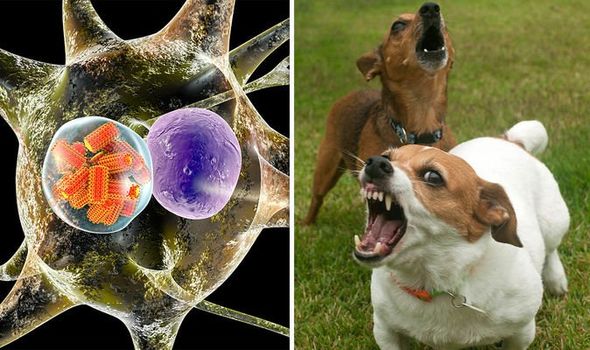
Photo Credit : https://www.express.co.uk

The Large Animal Vet


Perhaps the title sounds misleading. A “large animal” vet develops a veterinary practice caring for the needs of livestock such as cattle (dairy or beef), sheep, goats and pigs. A “small animal” veterinarian like me is usually slotted into the care of companion pets such as dogs and cats. So when I examine a 200 pound dog, it is still a small animal and likewise there is often confusion about whom to call when the patient is a pot-belly/miniature pig. Not me.


The life of a small animal vet and that of a large animal practitioner are markedly different. One works almost exclusively indoors, dressed neatly, white coat in place. The other weathers life outdoors, facing extremes of blazing heat to icy cold, rain and snow. One always has a sink handy to tidy up. The other uses outdoor hoses more than they’d like. A dairy vet may check over 100 head of cattle in a morning and four “farm calls” make a full day. A small animal vet may follow the medical strands of more than 25 patients a day, winding through exams, blood results, x-rays and working in a surgery or two.  All juggle the demands of unexpected emergency work.


Being in an office most of the day, I rarely interact with my brother and sister large animal veterinarians. So when the pygmy goat from the petting zoo fell over dead I was unhappy, but proceeded to perform a post-mortem examination and sent tissue samples off to our regular lab. I had overseen the care of these goats for many years, but they were on the back burner when it came to my interest in the truly exotic Zoo collection. My concerns centered on whether or not the public might have fed something odd to the goat? (I’ll jump ahead here : No. The public did not harm the goat). I mulled over the problem but prepared to wait until the pathology report was finished sometime in the next week. And then another goat died.


I was unnerved. The goats were being closely watched and none had shown any outward signs of sickness. They had all lived for more than 8 years at the Zoo and had never, collectively, suffered a single injury amongst themselves. I immediately sought the expertise of a Large Animal veterinarian. The Goat Expert was on a dairy farm. The return call came in as I was finishing one surgery and about to start another. Gloves still on, I was staring at some x-rays

in-between these surgeries when they told me they had Dr. B on the line. Multi-tasking at its best.


I hurried over, snapping gloves into the waste receptacle and grabbing pen and paper. I introduced myself and LAUNCHED into a recital of my goat woes. I verified that he had goat experience? Yes. I gave him dates, genders, date of deaths, lack of lab results, still pending. I drew breath to spew forth another list of details and heard him gently respond, “Yes…. I think…. I might be able…. to help”. His measured tones were from a man used to the gentle rhythms of milking machines, contented cows swishing their tails, chewing their cuds. Da-dum da-dum to my staccato dop-dop-dop-dop-dop! I managed to squeeze in a few more hurried sentences (surgery! Waiting!) before he responded calmly, “I think I drive past your practice on my way up from this dairy….”. I opened my mouth. Closed my mouth. I could hear the clouds, feel the sunshine, almost see the shining black and white hides of the gentle Holsteins he surveyed as we spoke. It was all there in the rhythm of his speech. I told myself to stop yapping before he decided my goat problem would be too stressful for him to bother with.


An hour later Dr. Thomas Bauman drove up in a large truck outfitted for all manner of veterinary ministrations. He spent an hour and a half doing a post-mortem on one goat. He had a wicked knife and mulled over the cause of sand in the stomach. He felt it was too much. Did we feed on the ground? No. But little kids feed the Zoo goats oat hay pellets and they often dropped to the sand, with all the goats scrambling to get their share. Hmmm. He gave the problem his full attention and we submitted a gazillion samples to the State Lab, including an intact eyeball because it would be useful for trace metal analyses. The final answer was a copper deficiency in the feed, to which Pygmy goats are especially susceptible. Hay grown in the San Joaquin Valley is often deficient in copper. The salt lick fed at the Zoo did not have added copper because Alpacas are in with the goats and they are susceptible to copper toxicity (too much) if supplemented. So we now feed our goats little capsules of copper wire every six months and all is good. But sometimes I find myself wishing that I was a Large Animal veterinarian. Just so I could slow down and smell the …..never mind.


Christine B. McFadden, DVM

drmc@mcmenagerie.com

Walking Your Dog

Walking the dog is good exercise, good for the dog, good for the family. Done properly, you take in some sunshine and fresh air. You have time to admire the blossoming trees and critique your neighbor’s landscape. Wait a minute, there’s a “proper” way to walk your dog? Hmmmm…


Young puppies need exercise to build strong bones and muscle. Psychologically their mind will be more focused if their body is relaxed after a good run. Good manners and obedience training is then maximized. The average dog needs 30 to 60 minutes of hard exercise every day – not just a leashed walk around the block. Some breeds, like hunting breeds bred to run for hours, may need more exercise than a breed bred to be a lap dog. Different personalities require more exercise to tire. Know your pet.


Because of the high prevalence of canine Parvovirus infection locally, all puppies should have received three or four vaccinations for this and Distemper by four months of age before hitting the streets of Merced.

walking dog.jpg

Dogs that do not receive adequate exercise are often bored and that pent-up energy can turn into destructive habits: tearing up furniture and household items, digging up the back yard, constant barking. Yech! No wonder you see those ads for free dog, needs big back yard.


As your dog grows older his or her exercise needs change, especially if your pet has any health issues. Arthritis is as common in older dogs as in older people, and regular exercise is even more important to keep them moving. You can fall into a vicious cycle : it hurts to walk, so you let your dog stay home and sleep. His muscle tone deteriorates further and can’t carry the weight of his own limbs. Muscle atrophy occurs, and now your dog walks bone-on-bone. This is where regularly scheduled daily exercise helps to keep that muscle tone built up and will improve your dog’s mobility. This is also a good time to consider working with your veterinarian to consider arthritis medication options, customized to your dog’s kidney and liver function. Your vet will review with you dietary options, over the counter supplements and anti-inflammatory and analgesic (pain) medications. Working together we can optimize your dog’s athleticism and enjoyment of life well past what used to be achieved.


Explore the lovely foot paths along Bear Creek and Black Rascal Creek. Merced neighborhoods enjoy our climate by showcasing flowers throughout most of the year. Clean up after your pet’s waste, don’t let your dog soil someone’s yard. There are many handy gadgets available today to make the minor chore quick and easy.


Please review the weather before setting out. The Valley rarely suffers severely cold days but there’s no denying that our summer weather includes many scorching days over 100 degrees. Feel the asphalt with your palm. Even after the sun has gone to bed, you may find the road too hot for doggie feet. They aren’t walking on rubber-soled athletic shoes that insulate their feet from the baking asphalt! Early mornings are most cool for pet and people if you can motivate yourself to get out there and enjoy our sunrise.

I feel I must add a word of caution to all would-be dog walkers and perhaps especially to parents of young children who wish to take the dog for a walk. Dogs attract other dogs. Your pet may be walking obediently on a leash, minding its own business and another dog or dogs may come from nowhere. These loose dogs may attack your dog. If you try to intervene they may leave your dog to attack you. Some of my clients walk their dog and carry a stout walking stick for possible defense. Some carry pepper spray but I have heard that it is often ineffective on dogs, not to mention you must be close enough to aim for the eyes. An inventive scheme is to carry an umbrella, and if a stray approaches rapidly open and close the umbrella to fend off an attack. Loud noises, such as produced by an air horn, could also frighten away a dog. Always stand your ground and face an approaching dog, saying “NO” in a loud, commanding voice. Hold your hand out firmly in the universal gesture for “Stop!” Do NOT scream and jump around as you have now become prey. Should your dog actually be attacked do NOT use your hands and arms to try to pry them apart – every year I have a client or two sent to the hospital when the attacking dog turns upon them (or their own dog bites them, frenzied as it tries to protect itself). Only a stick, a broom, a chair, some kind of physical object can be used to wedge the dogs apart. Know your neighborhood. Do not walk your dog near homes with chronically loose pets or dogs that bark viciously along the fence line and might jump over.


Taking a walk has benefits that far outweigh the risks. Get out and enjoy our spring!


Christine B. McFadden, DVM

drmc@mcmenagerie.com
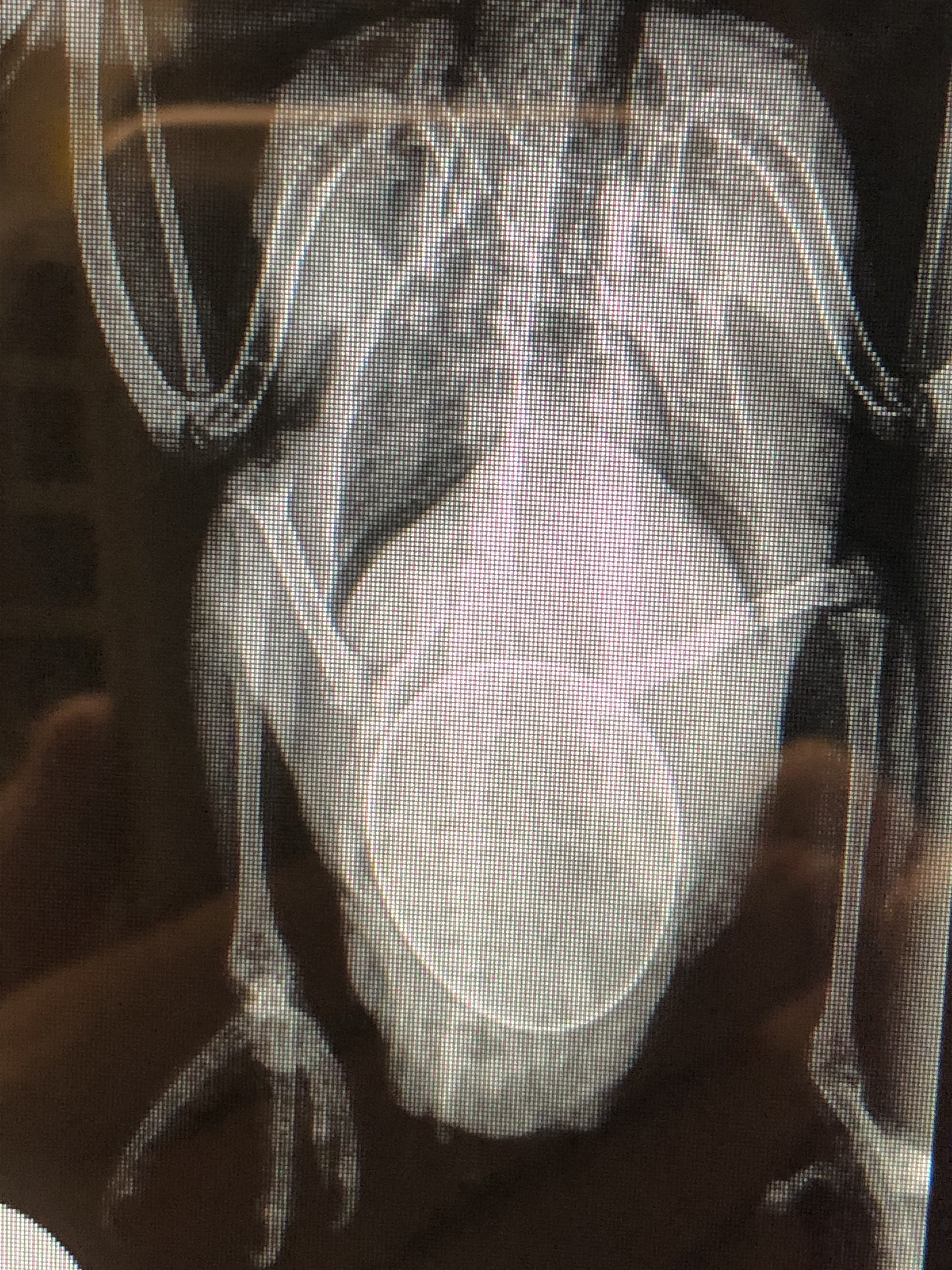
 

Egg Bound Bird

When I first fielded the call I wasn’t overly concerned, probably because the caller was about 80 miles away and somebody else’s patient. It’s easy to give telephone advice. I am, in truth, happy to share knowledge that might benefit another veterinarian’s patient as it is by similar sharing that I have been taught how to heal.  So I carefully shared my experiences in Avian Obstetrics and wished all a good outcome. Then I cheerfully went about my own day.

Sometimes that is not the end of the story. Many days later I found myself enmeshed in the case personally. It started out simply enough. A young family owned several parrots. One of them, a delightful little green-cheeked Conure was a clown and gentle enough to tolerate their young toddler. The bird was named Salsa, for her green and red feathers. I say “her” loosely, because most birds in the psittacine or parrot family groups cannot be sexed visually and require a DNA blood test to know whether you have a boy or girl. We used to surgically sex birds years ago, entering the abdomen only on the left side because most birds have one sole functioning ovary, on the left. Males have two testes, located in the same area in the abdomen, in front of the kidneys, tucked up under their protective spine.

So nobody knew if Salsa was a boy or a girl, which hadn’t been very important until the family left for vacation and Salsa became ill.  She began to sit in the corner of the cage bottom, very quietly. Her breathing was fine, and if disturbed she was a little snippy but hopped about brightly. The babysitter noticed that Salsa was straining, maybe trying to poop, and her abdomen seemed distended. A quick trip to her regular veterinarian confirmed that Salsa had an egg stuck inside! (This also confirmed she was a female! Smile).

Welcome to the world of birds and their babies! Remember, birds are not mammals. Any female bird can make an egg, fertilization is not required. Nothing hatches from these eggs. The eggs produced by chickens for grocery store sale I call “baking” eggs, the kind you cook with. The formation of an egg is fascinating. The left ovary is attached to an oviduct, similar to the uterine horn in a dog and cat. The ovum or egg looks like a miniature yolk as it is first released into the oviduct, where it travels to the shell gland or uterus to become coated in calcium carbonate as a hard shell. The whole process takes around 24 hours. Most parrots lay an egg every 2 to 3 days, until they have a full “clutch” which completes their nest. Certain external stimuli such as increased sunlight, warmer temperatures and more food may promote egg production. In a pet bird there is no denying that egg laying can be a risky business.

Sometimes the egg shell is not properly hard, termed a “soft-shelled” egg. This is a warning sign that the bird may be malnourished, particularly deficient in calcium and vitamin D. Birds that live exclusively indoors and on seed diets are at high risk of this type of malnutrition. Calcium is needed not only for strong bones and firm egg shells, but also to produce the muscle contractions that will allow the egg to be laid. First time eggs may be too large to pass easily. Once the egg is stuck, things can go bad very quickly. The egg may be so large to prevent the bird from breathing easily. It may squish the intestines and block passage of fecal matter. The egg may press against the sciatic nerve, causing permanent left leg paralysis. It may lose moisture and become stuck to the tissues of the oviduct, eventually starting an infection that leads to death. Egg binding is a serious medical emergency in birds.

Salsa didn’t have a mate, so we knew this was just an empty egg inside her. Because Salsa couldn’t pass the egg on her own, her veterinarian, very appropriately, anesthetized the little Conure and attempted oocentesis, (don’t you love new words? Pronounce it “oh-oh-sent-e-sis”). A needle is inserted into the egg to withdraw the contents, in an effort to collapse and allow passage of the now much smaller egg. Salsa’s egg collapsed but did not pass. However, she was bright and perky once the pressure in her abdomen was relieved so no one was worried. When the owners returned home Salsa was delighted to see them. Over the next few days they noted, however, that she became increasingly less active, until finally she was sitting at the bottom of her cage again. Which is when she was referred to me, 17 days after becoming egg bound. I started her on antibiotics,  gave her injections of Vitamin D and Calcium, and rehydrated her with fluids before taking her to surgery. I use a surgical laser instead of a “cold steel” scalpel for surgical incisions as there is minimal blood loss. The oviduct with the collapsed egg and a second egg behind it (!) was isolated and carefully removed. The ovary was left in place. Her little abdomen was flushed and sutured up and within 15 minutes Salsa was back in her incubator, recovering from her “spay” surgery. At her recheck two weeks later her family reported that Salsa was back to her old self, all fun and games. She weighed exactly 65 grams on that visit, smaller than a cockatiel. Her diet had been fortified with pellets, fresh fruits, vegetables and a calcium supplement. Salsa celebrated her recovery with a pistachio nut!

****Please note : The images and video used in this post are NOT the same patient being discussed in the ‘Egg Bound Bird’ blog post. In the video, the obstetrical problem was managed medically. This video is shown with permission from the gracious owner of another egg bound patient. The Sun conure in the video is roughly twice the size of the little conure in the story, which required surgical intervention, similar to a C-section and hysterectomy. Now you can have visual aids to go along with the blog!

WARNING THE VIDEO BELOW CONTAINS SENSITIVE MATERIAL THAT MAY BE TOO MUCH FOR SOME TO VIEW.

Christine B. McFadden, DVM
drmc@mcmenagerie.com

Ear Jam / Otitis Externa

Today we will tackle the shaky subject of ear infections in the dog. Ear infections rank right up there with some of the smelliest problems you might ever endure with your pet. And your dog feels a lot worse about it. The ear is exquisitely built in the dog – those long, silky flaps (pinnae) framing your dog’s face, so pettable, tilting to make clown faces, waving in the wind during a glorious ride peeking out the car window. Some ears stand upright at attention and a few are bald. All ears are beautiful. The inner workings of the ear contain the mysteries that lead to one of the major 5 senses in the body : Hearing. A dogs hearing ability is considered to be 4 times that of the average human being. Sound is caused by air vibrations – the more vibrations per second, the higher the sound. Humans are limited to hearing sounds that vibrate at 20,000 vibrations per second, while dogs pick them up at 50,000 vibrations per second. Another factor is that people have only 8 ear muscles to help wiggle their ears to funnel sound in and capture noises ; the dog has 18 muscles (Not to be outdone, the cat, with 30 ear muscles, enjoys the best hearing of all!).

Did you know that dogs lack most of the skin glands that a person has? One place that they DO have true skin glands is lining the inner ear canal or passageway into the ear. If you gently lift your pets ear flap, or pinnae, you’ll see a hole at the base which goes into the head: this is the ear canal. The average ear canal is 2 inches long! In the dog it travels down, with a little L-shaped jog at the end just above the ear drum (tympanic membrane). This may serve to protect the ear drum from things that fall into the ear. Just as in a person, the ear drum is exquisitely sensitive, a barrier between the outer ear and the middle and inner ear where the hearing organs are located. This fine membrane vibrates in response to the sound waves it receives, transmitting them to the middle and inner ear for complex translation. Any fluid, foreign object, mass, or swelling inside the ear may deflect the passage of air vibrations and alter hearing. Long term infections may lead to permanent thickening (hyperplasia) of the canal, blocking the travel of sound.  Loss of elasticity to the ear drum may result in deafness to varying degrees. Ear infections are serious.

So what can go wrong with an ear? How can you tell? One of the easiest things to remember is that dogs don’t really make ear wax like people do – so if you see yellow or black discharge lining the ear you know something is very wrong. This ceruminous or glandular discharge may be made up of several bacteria or yeast or both. Some people will note a bread-like odor if yeast is present, and one bacteria, pseudomonas, is quaintly referred to by its “rotten taco smell”. Because the average length of a dog’s ear canal is over 2 inches long, a veterinarian requires a specialized instrument, the otoscope, to examine deeply. An otoscope has a strong halide light and magnifying lens, coupled with a long tube sized for the individual to look deep into the canal for the cause of the problem.

Like something out of a cheap horror movie, sometimes we put our eyeball to the scope and see giant (magnified) grey legs waving at us – ear mites, Otobius megnini. These are not to be confused with the cat ear mite, Otodectes cynotis, which would be about the size of a small grain of pepper if visible at all and never waves at you. We don’t see them that often around Merced and it’s usually good for a surprised shriek. In the USA the Otobius mite is most common in the arid regions of the Southwest and has a preference for the ear, even, occasionally, in people.

Very commonly we find foxtails buried deep into ears, painfully jabbing the tender canal. Sometimes they can be removed with a long narrow instrument called an “alligator forceps” – your pet will let you know if sedation is required! The pointed, piercing end of a foxtail awn must feel like an ice pick is poking into their head! Foxtails in a deep ear hole are never good, as they may perforate the ear drum and travel into the head, adjacent jaw or lymph nodes. The ear responds vigorously to this foreign body, mounting a massive infection in an attempt to eject the invader; alas, to no avail as gravity keeps it buried deep in the canal. The best news about foxtails is that once removed the infections are usually responsive to medication and clear up quickly.

Chronic, recurring ear infections are extremely common in our Valley. Properly called “otitis externa”, these infections bear no relationship to the inner ear infections young children often suffer from. They do not respond to oral antibiotics given to toddlers. They are not similar infections at all. Hayfever, or Atopy, may be behind much of the recurring or chronic infections of dogs. The ear canal of a dog is lined with true glands. Glandular tissue may respond to an allergen, like pollens in the air (and is our Valley not King of Pollen?) by becoming inflamed. Some breeds, like the Labrador Retriever and Cocker Spaniel, are genetically born with twice as many glandular cells lining their ear canals as other breeds, making them even more susceptible to ear infections. When the ear canal is examined we can see the tiny blood vessels swollen and red and the little glands puff up, making the inner ear canal look bumpy like a cobblestone road. As the tissue swells, a thin fluid exudate oozes out, creating a warm, wet environment deep in the ear hole – perfect for breeding yeast and bacteria. And do they ever! This ear soup is stuck, since it can’t drain by itself. If unattended, blood and pus may form. These infections are very painful, and a dog may paw or shake its head so hard the blood vessels burst and the pinnae fills up like a balloon with a blood hematoma. Polyps and cancerous masses can occur. All ear infections require careful treatment plans only your veterinarian can prescribe – your pets smiling face and happy head wag is its own reward!

Christine B. McFadden, DVM

drmc@mcmenagerie.com