Molly and the Spider Plant

It was Molly who reminded me. Molly is an English Springer Spaniel. Her soft, silky black ears make it irresistible to gently pull them. Her owner was bewailing the fate of her garden, as young Molly had developed a fascination for a particular potted spider plant. She sought my advice.
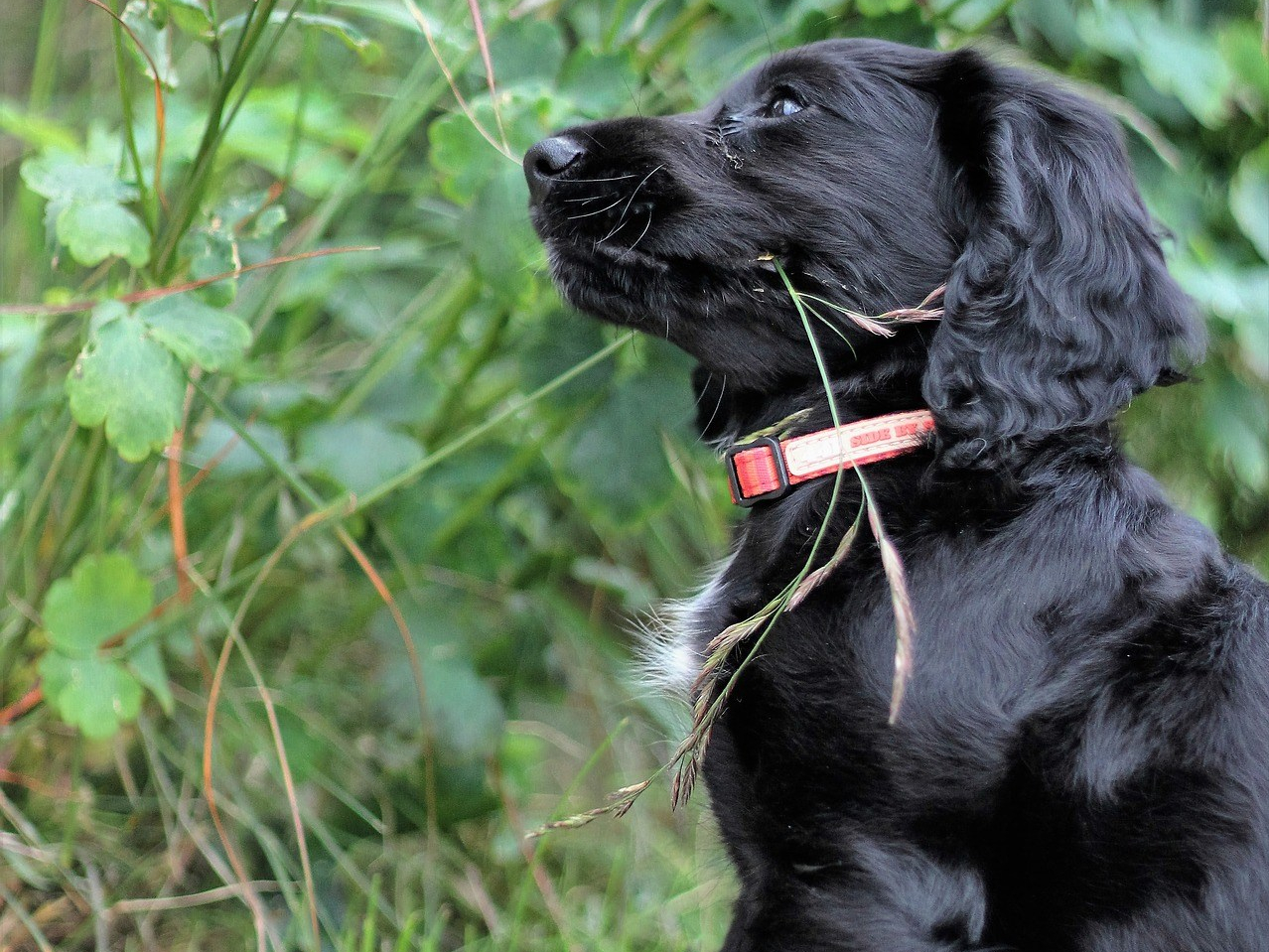
MollyandtheSpiderPlant

My mind went drifting back to my third Irish Wolfhound, named Shredder. ( You can see photos of Shredder and I on my Facebook Page) If there can be karma in the name you give your dog then he was blessed with boatloads of karma. He lived up to his name. The glue on envelopes fascinated him, and given his size, no kitchen counter was safe for the deposition of mail. He took what he pleased and to this day I blame him for receiving a 5 day cut-off notice from the electricity people. He’s the only dog I’ve ever had who actually did eat the children’s homework. No one laughed. But the real pain in the neck was his attitude towards a tiny potted lemon tree I had started on the back patio. One morning, as I made my garden rounds, I noticed that the tree was a little crooked. Doubtless the dirt was settling, so I carefully righted it, tamping the soil down gently at the base. A few days later I noted it was tilted again. Puzzled, I again returned it to its proper position. As the days passed, I began to realize a pattern here, namely that the tree was being knocked sideways again and again. I was righting it on a daily basis! And then I caught him, Shredder, with a lemon leaf in his mouth, grinning happily, tail wagging. Such fun! Sigh.

So I moved the plant. Nope. Now, as a veterinarian, I had lots of training for behavioral problems. This was drummed into us students as very important, because poor animal behavior can lead straight to the Pound. I became annoyed. I staked the tree with a bamboo stake. Apparently this was not deemed fair play by the dog and next morning I found the tree completely sideways, a branch broken. I righted it. He knocked it sideways. Finally I took metal rebar, settled the tree more deeply in the pot, and firmly staked the trunk every few inches. Satisfied that I had prevailed, I went to bed.

The following morning the lemon tree was nowhere to be seen. When it was no longer fun, Shredder had simply removed the entire plant and shredded it. Who says dogs don’t have a sense of humor?

I did not share this story with Molly and her owner. I wanted them to have confidence in my advice. But when next I saw her, Molly had become truly devious. She not only enjoyed her spider plant but had branched out to include ALL the potted plants. I understood her owner’s angst. I wished I had a fabulous know-it-all answer. There are special Behaviorists in the field of veterinary medicine. They listen for hours to your problems and have reams of questionnaires to fill out. They have many inventive cures to modify and “cure” your dog of his or her behavioral problems. Most of them involve owner intensive time: “Take your dog for a 5 mile walk twice a day, he’ll be tired out and have less energy”(me, too); “Tell him no! sharply every time he goes near your plant, then distract him with a fun activity” (but I needed to run to the grocery store, I won’t be home to distract him); “Use the dimes or rocks-in-the–tin-can method” (but first, how do you really securely seal the thing and second, my aim REALLY is that poor – ouch!). Somehow, behaviorists always have the answers and most of it involves time that most of us don’t have – or the dog wouldn’t be doing it to begin with, right? Fence either your dog or your plants in (expensive! Not attractive!).

In the end, I wanted to tell her to dump the spider plants and try roses. It’s karma. You see, one of the meanings associated with the name “Molly” is “rebellion”. They should have looked it up first.

Christine B. McFadden, DVM

drmc@mcmenagerie.com

Connect with me on Facebook for shared photos and more!

Marijuana Toxicosis

Now it is possible that some of you may succumb to the same little habit I am guilty of: reading the popular magazines while standing in line at the grocery store. Never buying them, of course. This is where I follow the stars (we aren’t talking astronomy here) and gather knowledge of my fellow human beings. Consider it human resource research. It doesn’t take many pages for me to feel that I have gleaned everything of interest that one of these magazines might offer, so imagine my surprise when I came across an entire page devoted to the subject of: “What’s In My Bag?” It is actually believed to be of interest to American readers to know what a Hollywood actress might carry in her purse. I am stuck on that: who cares and why? First, I decided to look in my own purse. I have one, though I rarely carry it.  Wallet, ID, keys. A pen. Sometimes I have actual money in there, sometimes not. I cannot imagine this being of interest to anyone else. Even potential purse snatchers have divined that it’s not worth their time.

Now, if I was going to be interviewed for a magazine with full page glossies, would I lie and embellish all that? You bet. Do people really carry extra shoes, whole bottles of water, and apples in their purses? Why don’t THEIR apples bruise after being jostled in a bag with shoes all day long? Are those shoes… gym shoes? Ewww. Is it possible that I am the only person in the world who doesn’t carry protein bars as their snack, sweetened preferably with honey or agave or stevia leaves, no white sugar please? Help! These women have no need for gym class – their purses are “free weights”. Crunches, curls, lunges -just lift and press that purse. The possibilities are endless.

One item missing from these lists of “What’s In My Bag” are marijuana products. Ooops, did I just say that? Hollywood has a bit of a rep for extreme partying, for a lifestyle of too many pills, alcohol, and drugs. Now that marijuana has been legalized in California I thought someone’s “Bag” might be the first place it would show up. So I’m happy they’ve shown restraint. I’m not very happy about marijuana, legal or not. Legalization has opened up a host of dangers for my patients, mostly the dogs.  As a veterinarian, I am appalled at the people who, through carelessness or on purpose, allow it to be shared with their pets. Over the years I have cared for several dogs that were “stoned”. Marijuana-laced brownies or other food items were usually the culprit, but about half the time the item was shared with the dog because their owner was high and thought their dog should be allowed to experience the same “joy”. The reason I saw the dog was because even in their fog, the owners recognized something was terribly wrong and sought emergency care for their pet.

A pet affected by marijuana toxicosis will exhibit a host of neurological abnormalities. Dogs may become so agitated they appear manic, drooling, dilated pupils, constant vocalization and walk uncoordinated. Seizures, coma and death may occur. There is no ready test at present to detect marijuana levels in a dog, so we must rely on the owner’s honest history if we are to help their pet. That said, there is also no true antidote – we must watch the dog suffer the effects, which we try to minimize and flush out the drug with IV fluids, oral charcoal, sedatives and  sometimes enemas. The active chemicals in marijuana are stored in body fat, broken down in the liver and exit the body in the feces. It can take 24 miserable hours or longer for your pet to recover. Some trip. I am not impressed.

Years ago, fatalities related to marijuana exposure were rare. Most pets ingested only small amounts of a natural plant, containing a relatively small amount of the primary psychotropic chemical THC (tetrahydrocannabinol). That is no longer true. You see, in developing medical-grade marijuana products they have synthesized and concentrated the most potent chemicals in marijuana. Pets that ingest these medical-grade products have a much higher risk of toxicity.

The American Veterinary Medical Association (AVMA) is undertaking research to see if there are any medical benefits to the non-hallucinatory, non-psychotropic chemical CBD (cannabidiol) that is also found in marijuana. Could it be part of a treatment plan for problems such as arthritis in pets or epileptic seizure control? At this time there is little scientific evidence on this subject. Legitimate research has been hampered by the fact that while many State laws have legalized restricted uses for marijuana in people, the Federal Laws have not changed. Until the safety and risks of CBD products have been studied there is little advice on the subject from veterinarians. In the meantime, PLEASE prevent exposure of your pet to any THC / marijuana products !

Christine McFadden holds a license to practice veterinary medicine and surgery. She has cared for the family pets of Merced at Valley Animal Hospital for more than 30 years. Send questions or comments to drmc@mcmenagerie.com.

Well your cat doesn’t have lice, but…

It is remarkable what word associations may trip in your brain.

Someone was talking about head lice in children the other day and I found myself mulling over my encounters with the louse, an ectoparsite (“ecto” pertaining to bugs found crawling around on the outside of the body, as opposed to those living in your intestine, lungs, blood or brains, which would be “endo”parasites and even scarier). Infestations with lice are called “pediculosis.”

I have had the possibly unique experience, compared to the average person, of contracting a brief case of horse lice and another of ostrich lice. In my line of work I have also been called upon to identify and treat lice on chickens, pigeons and guinea pigs. Probably the lice on the ostrich and that of the other birds was the same stuff – namely, avian lice, but I’ve never researched it at any length to determine if they might have been different between KINDS of birds. My sole concern was how to get rid of the pests. My methods have been successful for my patients.

The big message I wish to convey is that all lice are “species-specific.” What this means is that a bird louse can only live and multiply on other birds-of-a-feather. An equine louse can only thrive on horses or other equus species. Sure, they may jump onto another creature, an example being the veterinary student trimming the horse’s hooves with her head buried in its flank – but apart from running around for a few riotous minutes, once scraped off, they are of no further concern to a different species. Period. Bird lice can’t live on people, horse lice can’t live on people. Bird lice can’t live on horses. I know, I’ve tested this theory! I was not a willing participant, but I will bear witness that indeed, the louse of one kind of animal cannot live on another species. Species-specific! Promise! Big sigh of relief.

Many years ago I encountered the only case of lice I have ever seen in a cat. Her owner dropped her cat off in the morning on her way to work, stating that the cat had “bugs” and for heaven’s sake fix it because the cat slept with her.

Lice can often be seen with the naked eye and I quickly found a few on this black cat. Ensnared on some scotch tape, I examined the sample under the microscope. This was more than 25 years ago. There was no Internet to speak of, no cell phones, no Google or other search engines.

What I had was good old text books, several devoted strictly to the parasites of animals. And what showed up on the microscope didn’t look like any lice I recognized. Odd. Searching my books, I came across a photo demonstrating the finer points of the human head louse. I called Public Health. I called the owner, hesitating to discuss my findings. How to delicately convey that her cat was fine.

She was horrified. Turned out she taught first graders and there was a notice circulating that a head lice problem had cropped up in class. She realized that she had contracted it from her student and brought head lice home. I gave the cat a medicated bath, which cured the cat. And although this was one louse I avoided, it made my head itch every time I thought about it!

Christine McFadden holds a license to practice veterinary medicine and surgery. She has cared for the family pets of Merced at Valley Animal Hospital for more than 30 years. Send questions or comments to drmc@mcmenagerie.com.

Summer Vacation / Hawaii 5 Days or Less

Well, I said helpfully, I just called up so you could yell at me.

Complete silence for a moment, followed by protestations. They had never been upset with me. Everyone was so lovely at the clinic. Their pet had never been away from them before.

Their dog boarded with us for a week. A joyous, boisterous good time was had by all. Their little Maltese, Princess, had never been anywhere where she could bark as much as she wanted. Once she realized there was no shushing, she barked herself hoarse. There was so much to see and do, dogs coming and going, the occasional call of a parrot, exotic sights and smells. New people to romp and play with, as her owners knew from receipt of photos and video outtake of their Princess at play. Not wanting to miss a moment of the party, Princess skipped her daytime naps. Accustomed to daily brushing at home, she submitted to some brushing at the clinic but wiggled uncontrollably because she wanted to play some more! Rules went out the window as this little Maltese took advantage of every new opportunity that came her way. We took to calling her the Energizer Bunny. The day she went home she had a bath and blow out and went trotting out the door, every inch the Princess.

Remind you of anyone you know? Ever needed a vacation after the vacation? Guess what, dogs do it, too. And for the pet owner who has never seen their dog like this, it’s scary. Understandably, their first reaction is to ask: what did we do to their dog? Often at high volume, because they’re worried. I no longer try to explain the “vacation syndrome”, I just offer to see their pet, courtesy, to check him or her over for any actual health issues. To date, I have never found a problem and all these pets have returned to normal behaviors and routines within a few days of going home.

And then there are the good folk who take their pet with them. Oh, to hit the open road, man’s best friend at your side. I’m supposed to tell you not to forget your health certificate, but unless you cross borders into another country you may not be asked to show them. I’ve heard national parks will often inspect these documents. They are technically required by law for interstate travel by car. Of course, some people get carried away and want to take their pet with them on vacation to places like Hawaii. We’ve discussed this in this column before that the State of Hawaii, a group of isolated islands, is rabies free, unlike the rest of the USA. They have stringent requirements before a pet may enter Hawaii. Some clever person named the program “5 Days or Less.”

Clients who come to see me are disbelieving when I explain that the 5-Day-or-Less Program is available AFTER 120 days from our first meeting. First their pet must meet the requirements for prior Rabies vaccinations and microchipping before we will submit a Rabies titer blood test (FAVN) to a government mandated lab. The 120-day countdown starts with their passing FAVN test. Four months later you may fly to Hawaii with your pet and enter the Islands that same day – 5-Days-or-Less! Ta-da! Should you fly your pet there earlier, they’ll just quarantine him/her on the island for 120 days at your expense. You are permitted to visit on-site.

I’ve worked on a lot of Health Certificates to foreign locales. I respect the concerns behind their requirements. I do wish that Hawaii had come up with a different name for their program, as the current title is misleading to many clients. Experience has taught me to quietly sidle into the room, smile brightly as I congratulate them on their big trip to Hawaii and ask when they are planning to travel? I roll out my paperwork and gently start to explain what actually lies ahead of us. Today I barely flinch when the client starts screaming. We work through it. And may I say that Hawaii is a piece of cake compared to Japan. Japan, also Rabies-free, requires that you start the process over 6 months in advance. I just completed one that we started in July of 2017. Two more are in the pipeline. That was me you heard screaming.

Christine McFadden, DVM

drmc@mcmenagerie.com

Adam’s Rib

So our school held a softball banquet for the team. Parents were asked to provide potluck. We brought ribs. Which somehow reminded a physician friend of her med-school days and the particular anatomy class when one of her classmates suddenly realized that both male and female human beings had the same number of rib bones. Every time. He counted. He was so distraught that he had to leave the classroom. How to account for Adam’s rib?

That story put me in fine mood to remember another story which I read in a sort of can-you-believe–this column written by veterinarians for other veterinarians.

An elderly client was bereft when her cat went missing. After several months passed, she showed up at her vet’s office grinning from ear to ear, delighted to have recovered “Tiger.” The veterinarian exhibited great delicacy and restraint, gently pointing out that this couldn’t be her long lost Tiger, because her cat had been an orange tabby and this one was a black tabby. Her Tiger was an old cat and this cat was much younger, which he could tell by looking at the cat’s teeth. The woman countered his remarks with comments of being in the sun and the dental benefits of hunting mice for a living. Triumphantly, the veterinarian pointed out that this clearly wasn’t Tiger, because Tiger had been neutered and this one was an intact tomcat! His client nodded back at him, flashing a brilliant smile as she indulgently explained what had happened. Tiger had always liked to sleep on top of the television set. (Note: This story is way before “flat screen” TV’s. I suspect it had “tubes” in it and bunny ear antennae for reception, not digital mother boards. The tops of these TVs were broad and flat and warmed up nicely after a little use. Perfect for napping cats.) There was a Christian evangelist she especially enjoyed watching. She suspected that Tiger had never really liked having that neuter surgery done, and she believed his prayers were answered as he lay on top of her TV, listening to the Word of God. So, she shrugged happily, they just regrew.

Like the client who brought their mother dog into me a couple of weeks after a C-section delivery of her puppies. Her pups were doing well and, they assured me, they had been very happy with my services and skillful surgery. But, and here they paused, glancing at each other, but, Doc, you missed a puppy. I was extremely puzzled myself. This was impossible, as after delivering the puppies I had proceeded to perform an ovariohysterectomy, or spay, so had not left any reproductive tissue behind. They plopped their dog on the table and turned her onto her side, revealing a large, engorged and rather angry breast that was inflamed with infection, called mastitis. In size and shape it did look about the size of one of her newborn puppies. They believed that this “puppy” had slipped through the belly button into her breast! Only their sincerity and kindness saved my composure, as I explained what was happening and how glad I was to be able to treat the mastitis, an infection that can quickly turn ugly and is very painful.

I care for pets belonging to people from all walks of life. They come from a variety of faiths. It is humbling to be allowed to be a partner in the caregiving for their beloved pets. I do not presume to explain the myriad mysteries found in daily life. There is an art and a science to medicine. Scientifically, I know that once neutered, a cat stays neutered. I know that wasn’t the original Tiger. But I do believe in miracles. Why not?

Christine McFadden, DVM

drmc@mcmenagerie.com

The Large Animal Vet


Perhaps the title sounds misleading. A “large animal” vet develops a veterinary practice caring for the needs of livestock such as cattle (dairy or beef), sheep, goats and pigs. A “small animal” veterinarian like me is usually slotted into the care of companion pets such as dogs and cats. So when I examine a 200 pound dog, it is still a small animal and likewise there is often confusion about whom to call when the patient is a pot-belly/miniature pig. Not me.


The life of a small animal vet and that of a large animal practitioner are markedly different. One works almost exclusively indoors, dressed neatly, white coat in place. The other weathers life outdoors, facing extremes of blazing heat to icy cold, rain and snow. One always has a sink handy to tidy up. The other uses outdoor hoses more than they’d like. A dairy vet may check over 100 head of cattle in a morning and four “farm calls” make a full day. A small animal vet may follow the medical strands of more than 25 patients a day, winding through exams, blood results, x-rays and working in a surgery or two.  All juggle the demands of unexpected emergency work.


Being in an office most of the day, I rarely interact with my brother and sister large animal veterinarians. So when the pygmy goat from the petting zoo fell over dead I was unhappy, but proceeded to perform a post-mortem examination and sent tissue samples off to our regular lab. I had overseen the care of these goats for many years, but they were on the back burner when it came to my interest in the truly exotic Zoo collection. My concerns centered on whether or not the public might have fed something odd to the goat? (I’ll jump ahead here : No. The public did not harm the goat). I mulled over the problem but prepared to wait until the pathology report was finished sometime in the next week. And then another goat died.


I was unnerved. The goats were being closely watched and none had shown any outward signs of sickness. They had all lived for more than 8 years at the Zoo and had never, collectively, suffered a single injury amongst themselves. I immediately sought the expertise of a Large Animal veterinarian. The Goat Expert was on a dairy farm. The return call came in as I was finishing one surgery and about to start another. Gloves still on, I was staring at some x-rays

in-between these surgeries when they told me they had Dr. B on the line. Multi-tasking at its best.


I hurried over, snapping gloves into the waste receptacle and grabbing pen and paper. I introduced myself and LAUNCHED into a recital of my goat woes. I verified that he had goat experience? Yes. I gave him dates, genders, date of deaths, lack of lab results, still pending. I drew breath to spew forth another list of details and heard him gently respond, “Yes…. I think…. I might be able…. to help”. His measured tones were from a man used to the gentle rhythms of milking machines, contented cows swishing their tails, chewing their cuds. Da-dum da-dum to my staccato dop-dop-dop-dop-dop! I managed to squeeze in a few more hurried sentences (surgery! Waiting!) before he responded calmly, “I think I drive past your practice on my way up from this dairy….”. I opened my mouth. Closed my mouth. I could hear the clouds, feel the sunshine, almost see the shining black and white hides of the gentle Holsteins he surveyed as we spoke. It was all there in the rhythm of his speech. I told myself to stop yapping before he decided my goat problem would be too stressful for him to bother with.


An hour later Dr. Thomas Bauman drove up in a large truck outfitted for all manner of veterinary ministrations. He spent an hour and a half doing a post-mortem on one goat. He had a wicked knife and mulled over the cause of sand in the stomach. He felt it was too much. Did we feed on the ground? No. But little kids feed the Zoo goats oat hay pellets and they often dropped to the sand, with all the goats scrambling to get their share. Hmmm. He gave the problem his full attention and we submitted a gazillion samples to the State Lab, including an intact eyeball because it would be useful for trace metal analyses. The final answer was a copper deficiency in the feed, to which Pygmy goats are especially susceptible. Hay grown in the San Joaquin Valley is often deficient in copper. The salt lick fed at the Zoo did not have added copper because Alpacas are in with the goats and they are susceptible to copper toxicity (too much) if supplemented. So we now feed our goats little capsules of copper wire every six months and all is good. But sometimes I find myself wishing that I was a Large Animal veterinarian. Just so I could slow down and smell the …..never mind.


Christine B. McFadden, DVM

drmc@mcmenagerie.com