Well your cat doesn’t have lice, but…

It is remarkable what word associations may trip in your brain.

Someone was talking about head lice in children the other day and I found myself mulling over my encounters with the louse, an ectoparsite (“ecto” pertaining to bugs found crawling around on the outside of the body, as opposed to those living in your intestine, lungs, blood or brains, which would be “endo”parasites and even scarier). Infestations with lice are called “pediculosis.”

I have had the possibly unique experience, compared to the average person, of contracting a brief case of horse lice and another of ostrich lice. In my line of work I have also been called upon to identify and treat lice on chickens, pigeons and guinea pigs. Probably the lice on the ostrich and that of the other birds was the same stuff – namely, avian lice, but I’ve never researched it at any length to determine if they might have been different between KINDS of birds. My sole concern was how to get rid of the pests. My methods have been successful for my patients.

The big message I wish to convey is that all lice are “species-specific.” What this means is that a bird louse can only live and multiply on other birds-of-a-feather. An equine louse can only thrive on horses or other equus species. Sure, they may jump onto another creature, an example being the veterinary student trimming the horse’s hooves with her head buried in its flank – but apart from running around for a few riotous minutes, once scraped off, they are of no further concern to a different species. Period. Bird lice can’t live on people, horse lice can’t live on people. Bird lice can’t live on horses. I know, I’ve tested this theory! I was not a willing participant, but I will bear witness that indeed, the louse of one kind of animal cannot live on another species. Species-specific! Promise! Big sigh of relief.

Many years ago I encountered the only case of lice I have ever seen in a cat. Her owner dropped her cat off in the morning on her way to work, stating that the cat had “bugs” and for heaven’s sake fix it because the cat slept with her.

Lice can often be seen with the naked eye and I quickly found a few on this black cat. Ensnared on some scotch tape, I examined the sample under the microscope. This was more than 25 years ago. There was no Internet to speak of, no cell phones, no Google or other search engines.

What I had was good old text books, several devoted strictly to the parasites of animals. And what showed up on the microscope didn’t look like any lice I recognized. Odd. Searching my books, I came across a photo demonstrating the finer points of the human head louse. I called Public Health. I called the owner, hesitating to discuss my findings. How to delicately convey that her cat was fine.

She was horrified. Turned out she taught first graders and there was a notice circulating that a head lice problem had cropped up in class. She realized that she had contracted it from her student and brought head lice home. I gave the cat a medicated bath, which cured the cat. And although this was one louse I avoided, it made my head itch every time I thought about it!

Christine McFadden holds a license to practice veterinary medicine and surgery. She has cared for the family pets of Merced at Valley Animal Hospital for more than 30 years. Send questions or comments to drmc@mcmenagerie.com.
New Life for an Old Dog

She had been all black in her youth, but now at the age of 14 she is showing some gray around her muzzle. She used to jump and romp and play. Now she walks sedately across the yard, a faint weakness in her hindquarters. But always, Bella has class. Always, the gentle tail wag to let you know that she’s listening, she’s here.

Two years ago, Bella exhibited marked signs of difficulty when she tried to stand up in the morning. Upon examination, it was obvious that she was losing feeling in her back feet. Our X-rays showed degeneration of the spine in her back. We discussed options and Bella’s owners decided to see a specialist, where Belle underwent laminectomy spinal surgery. She recovered beautifully and even though she needed to stay on arthritis medications she moved quite fluidly again. Bella enjoyed her people and her life.

Bella is a Labrador Retriever, and though I don’t believe she has ever retrieved anything more interesting than a goodie from her owners’ hands, she shares a fate common to many Labs. Bred to be high energy dogs, capable of hunting all day and swimming in frigid waters to retrieve ducks, these dogs seem to naturally have an extra layer of protective fat. Given snacks and a soft life in the suburbs, many a Lab will put on a few extra pounds.

As I surveyed Bella in the exam room on Tuesday, I felt a deep unease. By no means obese, Bella could have stood to “lose a few” but not like this – Bella had lost 10 pounds over a two month period of time. Nothing in her diet or routine had changed, though her owners noted that she frequently passed a soft stool. Given her weight loss, I recommended that we start with a blood panel for diagnostic tests. Her physical exam was unremarkable for her age and existing medical history.

When the lab tests returned, the “biggies” were all good. No sign of diabetes, liver and kidney function within normal limits. Her body proteins were low. Hmmm.

Bella’s body either wasn’t making proteins or it was losing protein. In this case, with further testing, we were able to verify that she wasn’t losing protein in her urine, and that her small intestine wasn’t absorbing nutrients properly (her cobalamin levels, or vitamin B12, was too low). Of course, we knew she had chronic diarrhea, so it was only a small step towards the diagnosis of a protein-losing enteropathy, or PLE. Plowing ahead, what was the underlying cause of THAT? We asked that Bella return for abdominal x-rays and ultrasound. While corroborating thickened bowel loops, we also found a mass on her spleen. We didn’t know if that mass might be cancerous or not, but we hadn’t found any other signs of cancer and dogs can get along without their spleens very nicely. If it wasn’t cancer but a hematoma on the spleen, there was a risk of it rupturing and Bella bleeding to death. After several talks, we scheduled Bella for surgery. She would undergo a splenectomy to remove the spleen and have her intestine biopsied to confirm the cause of her PLE.

This was a lot to ask of an old dog. Bella was in surgery for over an hour, requiring her to lay on her back, not a terrific position for a dog that had undergone major back surgery. Positioned in a foam support tray throughout, I still worried. Surgery was successful and her recovery from anesthesia rapid.

We kept her on intravenous pain meds, but there was no denying that Bella was slow to “bounce back”. Her owner cried that first day. Because of her IV fluids, Bella couldn’t move around easily. She struggled. We disconnected the fluids to take her outdoors to walk in the sunshine. Pain medication can cause a loss of appetite. I hand fed her. We slowly decreased the pain meds and upped her recreation. On Day four post-op, Bella met her owner in the parking lot. Moving slowly, she walked over to her, tail gently wagging. Bella went home. Her biopsy report diagnosed Inflammatory Bowel Disease (IBD) which responded well simply by feeding a specialty diet. The diarrhea disappeared. Her spleen was cancer free. Bella was on the road to a full recovery, as classy as ever.

Christine McFadden holds a license to practice veterinary medicine and surgery. She has cared for the family pets of Merced at Valley Animal Hospital for more than 30 years. Send questions or comments to drmc@mcmenagerie.com.

A Border Collie called ‘Dunkin’

The afternoon was humming along as I made my way from one exam room to the next. Behind Door No. 1 was a kitten with a snotty nose. Behind Door No. 2 was a tiny parrot with a broken leg. And behind Door No. 3 there was Dunkin.

Dunkin (not, his owner assured me, named after the doughnut store) was a gorgeous Border Collie, marked with crisp whites blending beautifully into black highlights. Not quite yet a year old, both he and his owner appraised me as I entered. I greeted them and settled in to hear the story behind their unexpected visit.

Dunkin and his owner had been playing a game of fetch. Lithe, athletic, I could see the dog in my mind making a fantastic leap into the air to grab the flying stick. Nothing is more beautiful to me than a good athlete at the top of their game. Only when Dunkin caught the stick he’d made an odd sound, and blood had trickled out of his mouth. They had come straight away to the vet clinic.

I first performed a full physical exam, then gently asked Dunkin if I could look into the back of his mouth. Say what you will, politeness counts with dogs who have been taught manners. Sure enough, way back, I could see a bruised area, though not terribly well. I asked his owner for permission to anesthetize Dunkin for a full exam of the back of his throat.

On the surgery table, Dunkin lay in a deep, non-painful sleep. He was intubated and his heart rate and blood-oxygenation levels were excellent. We examined teeth, gums and around his tongue. All fine. Farther back, I could see the source of blood coming from his right tonsil area. It looked odd. Stretching out his neck, I could see the tonsillar crypt, a pouch-like indentation in the back of the throat, behind the base of the tongue. Something that looked like a fuzzy caterpillar was suspended below the purple, bruised and bloody hole. Momentarily puzzled, I examined his left side, where both tonsillar crypt and tonsil were intact and a normal glossy pink. Wow! The stick that Dunkin caught had sheared off his right tonsil in a near perfect excision. It hung on by a tattered shred. There was no question of reattaching it, so I completed the tonsillectomy and sutured the battered crypt back together. Some antibiotics, some anti-inflammatory and pain medications and Dunkin was set to go.

And go he did. I followed up with Dunkin about two weeks later and he sat perfectly still as I examined the back of his throat. He had healed beautifully. His owner reported that she had stopped tossing sticks for him but it seemed hopeless – if she wouldn’t play, Dunkin would happily toss a stick as high into the air as he could and then leap joyfully after it! You just can’t keep a good dog down!

Christine McFadden holds a license to practice veterinary medicine and surgery. She has cared for the family pets of Merced at Valley Animal Hospital for more than 30 years. Send questions or comments to drmc@mcmenagerie.com

Starbucks Drama

Sometimes it is difficult to find the thread where it all began. Maybe this story started when I first stopped giving out my real name to people taking my order for pizza or coffee or things. People never seem to be able to spell my name. What with the influence on “finding yourself” and being recognized as a unique individual, it seems that all the rules of spelling went out the window and people came up with very creative ways to write their names. I just gave up. The time it took to spell out my name required too much effort for a combination pizza, hold the bell pepper, regular crust, please. So after noticing that a friend was never asked how to spell her name, I adopted it for myself. Across town, if you can order it by phone, chances are my cell number comes up as “Amy”. I assure you, everyone knows how to spell “Amy”. Irritating.


So on this morning I had just finished some minor surgery on an alpaca at the Zoo. One of my staff, Courteney, assisted. The alpaca had formed two large abscesses under its jaw, suspicious for a disease caused by the uncommon bacteria Corynebacterium pseudotuberculosis. These fist-sized masses were painful. The alpaca had to be sedated and the abscesses lanced open with a scalpel blade, then surgical drains placed to allow continued drainage while the antibiotics took effect. The operation went smoothly and best of all, neither of us were spit upon. This was excellent, as we still had most of the day before us. To celebrate, I offered to buy her a drink at Starbucks as we returned to the clinic.


She placed our order and the man behind the counter asked for a name. “Amy”, I declared without thinking. Courteney shot me a look, eyebrows raised, but the guy behind the counter said “I’ll just make that “Dr Amy”. Startled by all this attention, I mumbled that my real name was Christine but no one could spell it and retreated to a spot near the door where I tried to melt into the wall. Courteney came over to cheerfully inform me that he was a client. Had the dog been there I had a good chance of making the connection but as it wasn’t I stayed glued to my wall.


So when the Starbucks man came in today with his two dogs, one an adorable Golden Retriever puppy that looks like an overgrown stuffed toy and his chocolate Lab, I recognized him immediately and was again mildly embarrassed not to have identified him at Starbucks.

And then I remembered That Other Starbucks Drama. Talk about Déjà vu. I’m going to have to write the company a personal apology. Again.


Flashback about 4 years. Another Zoo call, this time in winter. For some reason I became completely chilled, my fingers painfully numb from the cold. My assistant that day was Tim. I offered to buy us both a hot chocolate to warm up. We pulled up in front of the Starbucks store, delighted to find parking directly in front. Large glass windows allowed everyone inside to watch us get out of the Jag. Wearing green scrub tops, we looked important, like proper doctors. It was only after placing our order that I realized I had left my purse at the clinic. I turned to Tim for help, but he didn’t have any cash on him. All eyes were upon us. Our drinks were ready. Horrified, I tried to explain the situation but the kind barista waved us off, telling us to take our drinks. This was worse, obviously they’d been scammed before. Red faced, I fled the scene. Once back at work, I immediately sent Tim back with $20. (I’d have gone myself but there was a surgery waiting for me.)


Tim returned, now red faced himself. After paying our tab, Tim apologized again while backing towards the door. Unfortunately he backed into a display being used as a room divider, which exploded as he bumped it.  Tim got down on his hands and knees to gather up items as fast as he could, but they asked him to leave. Please. They seemed to feel we’d done enough for one day. Back at work, the staff created a Starbucks “ Most Wanted” poster with Tim’s face on it.


So now you know why I pass myself off as “Amy” sometimes and as for personal apologies : I swear I won’t combine Zoo visits with Starbucks again and  oh yeah – I don’t even drink coffee!


Christine B. McFadden, DVM

drmc@mcmenagerie.com

The French Fry Challenge

Beware! Traveling veterinarians are everywhere!

Along with the vast hordes of people who undergo summer migration in odd patterns they refer to as “vacations,” we made our way across the North Pole to Europe, specifically France.

You may (or may not) recall that we had entertained an exchange student from that country earlier this year and that she had left us with the declaration (politely) that no where on Earth could the fabulous French Fry be found as it existed in her country, specifically the north of France.

The gauntlet had been thrown. Valiantly I threw all my free air miles into the purchase of plane tickets and we set off on our summer adventure. Our first venture with the French pommes frites (french fry) was …. drum roll, please : at an airport McDonald’s. Oooh la la!

Oddly enough, they tasted like a McDonald’s french fry here. Except they were accompanied by a lime green packet of “pommes-frites-sauce” which was a mysterious white color inside and tasted a bit like sweetened mayonnaise (if you’ve ever had sweetened mayonnaise?).

We passed. It must be an acquired taste, and in all fairness, we had to ask for ketchup everywhere we went, but they did have it.

I suspect when the shoe is on the other foot and the French are visiting us, we may not be so accommodating. We sampled the frites in Paris and across the south of France, then headed north to Lille, almost on the border with Belgium.

Here we met up with our exchange student, whose family welcomed us into their home. We sampled “les frites” in restaurants and roadside stands across Northern France and into Belgium. We ate them with dishes whose names we couldn’t pronounce and sometimes ingredients we couldn’t guess at.

We ate them wrapped in newspaper cones, served in clever tiny wire baskets and scattered across plates. Without exception they were served fresh from the fryer, hot enough to burn the skin off your fingers and tongue, and were indeed crispy/crunchy on the outside and soft and melting on the inside (or was that my tongue giving way?).

With a deep bow of respect, may I say that round one went to northern France in the “Pommes Frites Contestation.”

Wish this could become an annual event! We made the acquaintance of their cat, Plume, and several other pets along the way. We very much enjoyed our trip to another country and found ourselves, delightedly, also happy to come home.

There was much fun with “bonjour” and the French kiss, kiss greeting upon our return and then I got down to work. What a joy! I truly love my work and the people with whom I work.

In my absence, at the Applegate Zoo, our new Black-tailed Mule deer, Lily, had birthed twin fawns! Lily came to our Zoo only weeks before giving birth. She had been taken in by Fish and Game staff after reports of a deer coming up to people in traffic and trying to climb into their cars or mooch something to eat.

Obviously she had been hand-raised (surreptitiously, not legally) then released. Too imprinted on humans to live safely in the wild, Lily found a home here with us, where Donna, the head Zookeeper, watched over her vigilantly and assisted in the twins’ safe delivery on June 15.

Mule deer have a gestation period of about 200 days (compared with a human pregnancy of 280 days). Anxious that the mother and babies bond, Donna kept everyone away initially – not to worry, the little ones are as wild as the proverbial March hares! Right now they have their spots and are slightly smaller than the rooster they share a pen with. Both little does, the fawns will be able to stay with their mother at the Zoo.

Please come visit our City of Merced Applegate Zoo to welcome these newcomers and celebrate summer! A lively Special Celebration is offered this Sunday, July 22 from 10:30 a.m. to 1 p.m. at the Applegate Zoo. Meet the twins! A bounce house, water games, snow cones, popcorn and more will be offered.

Kids : Wear your swimsuits, shoes and shorts required! The zoo address is 1045 West 25th St. in Merced. Free parking.

Christine McFadden, DVM

Summer Vacation / Hawaii 5 Days or Less

Well, I said helpfully, I just called up so you could yell at me.

Complete silence for a moment, followed by protestations. They had never been upset with me. Everyone was so lovely at the clinic. Their pet had never been away from them before.

Their dog boarded with us for a week. A joyous, boisterous good time was had by all. Their little Maltese, Princess, had never been anywhere where she could bark as much as she wanted. Once she realized there was no shushing, she barked herself hoarse. There was so much to see and do, dogs coming and going, the occasional call of a parrot, exotic sights and smells. New people to romp and play with, as her owners knew from receipt of photos and video outtake of their Princess at play. Not wanting to miss a moment of the party, Princess skipped her daytime naps. Accustomed to daily brushing at home, she submitted to some brushing at the clinic but wiggled uncontrollably because she wanted to play some more! Rules went out the window as this little Maltese took advantage of every new opportunity that came her way. We took to calling her the Energizer Bunny. The day she went home she had a bath and blow out and went trotting out the door, every inch the Princess.

Remind you of anyone you know? Ever needed a vacation after the vacation? Guess what, dogs do it, too. And for the pet owner who has never seen their dog like this, it’s scary. Understandably, their first reaction is to ask: what did we do to their dog? Often at high volume, because they’re worried. I no longer try to explain the “vacation syndrome”, I just offer to see their pet, courtesy, to check him or her over for any actual health issues. To date, I have never found a problem and all these pets have returned to normal behaviors and routines within a few days of going home.

And then there are the good folk who take their pet with them. Oh, to hit the open road, man’s best friend at your side. I’m supposed to tell you not to forget your health certificate, but unless you cross borders into another country you may not be asked to show them. I’ve heard national parks will often inspect these documents. They are technically required by law for interstate travel by car. Of course, some people get carried away and want to take their pet with them on vacation to places like Hawaii. We’ve discussed this in this column before that the State of Hawaii, a group of isolated islands, is rabies free, unlike the rest of the USA. They have stringent requirements before a pet may enter Hawaii. Some clever person named the program “5 Days or Less.”

Clients who come to see me are disbelieving when I explain that the 5-Day-or-Less Program is available AFTER 120 days from our first meeting. First their pet must meet the requirements for prior Rabies vaccinations and microchipping before we will submit a Rabies titer blood test (FAVN) to a government mandated lab. The 120-day countdown starts with their passing FAVN test. Four months later you may fly to Hawaii with your pet and enter the Islands that same day – 5-Days-or-Less! Ta-da! Should you fly your pet there earlier, they’ll just quarantine him/her on the island for 120 days at your expense. You are permitted to visit on-site.

I’ve worked on a lot of Health Certificates to foreign locales. I respect the concerns behind their requirements. I do wish that Hawaii had come up with a different name for their program, as the current title is misleading to many clients. Experience has taught me to quietly sidle into the room, smile brightly as I congratulate them on their big trip to Hawaii and ask when they are planning to travel? I roll out my paperwork and gently start to explain what actually lies ahead of us. Today I barely flinch when the client starts screaming. We work through it. And may I say that Hawaii is a piece of cake compared to Japan. Japan, also Rabies-free, requires that you start the process over 6 months in advance. I just completed one that we started in July of 2017. Two more are in the pipeline. That was me you heard screaming.

Christine McFadden, DVM

drmc@mcmenagerie.com

Adam’s Rib

So our school held a softball banquet for the team. Parents were asked to provide potluck. We brought ribs. Which somehow reminded a physician friend of her med-school days and the particular anatomy class when one of her classmates suddenly realized that both male and female human beings had the same number of rib bones. Every time. He counted. He was so distraught that he had to leave the classroom. How to account for Adam’s rib?

That story put me in fine mood to remember another story which I read in a sort of can-you-believe–this column written by veterinarians for other veterinarians.

An elderly client was bereft when her cat went missing. After several months passed, she showed up at her vet’s office grinning from ear to ear, delighted to have recovered “Tiger.” The veterinarian exhibited great delicacy and restraint, gently pointing out that this couldn’t be her long lost Tiger, because her cat had been an orange tabby and this one was a black tabby. Her Tiger was an old cat and this cat was much younger, which he could tell by looking at the cat’s teeth. The woman countered his remarks with comments of being in the sun and the dental benefits of hunting mice for a living. Triumphantly, the veterinarian pointed out that this clearly wasn’t Tiger, because Tiger had been neutered and this one was an intact tomcat! His client nodded back at him, flashing a brilliant smile as she indulgently explained what had happened. Tiger had always liked to sleep on top of the television set. (Note: This story is way before “flat screen” TV’s. I suspect it had “tubes” in it and bunny ear antennae for reception, not digital mother boards. The tops of these TVs were broad and flat and warmed up nicely after a little use. Perfect for napping cats.) There was a Christian evangelist she especially enjoyed watching. She suspected that Tiger had never really liked having that neuter surgery done, and she believed his prayers were answered as he lay on top of her TV, listening to the Word of God. So, she shrugged happily, they just regrew.

Like the client who brought their mother dog into me a couple of weeks after a C-section delivery of her puppies. Her pups were doing well and, they assured me, they had been very happy with my services and skillful surgery. But, and here they paused, glancing at each other, but, Doc, you missed a puppy. I was extremely puzzled myself. This was impossible, as after delivering the puppies I had proceeded to perform an ovariohysterectomy, or spay, so had not left any reproductive tissue behind. They plopped their dog on the table and turned her onto her side, revealing a large, engorged and rather angry breast that was inflamed with infection, called mastitis. In size and shape it did look about the size of one of her newborn puppies. They believed that this “puppy” had slipped through the belly button into her breast! Only their sincerity and kindness saved my composure, as I explained what was happening and how glad I was to be able to treat the mastitis, an infection that can quickly turn ugly and is very painful.

I care for pets belonging to people from all walks of life. They come from a variety of faiths. It is humbling to be allowed to be a partner in the caregiving for their beloved pets. I do not presume to explain the myriad mysteries found in daily life. There is an art and a science to medicine. Scientifically, I know that once neutered, a cat stays neutered. I know that wasn’t the original Tiger. But I do believe in miracles. Why not?

Christine McFadden, DVM

drmc@mcmenagerie.com

Taking in an Exchange Student

It started with a phone call. Would we consider taking in an exchange student for 10 days? She came from France and would spend most of her days joining the rest of her group in planned activities. We were expected to feed her breakfast, dinner if she was there, and provide her her own bed. We figured we could do anything for 10 days. Not to mention I would love to visit France. We said “yes.” We were able to review letters written by several students to their prospective host families. I studied them carefully and narrowed our choices between two. My girls paid no attention to my detail and chose the girl with the same name as theirs.

Drumming up my best high school French, I wrote to the family. I received a telephone text message from our student through the internet app “WhatsApp?” She sounded nice. We made a welcome sign for her and sent her a picture of the sign so she could find us (just in case she forgot her name?). When she got off the bus she had been traveling for 24 hours. Unlike online dating sites, she looked just like her picture. We brought her home, my twins chattering happily away to her, while I interjected an occasional explanation in French and my husband just drove. I bet she had a headache.

We fed her dinner and sent her to bed. She closed the door on us all as she prepared to sleep and three cats started to yowl outside it, beyond curious at this new visitor in the house. Desperately I flapped kitchen towels at them to shoo them away without disturbing her. The next morning our first pictures were of her trying to unpack her suitcase as the cats prowled through all her belongings. They seemed to find French jeans exotic and believed she had traveled all this way specifically to meet and pet them.

She had a cat at home and was kind to ours. She was out of the house for most of the day and fell asleep on the couch at 8 p.m. each night, which was about 4 in the morning for her at home. Overall I was impressed with her adaptability to a somewhat grueling schedule. She fought jet lag far better than I.

I purchased croissants and French cornichon pickles for her. She ignored them. Ooh la la, what was this? She didn’t drink coffee or wear red lipstick. She didn’t come from Paris. She was a real girl, kinda just like us. Quel surprise!

I made sure she visited a Starbucks and my husband treated her to an American Hamburger. After eating the hamburger with knife and fork she pronounced it quite good – but the French fries, well, her part of Northern France makes the best French fries in the world! This outlandish statement assured my husband’s commitment to travel to her hometown in Northeastern France. He will follow his stomach anywhere.

I invited her and a friend to the veterinary clinic one morning when their schedule was open. She saw some surgery and took a photo with a monkey from the Zoo. They watched some dentistry and left before I could get into some really interesting bowel surgery. They didn’t seem sad to miss it! I’m pretty sure that I convinced her to continue with her current studies, which did not include the pursuit of veterinary medicine. We posed for pictures in front of the clinic sign to remember this moment, like the Treaty of Versailles.

When she returned home, her cat sent a picture to our cats. I’m still waiting to see if their veterinarian will offer me a job. I can say “heart” and “knee” and “medication” in French – surely on the strength of that I should be hired? As a last resort, I can always fall back on the allure of French fries – my husband will take me there. Vive les frites!

Christine McFadden, DVM

drmc@mcmenagerie.com

The Water Cycle

Kids say the darndest things! This year “The Water Cycle” is being taught in Science at the high school, which came to my attention when a story was relayed to me the other night.

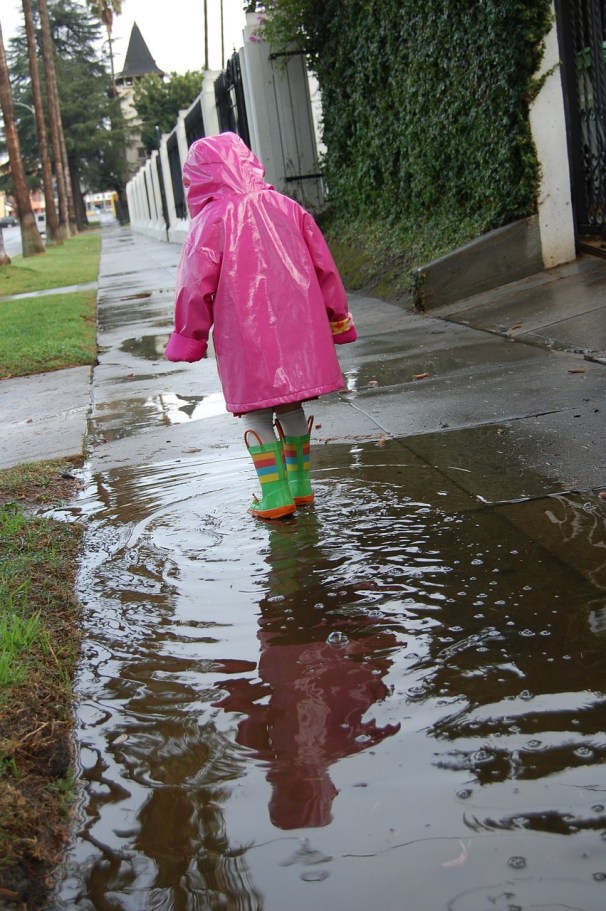
rainboots

It had been raining, and the young man was quite anxious. “It’s raining!” he exclaimed. “Yes, yes it is,” his teacher agreed. Drawing closer, he whispered, “Do I smell like pee?” Backing up, his teacher stared at him. “What are you talking about? Of course not!”

The student went on to explain his thought processes. He fully understood the Water Cycle and its importance to Earth’s replenishing and sustainability of its water sources. Taking it a step further, he reasoned that all the animals urinate outdoors – dogs, cats, horses and cows, bears and raccoons, all the wild birds, even the insects and fish. Well (his eyes widening), all that urine must leach into the soil and evaporate just like water! Which meant it was now returning to earth and raining urine on his head.

Having never thought this through to this degree I stopped to ponder these ideas, searching for merit. His teacher, I might add, did no such thing. She told him the clouds filtered out impurities and the rain was clean and he could retake his seat. He was most relieved. I was impressed at her quick-witted response. This is where the scientist in me gets bogged down. This is why I’d be a lousy teacher.

So, the Water Cycle, in its simplest form, explains how water covers 71 percent of the Earth’s surface. This water cycles through several steps: It evaporates into the atmosphere, where it condenses into droplets that form clouds and later falls back to the earth as precipitation (rain, snow, hail, sleet), which is collected or returned to our oceans, lakes and land.

Next, urine from mammals is composed of about 95-percent water plus some other compounds, including urea. Urea contains nitrogen. This fact is very important to a different science lesson, the Nitrogen Cycle. Nitrogen is necessary for all life as the building block of protein, which both plants and animals need to grow. Nitrogen is the most important nutrient that plants get from the soil. The soil receives this nitrogen in two ways – nitrates come from animal solid waste like manure. From liquid waste like urine comes urea. Another way nitrogen is acquired is through decomposing into the soil.

Birds and reptiles are uricotelic (I wrote this whole story so I could prove I know that word), meaning their urine waste is in the more solid form of urates (that white stuff in the bird’s droppings) than liquid urine. It’s simply how their non-mammalian rudimentary kidneys function.

This is a very long-winded way of explaining that only the water from body wastes can evaporate into the air. All the “impurities” or other compounds are left behind to enrich our soil. Rainwater is essentially distilled water, free from impurities unless it picks up local air pollution/ dust or other debris as it returns as precipitation during the Water Cycle.

This is the most amazing win-win ever! So put on your galoshes and go splash in some puddles!

And have a great day!

Christine McFadden, DVM

Send questions or comments to drmc@mcmenagerie.com.

Cloning

For roughly $50,000 you can clone your favorite dog or cat. Speaking strictly for myself, I was somewhat startled. Are we there already?

Since I’m still sewing up cuts with plain old needle and thread, I find some of this high-tech stuff interesting. And amusing. And disturbing. So while I’m still healing the old fashioned way, somewhere out there veterinarians are offering to clone your pet.

They start with something as simple as a skin biopsy, a little 6 mm circle of tissue taken from your pet and carefully preserved for the genetic material found in its DNA. From this they can replicate the DNA and fuse the sample with an egg. This grows into an embryo that can be implanted into a surrogate mother. Once born you have a “clone” – a pet produced asexually from one ancestor to which they are genetically identical “twins.” A lot of this original work was being done in South Korea. There are now companies based in the United States that also offer either to preserve your pets’ DNA for future cloning or you can order up your very own clone today. In humans, identical twins result from the natural splitting of an egg in utero and both children contain identical DNA genetic makeup. Someone labeled identical twins “natural clones”?! Canine clones appear to have been the most popular pet clones requested by the public in this early work.

There’s a lot to consider here.

Say everything goes smoothly with the pregnancy and your little clone is born. Let’s name her “Clonia.” In the old nature-versus nurture-debate, right from the get-go we may have the same genetic material but it is going to be raised by another mother. That surrogate doggie mom may have been chosen for her availability as a uterus (think “animal shelter rescue”) and may not be particularly personable towards humans. And everyone, mom-dog and puppies, are living in a laboratory setting, not on Grandma’s comforter in your kids’ bedroom closet. So the first six weeks or so are not in a home environment and raise some serious questions about early socialization for the beloved Clonia. From what I could gather, responsible lab researchers provide careful monitoring to rule out abnormalities in the little clones, so many don’t go to their homes until they are several months old. Developmentally, they cannot be properly evaluated until then. This means even more time spent in a laboratory setting, coddled and cossetted, no doubt, for $50,000, but not a home. So when you do bring home your old pets’ genetic double, Clonia may not act exactly the same as her ancestor. Maybe not at all. Nurture versus nature.

And what happens to the mother dog, once she has performed her duties? This issue is clouded by lack of information. Clonia, by the way, cannot be registered with the American Kennel Club, no matter how prestigious her ancestral pedigree. Since the first dog cloned in the United States was born in February 2016, as of this writing, there isn’t a lot of information out there about “identical personalities” to the original pet. Somehow liking to chew up your sneakers or wagging your tail clockwise isn’t enough to convince me that you have reincarnated the original pet. Isn’t that really what this is all about? Clonia may not physically be an identical twin and again, her personality, shaped by very different early experiences, may be substantially different.

There are so many hearts and homes out there looking for each other that I find it hard to recommend seeking love through a clone. Would a clone of Shakespeare, father to twins Hamnet and Judith, still pen his famous works, such as “Romeo and Juliet” wherein he wrote “What’s in a name? that which we call a rose By any other name would smell as sweet.” I suspect that that which we call a dog is each an unique individual and that the search to duplicate your beloved pet by cloning borders on smoke-and-mirrors shell games, not something sweet.

Christine McFadden, DVM

drmc@mcmenagerie.com