The Raw Movement

There has been a call for us to return to the simpler life, back towards the days when all things were more “natural”. Sounds healthier, yes? “Natural equals healthy” they shout. Raw milk for the family and raw meat for the dog. Ummmmmm. Not always. I myself am happy to be the beneficiary of many scientific discoveries. Let’s take a look.

In 1928, Penicillin, the first true antibiotic, was discovered. An antibiotic is a medicine that destroys bacteria and other microorganisms (germs). Prior to that, the average life expectancy for a person was around 48 years of age. Before antibiotics people and animals often died from infection. Childbirth, surgery, and many diseases were often a death sentence because of the attendant infection. In the year 2019, the average person may expect to live until they are 80 years of age. Why the change? In large part, because of the decrease in deaths from infectious diseases. Antibiotics, Vaccinations, Disinfectants and Sterilization, improved hygiene. Thank you, research scientists!

In 1950 over half the American population lived on farms. Over the next 20 years farms and the multi-party line telephone would disappear as young people moved to the cities and family farms consolidated into mega-businesses. Suburbia was born. Also in flux was how we viewed and cared for our pets. There are fewer working dogs today, and their work has evolved from livestock assistance on the farm into service roles, stepping in to assist people with physical or emotional disabilities. Dogs and cats are recognized for the vital role they play in our everyday lives. We want to care for them the very best that we can, and how we feed them has come under scrutiny as we question our own diet.

It’s true that wolves, foxes and other wild canidae eat raw meat. The average life expectancy of a wolf in the wild is 6-8 years. In captivity, a wolf may live 16-18 years. A wild fox may live 2-5 years; captive, 14 years. Wildlife face a host of “natural” hardships: starvation, infection from contagious diseases (no vaccinations!), infection from wounds and parasites. This is life at its most natural. Most pet dog breeds have been domesticated for centuries. Most can expect to live 10-15 years.

It’s interesting to me that the raw food which people purchase to feed their dog is still a processed food (unless you’ve farmed and slaughtered the meat yourself), susceptible to all the bacterial infections they’re supposed to be trying to avoid.  Raw meat can be contaminated by listeria, salmonella, E Coli, campylobacter and more. What is interesting is that the proponents of RAW claim healthier coats or more energy – not a longer life or true overall health. One on-line site stated that a benefit to feeding a raw diet was that you had total control of what was included in your dog’s food – laughable! We are all aware of the food recalls for both human and animal products : listeria in cheese, E coli in spinach, campylobacter in chicken, salmonella and listeria in commercial raw dog foods.

The truth is : Bacteria aren’t going away. Like us, they fight for survival. They mutate and re-form and will turn up again and again. The Center for Disease Control (CDC), our national public health institute in Atlanta, Georgia, has a battalion of researchers and scientists that follow disease trends throughout the United States and around the world. They’re work is to safeguard us – sometimes from ourselves.

When a client requests advice on what to feed their pets I have a stock answer : Go with the tried and true. Go with a company that has been making pet food for decades, with decades of investment into research of breed needs, life stage requirements, and years of following pets to monitor their health, making any necessary adjustments to their foods along the way. They have invested their livelihood in formulating foods to help your pet to thrive. Often there are a variety of choices within each brand, with ingredient modification to meet the financial abilities of the buyer while still providing decent nutrition for the pet. Bon appetit!

Christine B. McFadden, DVM

drmc@mcmenagerie.com
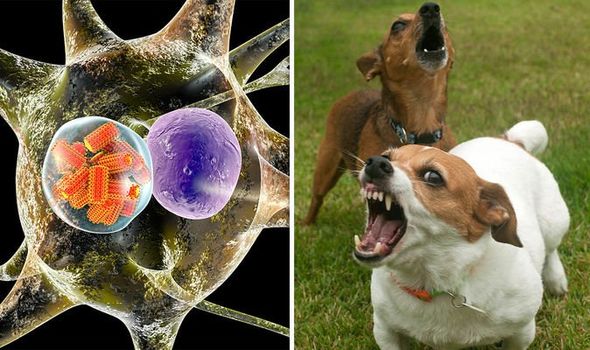
World Rabies Day


Several years ago I wrote an article on Rabies (Merced Sun Star, June 2014), a viral disease carried from animal to animal and sometimes from animal to human. For both animals and humans the disease is considered a death sentence.  I recently came upon a series of articles in a veterinary journal and was sad to learn that the disease is still a serious threat in much of the world and that approximately 60,000 people die from this disease every year. Still.


Why do I take up the story again? Because it deserves to be heard and, most importantly, it is still a threat to you and your loved ones. A very real threat if you enjoy traveling to out-of-the-way places.

Rabies-outbreak-map-rabies-symptoms-rabies-dog-bite-1125644

Rabies is a slow-moving viral disease. It can affect any mammal, but is usually spread from one carnivore to another as the virus is passed in saliva by bites through the skin. Infection after contact with infected saliva on an open wound is a possible, though unlikely, mode of transmission. Once a new victim has been bitten, the virus slowly makes its way into the nerves and through the nervous system to the brain. This can take two weeks to 2 months or longer. By the time the rabies virus is present in the saliva, death is near. It is for this reason that when an unknown dog bites a person the dog will be quarantined for 2 weeks.  Two weeks is long enough to monitor the dog : If rabid, the animal will die. The dog’s brain can then be tested for rabies virus and the bitten person still has ample time to receive the anti-rabies protective vaccine.


Rabies has been found in the wildlife in and around Merced County. It is endemic in area bats, raccoons, skunks and foxes. You, the pet owner, have set up a terrific protective line of defense by the simple stratagem of vaccinating your pet dogs and cats. It is believed that by vaccinating 80% of a populations’ pets an effective barrier is created to protect people against exposure to the disease. In the United States more rabid cats have been reported to the CDC (Center for Disease Control) than dogs for several years. Vaccinate your cats! Vaccinate all dogs and cats older than 3 months of age. Keep them up-to-date.


There are a few island communities which have managed to keep rabies out or eradicate its presence : Hawaii, Great Britain, and Japan are three. You cannot easily take a dog or cat into those Islands. I applaud their high security. The regions most likely to have rabid animals that endanger humans are underdeveloped countries in Asia and Africa.


For the traveler to a foreign country, be aware that the dogs roaming the streets may be high risk for encountering rabies. The unsuspecting traveler may admire a puppy, letting it lick their hands. Food you carry could attract attention from a roving dog. Many of these countries have inadequate medical services for diagnosing rabies or offering post-exposure prophylaxis (prevention/ PEP) services.  Rabies prevention is not universally available. The more exotic your outpost, the higher the risk of encountering rabies. Of the 60,000 people who die every year, nearly every single case (99%) of human death started with a bite from an infected dog.


Whether at home or traveling, camping for a weekend or following your dreams of adventure exploring a foreign land, please take precautions. Enjoy wildlife, but don’t treat or keep wildlife as pets. They cannot be vaccinated against rabies and may have variable incubation times for rabies. Avoid attracting wild life to your home or campsite. Do not feed wildlife. Do not feed your pets outdoors, as this attracts wild life and strays.  Avoid animals acting unnaturally. Animal-proof your trash. Avoid stray dogs and cats. Stray animals may not be vaccinated and they run high risk of exposure and contact with wild animals that might harbor rabies. The message, Backpackers : stay away from unknown dogs and wild life. The life you save might be your own!


World Rabies Day is Thursday, September 28th this year. This day is sponsored by an alliance among the World Health Organization and many other organizations working towards the goal of eradicating Rabies deaths in people and animals by the year 2030. They are joined by the One Health Initiative, a group dedicated to promoting increased communication and joint action between physicians and veterinarians globally through the integration of human medicine, veterinary medicine and environmental science. Rabies is cited as a classic example of what “One Health” is all about, as the control of rabies in animals has reduced the death toll in people from that disease. Together, we CAN make a difference.


Christine B. McFadden, DVM

drmc@mcmenagerie.com

Photo Credit : https://www.express.co.uk