The Parrot Who Ate Caramel Corn / Heart Failure

Unbelievable. If I dared roll my eyes during an interaction with a client, my eyes should have been doing cartwheels during the intake history I was noting on the chart.

My patient, an African Grey Parrot named Joe, was lying face down in his carrier, his beautiful red tail inelegantly dragging in the muck and mire. I was afraid to handle him, for fear it would push him over the brink. As I stalled for time I observed him from a safe distance, thoughts milling through my head. It creates a poor first impression when you touch your patient and he falls over dead.
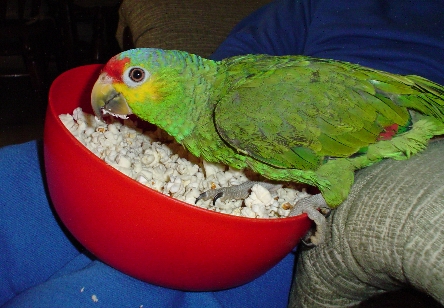
tequilapalomitas.jpg

The question I’d just asked was about his preferred foods. I was secretly hoping to hear that he ate a sunflower seed only diet, because this is the pinnacle of poor nutrition for the average parrot and was quite popular 30 years ago when most birds were imported and went through the rigors of quarantine stations before finding their way into homes. Thousands of parrots seemed to subsist on sunflower seed alone, whose nutritional value, though high in protein and fats, was loathsomely deficient in calcium and other life-sustaining vitamins and nutrients. 

The secret card up my sleeve? African Grey parrots, both the Congo species and their smaller cousins the Tymneh, were unusually susceptible to severe sickness from hypocalcemia. In addition to building strong bones, calcium is needed for all muscle contractions, including the heart muscle, and low calcium led to seizures or tetany and cardiac arrest. The treatment was simply supplying calcium and a little vitamin D to the afflicted parrot and most would turn around. The stuff of miracles and who doesn’t want to see a miracle?

But this woman! What was she saying? Forget seeds. Her bird subsisted on caramel corn? Peanut M&M’s? Pizza? Impossible that this bird could survive the high salts and fats and sugars of this diet! Let alone live to 42 years of age. But here he was. Although, as I knelt to get a closer view, one could not say that he was “living.” Not yet dead was more accurate. Gingerly I opened the cage door and slowly pulled him out. Joe didn’t move. I finally placed my stethoscope to his chest without disturbing his position on the towel. Oh dear. He had a heart murmur and his heart was beating very erratically. Cardiac arrhythmia. His abdomen bulged ominously. A tumor? The case was hopeless. The bird had never been to a veterinarian before and this was clearly too little, too late.

Which I tried to explain to his owner. We could do diagnostic tests, but he might die while we were trying to help him. The tests would be expensive and some would take a day or more to get results. I didn’t think he’d live long enough to find out what was killing him, let alone help him. I hate cases like this.

Joe’s owner requested that we proceed.

We placed him in an oxygen cage. Then, using gas anesthesia, we let him breathe himself into a state of non-painful peace and took x-rays, drew blood, obtained culture samples and tapped his abdomen (abdomenocentesis). No tumor. Joe appeared to be in congestive heart failure. What’s more, he woke up. I had given him several medications while he was still out and he remained on supplemental oxygen. Fast forward 24 hours. Joe is standing, a little wobbly, and has lost 50 grams of retained fluid overnight (10 percent of his entry weight). His blood calcium test is normal. Too weak to eat well on his own, we gavage fed him, using a tube to place baby mush directly into his crop. Fast forward 72 hours. Joe is talking, grooming himself and cracking seed. We take him off oxygen. On Day Five I sit down with his owner and explain that against all odds, her bird is adjusting well to oral medication and can go home. He will need medication the rest of his life. Given the seriousness of his condition, I tell her each day is a blessing. This is good enough for Joe and his owner.

We stayed in touch. Joe continued to improve. On Day 10 his owner happily reported that Joe was eating caramel corn again. Tongue-tied, I pulled back and stared at the phone. Not the goal I had in mind. I kept quiet. It’s been more than one month since I first met Joe. He is doing very well on his heart medications. I may start eating caramel corn myself.

Christine McFadden, DVM

Send questions or comments to drmc@mcmenagerie.com
Egg Bound Bird

When I first fielded the call I wasn’t overly concerned, probably because the caller was about 80 miles away and somebody else’s patient. It’s easy to give telephone advice. I am, in truth, happy to share knowledge that might benefit another veterinarian’s patient as it is by similar sharing that I have been taught how to heal.  So I carefully shared my experiences in Avian Obstetrics and wished all a good outcome. Then I cheerfully went about my own day.

Sometimes that is not the end of the story. Many days later I found myself enmeshed in the case personally. It started out simply enough. A young family owned several parrots. One of them, a delightful little green-cheeked Conure was a clown and gentle enough to tolerate their young toddler. The bird was named Salsa, for her green and red feathers. I say “her” loosely, because most birds in the psittacine or parrot family groups cannot be sexed visually and require a DNA blood test to know whether you have a boy or girl. We used to surgically sex birds years ago, entering the abdomen only on the left side because most birds have one sole functioning ovary, on the left. Males have two testes, located in the same area in the abdomen, in front of the kidneys, tucked up under their protective spine.

So nobody knew if Salsa was a boy or a girl, which hadn’t been very important until the family left for vacation and Salsa became ill.  She began to sit in the corner of the cage bottom, very quietly. Her breathing was fine, and if disturbed she was a little snippy but hopped about brightly. The babysitter noticed that Salsa was straining, maybe trying to poop, and her abdomen seemed distended. A quick trip to her regular veterinarian confirmed that Salsa had an egg stuck inside! (This also confirmed she was a female! Smile).

Welcome to the world of birds and their babies! Remember, birds are not mammals. Any female bird can make an egg, fertilization is not required. Nothing hatches from these eggs. The eggs produced by chickens for grocery store sale I call “baking” eggs, the kind you cook with. The formation of an egg is fascinating. The left ovary is attached to an oviduct, similar to the uterine horn in a dog and cat. The ovum or egg looks like a miniature yolk as it is first released into the oviduct, where it travels to the shell gland or uterus to become coated in calcium carbonate as a hard shell. The whole process takes around 24 hours. Most parrots lay an egg every 2 to 3 days, until they have a full “clutch” which completes their nest. Certain external stimuli such as increased sunlight, warmer temperatures and more food may promote egg production. In a pet bird there is no denying that egg laying can be a risky business.

Sometimes the egg shell is not properly hard, termed a “soft-shelled” egg. This is a warning sign that the bird may be malnourished, particularly deficient in calcium and vitamin D. Birds that live exclusively indoors and on seed diets are at high risk of this type of malnutrition. Calcium is needed not only for strong bones and firm egg shells, but also to produce the muscle contractions that will allow the egg to be laid. First time eggs may be too large to pass easily. Once the egg is stuck, things can go bad very quickly. The egg may be so large to prevent the bird from breathing easily. It may squish the intestines and block passage of fecal matter. The egg may press against the sciatic nerve, causing permanent left leg paralysis. It may lose moisture and become stuck to the tissues of the oviduct, eventually starting an infection that leads to death. Egg binding is a serious medical emergency in birds.

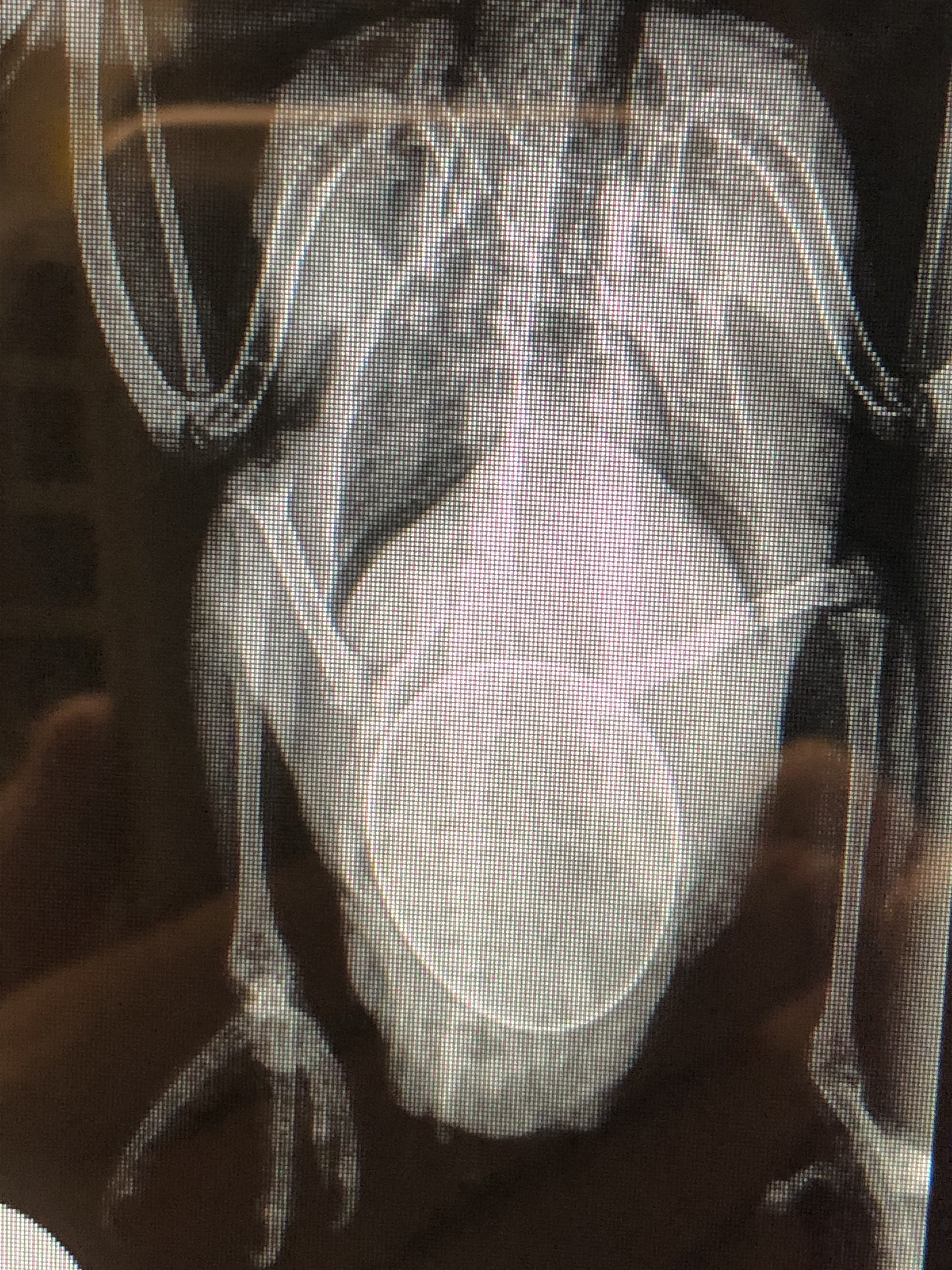
Salsa didn’t have a mate, so we knew this was just an empty egg inside her. Because Salsa couldn’t pass the egg on her own, her veterinarian, very appropriately, anesthetized the little Conure and attempted oocentesis, (don’t you love new words? Pronounce it “oh-oh-sent-e-sis”). A needle is inserted into the egg to withdraw the contents, in an effort to collapse and allow passage of the now much smaller egg. Salsa’s egg collapsed but did not pass. However, she was bright and perky once the pressure in her abdomen was relieved so no one was worried. When the owners returned home Salsa was delighted to see them. Over the next few days they noted, however, that she became increasingly less active, until finally she was sitting at the bottom of her cage again. Which is when she was referred to me, 17 days after becoming egg bound. I started her on antibiotics,  gave her injections of Vitamin D and Calcium, and rehydrated her with fluids before taking her to surgery. I use a surgical laser instead of a “cold steel” scalpel for surgical incisions as there is minimal blood loss. The oviduct with the collapsed egg and a second egg behind it (!) was isolated and carefully removed. The ovary was left in place. Her little abdomen was flushed and sutured up and within 15 minutes Salsa was back in her incubator, recovering from her “spay” surgery. At her recheck two weeks later her family reported that Salsa was back to her old self, all fun and games. She weighed exactly 65 grams on that visit, smaller than a cockatiel. Her diet had been fortified with pellets, fresh fruits, vegetables and a calcium supplement. Salsa celebrated her recovery with a pistachio nut!

****Please note : The images and video used in this post are NOT the same patient being discussed in the ‘Egg Bound Bird’ blog post. In the video, the obstetrical problem was managed medically. This video is shown with permission from the gracious owner of another egg bound patient. The Sun conure in the video is roughly twice the size of the little conure in the story, which required surgical intervention, similar to a C-section and hysterectomy. Now you can have visual aids to go along with the blog!

WARNING THE VIDEO BELOW CONTAINS SENSITIVE MATERIAL THAT MAY BE TOO MUCH FOR SOME TO VIEW.

Christine B. McFadden, DVM
drmc@mcmenagerie.com

Humor On The Job

Dr Mc Blog

May 4, 2014

After years of working together my staff has a few stories to tell.

Like about the crazy cat that bolted from her carrier like a wild thing (“oh, I should have told you she’s never been touched before. We had to put her food in there to catch her….”) and raced across the hospital to seek refuge in the staff break room. And jumped up onto the microwave. Which was in use, warming up some hot cocoa. In her distress the cat released her bladder…which dribbled into the microwave…which smoked and fizzled….and smelled. Probably forever, we don’t really know. We threw it out that very day. Some things you just don’t try to fix. (Except the cat. We “fixed” her. She did great!).

Or the day I gave up Ostrich Practice. Ostriches live in large fields like cows. They aren’t trained to lead on halters, you’re supposed to wait until one comes up to the fence to bite you out of curiosity, grab its’ beak and swiftly pull a cut-off sweatshirt sleeve over their head – once blinded, they won’t move (I’m not kidding. I’ve really done this. Past tense). It was raining and very muddy, and this particular ostrich, though injured from a dog attack and “down”, struggled rather fiercely against the examination so that I had to straddle him for restraint. Among other problems the ostrich had lice and shared some with me. I stopped off at the clinic long enough to glare at my staff, cancel my morning, and go home to clean up. Good news? Lice are “species-specific” parasites, meaning an ostrich louse may be able to run around on a person briefly but it can’t live and breed on you, so once picked off you’re clean. This is true for all types of louse or lice.

Then there was the episode of the Peach Parrot with diarrhea. A Moluccan Cockatoo weighing about 2 ½ pounds, “Peaches” was brought in because of the large puddles of poop she was passing, instead of the neat white and green droppings most birds have. Peaches was droopy and had lost weight, quietly squawking in pain when another puddle flowed out. She was ill enough that we hospitalized her while waiting for some lab test results to come back. Early the next morning I approached my patient in her incubator to see how she had fared overnight. Surprisingly, her bedding was clean. How could her diarrhea have cleared up overnight?  Hmmm. As much as I wish to see a strong response to treatment there was no real way to tell if the diarrhea had improved until I actually saw her droppings. Some birds will not go to the bathroom in their cage and will literally “hold it” until taken out in the morning.  I needed to see her fecal droppings. Hmmm. I examined the incubator floor again, noting a lot of cracked seed shells and some chewed up grapes. What goes in must come out, right? Now, I know a thing or two about birds and I know that most birds will defecate when picked up. So I opened the lid of the incubator, speaking gently to the bird while asking her to perch on my arm. I picked her up. Forgetful that the bird was fully flighted. Bird knew it. Bird took off. Peaches flew straight towards Jillian standing a few feet away. Jillian shrieked and dropped to the ground (anyone remember Alfred Hitchcock’s “The Birds”?). And, OF COURSE the bird flew right to her, landing on her prostrate back as Jillian buried her face in the floor (so the bird couldn’t pick out her eyeballs? Parrots don’t do that!). During the flapping and shrieking I attempted to reassure Jillian by yelling across the space “It’s ok, the bird’s nice!” (she was scaring my patient). Jillian remained (rather rigidly) face down, so I swooped over and re-perched the bird to return her to the incubator. Over my shoulder I heard a staff member assisting Jillian to her feet exclaim “Oh, let me clean that poop off!” I wheeled around and shouted “Wait! I need that!” Faces swiveled and stared at me. Dumbfounded, unbelieving silence. I faced them weakly. “I really need that sample” I begged, sort of inching my way towards the still crouched form of my employee. “Um, thanks” I said as I wielded a tongue depressor to obtain the desired sample.  To this day not a one of them glories in the case assistance given to help this bird. Jillian says she’s forgiven me but I noticed they moved the incubator far away from her work station.

Christine McFadden, DVM

drmc@mcmenagerie.com