The Raw Movement

There has been a call for us to return to the simpler life, back towards the days when all things were more “natural”. Sounds healthier, yes? “Natural equals healthy” they shout. Raw milk for the family and raw meat for the dog. Ummmmmm. Not always. I myself am happy to be the beneficiary of many scientific discoveries. Let’s take a look.

In 1928, Penicillin, the first true antibiotic, was discovered. An antibiotic is a medicine that destroys bacteria and other microorganisms (germs). Prior to that, the average life expectancy for a person was around 48 years of age. Before antibiotics people and animals often died from infection. Childbirth, surgery, and many diseases were often a death sentence because of the attendant infection. In the year 2019, the average person may expect to live until they are 80 years of age. Why the change? In large part, because of the decrease in deaths from infectious diseases. Antibiotics, Vaccinations, Disinfectants and Sterilization, improved hygiene. Thank you, research scientists!

In 1950 over half the American population lived on farms. Over the next 20 years farms and the multi-party line telephone would disappear as young people moved to the cities and family farms consolidated into mega-businesses. Suburbia was born. Also in flux was how we viewed and cared for our pets. There are fewer working dogs today, and their work has evolved from livestock assistance on the farm into service roles, stepping in to assist people with physical or emotional disabilities. Dogs and cats are recognized for the vital role they play in our everyday lives. We want to care for them the very best that we can, and how we feed them has come under scrutiny as we question our own diet.

It’s true that wolves, foxes and other wild canidae eat raw meat. The average life expectancy of a wolf in the wild is 6-8 years. In captivity, a wolf may live 16-18 years. A wild fox may live 2-5 years; captive, 14 years. Wildlife face a host of “natural” hardships: starvation, infection from contagious diseases (no vaccinations!), infection from wounds and parasites. This is life at its most natural. Most pet dog breeds have been domesticated for centuries. Most can expect to live 10-15 years.

It’s interesting to me that the raw food which people purchase to feed their dog is still a processed food (unless you’ve farmed and slaughtered the meat yourself), susceptible to all the bacterial infections they’re supposed to be trying to avoid.  Raw meat can be contaminated by listeria, salmonella, E Coli, campylobacter and more. What is interesting is that the proponents of RAW claim healthier coats or more energy – not a longer life or true overall health. One on-line site stated that a benefit to feeding a raw diet was that you had total control of what was included in your dog’s food – laughable! We are all aware of the food recalls for both human and animal products : listeria in cheese, E coli in spinach, campylobacter in chicken, salmonella and listeria in commercial raw dog foods.

The truth is : Bacteria aren’t going away. Like us, they fight for survival. They mutate and re-form and will turn up again and again. The Center for Disease Control (CDC), our national public health institute in Atlanta, Georgia, has a battalion of researchers and scientists that follow disease trends throughout the United States and around the world. They’re work is to safeguard us – sometimes from ourselves.

When a client requests advice on what to feed their pets I have a stock answer : Go with the tried and true. Go with a company that has been making pet food for decades, with decades of investment into research of breed needs, life stage requirements, and years of following pets to monitor their health, making any necessary adjustments to their foods along the way. They have invested their livelihood in formulating foods to help your pet to thrive. Often there are a variety of choices within each brand, with ingredient modification to meet the financial abilities of the buyer while still providing decent nutrition for the pet. Bon appetit!

Christine B. McFadden, DVM

drmc@mcmenagerie.com
My Husband’s Hospital Vacation

My first indication that text messaging had gone too far in my household was the afternoon I checked my phone and discovered the following message : “Just wanted to let you know. I thought I might be having a heart attack so I checked myself into the hospital.” It had been sent from my husband’s cell phone.


What you need to know were the events preceding this text message. My husband had taken our children skiing two days earlier. On this morning, he had done some moaning and groaning around the house. The problem is, I not only have to get ready for work myself, but I oversee care of the kids, the cats and the chickens before leaving. Getting to school on time is a mountain we climb every day. If it’s not worth opening your mouth to speak up about something, I’m not going to slow down long enough to start an inquiry. He knows where to find his Advil.


I confess I felt more irritation than anxiety when I read the message. Really? I’d had a full day and no lunch up to that point. So I called him. He answered. He sounded cheerful. Enough hours had passed before I’d discovered his message that he could assure me that his chest x-rays, his blood tests and his EKG were all normal and he wasn’t having a heart attack. So why are you still there? I reasoned. Well, he rambled on, this doesn’t explain the pain. “What about arthritis?” I asked. Oh no, he assured me, I’ve never had arthritis here. It’s on my right side. I was driving myself to the golf course and felt pain in my right arm, so I pulled over and googled heart attacks. It said they would be on the left side, but I thought I should be sure. They’re going to run another test to see if I have blood clots. If it’s abnormal, I’ll stay for a CT scan.


OK, honey. I returned to my own patients. There was a cat that had been tumbled in the dryer for 7 minutes. She appeared dazed, with tiny bruises starting to appear on her skin where patches of fur were missing. She was a lucky cat; only last month, another cat had actually died in a similar accident. We began treatment for shock and started the cat on IV fluids.


It was closing time when my husband called. My test is abnormal, he said. “What’s the name of that test, hon?” D-Dimer. We use the D-dimer test in veterinary medicine. Platelets, the cells that help blood coagulate or clot so you don’t bleed out, will slowly break down after they’ve served their purpose. If your body is forming big blood clots where it shouldn’t, the by-product of platelet breakdown will be very high in the blood stream. The D-dimer test measures this level.


For a variety of reasons, I didn’t believe it. So while getting the kids squared away I researched the normal blood levels for humans. Armed with this info, I went down to visit my husband in the ER. He looked remarkably fit. In fact, he wasn’t feeling any pain, though he’d not been given any medication. I asked his nurse for the actual number on his D-dimer test. It was less than 200. I stared at the nurse. “But that’s normal”. Yes, the nurse agreed. I stared at my husband. “Who told you it was abnormal?” He frowned, concentrating. He wasn’t sure (What else did he have to do?). About then they came to wheel him down for his CT scan. They said it would be read that night. Forgive me my skepticism, but having assured myself that my husband was doing very well, I kissed him and told him to enjoy his scan. At this point I reflected that if they did find something wrong with him, it would not be what he’d gone in for. I slept poorly (despite my brave front). At 2:20 in the morning (5 hours later) my husband sent a text message that he had completed his CT scan but it wouldn’t be read until the next day.


I visited him on my way to work the next morning. He was cheerful and even complimentary on the hospital breakfast. They were going to run some more blood tests. I left him to it.


At work, my own patients were well. My dryer tumbled cat looked much better and was enjoying a hearty breakfast herself. Her bloodwork was excellent. By early afternoon I was discharging my patient to her ecstatic owner. Back at the human hospital, my husband had been leaked the information that he had a “non-displaced hairline fracture in his right rib”. My husband was now being offered an echocardiogram and had begun to call me every hour or so. I told him if he couldn’t relieve the babysitter by 3:30 to let me know. If he wanted to stay another night in the hospital that was on him. I was worn out.


Once he knew it was just a cracked rib, my husband felt lots better. I arrived home that night to find he had invited several people to dinner and cooked up a storm. Even better, he could go on his golf vacation next week.


I am SO grateful my patients can’t talk!


Christine B. McFadden, DVM

drmc@mcmenagerie.com
Castor the Police Dog

There are many fine working dogs out there – cattle and sheep dogs, Guide Dogs for the Blind, Special needs assistance dogs, Bomb and Drug dogs, and perhaps one of the finest working groups, the Working Police Dog, or K-9 Cops, complete with their own badge. Hired on by Police and Sheriff departments nationwide, they are largely made up of German Shephard and Belgian Malinois breeds. I have had the honor of working with these dogs for over 30 years. Both local Police Department and Sheriff’s Departments have working dogs, used on the SWAT team, for school protection, building searches, drug deals and of course, criminal apprehension.

Astor was a beautiful sable shepherd. High strung, as so many of these dogs need to be to perform their job, ever alert, he suffered from stomach issues, and his spleen would swell to enormous proportions. We had just gotten in 4 new dogs at the Police Department, and one had already been rejected for a permanent lameness in the right shoulder and returned to the seller. This was at great expense and nerve wracking for the new program. To have problems with another dog was near unbearable. I said he needed to have surgery, to biopsy the intestine and spleen. It was late in the day when his handler came down to visit him in recovery. Though the individual police departments own the dogs, it is their Peace Officer Handlers that live with the dog and develop an intense bond. These dogs – and their handlers – were new to me and I knew very little about them. I was ignorant that even off duty an officer is expected to be prepared to respond to an emergency, so when the handler bent over in post op to greet his dog, I was most startled to note a gun in his waistband! I wondered if he’d planned to shoot me if the surgery hadn’t gone well! (He said no).

Most of the dogs have German names, as many were and still are imported from Germany. Their commands are given in the German Schitzhund or obedience training language. Handlers lucky enough to be assigned a partnership with one of these dogs will spend weeks learning the cues and training required while forming a deep bond. You see, these dogs can go where a person cannot. These dogs serve as the first line of defense when things go bad. No one wants to lose a dog – but better the dog than a Peace Officer. The K-9 Cop can mark a perpetrator in a crowd and run him (or her) down. Once the fleeing person stops, they will stand still, not biting unless the person resists and provokes a bite. They can be sent into buildings with cameras on their backs to locate the offender. They can smell or hear where someone is hidden.

Castor was a Malinois from the Sheriff’s Department. He passed away naturally some years ago. A very “sharp” dog, he was a holy terror when he came into our clinic. He growled at all the staff. He was not walked during his brief stays, as we customarily do with all boarding pets. Except….Castor loved me. There was no rhyme nor reason to it. I poked him with needles, gave shots, drew blood. No problem. At first I wondered if I resembled the handler’s wife, but once I met her, blonde, petite, beautiful, sadly I knew that I did not. Whatever the reason, I was grateful. Castor had many arrests to his name, but my favorite story was the guy swimming in the canal to elude capture. His handler sent the dog, knowing if the guy made it to the far bank he might get away. The criminal decided to drown the dog. Castor took matters into his own hands, simply wrapping his jaws around the only body part he could reach – his neck. The man surrendered.

In the United States Air Force, fighter pilots are accompanied by a “Wingman”, another fighter plane which flies off the right wing and just behind the lead, whose job is primarily to protect the lead by “watching his back”. Our Canine Corps of Peace Officers serve as “Wingman” to the officers they shadow.  May we be humbled by their gifts and grateful for their service.

Well your cat doesn’t have lice, but…

It is remarkable what word associations may trip in your brain.

Someone was talking about head lice in children the other day and I found myself mulling over my encounters with the louse, an ectoparsite (“ecto” pertaining to bugs found crawling around on the outside of the body, as opposed to those living in your intestine, lungs, blood or brains, which would be “endo”parasites and even scarier). Infestations with lice are called “pediculosis.”

I have had the possibly unique experience, compared to the average person, of contracting a brief case of horse lice and another of ostrich lice. In my line of work I have also been called upon to identify and treat lice on chickens, pigeons and guinea pigs. Probably the lice on the ostrich and that of the other birds was the same stuff – namely, avian lice, but I’ve never researched it at any length to determine if they might have been different between KINDS of birds. My sole concern was how to get rid of the pests. My methods have been successful for my patients.

The big message I wish to convey is that all lice are “species-specific.” What this means is that a bird louse can only live and multiply on other birds-of-a-feather. An equine louse can only thrive on horses or other equus species. Sure, they may jump onto another creature, an example being the veterinary student trimming the horse’s hooves with her head buried in its flank – but apart from running around for a few riotous minutes, once scraped off, they are of no further concern to a different species. Period. Bird lice can’t live on people, horse lice can’t live on people. Bird lice can’t live on horses. I know, I’ve tested this theory! I was not a willing participant, but I will bear witness that indeed, the louse of one kind of animal cannot live on another species. Species-specific! Promise! Big sigh of relief.

Many years ago I encountered the only case of lice I have ever seen in a cat. Her owner dropped her cat off in the morning on her way to work, stating that the cat had “bugs” and for heaven’s sake fix it because the cat slept with her.

Lice can often be seen with the naked eye and I quickly found a few on this black cat. Ensnared on some scotch tape, I examined the sample under the microscope. This was more than 25 years ago. There was no Internet to speak of, no cell phones, no Google or other search engines.

What I had was good old text books, several devoted strictly to the parasites of animals. And what showed up on the microscope didn’t look like any lice I recognized. Odd. Searching my books, I came across a photo demonstrating the finer points of the human head louse. I called Public Health. I called the owner, hesitating to discuss my findings. How to delicately convey that her cat was fine.

She was horrified. Turned out she taught first graders and there was a notice circulating that a head lice problem had cropped up in class. She realized that she had contracted it from her student and brought head lice home. I gave the cat a medicated bath, which cured the cat. And although this was one louse I avoided, it made my head itch every time I thought about it!

Christine McFadden holds a license to practice veterinary medicine and surgery. She has cared for the family pets of Merced at Valley Animal Hospital for more than 30 years. Send questions or comments to drmc@mcmenagerie.com.

A Border Collie called ‘Dunkin’

The afternoon was humming along as I made my way from one exam room to the next. Behind Door No. 1 was a kitten with a snotty nose. Behind Door No. 2 was a tiny parrot with a broken leg. And behind Door No. 3 there was Dunkin.

Dunkin (not, his owner assured me, named after the doughnut store) was a gorgeous Border Collie, marked with crisp whites blending beautifully into black highlights. Not quite yet a year old, both he and his owner appraised me as I entered. I greeted them and settled in to hear the story behind their unexpected visit.

Dunkin and his owner had been playing a game of fetch. Lithe, athletic, I could see the dog in my mind making a fantastic leap into the air to grab the flying stick. Nothing is more beautiful to me than a good athlete at the top of their game. Only when Dunkin caught the stick he’d made an odd sound, and blood had trickled out of his mouth. They had come straight away to the vet clinic.

I first performed a full physical exam, then gently asked Dunkin if I could look into the back of his mouth. Say what you will, politeness counts with dogs who have been taught manners. Sure enough, way back, I could see a bruised area, though not terribly well. I asked his owner for permission to anesthetize Dunkin for a full exam of the back of his throat.

On the surgery table, Dunkin lay in a deep, non-painful sleep. He was intubated and his heart rate and blood-oxygenation levels were excellent. We examined teeth, gums and around his tongue. All fine. Farther back, I could see the source of blood coming from his right tonsil area. It looked odd. Stretching out his neck, I could see the tonsillar crypt, a pouch-like indentation in the back of the throat, behind the base of the tongue. Something that looked like a fuzzy caterpillar was suspended below the purple, bruised and bloody hole. Momentarily puzzled, I examined his left side, where both tonsillar crypt and tonsil were intact and a normal glossy pink. Wow! The stick that Dunkin caught had sheared off his right tonsil in a near perfect excision. It hung on by a tattered shred. There was no question of reattaching it, so I completed the tonsillectomy and sutured the battered crypt back together. Some antibiotics, some anti-inflammatory and pain medications and Dunkin was set to go.

And go he did. I followed up with Dunkin about two weeks later and he sat perfectly still as I examined the back of his throat. He had healed beautifully. His owner reported that she had stopped tossing sticks for him but it seemed hopeless – if she wouldn’t play, Dunkin would happily toss a stick as high into the air as he could and then leap joyfully after it! You just can’t keep a good dog down!

Christine McFadden holds a license to practice veterinary medicine and surgery. She has cared for the family pets of Merced at Valley Animal Hospital for more than 30 years. Send questions or comments to drmc@mcmenagerie.com

Adam’s Rib

So our school held a softball banquet for the team. Parents were asked to provide potluck. We brought ribs. Which somehow reminded a physician friend of her med-school days and the particular anatomy class when one of her classmates suddenly realized that both male and female human beings had the same number of rib bones. Every time. He counted. He was so distraught that he had to leave the classroom. How to account for Adam’s rib?

That story put me in fine mood to remember another story which I read in a sort of can-you-believe–this column written by veterinarians for other veterinarians.

An elderly client was bereft when her cat went missing. After several months passed, she showed up at her vet’s office grinning from ear to ear, delighted to have recovered “Tiger.” The veterinarian exhibited great delicacy and restraint, gently pointing out that this couldn’t be her long lost Tiger, because her cat had been an orange tabby and this one was a black tabby. Her Tiger was an old cat and this cat was much younger, which he could tell by looking at the cat’s teeth. The woman countered his remarks with comments of being in the sun and the dental benefits of hunting mice for a living. Triumphantly, the veterinarian pointed out that this clearly wasn’t Tiger, because Tiger had been neutered and this one was an intact tomcat! His client nodded back at him, flashing a brilliant smile as she indulgently explained what had happened. Tiger had always liked to sleep on top of the television set. (Note: This story is way before “flat screen” TV’s. I suspect it had “tubes” in it and bunny ear antennae for reception, not digital mother boards. The tops of these TVs were broad and flat and warmed up nicely after a little use. Perfect for napping cats.) There was a Christian evangelist she especially enjoyed watching. She suspected that Tiger had never really liked having that neuter surgery done, and she believed his prayers were answered as he lay on top of her TV, listening to the Word of God. So, she shrugged happily, they just regrew.

Like the client who brought their mother dog into me a couple of weeks after a C-section delivery of her puppies. Her pups were doing well and, they assured me, they had been very happy with my services and skillful surgery. But, and here they paused, glancing at each other, but, Doc, you missed a puppy. I was extremely puzzled myself. This was impossible, as after delivering the puppies I had proceeded to perform an ovariohysterectomy, or spay, so had not left any reproductive tissue behind. They plopped their dog on the table and turned her onto her side, revealing a large, engorged and rather angry breast that was inflamed with infection, called mastitis. In size and shape it did look about the size of one of her newborn puppies. They believed that this “puppy” had slipped through the belly button into her breast! Only their sincerity and kindness saved my composure, as I explained what was happening and how glad I was to be able to treat the mastitis, an infection that can quickly turn ugly and is very painful.

I care for pets belonging to people from all walks of life. They come from a variety of faiths. It is humbling to be allowed to be a partner in the caregiving for their beloved pets. I do not presume to explain the myriad mysteries found in daily life. There is an art and a science to medicine. Scientifically, I know that once neutered, a cat stays neutered. I know that wasn’t the original Tiger. But I do believe in miracles. Why not?

Christine McFadden, DVM

drmc@mcmenagerie.com

The Water Cycle

Kids say the darndest things! This year “The Water Cycle” is being taught in Science at the high school, which came to my attention when a story was relayed to me the other night.

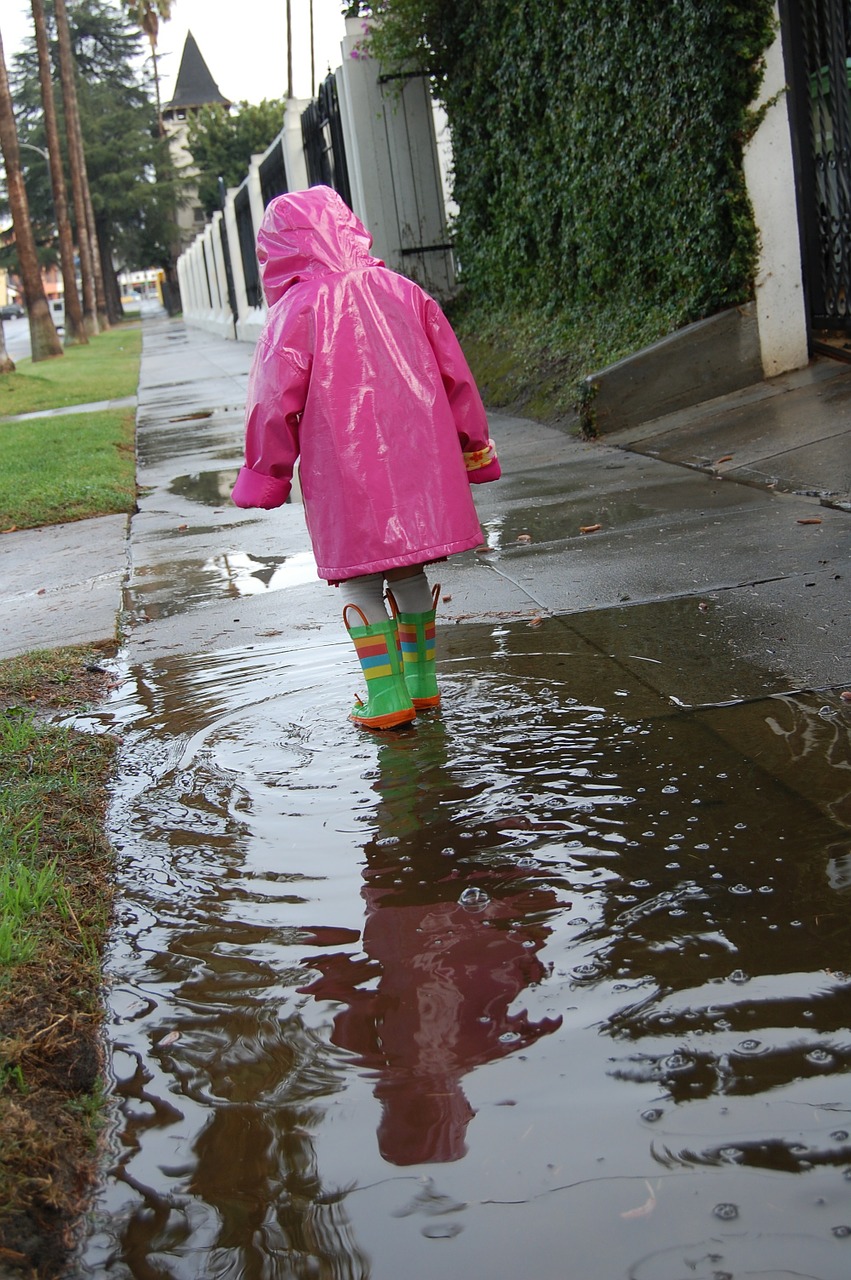
rainboots

It had been raining, and the young man was quite anxious. “It’s raining!” he exclaimed. “Yes, yes it is,” his teacher agreed. Drawing closer, he whispered, “Do I smell like pee?” Backing up, his teacher stared at him. “What are you talking about? Of course not!”

The student went on to explain his thought processes. He fully understood the Water Cycle and its importance to Earth’s replenishing and sustainability of its water sources. Taking it a step further, he reasoned that all the animals urinate outdoors – dogs, cats, horses and cows, bears and raccoons, all the wild birds, even the insects and fish. Well (his eyes widening), all that urine must leach into the soil and evaporate just like water! Which meant it was now returning to earth and raining urine on his head.

Having never thought this through to this degree I stopped to ponder these ideas, searching for merit. His teacher, I might add, did no such thing. She told him the clouds filtered out impurities and the rain was clean and he could retake his seat. He was most relieved. I was impressed at her quick-witted response. This is where the scientist in me gets bogged down. This is why I’d be a lousy teacher.

So, the Water Cycle, in its simplest form, explains how water covers 71 percent of the Earth’s surface. This water cycles through several steps: It evaporates into the atmosphere, where it condenses into droplets that form clouds and later falls back to the earth as precipitation (rain, snow, hail, sleet), which is collected or returned to our oceans, lakes and land.

Next, urine from mammals is composed of about 95-percent water plus some other compounds, including urea. Urea contains nitrogen. This fact is very important to a different science lesson, the Nitrogen Cycle. Nitrogen is necessary for all life as the building block of protein, which both plants and animals need to grow. Nitrogen is the most important nutrient that plants get from the soil. The soil receives this nitrogen in two ways – nitrates come from animal solid waste like manure. From liquid waste like urine comes urea. Another way nitrogen is acquired is through decomposing into the soil.

Birds and reptiles are uricotelic (I wrote this whole story so I could prove I know that word), meaning their urine waste is in the more solid form of urates (that white stuff in the bird’s droppings) than liquid urine. It’s simply how their non-mammalian rudimentary kidneys function.

This is a very long-winded way of explaining that only the water from body wastes can evaporate into the air. All the “impurities” or other compounds are left behind to enrich our soil. Rainwater is essentially distilled water, free from impurities unless it picks up local air pollution/ dust or other debris as it returns as precipitation during the Water Cycle.

This is the most amazing win-win ever! So put on your galoshes and go splash in some puddles!

And have a great day!

Christine McFadden, DVM

Send questions or comments to drmc@mcmenagerie.com.

Cloning

For roughly $50,000 you can clone your favorite dog or cat. Speaking strictly for myself, I was somewhat startled. Are we there already?

Since I’m still sewing up cuts with plain old needle and thread, I find some of this high-tech stuff interesting. And amusing. And disturbing. So while I’m still healing the old fashioned way, somewhere out there veterinarians are offering to clone your pet.

They start with something as simple as a skin biopsy, a little 6 mm circle of tissue taken from your pet and carefully preserved for the genetic material found in its DNA. From this they can replicate the DNA and fuse the sample with an egg. This grows into an embryo that can be implanted into a surrogate mother. Once born you have a “clone” – a pet produced asexually from one ancestor to which they are genetically identical “twins.” A lot of this original work was being done in South Korea. There are now companies based in the United States that also offer either to preserve your pets’ DNA for future cloning or you can order up your very own clone today. In humans, identical twins result from the natural splitting of an egg in utero and both children contain identical DNA genetic makeup. Someone labeled identical twins “natural clones”?! Canine clones appear to have been the most popular pet clones requested by the public in this early work.

There’s a lot to consider here.

Say everything goes smoothly with the pregnancy and your little clone is born. Let’s name her “Clonia.” In the old nature-versus nurture-debate, right from the get-go we may have the same genetic material but it is going to be raised by another mother. That surrogate doggie mom may have been chosen for her availability as a uterus (think “animal shelter rescue”) and may not be particularly personable towards humans. And everyone, mom-dog and puppies, are living in a laboratory setting, not on Grandma’s comforter in your kids’ bedroom closet. So the first six weeks or so are not in a home environment and raise some serious questions about early socialization for the beloved Clonia. From what I could gather, responsible lab researchers provide careful monitoring to rule out abnormalities in the little clones, so many don’t go to their homes until they are several months old. Developmentally, they cannot be properly evaluated until then. This means even more time spent in a laboratory setting, coddled and cossetted, no doubt, for $50,000, but not a home. So when you do bring home your old pets’ genetic double, Clonia may not act exactly the same as her ancestor. Maybe not at all. Nurture versus nature.

And what happens to the mother dog, once she has performed her duties? This issue is clouded by lack of information. Clonia, by the way, cannot be registered with the American Kennel Club, no matter how prestigious her ancestral pedigree. Since the first dog cloned in the United States was born in February 2016, as of this writing, there isn’t a lot of information out there about “identical personalities” to the original pet. Somehow liking to chew up your sneakers or wagging your tail clockwise isn’t enough to convince me that you have reincarnated the original pet. Isn’t that really what this is all about? Clonia may not physically be an identical twin and again, her personality, shaped by very different early experiences, may be substantially different.

There are so many hearts and homes out there looking for each other that I find it hard to recommend seeking love through a clone. Would a clone of Shakespeare, father to twins Hamnet and Judith, still pen his famous works, such as “Romeo and Juliet” wherein he wrote “What’s in a name? that which we call a rose By any other name would smell as sweet.” I suspect that that which we call a dog is each an unique individual and that the search to duplicate your beloved pet by cloning borders on smoke-and-mirrors shell games, not something sweet.

Christine McFadden, DVM

drmc@mcmenagerie.com

World Rabies Day


Several years ago I wrote an article on Rabies (Merced Sun Star, June 2014), a viral disease carried from animal to animal and sometimes from animal to human. For both animals and humans the disease is considered a death sentence.  I recently came upon a series of articles in a veterinary journal and was sad to learn that the disease is still a serious threat in much of the world and that approximately 60,000 people die from this disease every year. Still.


Why do I take up the story again? Because it deserves to be heard and, most importantly, it is still a threat to you and your loved ones. A very real threat if you enjoy traveling to out-of-the-way places.

Rabies-outbreak-map-rabies-symptoms-rabies-dog-bite-1125644

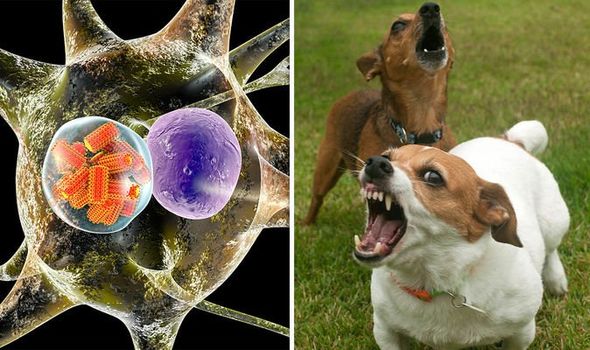
Rabies is a slow-moving viral disease. It can affect any mammal, but is usually spread from one carnivore to another as the virus is passed in saliva by bites through the skin. Infection after contact with infected saliva on an open wound is a possible, though unlikely, mode of transmission. Once a new victim has been bitten, the virus slowly makes its way into the nerves and through the nervous system to the brain. This can take two weeks to 2 months or longer. By the time the rabies virus is present in the saliva, death is near. It is for this reason that when an unknown dog bites a person the dog will be quarantined for 2 weeks.  Two weeks is long enough to monitor the dog : If rabid, the animal will die. The dog’s brain can then be tested for rabies virus and the bitten person still has ample time to receive the anti-rabies protective vaccine.


Rabies has been found in the wildlife in and around Merced County. It is endemic in area bats, raccoons, skunks and foxes. You, the pet owner, have set up a terrific protective line of defense by the simple stratagem of vaccinating your pet dogs and cats. It is believed that by vaccinating 80% of a populations’ pets an effective barrier is created to protect people against exposure to the disease. In the United States more rabid cats have been reported to the CDC (Center for Disease Control) than dogs for several years. Vaccinate your cats! Vaccinate all dogs and cats older than 3 months of age. Keep them up-to-date.


There are a few island communities which have managed to keep rabies out or eradicate its presence : Hawaii, Great Britain, and Japan are three. You cannot easily take a dog or cat into those Islands. I applaud their high security. The regions most likely to have rabid animals that endanger humans are underdeveloped countries in Asia and Africa.


For the traveler to a foreign country, be aware that the dogs roaming the streets may be high risk for encountering rabies. The unsuspecting traveler may admire a puppy, letting it lick their hands. Food you carry could attract attention from a roving dog. Many of these countries have inadequate medical services for diagnosing rabies or offering post-exposure prophylaxis (prevention/ PEP) services.  Rabies prevention is not universally available. The more exotic your outpost, the higher the risk of encountering rabies. Of the 60,000 people who die every year, nearly every single case (99%) of human death started with a bite from an infected dog.


Whether at home or traveling, camping for a weekend or following your dreams of adventure exploring a foreign land, please take precautions. Enjoy wildlife, but don’t treat or keep wildlife as pets. They cannot be vaccinated against rabies and may have variable incubation times for rabies. Avoid attracting wild life to your home or campsite. Do not feed wildlife. Do not feed your pets outdoors, as this attracts wild life and strays.  Avoid animals acting unnaturally. Animal-proof your trash. Avoid stray dogs and cats. Stray animals may not be vaccinated and they run high risk of exposure and contact with wild animals that might harbor rabies. The message, Backpackers : stay away from unknown dogs and wild life. The life you save might be your own!


World Rabies Day is Thursday, September 28th this year. This day is sponsored by an alliance among the World Health Organization and many other organizations working towards the goal of eradicating Rabies deaths in people and animals by the year 2030. They are joined by the One Health Initiative, a group dedicated to promoting increased communication and joint action between physicians and veterinarians globally through the integration of human medicine, veterinary medicine and environmental science. Rabies is cited as a classic example of what “One Health” is all about, as the control of rabies in animals has reduced the death toll in people from that disease. Together, we CAN make a difference.


Christine B. McFadden, DVM

drmc@mcmenagerie.com

Photo Credit : https://www.express.co.uk

The Large Animal Vet


Perhaps the title sounds misleading. A “large animal” vet develops a veterinary practice caring for the needs of livestock such as cattle (dairy or beef), sheep, goats and pigs. A “small animal” veterinarian like me is usually slotted into the care of companion pets such as dogs and cats. So when I examine a 200 pound dog, it is still a small animal and likewise there is often confusion about whom to call when the patient is a pot-belly/miniature pig. Not me.


The life of a small animal vet and that of a large animal practitioner are markedly different. One works almost exclusively indoors, dressed neatly, white coat in place. The other weathers life outdoors, facing extremes of blazing heat to icy cold, rain and snow. One always has a sink handy to tidy up. The other uses outdoor hoses more than they’d like. A dairy vet may check over 100 head of cattle in a morning and four “farm calls” make a full day. A small animal vet may follow the medical strands of more than 25 patients a day, winding through exams, blood results, x-rays and working in a surgery or two.  All juggle the demands of unexpected emergency work.


Being in an office most of the day, I rarely interact with my brother and sister large animal veterinarians. So when the pygmy goat from the petting zoo fell over dead I was unhappy, but proceeded to perform a post-mortem examination and sent tissue samples off to our regular lab. I had overseen the care of these goats for many years, but they were on the back burner when it came to my interest in the truly exotic Zoo collection. My concerns centered on whether or not the public might have fed something odd to the goat? (I’ll jump ahead here : No. The public did not harm the goat). I mulled over the problem but prepared to wait until the pathology report was finished sometime in the next week. And then another goat died.


I was unnerved. The goats were being closely watched and none had shown any outward signs of sickness. They had all lived for more than 8 years at the Zoo and had never, collectively, suffered a single injury amongst themselves. I immediately sought the expertise of a Large Animal veterinarian. The Goat Expert was on a dairy farm. The return call came in as I was finishing one surgery and about to start another. Gloves still on, I was staring at some x-rays

in-between these surgeries when they told me they had Dr. B on the line. Multi-tasking at its best.


I hurried over, snapping gloves into the waste receptacle and grabbing pen and paper. I introduced myself and LAUNCHED into a recital of my goat woes. I verified that he had goat experience? Yes. I gave him dates, genders, date of deaths, lack of lab results, still pending. I drew breath to spew forth another list of details and heard him gently respond, “Yes…. I think…. I might be able…. to help”. His measured tones were from a man used to the gentle rhythms of milking machines, contented cows swishing their tails, chewing their cuds. Da-dum da-dum to my staccato dop-dop-dop-dop-dop! I managed to squeeze in a few more hurried sentences (surgery! Waiting!) before he responded calmly, “I think I drive past your practice on my way up from this dairy….”. I opened my mouth. Closed my mouth. I could hear the clouds, feel the sunshine, almost see the shining black and white hides of the gentle Holsteins he surveyed as we spoke. It was all there in the rhythm of his speech. I told myself to stop yapping before he decided my goat problem would be too stressful for him to bother with.


An hour later Dr. Thomas Bauman drove up in a large truck outfitted for all manner of veterinary ministrations. He spent an hour and a half doing a post-mortem on one goat. He had a wicked knife and mulled over the cause of sand in the stomach. He felt it was too much. Did we feed on the ground? No. But little kids feed the Zoo goats oat hay pellets and they often dropped to the sand, with all the goats scrambling to get their share. Hmmm. He gave the problem his full attention and we submitted a gazillion samples to the State Lab, including an intact eyeball because it would be useful for trace metal analyses. The final answer was a copper deficiency in the feed, to which Pygmy goats are especially susceptible. Hay grown in the San Joaquin Valley is often deficient in copper. The salt lick fed at the Zoo did not have added copper because Alpacas are in with the goats and they are susceptible to copper toxicity (too much) if supplemented. So we now feed our goats little capsules of copper wire every six months and all is good. But sometimes I find myself wishing that I was a Large Animal veterinarian. Just so I could slow down and smell the …..never mind.


Christine B. McFadden, DVM

drmc@mcmenagerie.com