KCS or Dry Eye

Dr Mc Blog


November 16, 2015
His name was Chipotle. A mismatch for a name if ever I saw one. The timid salt-and-pepper curly coated little Shih Tzu weighed in under 20 pounds and his tail trailed after him over the floor as he puttered around the exam room. Happily I noted that he wasn’t sweeping up any dust balls. There was nothing of a fiery chili pepper about him and I wondered briefly how he got his name. Then he looked up at me. Oh dear. Under long eyelashes I could only see matted hair and mucous covering what should have been his luminous eyes.

I scooped him up and brought him closer to me on the exam table. He stood quietly, the little feather duster tail wagging slowly as he gazed blindly up at me. Both eyes were covered by a sticky, thick layer of mucoid film, which covered a thick coat of brown pigment overlying the corneas. The whites of his eyes were streaked red from inflammation. They looked very painful. Chipotle cocked his head as I bent over him, using an ophthalmoscope (kind of a fancy flashlight) attempting in vain to penetrate deep into the back, or fundus of his eye, where the optic nerve is. But the pigment was so thick over his eyes that I couldn’t see more deeply.

I finished his examination, noting that he also had a chronic ear infection but that over-all he was in good shape, with an excellent weight and coat. I turned to his owner, an earnest man who had recently relocated to our town and was very anxious to find out what was wrong with his dog. To my surprise, he had actually been treating the dog with a prescribed medication. The owner knew it wasn’t working. He had been using it for so long I wasn’t sure if the original problems with the dog’s eye condition might have started out as something else and now changed. Certainly this medication was not effective.

I explained to Chipotle’s owner my thoughts about his eye lesions and discussed the diagnostic tests we needed to perform. First on my list was a Schirmer tear test. Special tiny strips of sterile absorbent paper are gently placed just inside the eyelid for 60 seconds. The paper wicks up the liquid in the pet’s tears. The strips are measured in millimeters, already marked on the strips. Anything over 15 millimeters in 60 seconds is normal. Anything less than 10 mm is suspect for a condition called “Dry Eye” or Keratoconjunctivitis sicca (KCS).

KCS is a horrible condition. For reasons often unknown, frequently ascribed to a problem with the immune system, the dog’s eyes have stopped producing tears from the lacrimal glands. In normal eyes, every time a pet blinks the surface of the eye, the cornea, is covered by a thin film of tears that keeps the cornea moist. Without tears the cornea dries up. Ulcers or holes in the corneal surface may occur. Over time brown pigment covers the dried cornea and that thick ropey mucous appears. The dog will go blind. Every bit of this process is extremely painful.

Chipotle flunked his Schirmer’s tear test. His right eye had a score of 2 mm, his left zero. We also ran a blood panel to rule out immune associated disorders like thyroid disease, diabetes mellitus, lupus and other diseases. Chipotle’s blood tests did not show a clear cause for his KCS.

The recommendations for Chipotle were to clean his eyes of the thick mucous at least twice a day with a sterile saline solution, found in over-the-counter contact lens cleaning products. This would allow his topical eye medications specific for KCS to penetrate better. There are at least two medications used to stimulate tear production in the dog (sadly, they are not terribly effective for the rare cats who develop this disease) : cyclosporine and tacrolimus. Both require twice daily application for the rest of the dog’s life. Eye infections, ulcers or other secondary corneal diseases may require additional topical medications. It’s a daunting prospect to face the requirement to treat your dog twice daily, every day, forever – or he’ll go blind.

Chipotle’s owner was committed to his little dog, but seemed apprehensive about actually using the medication. “He’s mean”, he said. Huh? This little droopy dog? Since I do this for a living I offered to demonstrate how to apply the medication. Which was the precise moment that Chipotle earned his name, as he came to life with a fierce burst of barks. Fiery indeed! Shih Tzu’s are blessed with small, rounded teeth and I’d be pretty embarrassed to be bitten by one (did I put that in writing?). It wasn’t too hard to devise a treatment method and off they went. On recheck 4 weeks later I was startled by the transformation in this little dog! His corneas were still covered by the brown pigment, though that would thin over the coming year, but the mucous was gone. His Tear test was over 15 mm in both eyes. Clearly the pain was gone, as Chipotle bounced all over the room, tail swishing wildly. Most miraculous of all, his bad temper at home about “medicine time” was gone and his owner confirmed that he had his “old dog back”.

Christine B. McFadden, DVM
drmc@mcmenagerie.com
 

Atresia Ani and Medical Jargon

Dr Mc Blog


October 27, 2015
They say communication is the key to understanding. Hmph! Many years ago I was in conversation with a Southern grandmother. “I like Datsuns”, she told me. Encouraged by this opening, I nodded in agreement, saying that I believed both the Datsun and Toyota cars to be very dependable. Warming to the subject, I began to share a story about my Aunt Bea’s wonderful little car when the woman interrupted me, frowning. “I was talkin’ about Datsun DOGS”! There was a beat of silence. “Oh, oh, of course, Dachshunds!” I spluttered. I can’t remember the rest of that conversation for the life of me, but it was only one of many lessons I absorbed over the years as I’ve struggled to explain pet maladies and medical eccentricities to my clients….

The elderly woman sat expectantly in the client seat we provided in our exam room. In my hands I held a tiny eight day old puppy. She had brought the puppy to me because it had stopped nursing that day and she was quite anxious that all go well for her charge. I examined him, checking the roof of his mouth for a cleft palate or other deformity. His ears were pressed tight to his head, his eyes still unopened. His heart sounded normal. The puppy appeared to have been eating well, with a full, rounded tummy. As I lifted up his tail my eyes stopped. I carefully twirled him in my hands for a closer inspection. The skin under his tail was smooth, unbroken by any opening that should have been there.

Oh. I looked over at his owner, still sitting up straight in her chair, a kind smile upon her face. As our eyes met she appealed to me, “Do you know what’s wrong?” I nodded slowly, my mind racing over the possibilities for treatment and successful outcome. Because I could think of none, I was slow to respond.

“Your puppy has a congenital defect, Atresia Ani,” I replied.

The woman’s smile widened. “Good, so you can fix him?”

I realized that my medical diagnosis made no sense to her – oh, so many hard-earned terms thrown out the window over the years, as I struggled to re-phrase body diseases into language comprehensible to all! I stared at this good woman fixedly and tried again. “You see, he was born without an anus.”

I must have been rocking in my agitation, as the woman began to gently move backwards and forwards in slow rhythm to match. “Yes”, she nodded, “I’m glad you can help him. When will he be better?”

The pressure was unbearable as I realized I still had not conveyed his diagnosis to her. Another tense silence and I suddenly blurted out “Your puppy was born without an asshole!”

Shock at my language and immediate comprehension registered in her eyes. The smile faded. Neonatal medicine was rudimentary thirty years ago in veterinary medicine. The condition of Atresia Ani is found in newborn puppies, a congenital defect characterized by the malformation or even complete lack of an anus. The intestine cannot empty. The puppy cannot defecate. Feces builds up inside, bloating the belly. Death ensues. Atresia Ani is rare, but when seen is more commonly found in female dogs of the Boston Terrier or small Poodle breeds. Surgical correction is not simple : the tube of intestine, the rectum, cannot just be connected to a newly created opening in the skin to connect the two. Without an anal sphincter there is no way to open and close, no way to regulate defecation. Feces will drip out at any time, called fecal incontinence. This is not appealing to most pet owners, faced with a lifetime of diapers, careful hygiene and skin care.  In extreme cases of Atresia Ani part of the intestine may not have developed at all. To asses a case for surgery requires in-depth radiographic study. In addition, one must be certain no other congenital defects exist which would adversely affect the outcome. This case was entirely beyond the scope of a general practitioner and seemed unthinkable in a patient weighing less than 150 grams. How the puppy survived for so many days was itself a sad miracle. The puppy was being poisoned by the body waste he couldn’t eliminate and I had to recommend humane euthanasia. The client was lovely about it, though saddened that we could not help her puppy. There were other healthy, thriving puppies at home. But it was this little one that needed her care who had tugged at her heartstrings. I remember her fondly, and her puppy, of no particular importance to the world, but he mattered to her and she made his short life matter to me.

Christine B. McFadden, DVM
drmc@mcmenagerie.com


The Ex-Husband

Dr Mc Blog

October 20, 2015
Some days I find myself spending most of my waking day with other people and their pets rather than my own family. I think that’s why I enjoy a homey feel at work, books on the shelves, paintings on the walls. And I love getting to know our clients, learning their stories as their lives intertwine with mine. Sometimes the pet stands out, sometimes the people.

One young woman showed up two years ago with her much loved but very old dog. When a pet has been with you since childhood the attachment goes deep. In this case, cancer was involved. Although we were able to ameliorate many of the side effects of the disease, eventually her dog passed away.  I did not know if I would ever see her again.

Six months had passed when I noticed her name on the day’s calendar with the annotation “new pet”. And that is how I came to meet “Sadie”. Sadie was a Rescue, a Shephard mix that seemed a poor choice for adoption. I would not have selected this timid animal cowering between her new owners knees, none too certain she’d found a safe haven. The dog looked like she wanted to bite someone, and I was the most handy! Sadie was not a young puppy, either, making these temperament problems even less susceptible to change. I kept my distance across the room, asking questions and studying this unlikely pair, letting the dog get used to hearing my voice. Hopefully, time to collect her wits about her.

I abandoned the usual approaches and carefully took a seat in the other chair, next to Sadie’s new owner. We continued talking and eventually I was able to touch Sadie and perform an exam, though lightly. I did my best to avoid anything that might startle Sadie or make her snap at me as fear and bad behavior during one visit will build into more problems at the next. Amazingly, over the course of the next eight months, I saw Sadie several times and each visit she was visibly more relaxed and much easier to work with. There was no longer any question of her biting. (Having said that, let me impress upon you the maxim “all dogs bite”, given enough pain, fear or whatever!)

Sadie came with a few problems. She had a bit of a runny nose and her paws turned beet red and swelled up. Perhaps as a reaction to meadow grass on one of her walks? Each time the problems responded well to medication and her owner is documenting general events in Sadie’s life to differentiate whether contact irritants or an allergen might have caused these reactions. As examples, cigarette smoke is an irritant; heavy pollens in the Valley air may cause hay fever, an allergic reaction. Sometimes the way the body reacts looks the same. Through documentation of her activities we hoped to be able to avoid Sadie’s “triggers”.

Sadie dropped in for a visit today because her ears were bothering her again. She greeted me as I came into the room and allowed a full examination, though I admit this was still from the chair next to her owner. (It works!). After we’d discussed her medical condition I admired the incredible progress her owner had made in socializing this dog. Many people rescue an especially “sad” case but few have the knack to turn them into happy socialized pets that interact with and enjoy the world around them. Then both pet and people are miserable for years to come. It was tremendously uplifting to see the change in this dog. I asked her owner how Sadie was doing in the home environment.

“Great!” she said. “My Mom says I’ve gone too far, that I’ve spoiled her. She’s (Sadie) doing well with men, too. Well, except my ex-husband. My Mom had him over to her house last Sunday for a recipe. I haven’t seen him in 10 years. Sadie did NOT like him!” She laughed happily. “She’s a good judge of character.”

I said, “Wait a minute, what’s this about a recipe? Why did your mom have him over?”

“Oh, she replied, “his banana cream pie. She’s been using his recipe all these years and she thought hers was missing something, so she asked him to come over and make it with her. She kept saying, you didn’t write that down before!” Sadie’s owner scowled briefly. “I think hers is better anyway.” We were both laughing by now. “Yes!” I said, “That pie sounds amazing! You must name it “Darlene’s Ex-Husbands’ Banana Cream Pie Greatly Improved!”

Christine B. McFadden, DVM
drmc@mcmenagerie.com


Anesthesia : Science or Art?

Dr Mc Blog


October 13, 2015
The body doesn’t always perform, live or die, as expected. The medicine that worked before in a given situation, doesn’t. Or wondrously, against the textbook prediction (prognosis) a full cure is effected when…. It shouldn’t have? Of all the internal medicine problems, the surgeries, the diseases and treatments that veterinarians must try to explain to their clients, it is possible that anesthesia is the most difficult subject to explain and often creates more anxiety than the surgical procedure accompanying it.

Anesthesia is the administration of a chemical substance by pill, injection, or as an inhaled gas that will induce a state most similar to heavy sleep, but at a level of decreased consciousness where pain is not felt. This allows surgery to take place. “A chance to cut is a chance to cure!” was a motto endorsed by my surgical professors. Most veterinarians learn very quickly that no matter how great a surgeon they become, it is as nothing if their patient does not wake up afterwards. Anesthesia is indeed a very important factor in the final outcome.

There is much that goes into the training. With todays’ computer applications, you can punch in a pet’s weight, age and species and the computer will print out a list of combinations and choices of anesthetic for that particular patient. Ahhh, but here is where the art of science comes in. Science, applied to a living creature, is not that cut and dried. Is the patient very tiny or young? She might not take deep, regular breaths under anesthesia and may require assisted ventilation. How to best smooth out the adrenaline rush of a frightened pet so he’ll transition easily into anesthetic sleep? Is the patient very thin or very fat? A heart murmur? Epileptic seizures? So many different considerations must be factored in to choose a correct anesthetic regimen.  Each patient’s case is reviewed individually. Your veterinarian will perform a pre-operative exam looking for signs of underlying disease that might complicate anesthesia. What must be tolerated in an emergency will be refused for an elective surgery : for example, a cat with a snotty nose will be refused a spay surgery.

Most pets receive a preanesthetic medication, called a “pre-med”. This is often a mild tranquilizer or sedative mixed with medication to dry up respiratory secretions. The pre-med serves multiple functions : it dries up fluids, keeping the nose and airway passages clear and it helps to calm and quell that adrenaline rush, as  pre-medicated patients actually need less anesthetic agent throughout their surgery. Pre-emptive pain medication may be given at this early stage, which has been proven to tamp down pain so much before surgery that pain never peaks as high after surgery.

Pre-meds are given about thirty minutes before surgery. The drowsy patient is more relaxed for the second phase, anesthetic induction. Induction anesthetic brings the pet rapidly into deep sleep, often via an intravenous injection. Small patients may induce themselves into sleep with the same anesthetic gas that will be used throughout surgery. If induction is not followed by maintenance with a gas anesthetic it may only last for 5 minutes! This initial state of unconsciousness allows placement of an endotracheal tube, a long flexible tube through the mouth into the windpipe, or trachea, which creates a wide-open passageway for air, oxygen, and the anesthetic gas to be delivered. From this point your pet keeps itself asleep by regularly breathing this anesthetic gas in and out. Monitoring equipment that follows your pet’s heart rate and other parameters are used while under anesthesia. A variety of anesthetic gases are used today in veterinary medicine and can be reversed by simply disconnecting from the machine. The majority of pets in a short procedure, under one hour, will awaken in a few minutes and be walking within 15 minutes!

There is much anxiety about anesthesia, the fear of going to sleep and never waking up, of an unexpected death. The reality is that there are few complications with anesthetics using the drugs and protocols available today. Surgery is recommended for the health benefit of your pet, to repair broken bones, remove cancers, etc. and these benefits far outweigh the risk from anesthetic complications for most pets. Many of our pastimes, whether driving a car or playing in sports, are more risky. I sincerely hope this gives you a foundation for understanding the art and science of anesthesia.

Christine B. McFadden, DVM
drmc@mcmenagerie.com


Egg Bound Bird

When I first fielded the call I wasn’t overly concerned, probably because the caller was about 80 miles away and somebody else’s patient. It’s easy to give telephone advice. I am, in truth, happy to share knowledge that might benefit another veterinarian’s patient as it is by similar sharing that I have been taught how to heal.  So I carefully shared my experiences in Avian Obstetrics and wished all a good outcome. Then I cheerfully went about my own day.

Sometimes that is not the end of the story. Many days later I found myself enmeshed in the case personally. It started out simply enough. A young family owned several parrots. One of them, a delightful little green-cheeked Conure was a clown and gentle enough to tolerate their young toddler. The bird was named Salsa, for her green and red feathers. I say “her” loosely, because most birds in the psittacine or parrot family groups cannot be sexed visually and require a DNA blood test to know whether you have a boy or girl. We used to surgically sex birds years ago, entering the abdomen only on the left side because most birds have one sole functioning ovary, on the left. Males have two testes, located in the same area in the abdomen, in front of the kidneys, tucked up under their protective spine.

So nobody knew if Salsa was a boy or a girl, which hadn’t been very important until the family left for vacation and Salsa became ill.  She began to sit in the corner of the cage bottom, very quietly. Her breathing was fine, and if disturbed she was a little snippy but hopped about brightly. The babysitter noticed that Salsa was straining, maybe trying to poop, and her abdomen seemed distended. A quick trip to her regular veterinarian confirmed that Salsa had an egg stuck inside! (This also confirmed she was a female! Smile).

Welcome to the world of birds and their babies! Remember, birds are not mammals. Any female bird can make an egg, fertilization is not required. Nothing hatches from these eggs. The eggs produced by chickens for grocery store sale I call “baking” eggs, the kind you cook with. The formation of an egg is fascinating. The left ovary is attached to an oviduct, similar to the uterine horn in a dog and cat. The ovum or egg looks like a miniature yolk as it is first released into the oviduct, where it travels to the shell gland or uterus to become coated in calcium carbonate as a hard shell. The whole process takes around 24 hours. Most parrots lay an egg every 2 to 3 days, until they have a full “clutch” which completes their nest. Certain external stimuli such as increased sunlight, warmer temperatures and more food may promote egg production. In a pet bird there is no denying that egg laying can be a risky business.

Sometimes the egg shell is not properly hard, termed a “soft-shelled” egg. This is a warning sign that the bird may be malnourished, particularly deficient in calcium and vitamin D. Birds that live exclusively indoors and on seed diets are at high risk of this type of malnutrition. Calcium is needed not only for strong bones and firm egg shells, but also to produce the muscle contractions that will allow the egg to be laid. First time eggs may be too large to pass easily. Once the egg is stuck, things can go bad very quickly. The egg may be so large to prevent the bird from breathing easily. It may squish the intestines and block passage of fecal matter. The egg may press against the sciatic nerve, causing permanent left leg paralysis. It may lose moisture and become stuck to the tissues of the oviduct, eventually starting an infection that leads to death. Egg binding is a serious medical emergency in birds.

Salsa didn’t have a mate, so we knew this was just an empty egg inside her. Because Salsa couldn’t pass the egg on her own, her veterinarian, very appropriately, anesthetized the little Conure and attempted oocentesis, (don’t you love new words? Pronounce it “oh-oh-sent-e-sis”). A needle is inserted into the egg to withdraw the contents, in an effort to collapse and allow passage of the now much smaller egg. Salsa’s egg collapsed but did not pass. However, she was bright and perky once the pressure in her abdomen was relieved so no one was worried. When the owners returned home Salsa was delighted to see them. Over the next few days they noted, however, that she became increasingly less active, until finally she was sitting at the bottom of her cage again. Which is when she was referred to me, 17 days after becoming egg bound. I started her on antibiotics,  gave her injections of Vitamin D and Calcium, and rehydrated her with fluids before taking her to surgery. I use a surgical laser instead of a “cold steel” scalpel for surgical incisions as there is minimal blood loss. The oviduct with the collapsed egg and a second egg behind it (!) was isolated and carefully removed. The ovary was left in place. Her little abdomen was flushed and sutured up and within 15 minutes Salsa was back in her incubator, recovering from her “spay” surgery. At her recheck two weeks later her family reported that Salsa was back to her old self, all fun and games. She weighed exactly 65 grams on that visit, smaller than a cockatiel. Her diet had been fortified with pellets, fresh fruits, vegetables and a calcium supplement. Salsa celebrated her recovery with a pistachio nut!

****Please note : The images and video used in this post are NOT the same patient being discussed in the ‘Egg Bound Bird’ blog post. In the video, the obstetrical problem was managed medically. This video is shown with permission from the gracious owner of another egg bound patient. The Sun conure in the video is roughly twice the size of the little conure in the story, which required surgical intervention, similar to a C-section and hysterectomy. Now you can have visual aids to go along with the blog!

WARNING THE VIDEO BELOW CONTAINS SENSITIVE MATERIAL THAT MAY BE TOO MUCH FOR SOME TO VIEW.

Christine B. McFadden, DVM
drmc@mcmenagerie.com

Seizure Disorders

Dr Mc Blog


September 9, 2015
There was a tremendous commotion at the front door. I looked up to see a tiny ball of fur writhing in circles in the open doorway as her owner struggled to balance the door and simultaneously pick up her pet. Just as I reached them, the dog suddenly stopped her flailing, stood up, shook her coat and trotted the rest of the way in. Her owner looked up at me and shrugged wearily. “Coco does this every time she comes in for a bath.”

Really? Her dog had a SEIZURE every time she was groomed? I found this incredible. Actually, I didn’t believe it. There were some gaps in my medical training which Coco was going to neatly plug. Oh, I knew a lot about seizure disorders. A seizure or convulsion is when the brain has an electrical misfire and the body loses control, most often recognized when a pet falls to the ground, its legs jerking uncontrollably. In humans this is called a grand mal seizure. Any kind of animal may suffer from a seizure, sometimes as simple as staring blankly at a wall, to chasing butterflies to a full-blown fit.

There are many causes for seizures. One big group that lumps many chemicals together is “poison”. Thirty years ago strychnine poisonings were still being seen here in Merced – leftover coyote bait? I don’t know. Most of those chemicals are long gone and illegal today. Some have been replaced by less toxic yet effective products. The snail bait metaldehyde that can lead to seizures and death in pets is slowly disappearing as an iron chelate compound takes its place.

Many pets which have their first seizure at home scare their family no end, but are up and running around like normal by the time they arrive – emergency! at the clinic. Why do we ask you to come in? Because we don’t know if your dog will stop seizing on its own, and when the seizure continues over 10 minutes or longer, called status epilepticus, your pet may be at risk of dying. Dogs in status epilepticus, for example, may need to be completely anesthetized to allow his or her muscles to unclench from their rigor, and may have to be kept heavily sedated for a prolonged period of time. This requires hospitalization, IV fluid support and intensive nursing care.

If your pet DOES have a seizure, try to time it (yes, it feels like an eternity!). Most last less than 2 minutes. Do NOT try to grab your pet’s head – it may bite you. Dogs do not swallow their tongue while seizing. Most pets recover quickly from a seizure. If not on emergency, have your pet seen by a veterinarian as soon as possible.

If the pet is not still seizing when brought to the hospital we will want to run some blood tests. There are a wide variety of organic diseases that may lead to a seizure. Oddly enough, low blood calcium is one. Calcium is not only needed for strong bones, but it is vital for every muscle contraction, including the beating of the heart. A mother dog with a large litter of pups or possibly a poor diet may present in tetany when milk production drains her body of calcium. Low blood sugar is a common problem in toy breeds. Electrolyte disturbances, the body’s salts, can lead to seizure like activity. The liver, the pancreas, the parathyroid glands, the brain! It all becomes very complicated. Many times when we find a problem on the blood tests we can treat the underlying disease specifically and the seizures will disappear. Sometimes, when the blood tests are normal and the seizures recurrent, we diagnose Epilepsy. If there is reason to be concerned about brain cancer a test by CT brain scan is available for pets at several centers in the Valley.

Epilepsy is still incompletely understood. It may be inherited or may occur secondary to severe head trauma, like being kicked by a cow. Often we diagnose “idiopathic” epilepsy meaning “I don’t know why”. Most epileptic cases are treated with similar medications, regardless of underlying cause. Anticonvulsant medications work through their sedative effect on the brain, calming the electrical impulses so they do not cross the excitement or seizure “threshold” that results in a “fit”.

While the onset of most seizures is never understood – so there is no preventing nor anticipating the next one – Coco set out to prove that yes, doggie drama queens do exist! We ran her blood work. Normal. We started her on anticonvulsants. She seizured “like always” at her next bath. We changed meds. Another seizure with the suds. Her owner swore that Coco never had a seizure at home. We never saw a seizure with vaccinations! Not over a blood draw! Not with the clippers! Something about running water and shampoo just pushed her over the edge. It was not worth medicating her for such infrequent events. Though possibly less stylish, Coco was home bathed after that and sternly warned to stay out of mud puddles!

Christine B. McFadden, DVM
drmc@mcmenagerie.com


Uric Acid Stones and Spotty the Dalmatian


Dr Mc Blog

August 12, 2015
Well if you don’t know that “Spotty” is the perfect name for a Dalmation dog then you’re not a kid. Clarity is not reserved to children, but I find they are less likely to obfuscate descriptive terms. And a Dalmatian dog, though born white, is soon covered with a myriad of black (or brown) spots. This breed has been beloved for centuries, serving as a watch dog, a fire station dog and starring in a famous Disney movie. Going back to their origins, they were selected for their beautiful coats and rugged nature to accompany coaches, travelling long distances as guards. This led to them serving horse-drawn fire wagons, as they could keep up with the horses, barking an alert to clear people out of the way. At the scene of the fire they both calmed the horses and guarded the wagon. One tough, sturdy breed of dog. Despite the movie (all puppies are cute), Dalmatians are a breed highly unsuitable to be penned up in a house with little to do. No action hero likes to be sidelined. But the Dalmation mania has subsided and these days we see dogs well suited to their homes. Some even belong to firefighters!

Spotty was a family pet. He had recently celebrated his fifth birthday. He looked forward to his daily bowl of kibble and walk in the park. But….something seemed a little off. Spotty passed on his kibble one night and at the park he seemed to strain to urinate. In fact, he’d walk a few paces and lift his leg, but nothing came out. By the next morning Spotty wasn’t walking very well. His hind legs seemed stiff and he was panting and anxious. Sometimes his stomach would heave and it was hard to tell if he was trying to vomit or urinate but nothing came out either end. Spotty seemed painful. Time to go to the vet.

In the hospital it was obvious Spotty was in distress from a distance. Panting and unwilling to walk, the reason was soon obvious. His abdomen was mildly distended and palpation identified a very large, firm bladder. It hurt to touch and Spotty was in no mood to be brave. We had a strong suspicion as to the cause of Spotty’s problem.

You see, the Dalmatian breed of dog has a unique inherited predisposition to uric acid bladder stones. Foods like organ meat or seafood are high in a form of protein called purines. The liver is supposed to break this protein down into a harmless substance that the body absorbs but in Dalmatians, lacking this gene, the liver only processes the protein into uric acid, which is filtered through the kidneys and settles out as small stones (as hard as coarse sand) into the bladder. The best way I can draw this picture with words is to compare the Dalmatian, a mammal, to birds. Birds are uricotelic, meaning they do not break down body waste into urine but instead their kidneys excrete uric acid, the solid white matter you see in a bird dropping. This is normal for a bird. But mammals – dogs – are supposed to excrete waste filtered through the kidneys as a thin fluid, urine. Dalmatian dogs make urine, but some will also make uric acid crystals which build up in the kidneys and bladder. Hundreds of these crystals can be deposited inside the bladder and obstruct the male Dalmatian dog’s ability to urinate. Once the bladder outlet is obstructed the dog can’t urinate and the bladder will slowly fill as the kidneys continue to produce both urine and uric acid. Without relief of the obstruction the bladder will rupture and/or the kidneys shut down, both potentially leading to death.

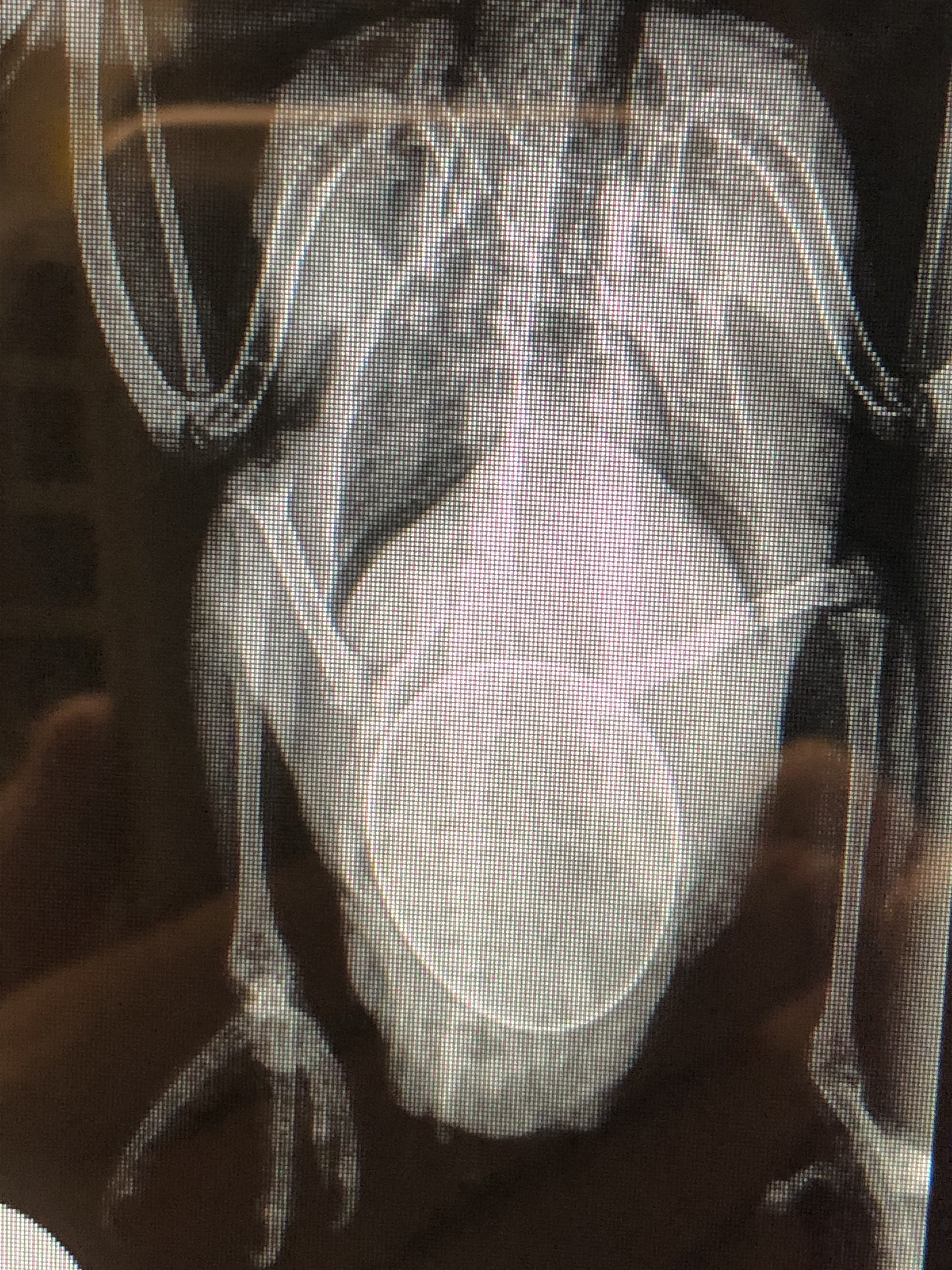
Spotty’s abdominal x-ray showed an enormous bladder, though the uric acid stones causing the problem weren’t well defined. His bloodwork demonstrated kidney distress, but within parameters that we felt could be reversed to normal once his obstruction was surgically cleared. We whisked Spotty in for emergency surgery, relieving his obstruction and emptying his bladder of hundreds of tiny grey stones. Intravenous fluids helped get his kidneys up and running again, a process we call diuresis. The stones or uroliths were analyzed to be certain they were uric acid in nature and a proper prevention plan put in place.

We know that high protein, meat-based diets may not be the best choice for any Dalmatian at this time as many are formulated with high purine foods of organ meat or seafood. Avoiding these purine-rich foods puts less burden on the liver and can greatly decrease the formation of stones. Dietary avoidance of these foods is a cornerstone to prevention.

This condition is similar to the disease of gout in people. In people the uric acid crystals settle in the joints, causing inflammation and pain. Interestingly, the same medication may be used to treat both humans and canines.

Spotty is lucky. Through a low-protein, non-meat based diet, medication and monitoring of his urine he is expected to lead a full, normal life. Because the gene has been identified, Dalmatian breeders can now specifically test and work to breed out this genetic mutation. The Veterinary Genetics Lab at the University of California, Davis, School of Veterinary Medicine offers genetic testing for a variety of breed-inherited diseases.

Christine B. McFadden, DVM
drmc@mcmenagerie.com


The Scam

Dr Mc Blog


July 28, 2015
I know we all hear about credit card fraud, identity theft, and internet scams, but it is still shocking when it happens to you.

There are many ways to obtain a new pet. My guess is most of them come to us as strays or we go in search to rescue a pet from a local animal shelter or humane group. Some are given to us as a gift (a little risky), some purchased on impulse from a pet store window, others found in a newspaper ad or off Craig’s List. Those looking for a particular breed of dog or cat, bird or reptile may research the breed, interview breeders and go on waiting lists as they wait patiently for the “right” one. In the age of the Internet you have an opportunity to connect with breeders all over the country, potentially finding some truly exquisite animals that are not available locally.

I have many clients who have found wonderful dogs this way. With the ability to review photos and see videos of their choice, they can even watch their puppy “grow up” from birth. This requires interaction with the breeder, signed contracts, deposits and yes, some faith. Until you physically have the puppy in your arms there is still a possibility of disappointment even with extensive communication on both sides. Perhaps your beautiful new puppy is already larger than an adult should be for that breed. Maybe his eyes run or her knee dislocates. Now you have the extra expense of fixing it. Things that a breeder may accept or not have noticed may bother you. But if this is not the puppy of your dreams or there are truly serious health issues you must consider how you will return the dog to the breeder. This should be considered and written out between both parties in advance, as returns across country are not simple. Most reputable breeders accept returns, even full refunds (read your contract carefully first) but most also require that you return the pet on your own dime. Average flights for dogs run over $100, a lot of dimes. Just for the opportunity to meet a dog you might not have accepted in the first place. And ALL puppies are cute! Needless to say, very few are returned, however unhappy the first meeting may be. By and large I have observed that most pet owners accept a few flaws and enjoy years of companionship with their internet-found pets.

But the Internet has allowed all manner of people to put up pets for sale. Reputable show breeders who carefully breed for the finest qualities in their dogs; backyard breeders who have purebred dogs which they’ve bred for fun (doesn’t mean they aren’t pretty or loveable!); the “Puppy Mills” which churn out “pedigreed” dogs in large batches, with a minimum of care towards congenital defects and sometimes minimal care, period; and….some that offer puppies for sale when they have none – a total scam!

We recently went online, searching for a specific breed in the Bay Area. We wanted to stay local enough to go check out the puppy but broaden our search as there was very little choice locally. This seemed like a good idea. Immediately a website popped up, advertising for a multitude of breeders from various cities around the Bay. All had pictures of puppies for sale, some referred you to personal websites where you could view their kennel. Prices seemed good. Hmm, maybe too good. But they had testimonials! And before they would talk with you, you needed to answer several questions about yourself, asking if you could provide a “forever home” and promised to care for this puppy with all your heart and did you have a veterinarian?  Initial contact was easy and if you like instant gratification, wow! They could have the puppy on your doorstep within 10 hours. From Delaware. Or Texas. But wait, didn’t it say Bay Area? Yes, but they had to go care for their ill father and took the puppy with them (the ad was placed 2 hours earlier). To make a long story short, be wary of a quick deal. Question a price too good to be true. If the puppy is no longer in the city or state listed when the ad was placed, walk away. Ask to see a current photo with an object in it, like your first name on a card. Their camera is broken? Move on. If at all possible meet the puppy first. If you are considering a purchase in the thousands of dollars (not me), the price of an airline ticket to meet your puppy in person may be reasonable. Even a meeting in a public supermarket parking lot will give you a chance to fully look your pup over before making the decision to open your heart and home to a new family member.

Christine B. McFadden, DVM
drmc@mcmenagerie.com
Valley Animal Hospital, Merced

The Pancreas

Dr Mc Blog

July 28, 2015
Don’t you wonder how some things ever came to be named? Now the word “pancreas” comes from an anatomist named Ruphos of Ephesus, around 1 or 2 AD. In Greek pancreas means “all flesh”. And it IS a pale pink scrawny L-shaped ribbon of an organ sitting in a crook of small intestine near the right side of the stomach wall. Nothing you can really get your hands on during surgery. In fact, you don’t WANT to get your hands on it during surgery. The pancreas is notoriously sensitive to rough handling and maybe handling of any kind and as a young surgeon I worried that if I had to gently nudge it to one side to access some intestine or heaven forbid hooked it when trying to locate a recalcitrant uterine horn (uterus) during a spay surgery that my patient would have a belly ache for days afterwards or maybe die. That part turned out to be not so true but even after 30 some years of exploring abdomens I am still skittish about handling the pancreas and try to avoid any surgical contact.

So what does a pancreas do? The pancreas serves two very important yet distinctly separate functions in the body. One is an endocrine (hormonal) function, as the pancreas produces the hormone insulin. When this system runs amok, pets suffer from diabetes mellitus, often called “sugar diabetes”. The other cells of the pancreas exert exocrine (enzymatic) control and produce amylase and lipase, two enzymes that help digest food in the small intestine. When these exocrine cells malfunction, the digestive enzymes are released willy nilly into the pancreas, not the intestine, where they start to digest the wrong thing. This is the disease Pancreatitis. Inflammation of the pancreas and surrounding abdominal tissue as these enzymes eat away at it is so marked that it may be seen on an x-ray. Tremendous pain over the anterior abdomen is often present. The pancreas is most stimulated to produce its digestive enzymes by high fat foods and protein.

Kahlua was a doggie princess. A little pudgy in middle age, she was lovingly treated to her fair share of dog food and table goodies, often high in fat. One day she started to vomit her dinner. She was sluggish and screamed in pain when her owner gently picked her up around her tummy. In our office she was running a low grade fever and cried when her anterior abdomen was palpated. Among her blood tests a special test for pancreatitis, the Spec Cpl (specific Canine pancreatic lipase test) was positive. Both amylase and lipase scores were in the thousands. When we told her owner the news he was ghastly quiet. Finally he raised his eyes and told me quietly that he had just lost his wife to pancreatic cancer. Kahlua was all he had left of her. He didn’t need to say more. I couldn’t rule out cancer that early because there is no blood test to rule out cancer of the pancreas. If cancer is present, it may be the size of a small pimple and won’t always show up on an ultrasound scan. We would have to proceed with standard treatment for pancreatitis and if Kahlua did not improve as expected would review our other choices. After several days on intravenous fluids to flush out her body and absolutely no food (do NOT want to stimulate the pancreas during this time!) Kahlua brightened up considerably and was no longer painful over her tummy. Her signs of infection responded well to antibiotics and when we gave the all clear and offered a tiny meatball of a bland low fat food she gobbled it down and never looked back. Despite this brush with serious disease Kahlua never had another problem with her pancreas, though she did maintain a low fat diet for the rest of her long life. She was another lesson in proceeding cautiously when discussing any particular ailment of a pet that humans might share, as all too often I find that my diabetic patient has a diabetic owner, or that heart disease or cancer “runs in the family”. Kahlua was 7 years old when she developed pancreatitis and lived another 10 years beyond that, a princess to the end.

Christine B. McFadden, DVM
drmc@mcmenagerie.com

Cat Scratch Fever

Dr Mc Blog

July 9, 2015
My mother wanted more articles on cats, but this time she’s gone too far. While her cats swirled about her feet in a breakfast feeding frenzy one nudged her along a little too hard, breaking skin. Three days later she almost landed in the hospital as her leg swelled up, an angry red color.

Diagnosis : Cat Scratch Fever.

Cat Scratch Fever, more properly Cat Scratch Disease, is caused by a little known bacteria, Bartonella henselae. Because cats themselves rarely suffer any effects from this bacteria, your veterinarian is not “looking” for it. Oddly enough, statistics from the Center for Disease Control (CDC) in Georgia report that up to 40 % of cats may harbor this bacteria on their claws or teeth sometime during their life, with the most likely period being when they are kittens. This, of course, is when young cats are most playful, most likely to play bite or scratch during a wrestling match. If your skin is broken the Bartonella bacteria has an opportunity to start an infection in you – the human. The cat will be fine.

Even more oddly, your cat probably picked the bacteria up when it was scratching at a flea! Infected fleas carry the bacteria, and your cat will get flea dirt caught under its nails or in its’ teeth. Once a person’s skin is broken, the bacteria is transmitted through the saliva or from under the cats nail. Even allowing a cat to lick an open wound which you may have (irritated mosquito bite?) may transfer the bacteria. We’re back to flea control, again! In our mild climate, fleas are a reality year round in Merced. If you think you have them under control, keep treating – keep it that way!

Washing any scratch or bite wound will prevent most people from developing an infection. Once Bartonella has taken hold, it can be readily treated with antibiotics by your physician. Your cat does not require treatment. On rare occasion an infection with Bartonella can land a person in the hospital for intensive care.

Does Bartonella EVER bother the cat? Maybe. There are tests to demonstrate if anti-Bartonella antibodies are present in the blood stream. This only proves exposure to the bacteria, not current infection. Rarely an ill cat, perhaps with an eye infection, may be tested for Bartonella. If you have high concern about acquiring a new cat or are faced with a family member who is immunocompromised and must guard against any disease encounter you can request these tests for your cat and even a course of treatment as a preventative, though it can’t guarantee against future re-infections.

My mothers’ cats are on flea control and are older, but one of them goes outdoors and inevitably brings fleas back into the house. I knew the source of infection and how to contain it. I must admit it was interesting to follow how her physician handled it. As a veterinarian, I am familiar with the rejection one must inevitably face when serving in a “helping profession”. Everyone wants to help. They want to help even more when it’s outside their scope of expertise – it’s so tempting to give advice! I am sometimes the last stop in a desperate quest to heal a pet, after the owner has purchased a variety of compelling exotic potions over-the-counter or whipped up a guaranteed home remedy recommended by the neighbor’s cousin passing through town.  My mothers’ leg improved slowly but surely under the extremely watchful eye of her physician (he even offered to make a house call to check on her over the weekend). So it was with some interest as I followed her recovery to hear her inform me that she was going to have the gardener check her leg that day. That gave me pause. I double-checked. The gardener? I silently chewed this over in my mind. She was seeing her physician every other day, if not daily. Her veterinarian daughter was stopping by every night. The gardener?  It felt good to know these things didn’t happen just to me. I wondered if the gardener would argue the merits of herbal remedies….? I could tell this was a turning point for the better in her case and that I could step out now. And her physician? A miraculous cure. My hat’s off to you, Dr. De La Pena.

Christine B. McFadden, DVM
drmc@mcmenagerie.com
Valley Animal Hospital, Merced