Dog flu has been reported in the Valley. Here’s what you need to know.

Serious news for all dog owners in recent weeks, folks: Canine influenza, or dog flu, has been documented both in San Francisco and the Bay Area and in Fresno. Up to 50 cases were diagnosed in the Bay Area in mid-January, with a confirmed case in Fresno announced Jan. 24.
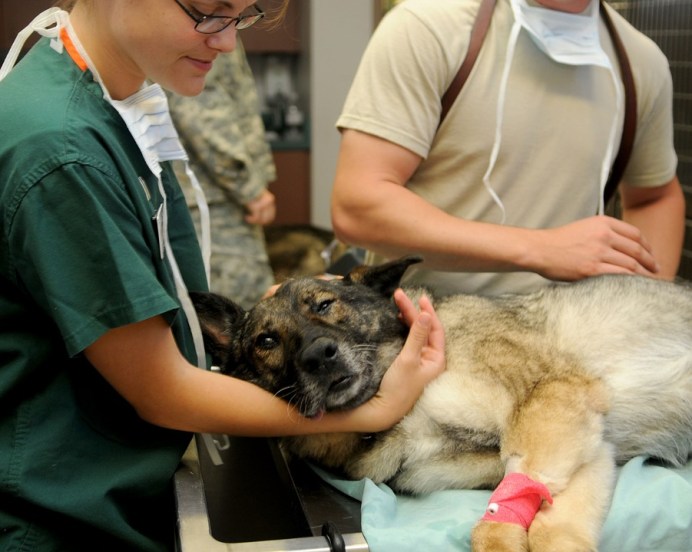
holding-dog-head-e1519278244598.jpg

This dog flu is highly contagious between dogs, with 80 percent of all exposed dogs becoming sick. Most of these dogs will be only mildly sick. Symptoms include coughing, sneezing, runny eyes and noses. Some dogs whose respiratory system has been attacked by the flu virus will develop secondary bacterial infections and have thick purulent (pus) discharge from their nose and a very high fever. Occasionally even pneumonia can occur and in rare instances, death.

You’ve all probably heard of “kennel cough,” which is a generic name for a variety of viruses or bacterial infections that cause a cough contagious to other dogs. The actual cause of bronchitis can only be determined through tests. An oral cheek and eye tear swab can be sent to the lab for a PCR test (polymerase chain reaction – if you really want to know more on that kind of testing, please research!) When last checked, a PCR upper respiratory test in dogs looks for up to 13 different viruses and other agents, including both forms of the Canine Influenza, H3N8 and H3N2. Dogs in close contact easily spread the germs by coughing on each other – in a kennel, a grooming parlor, at a dog park, day care or shelter. Anywhere dogs meet. In addition the flu virus can be spread by contaminated objects like food or water dishes, collars and leashes.

Should your dog contract canine influenza you will need to see your veterinarian. Treatment is tailored to symptoms and whether secondary infections are a concern. All affected animals should be isolated from other pets for 1 month to prevent the spread of this disease.

Canine influenza first made headlines in 2004 when several racing Greyhounds dropped dead in Florida. This was the CI H3N8. It wasn’t until March 2015 that there was another crisis when an epidemic broke out in dogs in Chicago. This was a different form of CI, H3N2. They thought part of the reason for an outbreak in a big city had to do with large concentrations of dogs moving through airports. The dog flu has not been widespread and risk to pets in many parts of the U.S. has been low.

The dog flu H3N2 has been known to affect cats. One outbreak occurred in cats in a high-stress shelter environment. No cats are known to have died from the canine influenza viruses, and there is no approved vaccine for cats.

Canine influenza viruses have not been found to be transmissible to humans.

Should you like more information on the canine influenza viruses please look up the American Veterinary Medical Association article on-line. Your local veterinarian has information and protective vaccine available to your pet. This bivalent vaccine protects against both strains of dog flu. Two vaccinations are required to start, given approximately one month apart, and can be started as young as seven or eight weeks of age. Because it takes a month for your pet’s body to mount a complete immune response, and given the closeness geographically of the epidemic, we recommend all dog owners contact their veterinarian to start protection. Be aware that like the Bordetella vaccine (a better known “kennel cough”) and human “flu shots” even with proper vaccination your pet might contract a mild case. Many area clinics are offering the vaccination to their regular patients. Simply put, we want to protect your pets. We’re here for you.

Christine B. McFadden

drmc@mcmenagerie.com
Have A Nice Day !

George Carlin, a comedian I’m not much familiar with, found fault with the phrase “Have a nice day,” saying it was “probably unrealistic to expect someone to have a nice day all day long.”

I am as guilty as the next person at wishing people I meet to “have a nice day” upon taking their leave. It has become an ingrained auto-response. The phrase is depersonalized and meaningless more often than not. Carlin’s riposte struck home because it has only been a few weeks since that very phrase landed me in the middle of a hostile exchange between my staff and a client.

The first I knew that we had a problem was finding a chart on my desk with a note “Client upset. Please call.” We get very few complaints, surprising, perhaps, given the number of animal patients we see in a day and the variety of human clients attached to them. I suppose some people never discuss their dissatisfaction with us and simply go elsewhere with their pets. Our best clients tell us when we have let them down and I very much appreciate that – how else to improve our services? And then there are, well, those days that we just mess up. We don’t just drop the ball, we kick it over the fence. No half measures for us, no sir.

So I read the chart. It landed on my desk because I had examined a cute little Maltese dog and vaccinated her when she first arrived to board with us. That had been days earlier and I had not heard of any problems during her stay. I then requested to speak with any personnel who might be able to enlighten me. This can be a dicey tightrope – understandably your staff wants to feel that you’ve got their back and truthfully, the client is not always right.

With half the story under my belt, I felt prepared to call the client, who was pleasantly surprised that I even called. The saga was not life threatening in any way but was important. The client had requested her dog be bathed upon arriving at the clinic. This made no sense to the staff because like some people, a dog away from home may exhibit different behaviors than their owner is accustomed to. He may stay up until all hours of the night. She may bark joyfully nonstop. Both will engage in food fights, scattering food willy nilly. Someone peed on their favorite blanket then ate it. In short, your calm little house pet may have the manners of the worst frat boy party animal you’ve ever seen depicted in a movie once you step away. I know, I’ve seen ‘em. So we always suggest a bath and fluff up right before heading home. Time to put the leash back on. Momma’s coming and you don’t want to disappoint Momma.

In this case, the staff just thought someone heard it wrong, so they waited to give the bath 4 days later, when the dog was scheduled to go home. Only Momma came back a day early. We absolutely would have given the bath then but everything got bolloxed up in the explanations and finally the good woman took her dog (bathless) and went home. The final insult? As she was leaving in high dudgeon, one of my staff called out “Have A Nice Day.”

Ouch! Hit that ball right out of the park.

I was treated to a delightful lunch at a Ruth Chris Steakhouse recently and noted that at every request the staff responded “with pleasure.” I considered trying to incorporate this into my daily interactions with clientele, but somehow, when asked to express anal glands I think saying “with pleasure” could backfire on me. I am trying to rid myself of “Have a Nice Day.”.

Christine McFadden, DVM

drmc@mcmenagerie.com

Weight Loss Dreams

Myrtle had lost 8 pounds. I was most impressed. A middle-aged Australian Shepherd, she’d never had puppies, so couldn’t excuse her mid-life spread by pointing out her gorgeous offspring. Myrtle had been spayed young, which virtually guaranteed that she would not contract breast cancer in her lifetime (a 1-in-4 risk for older intact female dogs). This also meant she couldn’t drum up excuses about hormonal changes late in life. No, sadly, Myrtle would garner no awards for discovering the mystery behind unwanted weight gain : too many calories in, not enough burned off. In short, Myrtle over-ate and slept in. “Exercise” was not in her vocabulary.


When you realize that she had stuffed 73 pounds into a 50 pound body frame, you might begin to understand the concern. A young dog that is overweight can usually bear the extra pounds with grace. They are active, if perhaps less agile than a truly fit play mate. But look ahead : after years of joints and body parts groaning under those extra pounds, you will find this same pet to be suffering from arthritis at a much younger age than its counterparts. The overweight dog faces their senior years plagued with creaky knees and groaning hips. Yes, we have bunches of medications to come to their aid – an arsenal of anti-inflammatories, analgesics (an analgesic is a straight pain medication that is meant to mask the pain but does nothing to change the underlying condition, does not reduce inflammation, etc), dietary supplements, omega this and that – and they work. They do. But NO pill helps a suffering obese dog as much as taking that extra weight off. The weight loss can’t reverse the damage already done, but it will significantly reduce the everyday burden and muscle strain required to move the body.


As a group veterinarians are seeing obesity with increasing frequency in pets of all kinds. Diabetes mellitus (sugar diabetes) is on the rise, as are heart disease, exercise intolerance and heat stroke.


We feed our dogs too much, too often. I would like to think that the man who assured me he fed his dog only doughnuts was kidding. I understand the desire to share food with those we love. At our veterinary clinic we stock a low cal treat in each exam room. They gum up like rice cakes and average about 3 calories each. No, I don’t suppose anyone would chose it over bacon, but my patients on the whole accept them. The Disney stickers we used to hand out were a little dry going down. We serve treats because we hope our patients have a pleasant experience. We understand what you’re going through.


When meeting a pet who desperately needs to lose weight, I try to review the actual diet as fed at home. There have been some surprises over the years. Dental chews help keep teeth healthy. Bonus! Because most people do not brush their dog’s teeth. But we found some of those chews had up to 50 calories each – which for a tiny dog leading a “lapdog” life could account for 1/5th of their total recommended daily caloric intake! Dog food companies have been slow to publish the calorie count of many of their foods. If found, it will read as “Kcal” or kilocalorie, which is the same as “calorie” in everyday life.


So-called “lite” or healthy-weight or weight-management diets can have widely varying calorie counts. Get that information, calories (Kcal) per cup, before choosing which food is best for your pet. Extra fiber will fill up the stomach, helping your dog feel satisfied with smaller meals. Your veterinarian is always there to help. Blood tests can be checked to rule out underlying health issues, and we offer assistance with prescription weight loss foods and plans that really work – if followed.


We strive for balance. As long as we count the gummy bear and the cocktail peanuts, we can help you make the life plan work. Because at the end of the day, the real reward is talking to Myrtle’s owner and hearing her say in wonder : “It’s as if she’s 2 years younger. I’m getting my dog back.”


Christine B. McFadden, DVM

drmc@mcmenagerie.com

Reflections Back on 2017 from the New Year

I can’t speak for you, but let me start this by saying that I spent my first night of the new year sleeping on the floor. No, you too? So let our first resolution be to stay home next year! Nothing stronger than water had crossed my lips, we missed the ball drop in New York because we were arguing too much as we channel-surfed at the last minute and I couldn’t tell you if there were midnight fireworks because we were all asleep long before the year crossed over. Some of us on the floor. I was there mostly because the makeshift mattress set up for the kids was very narrow. If you were next to your mom you would be snuggling, but if forced to share the same space with your sister it would have been a war zone all night. I chose “some sleep” over “none”. The great thing to come out of this? Everything settled to the down side and I’m convinced my silhouette, as seen from the left, is much slimmer.

I had lots of time to think while performing this balancing act. I remembered the faces of some I’d said goodbye to in the previous year. “Nella” was a gallant Golden Retriever. He was named as a young dog by a child too young to know a girl name from a boys and owned by a war veteran too kind to correct the child. Nella was the color of a vanilla wafer cookie. He was a big-hearted dog, always gently greeting me with a wave of his plumed tail, no matter the exams, the blood tests or x-rays that were needed. At 16 years of age, he suffered from severe arthritis. His owner always had a kind smile and a silly joke when he came in. He thanked us for our efforts to keep the big dog comfortable. He cooked for Nella when needed. On the bad days we hugged. And finally there was no denying that the most loving thing he could do for his dog was to let him go.

I started 2017 with a C-section delivery on Jan. 1. Ring in the new!

I ended 2017 with an 18 pound cat, Shrek, that had his bladder obstructed by tiny bladder stones they call “sand.” He couldn’t urinate. His bladder filled up tight as an over-filled balloon and the plumbing backed up until the pressure shut down his kidneys. It is hard to walk when your bladder feels like a large boulder in your stomach. When your kidneys shut down you feel tremendous nausea. It’s called uremic poisoning, because the body waste that the kidneys should filter out are reabsorbed into the bloodstream, poisoning you. It is impossible to eat when your kidneys shut down. A true emergency, his bladder at risk of rupture, we rushed Shrek into surgery. Under anesthesia we spent long minutes trying to break down the plug of small grit blocking his urethra until we could place a bladder catheter and empty his bladder. Then we pumped him full of intravenous fluids to encourage his kidneys to go back to work. Shrek looked a little odd, with one tube dripping fluids in at the front end and another dripping out more fluids (urine) at the back end. Key to prevent recurrent formation of this “sand” in Shrek will be his conversion to a diet of food developed specifically to prevent urinary sand of Feline Lower Urinary Tract Disease (FLUTD) syndrome.

My final thoughts before drifting off to sleep were of the first stanza of a poem I memorized years ago. The poem is by Alfred, Lord Tennyson.

Ring out, wild bells, to the wild sky,

The flying cloud, the frosty light:

The year is dying in the night;

Ring out, wild bells, and let him die.


May the new year be kind to you and your pets.

Christine B. McFadden, DVM

drmc@mcmenagerie.com

Christmas Kittens


I blame it all on the Christmas season and Fed Ex. The year that Christmas almost didn’t come. The pressure began in November. Each year I brace myself for the Holiday Onslaught. I understand that Santa has his elves and all those reindeer, but it’s just too iffy for me. Even if I can’t one-up the competition, I’d like to give a special gift, especially to my children.


Somehow, each year, it all comes as a new and dreadful surprise. BAM! the holidays rush at me. Turkeys and Black Friday and Cyber Monday and the Nutcracker and the Hallelujah Chorus, the Babe in the Manger, Wise Men and candy canes and oh, there’s not enough space to fit it all in.


Remembering the year that Christmas fell apart still fills me with dread. THAT year I entered the holiday season prepared. I had a plan. Full of confidence, I placed my orders in early November. Weeks to spare, but not so far in advance that I’d hide something in a safe place and completely forget about it until I cleaned a closet 4 years later. Who cared about Santa’s List? No need to check mine twice. I was done! New winter coats for the twins? Check. New curtains for their room? Fabric samples in the mail? Check.  New bed? New bedding to accompany? Check and check. I was done, done, done; let the holidays come. I sat back, humming a bit to limber my voice up for some Christmas carols. Stirred a few marshmallows into my hot chocolate.


And then it happened.  Three weeks before Christmas someone stole one of the Christmas coats. Fed Ex, an overachiever in seasonal delivery, had dropped the package on our doorstep at 7 PM. We were away, attending the Nutcracker ballet. Never expecting a package delivery on a Saturday night at 7 o’clock, I had not checked our porch before going to bed. Someone else did. I found it hard to believe that they were a child’s size 8 but never mind, it was gone. A replacement coat was not to be had for love nor money. Even E-Bay failed me. When you have twin girls, one coat is not enough. Someone had stolen Christmas.


Other blows were to come. The fabric swatches for those curtains hadn’t arrived, and on my third try I finally got through to the wonderful woman who had made me another set 20 years earlier, only to realize that she had dementia. Not only were my swatches not in the mail, but the time frame for “custom” anything had run out. I sadly wished her happy holidays as I got off the phone. I had a headache and my confidence was slipping.


And then, 2 weeks before Christmas, they told me they would not deliver the bed. In November they had guaranteed delivery in less than 4 weeks, but now the holidays congested their schedule and suddenly they were telling me December 26th.


Santa has broad shoulders but he needs them to carry his own pack. I just needed something under that Christmas tree that I could count on for my children.


In full panic mode, I wailed over my misfortunes at work. Cyndi popped off and said, “Why don’t you get them a kitten?” Staggered, I shut up full cry. My brain fogged. I stalled for time, looking for other options. I had to admit, nothing would best a kitten. So off to the Animal Shelter I went, looking over what seemed to be hundreds of cats and kittens of all variety, color and sizes. Most of them sick with the Christmas crud. I grimly adopted two, noses streaming and eyes goopy. Back at work I had them both tested for Feline leukemia and Feline HIV viruses and both tested negative. OK. Deep breath. I gave them a spacious cage in the Isolation ward and plied them with antibiotics and good food. I glared at them and said “10 days. You have 10 days to get well or you’ll miss Christmas. Don’t even think of it.” I will never forget the stress of that Christmas. The count-down was excruciating, but by golly, those kittens came through for me! They cleaned up, dried up and plumped up all in time for Christmas. And when the great day came……. Santa got all the credit. Thank you, Santa Claus.


Christine B. McFadden, DVM

drmc@mcmenagerie.com

Snow Globes and Other Christmas Dangers


I suppose there might be a deeper meaning to snow globes than just pure enjoyment. But me, I don’t really care to go deeper. I am entranced by the swirling snow and glitter that light so many pretty scenes. Scenes of trees and mountain tops, families, Nutcracker stories, elf and Santa stories, Nativity scenes. I am open to all of them at this time of year. I give ‘em a swirl whether they play music or not. The snow never drifts long enough.


So I was a little indignant when I first heard that snow globes might be dangerous to pets. What old Grinch was picking on my snow globe love? There was truth to the story, sad to say. It seems that some snow globes are filled not only with water, but with ethylene glycol – good old-fashioned antifreeze. Antifreeze is used in cars. It serves to cool the radiator and is also found in brake fluid, motor oil and many de-icing products.


ETHylene glycol (EG) antifreeze is sweet to taste and attractive to both cats and dogs. Antifreeze produced after 2012 is supposed to have a bitter taste added to it. All ethylene glycol antifreeze has a greenish color. This antifreeze kills. A different antifreeze product made with PROPylene glycol is unlikely to poison a pet and is orange-pink in color.


As little as 5 ml’s or 1 teaspoon can kill a cat or small dog. They lick the sweet antifreeze up and within the hour may begin to show side effects of vomiting, seizuring and staggering. This first stage of poisoning progresses rapidly over the next 12-72 hours to the third stage, where odd crystals of calcium oxalate settle in the kidneys. Kidney failure is quick to follow. At this stage there is no reversal. The affected pet dies.


Should you see your pet licking up a puddle of green antifreeze spilled from your car’s leaking radiator, take your pet to your veterinarian immediately. Ethanol, which is the same alcohol used in cocktails, is the antidote to antifreeze poisoning. Straight vodka will do. I know, I have given it intravenously in an emergency and the dog lived. Strange but true.


So why on earth is this stuff in snow globes? The snow globe is reputed to have originated in France (late 1800’s) or in Vienna, Austria in the early 1900’s. Many people were still using candles for light, and one clever method used by shoemakers to create a larger spotlight involved placing a large round vase (globe) filled with water in front of a candle flame, so that the reflective light on the other side was enlarged to the size of a person’s hand. The electric light bulb had been invented but would remain under intense development for improvements over the next 100 plus years. The early electric bulbs weren’t very bright. A Mr. Erwin Perzy in Austria tried the same candle-maker’s trick for brighter spotlights by placing globes of water in front of electric bulbs, but to no avail. So he added something to make the water more dense, hoping to reflect the light from the bulb better. He tried semolina flaked baby food. The effect reminded him of falling snow……….he added a picture diorama, and the modern snow globe was born.


Water-only filled globes weren’t very satisfactory as the swirling flakes just dropped to the bottom.  After many trials, it was found that adding water mixed with glycol made the “snow” fall more slowly, prolonging the effect. Because a 50:50 mixture of water and ethylene glycol doesn’t freeze easily (negative 35 degrees Fahrenheit!), it had the added benefit of keeping snow globes stable both when shipping and selling them in colder climes. As long as the snow globe remains intact the addition of antifreeze is a good thing.


Beware if you and your family dog rent a cabin in very cold regions – antifreeze is sometimes added to the toilet water to keep it from freezing. Don’t let your dog drink from the toilet! And do not, under any circumstances, leave a broken snow globe for clean-up later! Hold larger globes over the couch to make it snow. And let it snow, let it snow, let it snow.


Christine B. McFadden, DVM

drmc@mcmenagerie.com


Thanksgiving without Martha Stewart


Anybody ever hear of Martha Stewart? It’s been many a year since I received my first genuine M.S. cookbook. Having subscribed to “Gourmet” magazine for years I felt reasonably accomplished in the kitchen, my yardstick for comparison being fellow vet students who lived on Top Ramen and cheap hamburgers. Spaghetti and big salads were also popular.


I was entranced by that first book. A Big City girl at first, Martha used her bathtub, as I recall, to cool down drinks before a party. And then she got that country house. There was no stopping her then. And as for me? I sucked up every glossy page of recipes and food presentation. Yes, presentation was everything! How could you enjoy time with your friends if the crusts were not removed from the bread? Wait, back up! Make that home-made bread (get out the yeast! Is it alive? Did somebody proof this yeast?) And the chicken breasts, skinned (no one sold them already skinless back then), pounded thin and carefully rolled around the filling. Martha’s looked sleek and elegant. I stuffed as much ricotta filling in as I could and they looked, well, lumpy. We loved that recipe. Ahhh, those were the days.


Books make a good Christmas present and one year Santa granted me my wish. I received the Martha Stewart Christmas Cook book. I forget the actual title. Being the sort of person that reads the introduction, I found my holiday anticipation deflating faster than, well, a soufflé. By this time in my life I had a couple of kids and worked up to 6 days a week, with nights on emergency duty thrown in for good measure. I still loved cooking and planning dinners but reality in the form of only-so-many-minutes-in-a-day simply clubbed me over the head every night. Bedtime. In her Christmas cook book Martha detailed how she started Christmas preparations in November. Her cookies may have been home baked, but they were made many weeks before Christmas and stuck in the freezer. It sounded like she had a big freezer. And she mentioned her several merry little helpers – six? seven? who assisted her in the kitchen around the clock. Help? She had HELP? I had my own merry little helpers, all of them under the age of 5 and nearly impossible to keep OUT of the kitchen. They stirred enthusiastically and sent the flour flying. They measured out chocolate chips and ate half when I turned to get the vanilla. They shared with the dogs, who also refused to leave the kitchen, and spilled anything and everything to test Newton’s Law of Gravity and my patience. Don’t talk to me about eggs. There’s some movie where Audrey Hepburn learns to crack an egg and turns out gorgeous (Audrey, not the egg) (It was in “Sabrina”). My kids mastered the art of egg cracking at an early age, often while still in the crate. We did collaborate once on cracking an egg on the sidewalk to see if it would cook, but that wasn’t over the holidays, too cold, and now perhaps I see where they got their childlike curiosity….


I had had my doubts about Martha, but this book was the tipping point. Henceforth I viewed her recommendations with suspicion. In the years to follow I did occasionally succumb to some new Martha-ism. I bought the big turkey molds to make cornbread. Ten pounds of cornbread later, after everyone took a single bite because the turkey wasn’t the only thing stuffed, I threw in my apron.


And then, in her monthly magazine, she published a Martha Thanksgiving. Martha has horses, kept in a barn cozy with warming tiles for those cold Eastern winters. And that year she proposed to serve her annual Thanksgiving dinner in the barn, on tables covered with fine linens. There were pictures to prove it. I, too, love horses. I’m sure I would love Martha Stewarts’ horses. But did anyone tell the HORSES that it was Thanksgiving? I can’t imagine saying grace with the noise of a horse whizzing comfortably in the background. Making the Holiday Toast while the aroma, not of your Cab Franc, but rather horse manure, fills the barn air. A happy horse was pictured leaning over his stall door, a cart of goodies nearby. When excited, horses snort and spray flies. I have never recovered from this Thanksgiving with Martha and was in stitches when I came across an on-line letter “Martha Stewart Will Not Be Dining with Us” (author unknown). I shall be thankful this year that I have not consulted M.S. about any of my dishes. And this Christmas, when you consider your book list, be careful what you wish for.


Christine B. McFadden, DVM

drmc@mcmenagerie.com


X-Ray Vision / Halloween Horrors


For those who wish for x-ray vision, I say “Have at it, and good luck to you”. Of course, in the cartoons, x-ray vision meant the ability to see through walls and other people’s clothes. In the military, the phrase “night vision” is a desire to see clear as daylight – in pitch darkness.  For me, x-ray vision is the ability to look at radiographs of my patients and find the needle in the haystack – or whatever oddity has made my patient ill and prompted the order for x-rays in the first place!  The original “x-ray” (“x” meant unknown) was discovered in 1895 by a German scientist named W. C. Roentgen. This new ray could pass through the flesh but not through bones or metal objects. Roentgen was able to capture a picture of a hand using these mysterious invisible rays with a photography plate. Ta da! This work was shared among scientists of the day and ultimately led to a mobile radiograph station used in World War 1 to serve injured soldiers on the battlefields of France. Led by Mme. Marie Curie, various automobiles were transformed into x-ray taking centers, complete with the ability to develop the film on-site and were called “Little Curie’s”. It is said that Marie Curie herself drove one to the battlefields.


This was over 100 years ago and astounds me. Antibiotics were a thing of the future, anesthesia was crude, but we could take see-through pictures of people’s bones and hunt for bullets to guide their removal. Amazing!


Today the digital age has improved radiographs to a very high-def picture (ok, not like the TV in your living room). Although “x-rays” are used to make the picture, the actual image produced on the plate or screen is called a radiograph. Truth is, most of us still just call the pictures “x-rays”. That’s ok. X-ray images are only two dimensional. You must combine two views, usually one taken laying on the side and a second with the pet laying down flat on its back. Then the reader , a radiologist or just your local veterinarian, must put these images together in their mind to decide if the swallowed object (or whatever you’re looking for) is on the right or left side, closer to the backbone or by the belly button.  You must join these two images together in your mind to create a grid. For 3 dimensional x-rays, turn to the CT or CAT scan (computerized axial tonometry) images. In this technique a series of x-rays views are taken from multiple angles, then a computer processes it into neat slices of the body part under discussion. Confusing? You get used to it after awhile.


The devil, as they say, is in the details. What appears simple at first look may in fact be hiding something very important. Like a grainy black and white polaroid photo, X-rays are a mess of shades of grey. (Sorry, didn’t read the book. I was reading x-rays!) Many x-rays are easy to read. They give you false confidence. A large bone snapped in half, got it. An enlarged heart, bladder stones, a calcified disc in the backbone. All easy to read. As you progress in more detail, the headache starts. Are those doughnuts in the lungs? Nope, no dunking here, we’re scanning for round tubes of thickened bronchi in a coughing dog. No kidding, these unhappy, inflamed lungs will show up as white circles called “doughnuts”, at least by those in the veterinary medical profession.  Calorie free, may I add.

We often confirm a pregnancy by x-ray. Blood tests can confirm the pregnancy after the first 30 days of a roughly 2 month pregnancy (dogs and cats) but is close to the cost of x-rays and gives no details beyond yes or no. Ultrasound can confirm the pregnancy and check on live fetal heartbeats but isn’t reliable for giving you an accurate head count. Radiographic images taken after 45 days of pregnancy, when the babies’ skeletons are calcified, gives an accurate head count and is tremendously useful on the day of delivery, as the breeder knows what to expect and when labor is over.


In the last three days we x-rayed two dogs, a kitten and a guinea pig with broken bones. We took chest x rays on more than 6 pets and found  4 enlarged hearts, a tumor in the lungs and a case of bleeding into the chest. A macaw parrot did not have an intestinal obstruction. A pregnancy had 3 puppies. One dog had hip dysplasia, two had severe arthritis of the spine, another a slipped disc. “Patty” had nothing wrong at all on her x-ray image. But she screamed if you tried to gently touch her tail and was found to have a deep bruise to the soft tissue over her hip. The radiographs gave us peace of mind that Patty had not broken any bones, and steered our course of treatment towards the correct use of anti-inflammatories to speed her to a quick recovery.


Christine B. McFadden, DVM

drmc@mcmenagerie.com


Trash


Sabotaged again! My husband used the bathroom wastebasket as if you’re supposed to throw trash in it! You see, every day when I clean out the cat’s litter box (Also filed under headline : “What you will do for your children who love their cats so much they won’t let them go outdoors”) I also empty the bathroom wastebasket. It gives me a clean, pure feeling. Everything in its place, the world is sorted out, a much tidier place than when last seen. And to my stunned surprise, sometimes only moments later I will walk into that same bathroom and there will be TRASH in the wastebasket. What?! Can’t my family SEE that it was just cleaned?


And I am affronted. Every time. My husband and family are completely unaware of this crisis.

I myself, of course, am inconsistent. I use the wastebasket whenever needed.


When the carpets have been freshly cleaned I announce that we must all move into a motel. To date we have never, ever, gone 24 hours without spilling on it. Last time one of the cats threw up a hairball right in front of me. The carpet wasn’t fully dry. I laughed because crying would have been a victory for the cats and they must never know that they won the battle. What battle, you ask? That obscure battle between the weak (animals) and the powerful (people)? Where somehow the “poor, dumb” animals end up being catered to with heaps of toys, mountains of treats, and select cans of tempting gourmet foods. Who are these creatures and what have they done to deserve all this?


Let’s face it, most dogs have not saved someone’s life. But we cater to them as if they MIGHT. Many of them hog the bed, knock over toddlers and Seniors in a single bound or yap you deaf because a butterfly flew past the window. They will steal the steak off your plate, chew the heel off your shoe and whine for an hour at 4 PM because that’s the time you take them for a walk every single day, never mind that you broke your leg yesterday and are in traction. You say your dog is loyal, I say that you are an easily trained human. The tail doesn’t need to wag the dog, he had you wrapped from that first doggie kiss.


Are there less mice in the world because of cats? I think NOT! I will submit my home as a completely random example, with 1.8 cats per occupant and I still find at least 1 mouse a year in my garage. Outrageously, I am expected to rescue it and remove it to the great outdoors! Which, augghh, I do! Last time I cornered it in a matchbox and made my husband drive it down the street to an empty field. (Don’t tell the neighbors. It wasn’t their house.) I think my children named it. They said prayers wishing it a long life. The words I said aren’t found in any prayer book.


Cats will climb the curtains and pee in the flowerpots. They look cute crawling into paper bags but not so cute jumping into a Waterford vase, which crashed and broke and now we don’t have to worry about being uppity. In the general outcry there was much concern that little paws might step on glass and not one word of consolation for the smashed vase. Nor did a single cat come forward to help the mother on her hands and knees cleaning up the mess and saving paws.


I surrendered a long time ago. Animals are in our lives to stay. We share the world with them and they with us.  I’m pretty sure they outnumber us, so all things considered I think they’re very gracious. I really don’t mind cleaning up the litter box.  Tending to doggie yard duties gets me out and about my garden, which I enjoy. But somebody needs to teach my human family that the bathroom wastebasket is off limits, for Pete’s sake!


Christine B. McFadden, DVM

drmc@mcmenagerie.com


World Rabies Day


Several years ago I wrote an article on Rabies (Merced Sun Star, June 2014), a viral disease carried from animal to animal and sometimes from animal to human. For both animals and humans the disease is considered a death sentence.  I recently came upon a series of articles in a veterinary journal and was sad to learn that the disease is still a serious threat in much of the world and that approximately 60,000 people die from this disease every year. Still.


Why do I take up the story again? Because it deserves to be heard and, most importantly, it is still a threat to you and your loved ones. A very real threat if you enjoy traveling to out-of-the-way places.

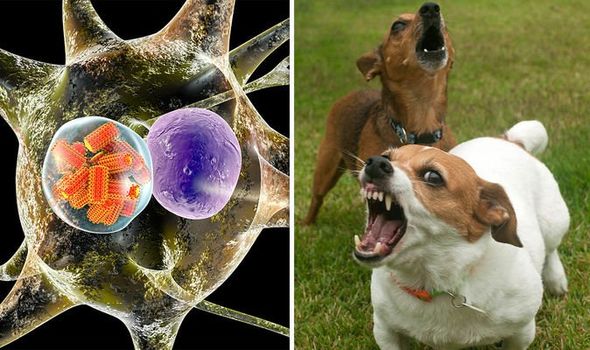
Rabies-outbreak-map-rabies-symptoms-rabies-dog-bite-1125644

Rabies is a slow-moving viral disease. It can affect any mammal, but is usually spread from one carnivore to another as the virus is passed in saliva by bites through the skin. Infection after contact with infected saliva on an open wound is a possible, though unlikely, mode of transmission. Once a new victim has been bitten, the virus slowly makes its way into the nerves and through the nervous system to the brain. This can take two weeks to 2 months or longer. By the time the rabies virus is present in the saliva, death is near. It is for this reason that when an unknown dog bites a person the dog will be quarantined for 2 weeks.  Two weeks is long enough to monitor the dog : If rabid, the animal will die. The dog’s brain can then be tested for rabies virus and the bitten person still has ample time to receive the anti-rabies protective vaccine.


Rabies has been found in the wildlife in and around Merced County. It is endemic in area bats, raccoons, skunks and foxes. You, the pet owner, have set up a terrific protective line of defense by the simple stratagem of vaccinating your pet dogs and cats. It is believed that by vaccinating 80% of a populations’ pets an effective barrier is created to protect people against exposure to the disease. In the United States more rabid cats have been reported to the CDC (Center for Disease Control) than dogs for several years. Vaccinate your cats! Vaccinate all dogs and cats older than 3 months of age. Keep them up-to-date.


There are a few island communities which have managed to keep rabies out or eradicate its presence : Hawaii, Great Britain, and Japan are three. You cannot easily take a dog or cat into those Islands. I applaud their high security. The regions most likely to have rabid animals that endanger humans are underdeveloped countries in Asia and Africa.


For the traveler to a foreign country, be aware that the dogs roaming the streets may be high risk for encountering rabies. The unsuspecting traveler may admire a puppy, letting it lick their hands. Food you carry could attract attention from a roving dog. Many of these countries have inadequate medical services for diagnosing rabies or offering post-exposure prophylaxis (prevention/ PEP) services.  Rabies prevention is not universally available. The more exotic your outpost, the higher the risk of encountering rabies. Of the 60,000 people who die every year, nearly every single case (99%) of human death started with a bite from an infected dog.


Whether at home or traveling, camping for a weekend or following your dreams of adventure exploring a foreign land, please take precautions. Enjoy wildlife, but don’t treat or keep wildlife as pets. They cannot be vaccinated against rabies and may have variable incubation times for rabies. Avoid attracting wild life to your home or campsite. Do not feed wildlife. Do not feed your pets outdoors, as this attracts wild life and strays.  Avoid animals acting unnaturally. Animal-proof your trash. Avoid stray dogs and cats. Stray animals may not be vaccinated and they run high risk of exposure and contact with wild animals that might harbor rabies. The message, Backpackers : stay away from unknown dogs and wild life. The life you save might be your own!


World Rabies Day is Thursday, September 28th this year. This day is sponsored by an alliance among the World Health Organization and many other organizations working towards the goal of eradicating Rabies deaths in people and animals by the year 2030. They are joined by the One Health Initiative, a group dedicated to promoting increased communication and joint action between physicians and veterinarians globally through the integration of human medicine, veterinary medicine and environmental science. Rabies is cited as a classic example of what “One Health” is all about, as the control of rabies in animals has reduced the death toll in people from that disease. Together, we CAN make a difference.


Christine B. McFadden, DVM

drmc@mcmenagerie.com

Photo Credit : https://www.express.co.uk